

 English
 中文简体
 Español
News
Home / Author / Qiu Wenjing — Regional Sales Executive / Premium Tear-Resistant All-Weather UV-Resistant Tarpaulin Fabric for Demanding Protection Applications


Content
Tarpaulin is one of the most practical protective materials used in transportation, construction, agriculture, logistics, warehousing, outdoor storage, advertising, and industrial operations. However, not every tarpaulin is designed to perform reliably when exposed to repeated abrasion, strong sunlight, heavy rain, wind, temperature changes, and demanding handling conditions. Premium Tear-Resistant All-Weather UV-Resistant Tarpaulin Fabric has been developed for users who require dependable protection, stable physical performance, and consistent quality over an extended service period.
This coated fabric combines a high-strength woven base with a protective surface treatment. Its 1000 by 1000 denier construction, 6 by 6 thread configuration, 480 grams per square meter total weight, strong tensile performance, and UV-resistant characteristics make it suitable for applications where ordinary lightweight covers may fail prematurely. The material is designed to create a durable barrier between valuable goods and the outdoor environment while remaining practical to process, transport, install, and maintain.
Produced by Haining Taiwei New Material Co., Ltd., the fabric reflects the capabilities of a specialized manufacturer with experience in PVC films, digital printing fabrics, tarpaulin films, frontlit and backlit materials, double-sided printing fabrics, mesh, and other flexible coated products. The company’s manufacturing infrastructure includes advanced calendering equipment, multiple production lines, and professional bonding facilities. These resources support stable production, efficient quality control, and the ability to serve customers requiring industrial quantities and customized material solutions.
The following article explains the product’s structure, technical characteristics, advantages over less specialized alternatives, manufacturing strengths, application value, ordering considerations, and quality-related details.
Premium Tear-Resistant All-Weather UV-Resistant Tarpaulin Fabric is a heavy-duty flexible material designed to provide protection in outdoor and semi-outdoor environments. Its primary purpose is to cover, shield, separate, or enclose equipment, goods, structures, and materials that may otherwise be damaged by precipitation, sunlight, dust, wind, dirt, and mechanical contact.
The fabric is particularly suitable when the covering material must do more than simply block water. A dependable industrial tarpaulin must also withstand pulling forces during installation, resist tearing when exposed to wind or contact with sharp edges, retain useful flexibility across a broad temperature range, and maintain surface integrity after repeated exposure to sunlight. This product addresses these requirements through a combination of strong yarns, balanced weaving, coated construction, adhesion performance, and weather-oriented formulation.
With a stated weight of 480 grams per square meter, the product offers a substantial balance between durability and handling convenience. It is heavier and more robust than many basic temporary covers, while remaining flexible enough for folding, rolling, cutting, welding, and installation according to the needs of a particular project.
The material is manufactured in widths of up to 3.20 meters. This wide-format capability can reduce the number of seams required in large covers and panels. Fewer seams may simplify fabrication, improve appearance, reduce potential weak points, and increase installation efficiency for truck covers, storage shelters, side curtains, industrial partitions, and other broad-area applications.
The performance of a coated tarpaulin depends on the interaction of its base fabric, coating system, additives, bonding quality, and finishing process. The product’s technical data identifies a 1000 by 1000 denier yarn specification and a 6 by 6 thread arrangement. This construction provides a dense and balanced foundation that supports dimensional stability and resistance to mechanical stress.
Denier is commonly used to indicate the mass of a filament or yarn over a defined length. In practical terms, a higher denier construction generally provides a stronger foundation than a fine, lightweight textile, although actual performance also depends on weave design, coating quality, yarn composition, and manufacturing precision. The 1000 by 1000 denier specification therefore supports the product’s positioning as a heavy-duty tarpaulin rather than a disposable or light-use cover.
| Technical Item | Stated Specification | Practical Significance |
|---|---|---|
| Item number | TWP-1010-480 | Identifies the specific product configuration for quotation and production reference. |
| Yarn specification | 1000 by 1000 denier | Provides a high-strength woven base suitable for demanding cover applications. |
| Thread arrangement | 6 by 6 | Supports a balanced construction and stable load distribution. |
| Total weight | 480 grams per square meter | Offers a substantial material structure with practical handling characteristics. |
| Tensile strength | 1100/950 N per 5 cm | Helps the fabric resist pulling forces during installation and service. |
| Tearing strength | 300/260 N | Supports resistance to propagation after a cut, puncture, or localized impact. |
| Adhesion | 60 N per 5 cm | Indicates bonding strength between the coating and supporting fabric layers. |
| Temperature resistance | Minus 15 to plus 70 degrees Celsius | Allows use across a broad range of ordinary outdoor conditions. |
| Maximum width | Up to 3.20 meters | Enables fabrication of wide panels with fewer joins. |
| Specified fire test reference | DIN 75200, less than 100 millimeters per minute | Provides a stated reference for flammability-related evaluation. |
| Specified tension test reference | GB/T 3923.1-2013 | Provides a stated reference for tensile testing. |
The listed tensile strength of 1100/950 newtons per 5 centimeters reflects directional values, typically representing performance in the two principal fabric directions. Directional strength is important because tarpaulins experience different stresses along the length and width during cutting, sewing, welding, tensioning, and installation.
The tearing strength of 300/260 newtons provides additional protection against damage spreading from a localized cut or puncture. This is especially valuable in logistics and construction environments, where contact with hooks, corners, tools, fasteners, or rough surfaces can create a starting point for a tear.
The stated adhesion value of 60 newtons per 5 centimeters indicates the strength of the bond between the surface coating and the textile support. Strong adhesion is essential because a high-strength base fabric alone cannot deliver reliable service if its coating separates, flakes, or peels under flexing and weather exposure.
The temperature resistance range of minus 15 to plus 70 degrees Celsius supports use in many ordinary outdoor conditions. The material may be exposed to cold mornings, hot summer surfaces, enclosed transport spaces, and seasonal changes while retaining a useful operating range. Actual suitability should always be evaluated according to the complete application, including direct solar heating, repeated folding, chemical contact, and local climate conditions.
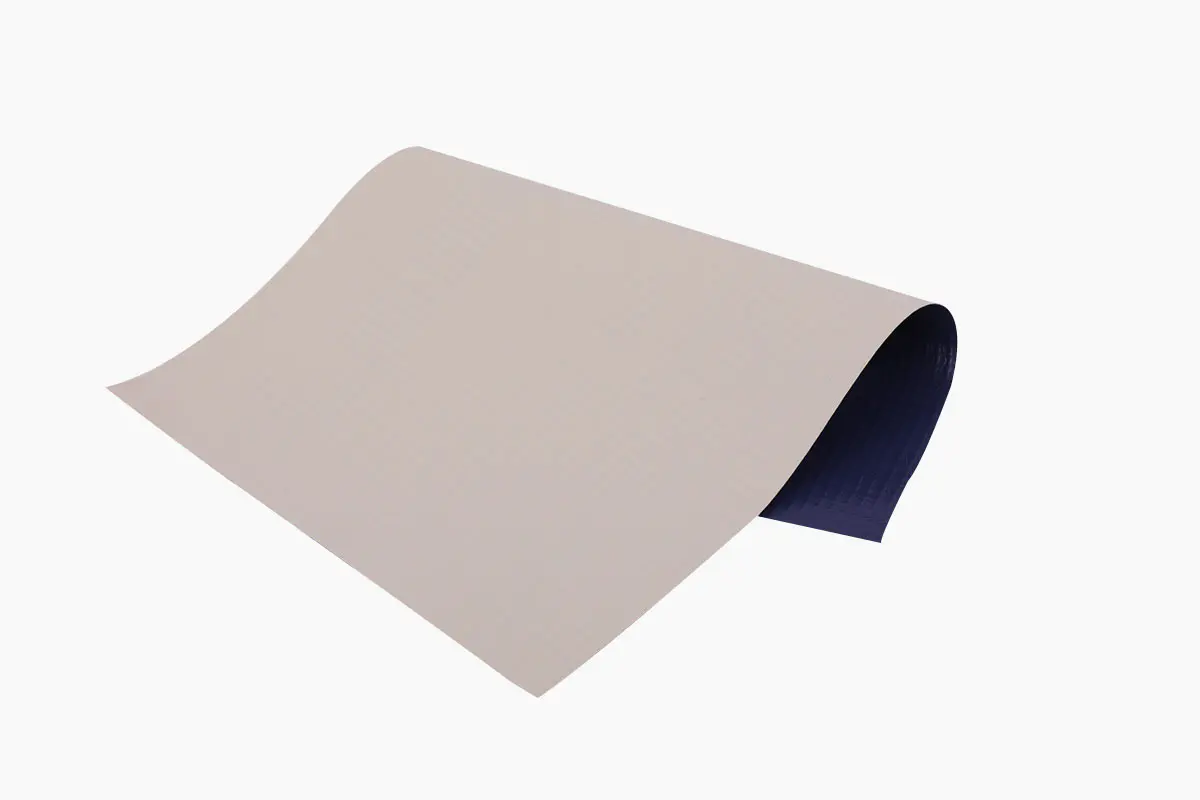
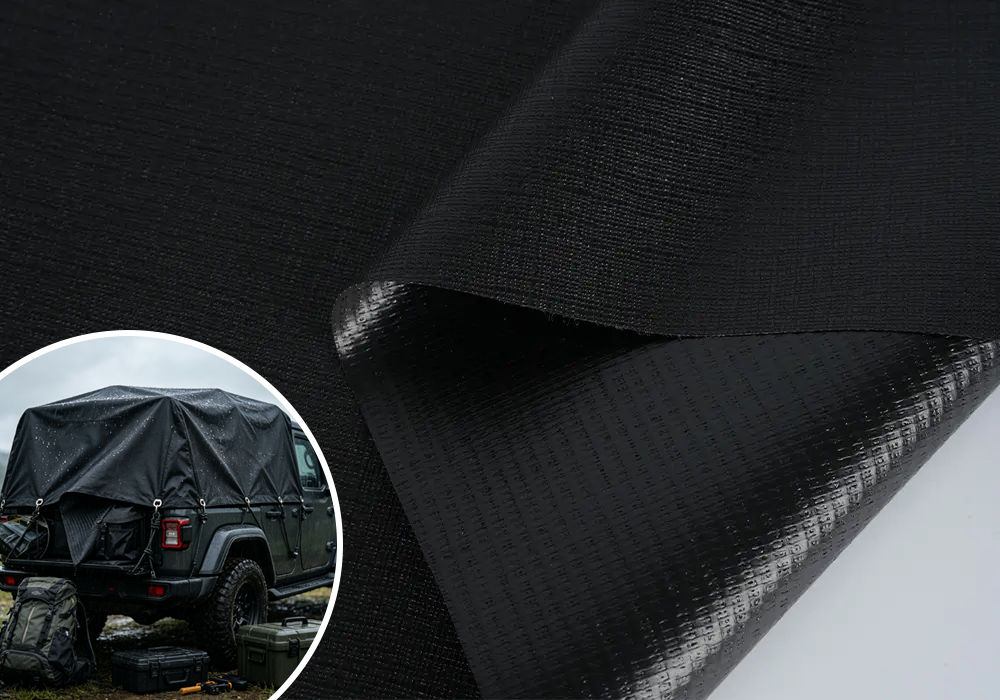
Premium Tear-Resistant All-Weather UV-Resistant Tarpaulin Fabric
Tear resistance is one of the most important characteristics for a tarpaulin used in real working environments. A cover may initially be punctured by a sharp object, pulled against a metal edge, or stressed around a fastening point. If the material has poor tear propagation resistance, a small defect can quickly become a large opening. This may result in water ingress, cargo exposure, replacement costs, and unplanned downtime.
The product’s woven 1000 by 1000 denier base provides a strong structural framework. The 6 by 6 thread arrangement helps distribute loads throughout the fabric rather than allowing force to concentrate in a single narrow line. When combined with the protective coating, this construction creates a cover that is more prepared for routine abrasion, pulling, and handling than many thin consumer-grade alternatives.
Mechanical reliability is particularly important for truck and trailer covers. During loading and unloading, a cover may be dragged, folded, secured with ropes, exposed to vibration, or tensioned over a large cargo area. A weak material can stretch unevenly or tear around eyelets and reinforced edges. A properly engineered heavy-duty fabric offers a more dependable foundation for fabrication and fastening.
Construction sites create similar challenges. Tarpaulin may be used to shield building materials, create temporary weather barriers, cover scaffolding sections, protect machinery, or separate work areas. Dust, wind, repeated movement, and contact with unfinished surfaces can place significant stress on the material. Tear-resistant fabric can help maintain coverage throughout the project rather than requiring frequent replacement.
In agriculture and outdoor storage, the material may cover hay, machinery, tools, packaging, or other goods. Although the specific construction and fastening method will affect performance, a strong base fabric helps the cover withstand handling and wind loading. The user should select suitable reinforcement, eyelets, ropes, straps, and support structures to match the expected conditions.
Compared with low-cost covers that focus mainly on initial price, this product is designed around service reliability. A stronger tarpaulin may offer better value when the cost of exposed goods, labor, transportation, installation, and replacement is considered. The relevant comparison is not simply the purchase price per square meter, but the total protective performance over the expected period of use.
Outdoor protective fabric must perform under changing weather rather than in a single controlled environment. Rain may be followed by sunlight, cold may be followed by heat, and wind may combine with dust or moisture. The all-weather design of this tarpaulin is intended to provide practical protection across these changing conditions.
Rain protection is a fundamental requirement for many tarpaulin applications. A properly coated fabric can help prevent precipitation from reaching covered goods, equipment, and surfaces. This is valuable for temporary storage, transportation, construction, agriculture, and outdoor events. The overall water resistance of a completed cover will also depend on welding, sewing, seam treatment, edge reinforcement, fasteners, and installation tension.
Wind resistance depends on both the material and the design of the finished installation. The fabric’s tensile and tear performance provides a strong foundation, but the cover must be properly anchored. Reinforced edges, correctly spaced eyelets, suitable ropes or straps, and adequate structural support are essential. No flexible cover should be considered windproof when it is poorly secured or exposed beyond its intended design conditions.
Cold-weather performance is supported by the stated resistance range beginning at minus 15 degrees Celsius. This can benefit users in regions where tarpaulins are exposed to winter temperatures, cold transportation conditions, or seasonal outdoor storage. Proper handling remains important because any coated fabric may become less flexible at low temperatures, particularly if folded sharply or stressed suddenly.
Heat resistance up to the stated plus 70 degrees Celsius supports use in warm outdoor environments and enclosed spaces that become heated by sunlight. The fabric’s real surface temperature may vary according to color, ventilation, sun intensity, and contact with hot objects. Users should avoid direct contact with sources exceeding the specified range and should assess specialized high-temperature applications separately.
The all-weather concept also includes resistance to routine environmental exposure. According to the company’s product capabilities, its flexible materials can feature cold resistance, flame retardancy, UV resistance, antistatic properties, mildew protection, and antibacterial properties. The exact performance of each characteristic should be confirmed for the selected product grade and documented specification before use in a regulated or highly specialized application.
Ultraviolet radiation is a major cause of premature degradation in outdoor fabrics. Continuous sunlight can cause color fading, loss of flexibility, embrittlement, cracking, and gradual reduction in mechanical strength. A cover that performs well during its first few weeks may become fragile if it lacks adequate UV protection.
The UV-resistant design of this tarpaulin helps the material remain functional during exposure to direct sunlight. The protective formulation is intended to reduce the damaging effects of ultraviolet radiation on the coated fabric. By helping prevent brittleness and cracking, UV resistance can extend the useful service period and reduce the frequency of replacement.
UV resistance has particular value for truck and trailer covers that travel or remain parked outdoors. It is also important for agricultural covers, construction barriers, outdoor storage shelters, temporary roofs, advertising structures, and equipment protection. In these applications, the fabric may receive many hours of solar exposure over an extended period.
Compared with a basic unprotected fabric, a UV-resistant tarpaulin can offer greater consistency in appearance and physical performance. This advantage is not limited to visual quality. When a material becomes brittle, even ordinary folding, tensioning, or wind movement can cause cracks. Maintaining flexibility helps the cover continue to perform during installation and daily use.
Service life will vary according to sunlight intensity, latitude, exposure duration, surface color, pollution, moisture, abrasion, cleaning methods, and installation quality. UV resistance should therefore be understood as a durability feature rather than a guarantee of unlimited outdoor service. Regular inspection remains recommended, especially around seams, edges, eyelets, and high-stress points.
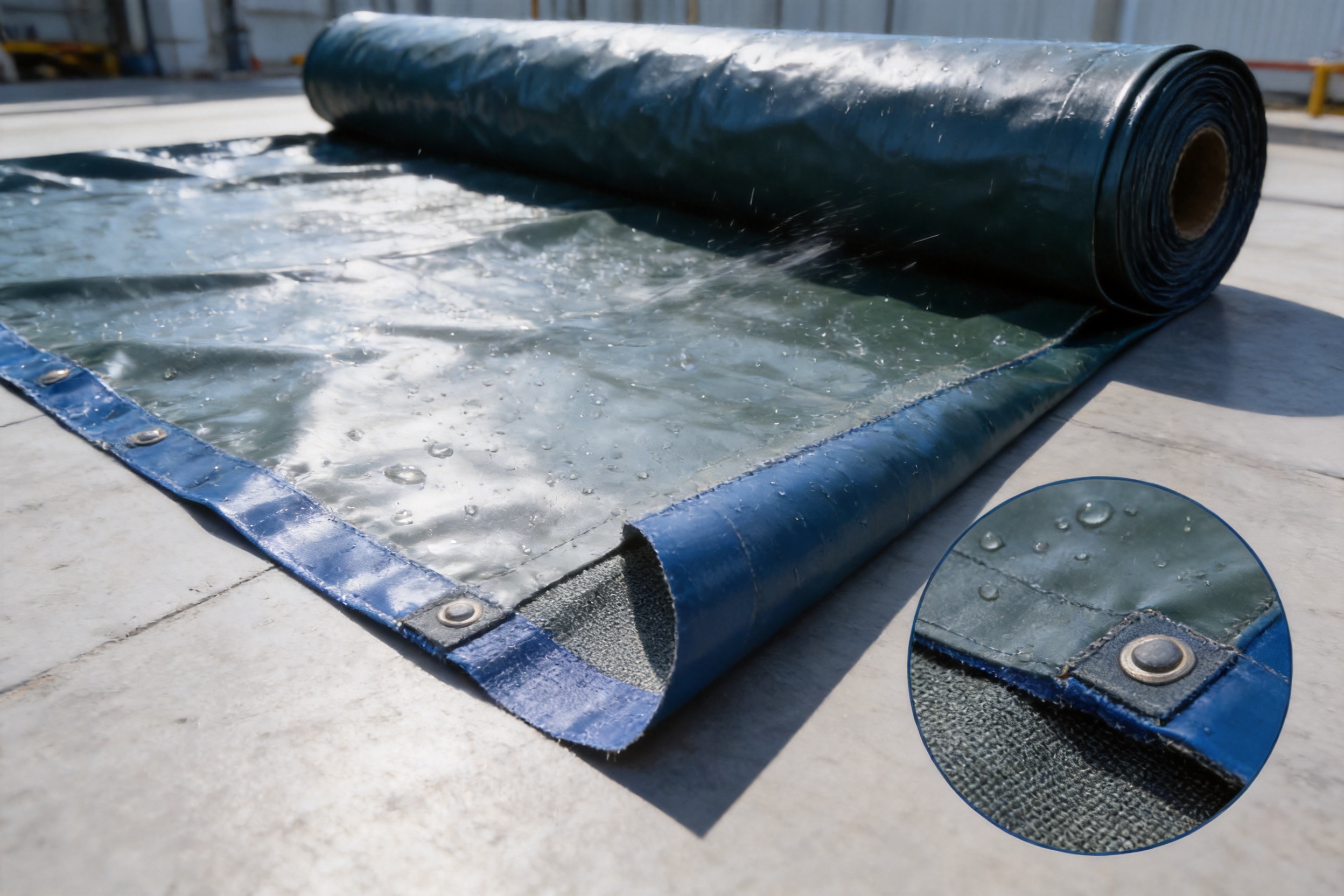
Tarpaulin products can differ significantly even when they appear similar at first glance. The principal advantages of this product arise from the coordinated selection of fabric weight, yarn construction, coating adhesion, weather resistance, available width, and manufacturing control.
Lightweight covers can be useful for short-term, low-stress applications, but they may not be suitable for repeated handling or difficult weather. The 480 grams per square meter structure provides a more substantial barrier and a stronger foundation for demanding service. It is better aligned with applications where the material must remain in place and protect valuable contents over time.
A tarpaulin with adequate tearing strength is less likely to allow a small defect to spread rapidly. This is a practical advantage in transportation, construction, and storage environments. While no fabric is immune to sharp objects or severe impact, improved tear resistance can reduce the consequences of everyday damage.
Adhesion performance is often overlooked when buyers compare tarpaulin products. A strong bond between coating and textile base supports resistance to peeling, delamination, and surface failure. The listed adhesion value of 60 newtons per 5 centimeters demonstrates that bonding is treated as an important quality parameter rather than an incidental feature.
Widths of up to 3.20 meters can make a meaningful difference in fabrication. Wider rolls can reduce the number of welded or sewn joins required for large covers. Fewer joins may shorten production time, lower seam-related risks, and create a cleaner finished appearance. This feature can be especially valuable for large truck curtains, storage covers, partitions, and industrial panels.
All-weather and UV-resistant characteristics make the material more appropriate for continued outdoor exposure than ordinary indoor or temporary fabrics. Users who need a cover to remain functional through changing seasons may benefit from selecting a material designed specifically for environmental stress.
The product is supplied by a company whose portfolio covers multiple related flexible materials, including PVC films, digital printing fabrics, tarpaulin films, frontlit and backlit materials, mesh, and double-sided printing fabrics. This broader technical background can support a more complete understanding of coating, calendering, bonding, surface treatment, and flexible composite production.
Manufacturing consistency is essential for coated fabrics because small variations in coating thickness, temperature, pressure, tension, or bonding can affect final performance. Haining Taiwei New Material Co., Ltd. uses advanced calendering equipment as part of its production infrastructure. Calendering is a continuous processing method in which material is passed through controlled rollers to form, coat, smooth, or consolidate flexible polymer layers.
In a tarpaulin production process, the textile base and coating materials must be combined with careful control of temperature, pressure, speed, and line tension. The objective is to achieve a consistent surface, stable thickness, reliable bonding, and uniform appearance across the roll. Professional equipment supports repeatable processing and can help reduce variations between production batches.
Multiple production lines provide manufacturing flexibility and support higher output. They can allow different product specifications, widths, weights, colors, and surface treatments to be managed according to production planning. This is particularly important for customers who require regular supply, multiple product series, or large-volume orders.
Professional bonding facilities further strengthen the company’s manufacturing capabilities. Bonding and welding are important not only in production but also in the conversion of fabric into finished covers, curtains, partitions, and protective structures. A manufacturer with bonding expertise can better understand how the base material will behave during downstream fabrication.
The company reports an annual output of 45 million square meters. Such capacity supports large commercial orders and helps establish a production system designed for repeatability. Capacity alone does not determine quality, but substantial output combined with technical equipment, experienced personnel, and quality management can provide useful supply assurance for distributors, converters, contractors, and industrial buyers.
The company was established in July 2010 and operates in Haining Dingqiao Industrial Park, Zhejiang Province, China. Its location provides convenient access to Shanghai and Ningbo ports, which can support export logistics and international shipment planning. More than 98 percent of its products are reported to be exported to Europe, America, the Middle East, Southeast Asia, and other regions.
International distribution requires more than production capacity. Export-oriented manufacturers must coordinate packaging, documentation, container loading, delivery schedules, product identification, and communication across different markets. The company’s stated experience in international export markets is therefore relevant to buyers seeking a stable overseas supply partner.
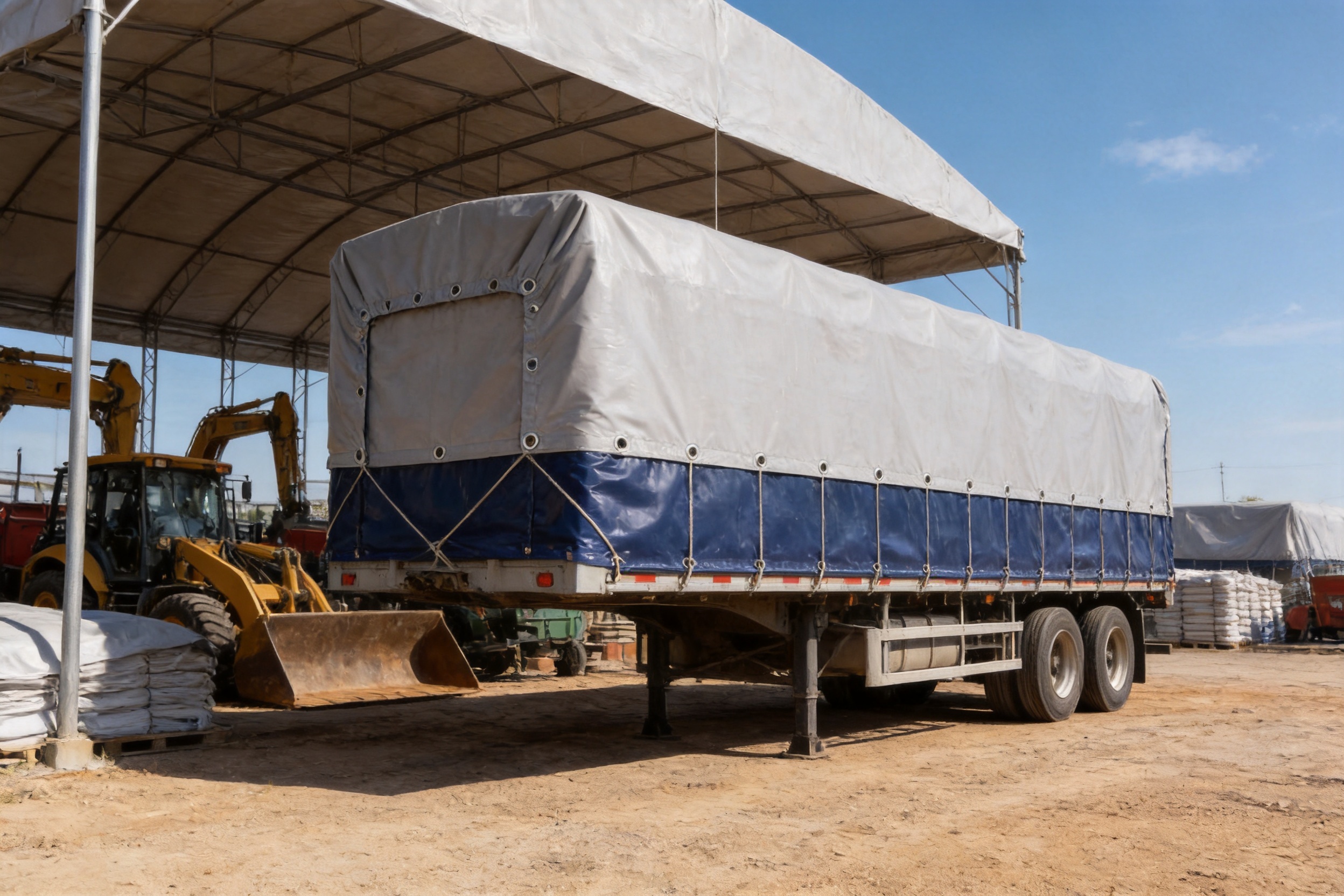
Quality management is important when a tarpaulin will be used to protect goods, support commercial operations, or form part of a larger fabricated structure. Haining Taiwei New Material Co., Ltd. identifies ISO 9001:2015 and GB/T 19001-2016 certification information. These standards are associated with quality management systems and provide a framework for controlled processes, documented procedures, corrective actions, and continual improvement.
The supplied technical information also identifies test references for tensile performance and fire-related behavior. GB/T 3923.1-2013 is listed in connection with tension testing, while DIN 75200 is listed with a stated burning-rate requirement of less than 100 millimeters per minute. Buyers should request the relevant test reports, certificates, and product-specific documentation when the material is intended for regulated applications or when a project requires formal compliance evidence.
Testing should be understood as a process rather than a single number. Tensile strength evaluates resistance to pulling forces, while tearing strength evaluates resistance to tear propagation. Adhesion testing examines the bond between coating and substrate. Weight and width checks help confirm dimensional consistency. Appearance inspections may identify coating defects, contamination, pinholes, uneven color, wrinkles, or edge problems.
For large-volume procurement, buyers may establish an inspection plan that includes preproduction confirmation, sample approval, in-process checks, finished-roll inspection, packaging verification, and random testing. Clear agreement on test methods, sampling levels, acceptable tolerances, roll length, core size, color, surface finish, and labeling can reduce misunderstandings between supplier and customer.
Quality documentation is particularly important when the material will be converted into a safety-related barrier, used around public spaces, or supplied to a market with specific regulatory requirements. The correct product grade should be selected based on the application, not solely on a general product title.
The fabric can be used for truck covers, trailer curtains, cargo protection sheets, and transport enclosures. Its strong construction helps resist tension and movement during loading, transit, and unloading. UV resistance is valuable when vehicles remain outdoors, while weather resistance helps protect cargo from rain and direct sunlight.
For transportation applications, the finished cover should include suitable reinforcement at corners, edges, fastening points, and areas that experience repeated contact. The selection of eyelets, straps, buckles, rollers, and other hardware should match the fabric thickness and expected load conditions.
Construction companies can use tarpaulin to cover building materials, protect tools and machinery, create temporary weather barriers, shield unfinished surfaces, and divide work areas. The material’s tear resistance and broad operating temperature range can support use in active outdoor environments.
Construction users should inspect the cover frequently because contact with rebar, nails, cut metal, concrete edges, solvents, and welding sparks may cause damage. The fabric should not be placed directly against hot work or exposed to chemicals unless compatibility has been confirmed.
Agricultural operators may use heavy-duty tarpaulin for machinery covers, equipment shelters, material storage, seasonal protection, and temporary enclosures. The fabric can help reduce exposure to rain, sunlight, dust, and wind. Its wide format may make it easier to cover large items with fewer overlaps.
For agricultural storage, ventilation and moisture management remain important. A cover should be installed to prevent water pooling and should allow suitable airflow when the stored product requires it. The tarpaulin is a protective barrier, but correct storage design is still necessary to prevent condensation or trapped moisture.
Industrial users may apply the fabric to temporary partitions, machine covers, warehouse curtains, loading-area barriers, and equipment protection. The material’s strength and coated surface can make it suitable for repeated handling and routine cleaning, subject to the selected cleaning method and chemical compatibility.
In commercial facilities, the fabric may also be used for outdoor display structures, service-area covers, market shelters, event enclosures, and seasonal protection systems. Its appearance, roll width, and ability to be fabricated into panels may be useful for projects requiring both functional performance and a professional finish.
The manufacturer’s wider product range includes digital printing fabrics, frontlit materials, backlit materials, and mesh products. This background is relevant for buyers whose projects combine protective tarpaulin with printed graphics, signage, or flexible display structures. The exact printability and surface suitability of this tarpaulin should be confirmed separately, but the company’s broader manufacturing portfolio can support coordinated material sourcing.
Correct fabrication is essential to obtaining the full value of a high-performance tarpaulin. Cutting should be carried out with suitable equipment to avoid jagged edges and unintended damage. Where the cover will be tensioned, stress should be distributed through reinforced hems, webbing, patches, or other structural measures.
Seams may be sewn, heat welded, or produced through another appropriate bonding method depending on the project design. The selected technique should be validated on the actual material because temperature, pressure, speed, and tool configuration influence seam strength. Finished seams should be checked for uniformity, incomplete bonding, wrinkles, holes, and excessive heat damage.
Eyelets should be installed with sufficient edge distance and appropriate reinforcement. Placing an eyelet too close to an edge may cause tearing when the cover is tensioned. Fastening spacing should be selected according to the cover size, wind exposure, support structure, and expected service conditions.
During installation, users should avoid dragging the fabric across sharp surfaces whenever possible. The cover should be supported so that water does not accumulate in low areas. Excessive tension can damage edges and fastening points, while insufficient tension may allow wind flapping and abrasion. A balanced installation improves both performance and service life.
Routine maintenance generally includes removing accumulated dirt, inspecting high-stress areas, checking fastening hardware, and repairing small defects before they expand. Cleaning should use methods compatible with the coating. Aggressive solvents, abrasive tools, and uncontrolled high-pressure cleaning may damage the surface.
When the fabric is stored, it should be clean and dry whenever practical. Long-term storage in a damp, compressed, or contaminated condition can encourage mildew, staining, odor, or coating deterioration. Folding or rolling should be carried out without forcing sharp creases, particularly in cold conditions.
Commercial buyers often require more than a standard roll. They may need a particular color, width, coating finish, weight, roll length, surface treatment, or fabrication format. The product is available in widths up to 3.20 meters, while other customization possibilities should be discussed with the manufacturer according to production capability and order quantity.
Customization may include cut panels, welded assemblies, reinforced hems, eyelet placement, printed surfaces, special packaging, or coordinated supply with related PVC and flexible textile products. Customers should provide drawings, dimensions, environmental conditions, intended service period, fastening method, and performance requirements when requesting a quotation.
The minimum order quantity is stated as one 20-foot container. This quantity is suitable for distributors, converters, project contractors, and industrial buyers planning regular or large-scale use. Customers with smaller requirements should ask whether a stock program, mixed container, distributor arrangement, or trial order is available.
Payment terms are stated as earnest money plus balance through T/T or L/C. Delivery terms may include FOB, CIF, and CNF arrangements. The stated delivery time is 20 working days, although actual timing may depend on product specification, order quantity, raw material availability, production scheduling, inspection requirements, packaging, and shipping conditions.
Because tarpaulin specifications can vary between series, buyers should confirm the exact item number and technical data before placing an order. The reference model for the product described here is TWP-1010-480. Written confirmation is recommended for weight, width, color, surface treatment, roll length, tolerance, testing, packaging, and delivery schedule.
A tarpaulin is part of a broader flexible materials industry that includes polymer formulation, textile preparation, coating, calendering, laminating, bonding, printing, finishing, inspection, and export logistics. A manufacturer experienced across several related product categories may be better positioned to understand how changes in substrate, coating, weight, or surface treatment influence final performance.
Haining Taiwei New Material Co., Ltd. has operated since 2010 and focuses on flexible polymer and textile products. Its product range includes PVC films, digital printing fabrics, tarpaulin films, frontlit and backlit materials, double-sided printing fabrics, mesh, and other light box cloth products. This technical scope indicates experience with materials used in both protective and visual applications.
The company’s reported annual capacity of 45 million square meters provides a foundation for serving international customers. Its export experience across Europe, America, the Middle East, Southeast Asia, and other markets also suggests familiarity with the logistical and communication requirements of overseas trade.
The company emphasizes technological innovation, quality products, and customer service. For a buyer, these commitments should be evaluated through practical evidence such as technical data, production samples, test reports, response time, order consistency, packaging quality, and after-sales support.
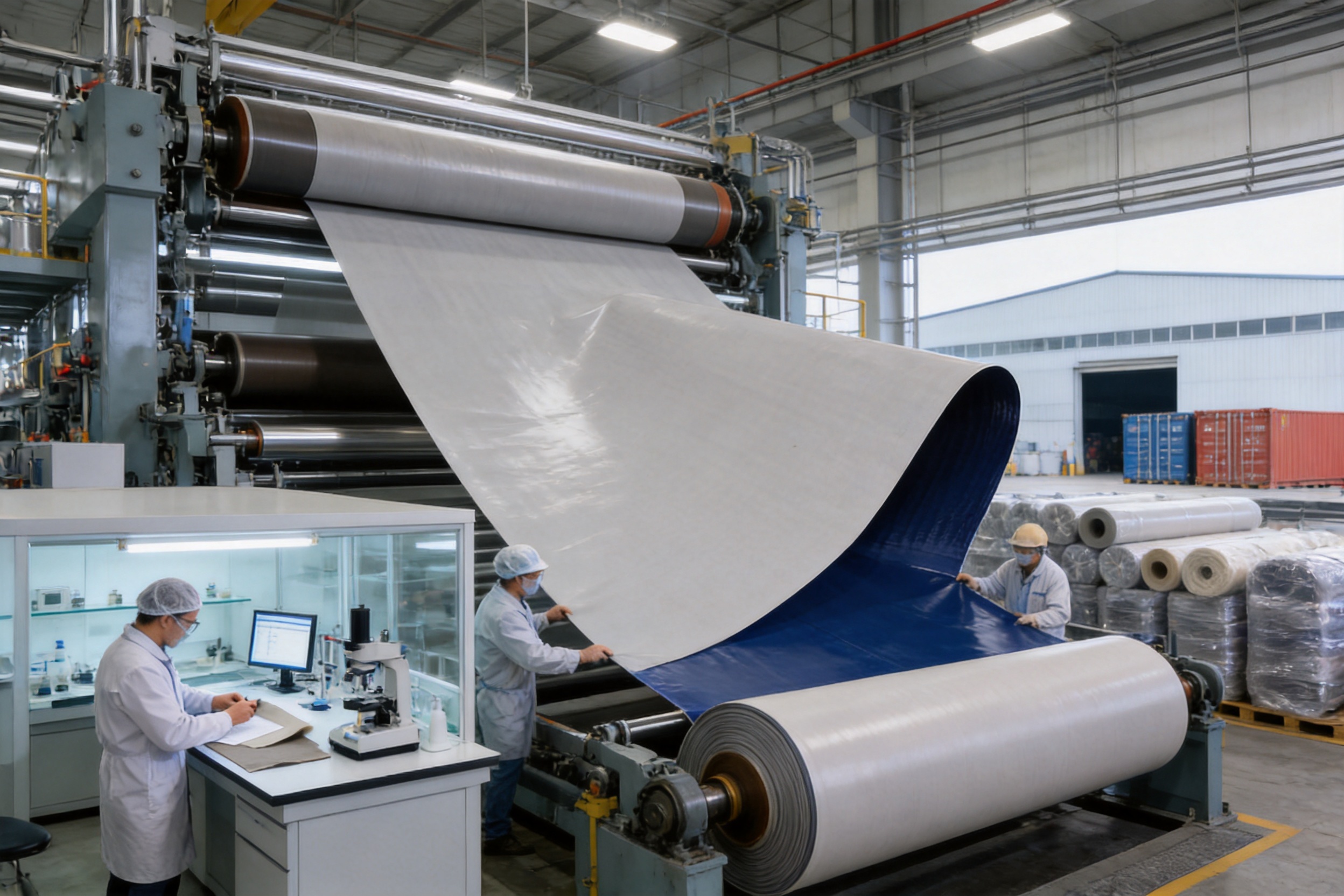
Durability is an important part of responsible material selection. A cover that lasts longer under the intended conditions may reduce the frequency of replacement, disposal, transportation, and labor associated with installing new material. Heavy-duty performance can therefore contribute to lower total consumption over the service life of an application.
Total cost should include more than the purchase price. Buyers should consider installation labor, fabrication, storage, replacement frequency, protection value, downtime, freight, and the consequences of material failure. In transportation and construction, a damaged cover may expose goods or interrupt work. Selecting a stronger, weather-resistant material may be economically justified even if its initial unit price is higher than a basic alternative.
Material efficiency can also be improved by selecting a suitable width. A roll width of up to 3.20 meters may reduce offcuts and the number of seams in large-format fabrication. Accurate measurement and careful cutting are important because unnecessary waste can offset some of the benefits of a wide roll.
At the end of service, disposal and recycling options should be considered according to local regulations and the composition of the finished product. Buyers should request relevant information when environmental reporting or waste-management requirements apply.
Before choosing a tarpaulin, the user should define the conditions the material will face. Important questions include whether the cover will be used indoors or outdoors, how long it must remain in service, whether it will be exposed to direct sunlight, what temperature range is expected, how much wind loading will occur, and whether the material will contact chemicals or abrasive surfaces.
The required dimensions and fabrication method should also be established. Large covers may benefit from wide rolls, while complex shapes may require welded panels, reinforced corners, or customized cut pieces. The fastening system should be designed at the same time as the fabric selection because eyelets, straps, seams, and support structures influence the loads placed on the material.
Users should also identify whether any specific fire, tensile, environmental, or industry standards apply. The product information lists DIN 75200 and GB/T 3923.1-2013 as test references, but project-specific requirements may be different. Confirming compliance before production helps prevent delays and costly substitutions.
A sample or small trial run is recommended when the material will be processed using unfamiliar equipment. Testing can confirm welding temperature, cutting behavior, seam strength, print compatibility, folding characteristics, and appearance before a large production order is started.
This is a heavy-duty coated tarpaulin fabric designed for tear resistance, outdoor weather exposure, and UV protection. It uses a 1000 by 1000 denier base, a 6 by 6 thread arrangement, and a total weight of 480 grams per square meter.
The stated maximum width is up to 3.20 meters. The actual available width should be confirmed according to the selected series, production schedule, and order requirements.
The listed tensile strength is 1100/950 newtons per 5 centimeters, and the listed tearing strength is 300/260 newtons. These directional values indicate resistance to pulling and tear propagation in the primary fabric directions.
The stated temperature resistance range is minus 15 to plus 70 degrees Celsius. The complete application should still be reviewed because direct contact with hot surfaces, repeated folding in cold conditions, and rapid temperature changes may affect performance.
Yes. The product is designed with UV-resistant characteristics to help maintain flexibility and surface integrity during sunlight exposure. Service life will depend on climate, exposure intensity, installation, color, maintenance, and mechanical stress.
Yes. Its high-strength construction, tear resistance, weather resistance, and available wide format make it suitable for many truck and trailer cover applications. Finished covers should include proper reinforcement, seams, fasteners, and edge treatment.
It can be used for equipment covers, temporary weather barriers, material protection, and partitions. Users should keep it away from uncontrolled sparks, hot work, sharp edges, and chemicals unless compatibility and fire requirements have been confirmed.
The provided information lists DIN 75200 with a stated rate of less than 100 millimeters per minute. Buyers should request product-specific test reports and confirm the exact requirement for their market and application before relying on fire-related performance.
Remove dirt regularly, inspect seams and fastening points, repair small defects promptly, and use cleaning methods compatible with the coating. Store the material clean and dry, and avoid prolonged compression or sharp folding when possible.
The stated minimum order quantity is one 20-foot container. Buyers should contact the manufacturer to discuss current production availability, trial quantities, mixed orders, or distributor options.
The stated payment methods include T/T and L/C, with earnest money plus balance terms. Delivery terms may include FOB, CIF, and CNF. The stated delivery time is 20 working days, subject to confirmation for each order.
The product is manufactured in China by Haining Taiwei New Material Co., Ltd., located in Haining City, Zhejiang Province. The company operates near major export routes connected with Shanghai and Ningbo ports.
Premium Tear-Resistant All-Weather UV-Resistant Tarpaulin Fabric is designed for users who need more dependable protection than a basic temporary cover can provide. Its 1000 by 1000 denier construction, 6 by 6 thread arrangement, 480 grams per square meter weight, directional tensile strength, tearing resistance, coating adhesion, broad temperature range, UV resistance, and width of up to 3.20 meters provide a balanced specification for demanding outdoor and industrial applications.
The product can be considered for transportation covers, construction protection, agricultural storage, industrial partitions, equipment covers, outdoor shelters, and other applications where material durability and weather performance are important. Its advantages are strengthened by the manufacturer’s experience in PVC films, coated fabrics, printing materials, mesh, and related flexible products.
Advanced calendering equipment, multiple production lines, professional bonding facilities, international export experience, reported annual capacity of 45 million square meters, and stated quality management certifications provide a substantial manufacturing foundation. Nevertheless, the best results depend on selecting the correct grade, confirming project-specific requirements, using suitable fabrication methods, and installing the finished cover correctly.
For purchasers, the product offers a practical combination of protection, mechanical strength, weather resistance, manufacturing flexibility, and supply capability. When evaluated according to total service value rather than only initial price, it can be a strong option for applications that demand reliable tarpaulin performance over time.
1. Product technical information for TWP-1010-480 Premium Tear-Resistant All-Weather UV-Resistant Tarpaulin Fabric.
2. DIN 75200, flammability-related testing reference identified in the supplied product data.
3. GB/T 3923.1-2013, textile tensile property testing reference identified in the supplied product data.
4. ISO 9001:2015, Quality Management Systems requirements.
5. GB/T 19001-2016, Quality Management Systems requirements.
6. General principles of coated textile construction, polymer calendering, flexible fabric bonding, and industrial tarpaulin fabrication.
Premium Tear-Resistant All-Weather UV-Resistant Tarpaulin Fabric
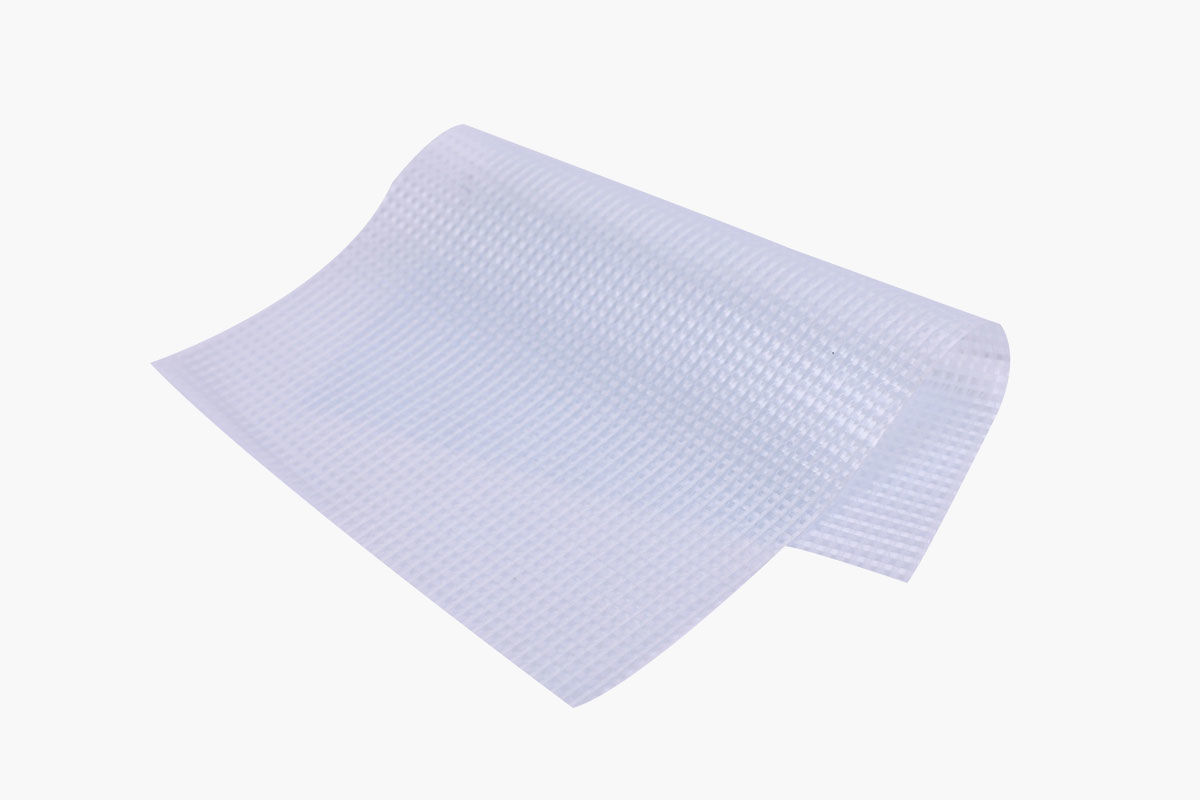 Industrial-Grade Reinforced UV-Resistant Clear Tarpaulin
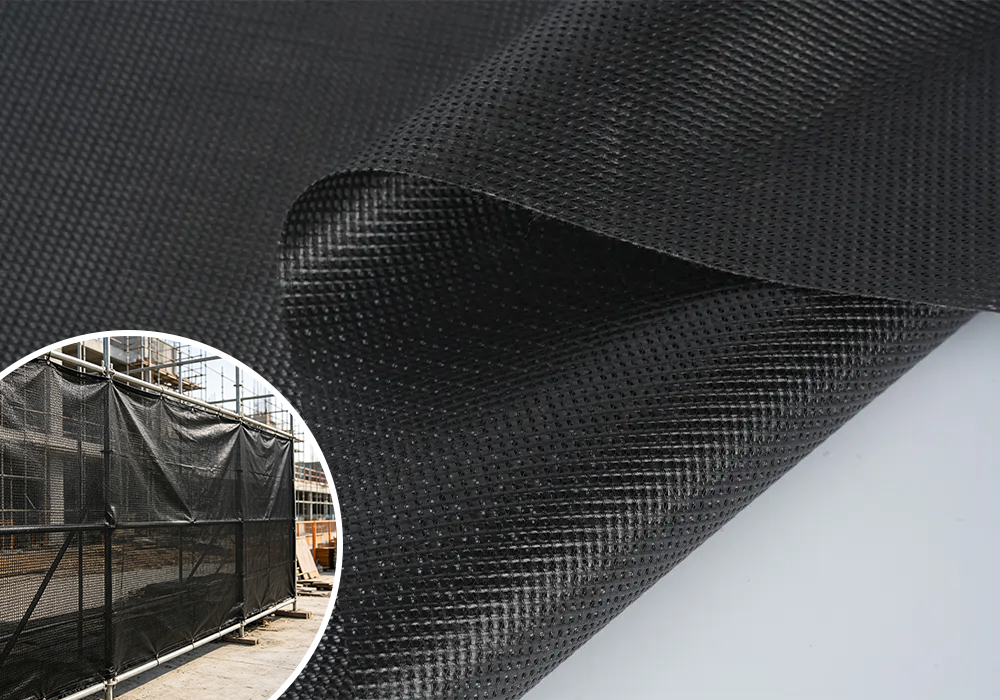 All Weather Heavy Duty Mesh Tarpaulin for Barrier Fencing
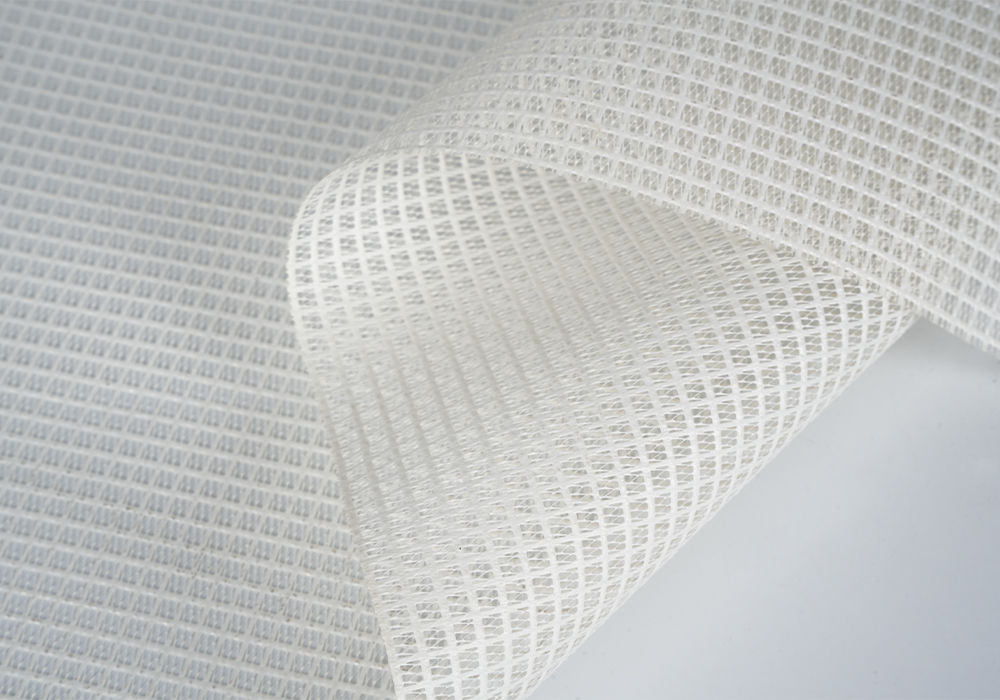 Breathable Wind Resistant Mesh Tarpaulin for Advertising
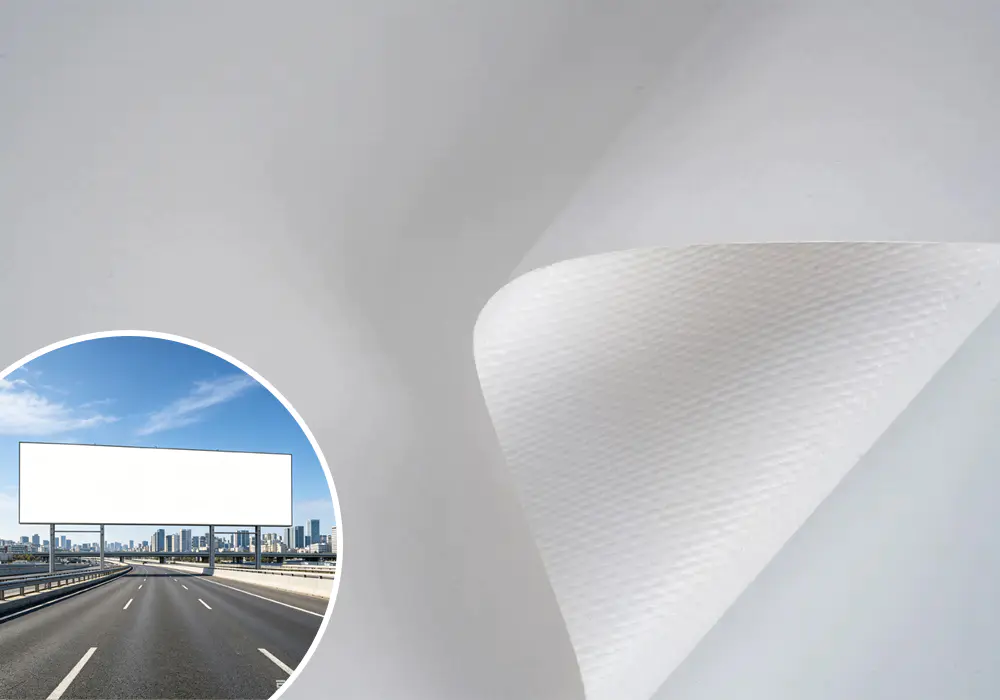 Tear Resistant Large Outdoor Flex Banner Print Cloth
 Weatherproof Printable Waterproof Tarpaulin For Camper RV
 Custom Digital Printing Fabric Manufacturers

 Previous