

 English
 中文简体
 Español
News
Home / Author / Dai Shuying — Technical Customer Support Manager / Blackback Light Block HD Printing Flex Banner Fabric: Complete Light Control, Vivid Graphics, and Industrial Outdoor Performance


Content
High-quality advertising displays depend on more than attractive artwork. The base fabric must control light, preserve color, resist outdoor stress, and remain easy to process from printing through installation. For single-sided advertising applications, one of the most important performance requirements is preventing unwanted light from passing through the material. Light leakage can reduce contrast, create uneven visual effects, reveal shadows, and make printed graphics difficult to read. Blackback light-block flex banner fabric is engineered to solve these problems while providing a reliable surface for high-definition inkjet printing.
The Blackback Light Block HD Printing Flex Banner Fabric described in this article combines a professional blackback light-proof structure, a printable front surface, a strong 840×840D woven base, and a 440gsm construction. Its design is intended for demanding applications such as store signage, wall advertising, event barriers, promotional displays, and other outdoor advertising installations requiring crisp single-sided graphics. The material is designed to deliver complete light blockout, vivid color reproduction, mechanical strength, and practical handling characteristics in one finished banner solution.
Manufactured by Haining Taiwei New Material Co., Ltd., the product represents the company’s broader expertise in PVC films, digital printing fabrics, tarpaulin films, frontlit and backlit materials, mesh, and light box cloth products. The company operates from Haining Dingqiao Industrial Park in Zhejiang Province, an important manufacturing region with convenient access to Shanghai and Ningbo ports. Its production capabilities, export experience, and focus on material performance support the consistent supply of advertising fabrics for international markets.
Single-sided banners are often installed in locations where light can come from behind the printed material. This may include storefront windows, temporary partitions, outdoor frames, event fences, building facades, roadside structures, and illuminated commercial environments. If a conventional banner allows light to pass through, the printed image may appear washed out or uneven. Backlighting can also expose support structures, shadows, folds, and installation marks.
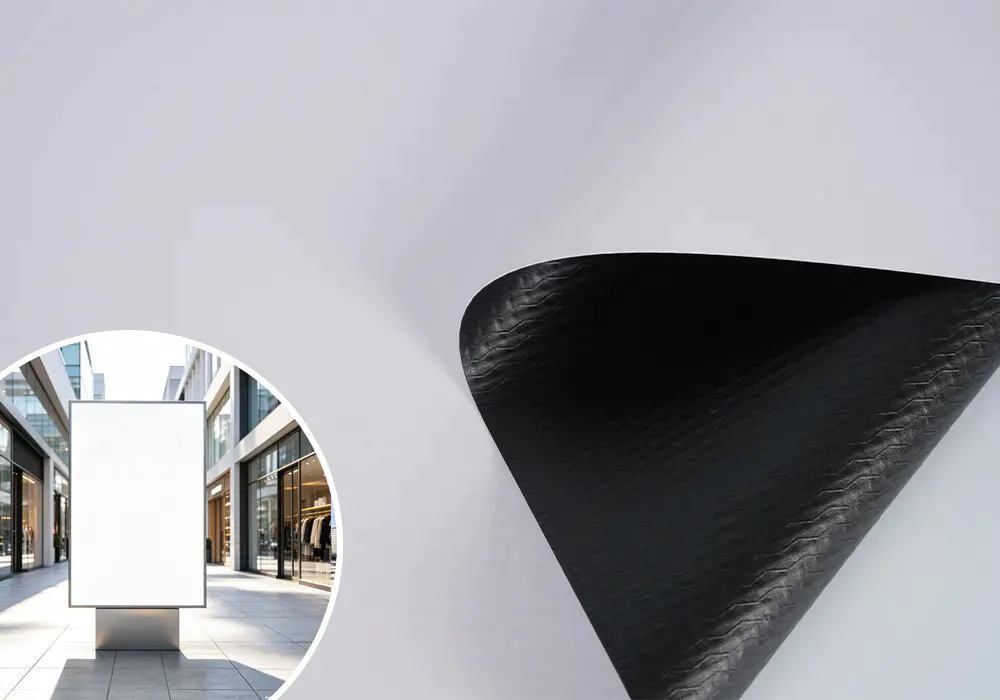
A blackback construction addresses this issue by incorporating a light-blocking layer behind the printable surface. The dark backing absorbs and interrupts incoming light, helping prevent it from passing through the banner. As a result, the front-facing image retains stronger contrast and more stable visual definition. Text, logos, photographs, and detailed promotional graphics can remain easier to read even when the surrounding environment contains strong sunlight or artificial illumination.
The product is designed to provide total light blockout and zero visible leakage under normal intended use. This feature gives it a practical advantage over standard frontlit fabrics that may be suitable for ordinary daylight display but offer less control when light interference is a concern. For advertisers, the benefit is not simply a darker backing. It is a more dependable visual foundation for displaying high-value printed content.
Light control is especially important when the banner contains dark tones, subtle gradients, fine lines, or small lettering. Any unexpected light transmission can reduce the apparent density of these elements. A professionally designed blackback layer helps maintain the intended appearance of the artwork and reduces the risk that the installed banner will look different from the printed proof.
The banner fabric uses an 840×840D woven base with a 9×9 construction and a stated weight of 440gsm. This specification indicates a substantial industrial-grade material rather than a lightweight temporary sheet. The woven base contributes to tensile performance, tear resistance, dimensional stability, and handling durability. The coated and bonded structure then adds printability, water resistance, and light-blocking performance.
| Product Attribute | Specification or Performance | Practical Benefit |
|---|---|---|
| Product type | Blackback light-block HD printing flex banner fabric | Suitable for single-sided high-definition advertising displays |
| Base fabric | 840×840D, 9×9 woven construction | Strong support for outdoor tension and handling |
| Weight | 440gsm | Substantial structure and improved resistance to everyday wear |
| Light control | Total light blockout design | Reduces shadows, back-light interference, and light leakage |
| Tensile strength | Up to 800/700 N/5cm | Improves resistance to wind and installation tension |
| Tearing strength | 180/160 N | Helps prevent ripping and fraying under stress |
| Peel adhesion | 60 N/5cm | Supports bonding integrity and reduces delamination risk |
| Surface function | HD inkjet printable | Supports sharp graphics and vivid color output |
| Outdoor properties | Waterproof and anti-UV characteristics | Helps protect display performance during outdoor deployment |
| Handling | Flexible and rollable | Facilitates transportation, storage, and installation |
The supplied performance values are tensile strength of 800/700 N/5cm, tearing strength of 180/160 N, and peel adhesion of 60 N/5cm. These figures should be understood according to the applicable testing direction, test method, and production specification. In practical terms, they indicate that the material is designed to withstand the mechanical demands associated with stretched banners, framed displays, temporary barriers, and other installations where the fabric may experience wind, tension, folding, and repeated handling.
The most distinctive feature of this product is its blackback light-proof base structure. Instead of relying only on the thickness of the fabric to limit light transmission, the material uses a dedicated light-blocking design. This construction improves the consistency of the finished display by preventing external light from interfering with the printed face.
For retail signage, this means promotional messages can remain visually strong throughout the day. A banner installed near a glass storefront, a brightly lit corridor, or an outdoor wall may face changing light conditions from morning to evening. A light-blocking back layer helps reduce the visual variation caused by those conditions. The advertising image is less dependent on what lies behind the banner.
For event barriers and temporary partitions, total blockout can also improve privacy and presentation. The dark backing reduces the visibility of objects, people, or structural components located behind the fabric. This creates a cleaner appearance and allows the banner to function as both a graphic display and a visual screen.
Compared with ordinary single-layer banner materials, the blackback design offers a more controlled viewing experience. Standard materials can be acceptable where light transmission is not important, but they may perform less effectively when the display requires strong opacity. The blackback structure is therefore a practical choice for applications where image clarity and background concealment are essential.
Complete blockout also supports consistent color perception. Printed colors are judged against the light conditions surrounding the display. When light penetrates from behind, pale areas can appear weak and darker areas may lose depth. By limiting this interference, the product helps the inkjet-printed artwork appear closer to the intended proof and design concept.
The front surface is specially treated for compatibility with major high-definition inkjet printing technologies. A suitable printing surface must accept ink in a controlled manner, promote consistent dot formation, and support the separation of colors without excessive spreading. The stated printability of this banner fabric is intended to help produce sharp edges, smooth gradients, detailed images, and vivid promotional graphics.
High-definition printing is particularly valuable for modern advertising because banners are often viewed from both close and moderate distances. A retail customer may stand only a few meters from a store sign, while a roadside display may be viewed from farther away. In both situations, the printed surface must balance detail, contrast, and color density. A well-engineered printable coating helps the material accommodate photographs, product images, brand colors, text, and complex layouts.
Ink absorption is another important aspect of print quality. If ink remains too wet or spreads unevenly, the finished image may show blurred edges, inconsistent density, or color overlap. If the surface absorbs ink too aggressively, colors may look dull and fine details may lose definition. The product’s specially treated surface is designed to support an appropriate balance between ink reception, drying behavior, and visible color rendering.
Vivid color is not only an aesthetic advantage. It also affects communication efficiency. Strong contrast allows headlines to stand out, while accurate color reproduction supports brand recognition and product presentation. A banner that maintains the intended appearance of corporate colors, photographic tones, and graphic elements can deliver a more professional impression than a material that produces weak or uneven output.
For converters and print service providers, the surface is also important because predictable print behavior can reduce production adjustments. Operators can select suitable ink settings, curing or drying conditions, and resolution levels according to the specific printer and application. As with all printable fabrics, testing is recommended before a large production run, especially when using a new ink system, printer model, or color-management workflow.
Outdoor banners are exposed to physical forces that are not present in indoor displays. Wind creates repeated pulling and fluttering. Installation hardware concentrates stress at hems, eyelets, welded edges, and attachment points. Transportation and storage may introduce folding, rolling, compression, and abrasion. A reliable banner must therefore combine flexibility with sufficient mechanical strength.
The 840×840D 9×9 woven base provides a strong foundation for the product. The denier specification describes the yarn structure used in the woven reinforcement, while the 9×9 construction indicates the approximate weave arrangement. Together with the 440gsm weight, these characteristics create a robust material suited to more demanding advertising environments.
The stated tensile strength reaches 800/700 N/5cm. Tensile strength measures the force required to pull the material until failure and is a key indicator for banners installed under tension. Strong tensile performance can help reduce stretching, deformation, or sudden failure when the material is secured to a frame or supporting structure.
The tearing strength is listed as 180/160 N. Tear resistance is different from tensile strength because it evaluates how a cut, puncture, or damaged section may propagate through the material. Strong tear resistance is valuable around eyelets, corners, hems, and attachment points, where a small defect could otherwise expand during installation or windy conditions.
Peel adhesion is listed at 60 N/5cm. This value relates to the bonding strength between layers. A banner is often exposed to temperature changes, moisture, folding, and mechanical stress, so layer adhesion is an important part of long-term reliability. Strong bonding helps reduce the possibility of delamination, bubbling, or separation between the printable layer, blocking layer, and base structure.
These properties create a balanced performance profile. The material is not designed merely to be thick. Its value comes from the interaction of the woven reinforcement, coated surface, blackback layer, and bonded construction. A product with high weight but poor layer adhesion may fail prematurely, while a strongly coated product with a weak base may be vulnerable to tearing. This banner fabric is designed to address these performance factors together.
Outdoor advertising materials must withstand moisture from rain, humidity, cleaning, and condensation. Water can affect both the fabric structure and the printed image. A suitable waterproof construction helps reduce water penetration, protects the base material, and supports more stable display performance during changing weather.
The product is described as waterproof, making it appropriate for outdoor promotional applications where exposure to rain or damp conditions may occur. Waterproof performance also helps protect the printed surface during transportation, installation, and temporary storage. Nevertheless, final durability depends on the ink system, finishing process, edge treatment, installation method, and local environmental conditions.
Ultraviolet radiation can gradually fade printed colors and weaken some polymer materials. The product incorporates anti-UV characteristics intended to reduce the effects of prolonged outdoor exposure. This helps preserve color appearance and supports longer service life in suitable applications. Anti-UV performance should not be interpreted as unlimited protection, since exposure intensity, geographic location, print chemistry, cleaning practices, and installation duration all affect actual results.
For long-term outdoor deployment, correct fabrication is essential. Edges should be finished according to the intended attachment method, eyelets should be properly spaced, and the banner should not be installed with excessive tension. Adequate allowance for wind movement and drainage can further protect the material. The banner’s anti-UV and waterproof properties work most effectively when combined with sound converting and installation practices.
Although the fabric is industrial-grade, it remains flexible enough to be rolled, transported, and installed without the difficulty associated with rigid signboards. Rollability is valuable for print service providers and advertising contractors because it reduces storage volume and simplifies movement between production, finishing, and installation locations.
When rolled correctly, the material can be prepared for shipment while protecting the printed surface from unnecessary bending. Proper packaging should support the roll and prevent crushing at the edges. During storage, the product should be kept in a clean, dry environment away from sharp objects, excessive heat, and direct sunlight. These precautions help preserve both the print surface and the physical structure.
The flexible texture also assists installation on frames, walls, fences, and temporary structures. It can conform to prepared support systems more easily than a rigid panel. This makes it suitable for changing campaigns, seasonal promotions, event branding, and other projects where the graphics may be replaced regularly.
The product is designed to avoid permanent creases under normal handling when properly rolled and installed. However, all flexible banner materials should be handled carefully. Sharp folding, dragging across rough surfaces, or compressing the material under heavy loads can create marks or damage. Using a controlled rolling method and keeping the printed face protected will help maintain the visual quality of the finished banner.
Retail signage must capture attention while communicating information quickly. Store names, seasonal messages, discount campaigns, product launches, and directional information all benefit from strong color and clear text. The blackback structure helps ensure that the background behind a storefront banner does not reduce the impact of the printed design.
The material can be used for wall-mounted graphics, window-area displays, temporary sale banners, and entrance promotions. Its HD printability supports photographs and detailed brand artwork, while its flexibility allows contractors to adapt the banner to different support systems.
Large wall advertisements require a material that can maintain image quality over a substantial surface area. A high-definition printable coating helps the design remain visually coherent, while the reinforced woven base supports handling during fabrication and installation. The blackback layer helps prevent the wall or support structure from showing through the image.
For wall advertising, installers should evaluate the wall condition, attachment method, wind exposure, access equipment, and expected display period. Correct preparation is particularly important for large graphics because uneven tension or poor anchoring can create wrinkles and localized stress.
Events often require branding that also controls sightlines. A banner may be installed around a venue, along a pedestrian route, beside a stage, or around a temporary work area. The light-blocking back layer can reduce visibility through the material, creating a cleaner barrier effect. The strong woven construction supports repeated handling and the demands of temporary installation.
Because event graphics are frequently transported from one location to another, rollability and manageable weight are valuable. The material can be printed, finished, rolled, transported, and installed according to the schedule of the event organizer or advertising contractor.
Outdoor campaigns may include product launches, political or community messaging, sports events, festivals, construction-site branding, and public information displays. These applications require a balance of print quality, durability, and efficient production. The product’s light blockout, waterproof characteristics, anti-UV properties, and mechanical performance make it suitable for many planned outdoor campaigns.
Campaign managers can also benefit from the material’s ability to support single-sided printing. Where only one viewing face is required, a blackback banner can provide the desired opacity without the additional production complexity of a double-sided print system.
Different banner fabrics are designed for different purposes, so product selection should be based on the application rather than on one specification alone. However, the Blackback Light Block HD Printing Flex Banner Fabric offers several advantages over conventional materials that do not provide the same combination of opacity, printability, and strength.
First, the complete light-blocking design offers stronger control of background interference than ordinary semi-opaque frontlit fabric. This is valuable when the banner will be exposed to backlighting, bright windows, or visible structures behind the display.
Second, the HD-treated surface is intended to provide sharper and more vivid graphics than a basic coated fabric with limited ink compatibility. The difference can be especially noticeable in photographic artwork, fine typography, and layered graphic designs.
Third, the 840×840D woven base and 440gsm construction provide a more substantial foundation than lightweight promotional sheets. This supports demanding installations where wind, handling, and repeated use are concerns.
Fourth, the stated tensile, tearing, and adhesion values show that the product is designed as a complete engineered structure. The material is not dependent on thickness alone. Its performance comes from the reinforcement, coating, bonding, and light-blocking design working together.
Finally, the flexible rollable format offers logistical benefits compared with rigid panels. The banner can be produced in a continuous format, stored compactly, and installed on a variety of supports. This can reduce transportation complexity and make campaign changes more efficient.
| Performance Consideration | Conventional Basic Banner | Blackback Light Block HD Printing Flex Banner |
|---|---|---|
| Light transmission | May allow visible backlighting | Designed for total light blockout |
| Image contrast | Can vary with background conditions | More stable under changing light conditions |
| Print detail | Depends strongly on surface treatment | Specially treated for HD inkjet printing |
| Outdoor strength | Varies by base fabric and weight | 840×840D woven base with 440gsm construction |
| Layer stability | May vary by bonding process | Specified peel adhesion of 60 N/5cm |
| Handling | May be flexible but less robust | Flexible, rollable, and engineered for demanding use |
| Application range | General short-term displays | Retail signage, walls, events, and outdoor campaigns |
Product performance depends heavily on manufacturing control. A banner fabric is a multilayer material, and consistency must be maintained across the woven base, coating application, pigmentation, lamination or bonding, surface treatment, curing, finishing, and inspection stages. Variations in any of these stages can affect opacity, printability, strength, adhesion, or appearance.
Haining Taiwei New Material Co., Ltd. was established in July 2010 and specializes in a broad range of flexible PVC and digital printing materials. Its product portfolio includes PVC films, digital printing fabrics, tarpaulin films, frontlit and backlit materials, double-sided printing fabrics, mesh, and other light box cloth products. This range gives the company practical experience across related material categories and application requirements.
The company is equipped with advanced calendering equipment, multiple production lines, and professional bonding facilities. Calendering is an important process for producing uniform polymer sheets and films. It can influence thickness, surface smoothness, flexibility, and material consistency. For advertising fabrics, controlled calendering helps create a stable foundation for subsequent coating, reinforcement, and bonding operations.
Professional bonding facilities are particularly relevant to blackback materials because the product depends on reliable integration between multiple layers. A strong and uniform bond supports the stated peel adhesion performance and helps reduce the risk of separation during outdoor exposure. Consistent bonding also contributes to a more even appearance across the finished roll.
Multiple production lines support manufacturing flexibility and output capacity. The company reports an annual output of 45 million square meters, providing a substantial production base for regular orders and larger project requirements. Capacity alone does not replace quality control, but it can support stable supply, planned production scheduling, and the ability to serve customers across multiple regions.
More than 98% of the company’s products are exported to Europe, America, the Middle East, Southeast Asia, and other regions. International market experience requires attention to different customer specifications, packaging requirements, documentation expectations, and application conditions. This export orientation supports the company’s ability to communicate with distributors, print service providers, sign manufacturers, and project purchasers in diverse markets.
Quality control for this product category should address both measurable physical properties and practical print performance. Important checks may include weight, thickness, width, tensile strength, tear strength, peel adhesion, opacity, surface uniformity, color consistency, coating integrity, and roll appearance.
Light-blocking performance is one of the most important product-specific checks. The material should be evaluated under suitable lighting conditions to identify pinholes, thin areas, edge variation, or localized leakage. Consistent blockout helps ensure that large printed graphics look uniform after installation.
Surface quality should also be inspected for coating defects, contamination, wrinkles, scratches, and uneven treatment. Since high-definition printing reveals surface irregularities more clearly than low-resolution graphics, a clean and stable printable face is essential for premium results.
Mechanical testing provides information about how the material will behave during fabrication and installation. Tensile and tear testing helps assess the strength of the woven base, while peel testing evaluates the integrity of the layered construction. These tests should be performed according to controlled procedures and interpreted with attention to machine and cross directions.
Print testing is recommended for every new combination of banner material, printer, ink, and finishing method. A practical test should evaluate color density, fine text, gradient smoothness, drying or curing, surface appearance, and resistance to handling. Printing conditions may vary between solvent, eco-solvent, latex, UV, and other ink technologies, so production settings should be confirmed by the user’s technical team.
Before printing, the roll should be inspected for visible damage and allowed to reach the working environment if temperature differences are significant. The print area should be clean and free from dust or particles that could affect image quality. Operators should confirm the printable side and ensure that the material is loaded into the printer according to the equipment manufacturer’s instructions.
After printing, sufficient drying or curing time should be provided before rolling, welding, hemming, eyeleting, or installation. Handling the material too soon may cause blocking, surface marks, ink transfer, or reduced image quality. The required time depends on the ink technology, environmental conditions, printer settings, and ink volume.
When finishing the banner, reinforcement should be considered at attachment points and high-stress edges. Eyelets, hems, pockets, welding, and other finishing methods should be selected according to the expected load and installation duration. Even a strong fabric can fail if an attachment system concentrates excessive force in a small area.
During installation, the banner should be tensioned evenly without creating sharp localized stress. Large outdoor displays should be evaluated for wind load and support strength. The frame, fasteners, poles, wall anchors, or fence system must be suitable for the size and location of the display. Installers should follow local safety requirements and use appropriate access equipment.
For storage, finished banners should be rolled rather than sharply folded when possible. The printed side should be protected from abrasion, and rolls should be stored horizontally or supported in a way that prevents deformation. Avoiding moisture, excessive heat, and prolonged direct sunlight during storage will help preserve the material before deployment.
The product’s waterproof and anti-UV characteristics support outdoor use, but service life is influenced by the complete installation environment. Temperature variation, wind exposure, pollution, cleaning chemicals, humidity, sunlight intensity, and mechanical contact all contribute to material aging. A banner installed in a protected urban location may perform differently from one placed in an exposed coastal or high-wind area.
Regular inspection is useful for long-term displays. Operators should look for loose fasteners, excessive movement, edge damage, surface contamination, fading, delamination, and water accumulation. Early maintenance can prevent small problems from becoming major failures.
Cleaning should be carried out with methods that are compatible with the printed surface and coating. Harsh solvents, abrasive tools, and aggressive pressure can damage the image or surface layer. A soft cleaning approach using suitable water-based methods is generally preferable, but the exact procedure should be confirmed through testing or supplier guidance.
When the campaign ends, the banner should be removed carefully to avoid tearing at eyelets or attachment points. If the material will be reused, it should be cleaned, dried completely, rolled correctly, and stored in a protected area. Reuse depends on the condition of the fabric, the strength of the finishing, and the requirements of the next installation.
Purchasing from a company focused on flexible PVC and digital printing materials can provide advantages beyond the individual product specification. A specialized manufacturer understands how coating, printing, bonding, reinforcement, and finishing interact. This knowledge can support more meaningful technical communication and better product selection.
Haining Taiwei New Material Co., Ltd. serves a range of related product categories, including PVC films, digital printing fabrics, tarpaulin materials, frontlit and backlit media, mesh, and light box cloth products. This portfolio allows customers to discuss different display requirements with a supplier familiar with multiple material constructions.
The company’s location in Haining, Zhejiang Province, provides access to established industrial infrastructure and nearby international shipping routes through Shanghai and Ningbo ports. Efficient logistics can be important for overseas buyers managing production schedules, container planning, and project deadlines.
The company emphasizes technological innovation, product quality, and customer service. Its export experience and reported production capacity support applications ranging from standard commercial graphics to larger advertising programs. For buyers, the value of such a supplier includes product knowledge, manufacturing continuity, technical response, and the ability to support repeat orders with consistent specifications.
The 440gsm blackback construction is appropriate when the project requires strong opacity, durable handling, and a substantial outdoor advertising material. However, buyers should still evaluate the specific installation conditions before ordering. Important factors include the required width, finished size, printing technology, expected display duration, wind exposure, attachment method, color requirements, and local climate.
For projects using very large graphics, the buyer should confirm available roll widths and the preferred welding or joining method. If the artwork includes fine text or photographic detail, a print trial should be requested. If the display will remain outdoors for an extended period, the buyer should discuss expected service conditions and any applicable performance documentation.
Order planning should also consider waste, hems, pockets, eyelet spacing, pattern matching, and replacement requirements. A small quantity of extra material may be useful for testing, color verification, installation samples, and future repairs. Clear communication of specifications helps reduce production delays and ensures that the selected material matches the intended use.
It is a flexible advertising fabric with a dark light-blocking backing layer and a printable front surface. The backing is designed to prevent light from passing through the material, while the front surface supports high-definition inkjet printing for single-sided graphics.
Total light blockout means the material is engineered to prevent light penetration through the banner under intended conditions. This helps reduce shadows, back-light interference, and visible objects behind the display.
Yes. The material is designed with waterproof and anti-UV characteristics and has a strong 840×840D woven base. It is suitable for many outdoor advertising applications when properly printed, finished, installed, and maintained.
The printable surface is designed for compatibility with major high-definition inkjet printing technologies. Because printer, ink, and curing conditions differ, users should conduct a print test and confirm production settings before beginning a large order.
The specified weight is 440gsm. This provides a substantial construction suitable for demanding display applications while retaining the flexibility needed for rolling, transportation, and installation.
The listed tensile strength is up to 800/700 N/5cm, and the listed tearing strength is 180/160 N. These values indicate strong resistance to pulling forces and tear propagation, subject to the relevant test direction and test method.
The stated peel adhesion is 60 N/5cm. This indicates strong bonding between the product layers and supports resistance to delamination during handling and outdoor exposure.
Yes. Its flexible construction allows it to be rolled for transportation and storage. The roll should be protected from crushing, sharp objects, excessive heat, moisture, and abrasion.
Typical applications include store signage, wall advertising, event barriers, temporary partitions, outdoor promotional campaigns, construction-site graphics, retail displays, and other single-sided high-definition advertising installations.
The banner should be finished with a suitable hem, pocket, eyelet, or attachment system, depending on the project. Installation should provide even tension, adequate support, and consideration of local wind and safety conditions.
The blackback is intended to improve the appearance of the printed image by reducing light transmission from behind. It helps preserve contrast and visual stability, particularly in locations where conventional fabric might show shadows or background interference.
Customers should provide the intended application, dimensions, printer and ink type, display duration, climate, finishing method, and installation conditions. A print sample and technical confirmation are recommended for major projects or unfamiliar applications.
Blackback Light Block HD Printing Flex Banner Fabric is designed for advertising projects that require more than a basic printable sheet. Its professional blackback structure provides total light blockout, helping prevent back-light interference and preserving the clarity of single-sided graphics. Its specially treated front surface supports high-definition inkjet printing, vivid color reproduction, sharp details, and layered visual effects.
The 840×840D 9×9 woven base and 440gsm construction provide an industrial-grade foundation for outdoor handling. Tensile strength of up to 800/700 N/5cm, tearing strength of 180/160 N, and peel adhesion of 60 N/5cm support the product’s resistance to tension, tearing, and layer separation. Waterproof and anti-UV characteristics further extend its suitability for outdoor advertising when combined with correct fabrication and installation.
Compared with conventional banner materials that may permit light transmission or offer limited mechanical performance, this product provides a more complete solution for demanding displays. Its rollable flexibility, printing compatibility, and application range make it practical for retail signage, wall advertising, event barriers, and temporary promotional campaigns.
Haining Taiwei New Material Co., Ltd. strengthens this product offering through specialized material knowledge, advanced calendering equipment, multiple production lines, professional bonding facilities, substantial annual capacity, and extensive export experience. Together, these capabilities support a consistent manufacturing approach and provide customers with a dependable source for digital printing fabrics and related flexible PVC advertising materials.
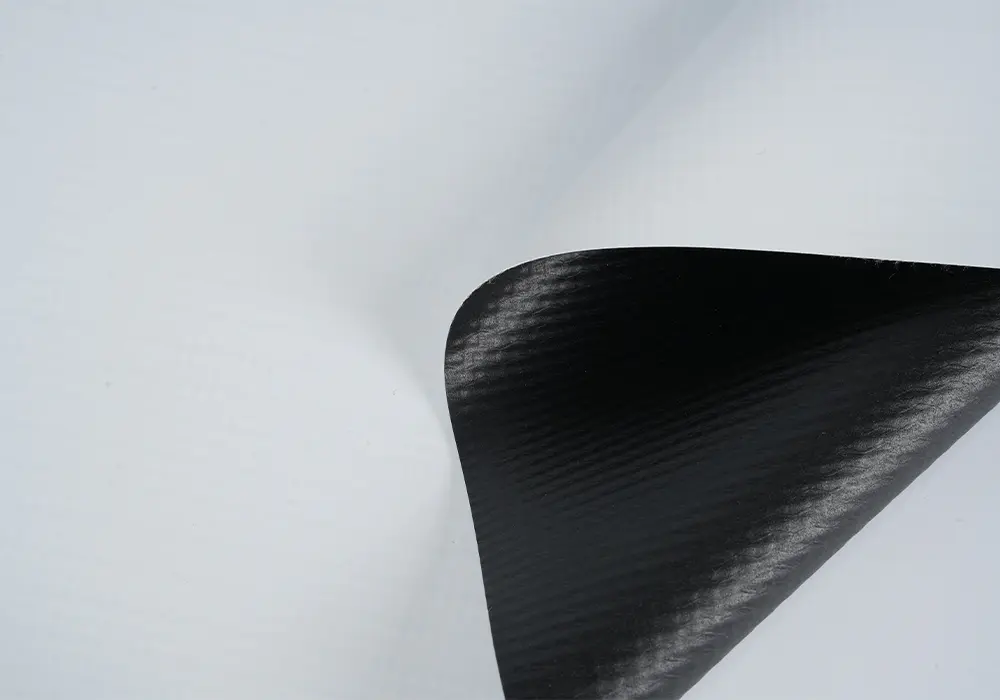
Blackback Light Block HD Printing Flex Banner Fabric
For buyers seeking strong opacity, vivid HD graphics, durable outdoor performance, and efficient handling in one banner material, this blackback light-block flex banner fabric offers a technically balanced and commercially practical choice.
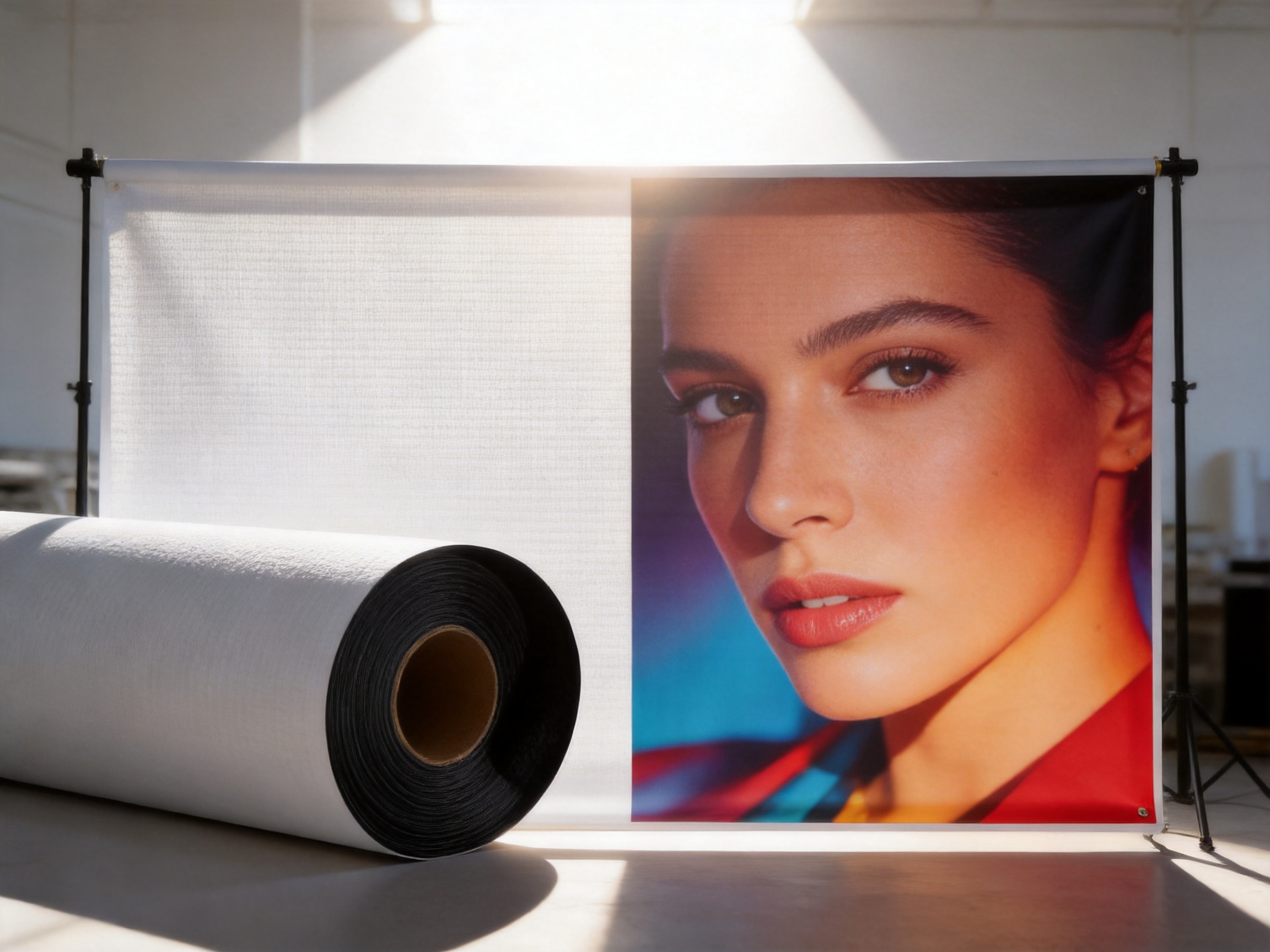
1. Product specification information supplied for Blackback Light Block HD Printing Flex Banner Fabric, including construction, weight, tensile strength, tearing strength, and peel adhesion.
2. Manufacturer information supplied for Haining Taiwei New Material Co., Ltd., including company history, product categories, production equipment, capacity, export markets, and company location.
3. General principles of coated textile construction, polymer film processing, lamination, bonding, and flexible advertising-media manufacture.
4. General guidance for digital inkjet printing, color reproduction, surface treatment, drying, curing, and print-surface evaluation.
5. General best practices for outdoor banner fabrication, edge reinforcement, eyelet installation, tensioning, storage, inspection, and maintenance.
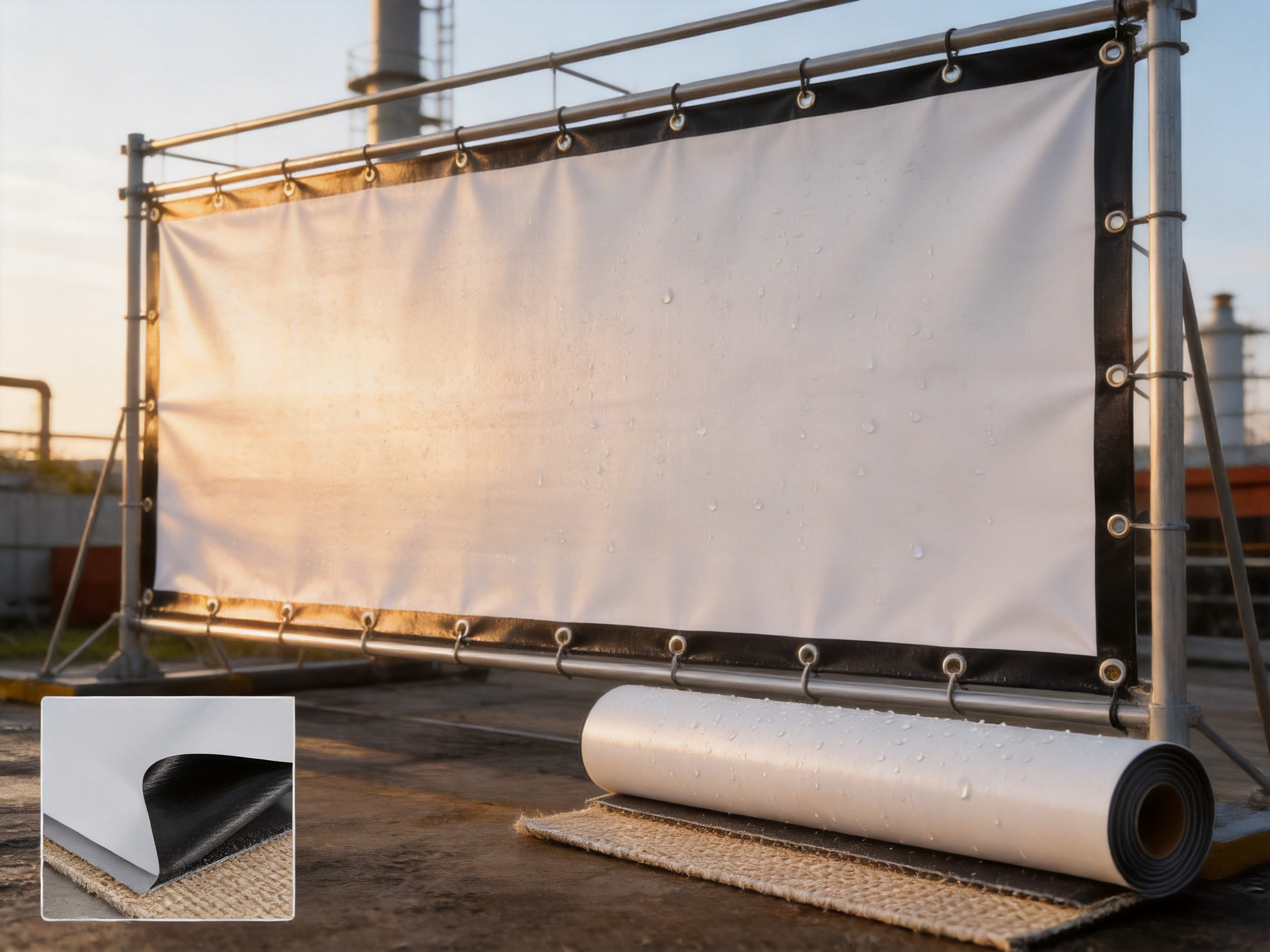
For technical purchasing decisions, users should confirm the latest product data sheet, available widths, test methods, printing compatibility, packaging requirements, and project-specific recommendations with the manufacturer before production.
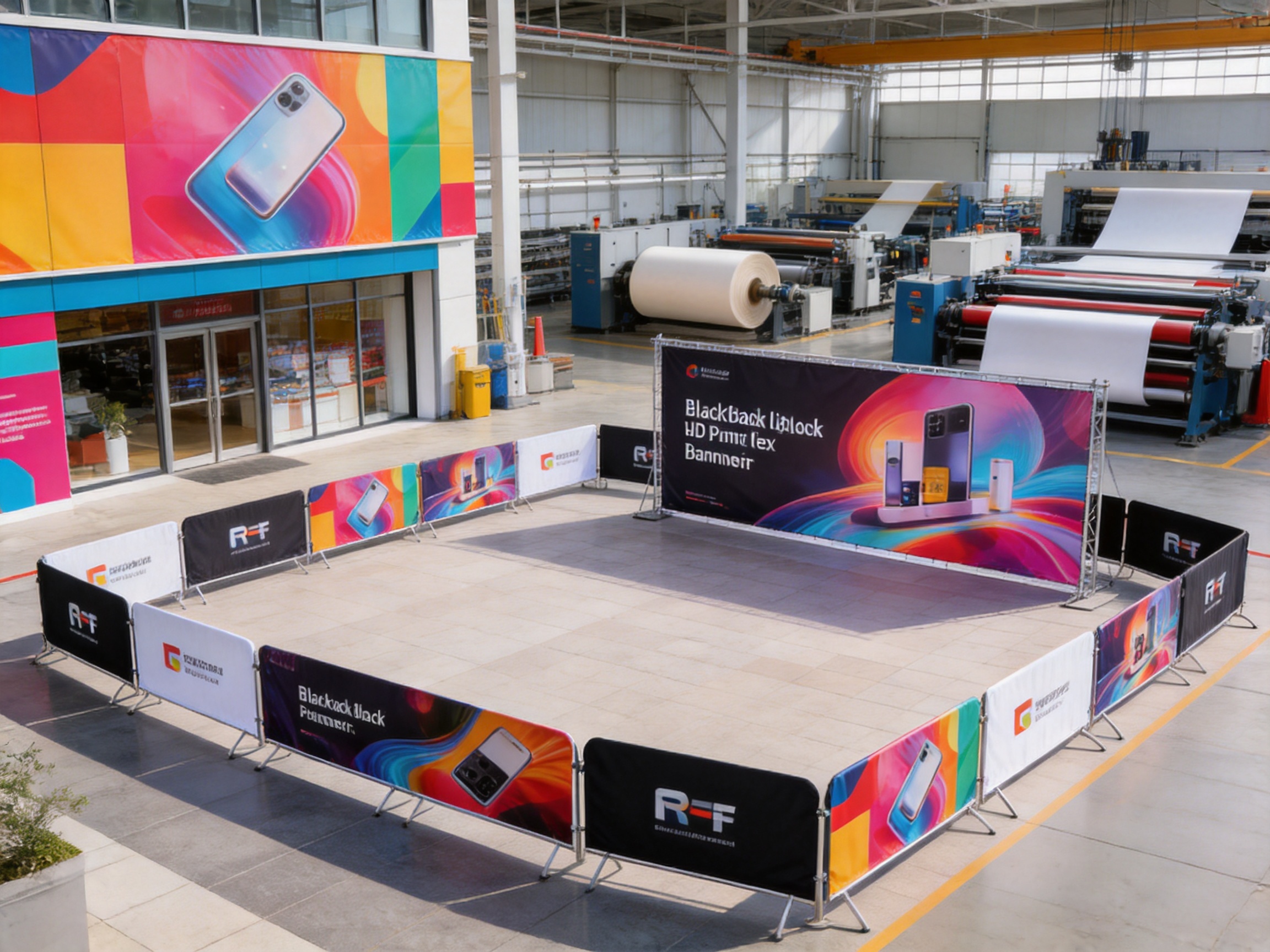 Blackback Light Block HD Printing Flex Banner Fabric
 Light Flexible Light Transmitting Flex Advertising Banner
 Light Economical Liquid Proof Tarpaulin For Medical Nursing
 Lightweight Foldable Mesh Tarpaulin for Event Promotion
 Large Format Transparent Lightweight inkjet cover Flex Banner
 Anti UV Long Lasting Blackback Outdoor flex Banner Fabric
 Custom Digital Printing Fabric Manufacturers

 Previous