

 English
 中文简体
 Español
News
Home / Author / Luo Zhen — Product After-Sales Service Specialist / Fluorescent Reflective Tarpaulin for Car Emergency Warning Triangles


Content
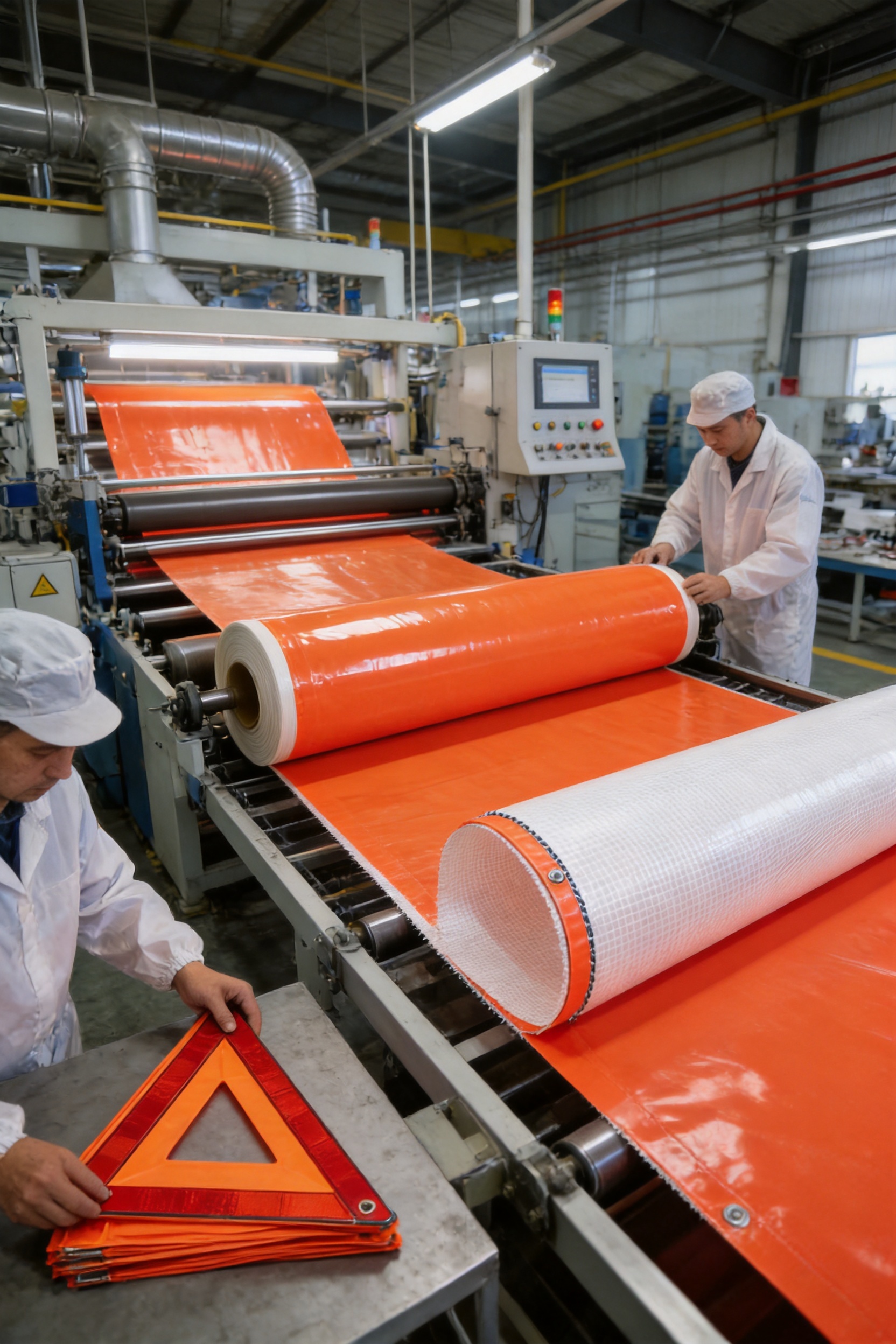
Roadside emergencies can develop within seconds. A vehicle may stop because of a flat tire, mechanical failure, collision, fuel problem, or adverse weather, leaving the driver and passengers exposed to approaching traffic. In these situations, a warning triangle is more than a basic vehicle accessory. It is a highly visible safety device that must attract attention during daylight, darkness, rain, fog, and other difficult driving conditions.
Fluorescent reflective tarpaulin is a specialized material developed for the production of emergency warning triangles and related road safety signs. It combines a bright fluorescent surface with a reflective layer, creating a warning effect that is visible in natural light and strongly illuminated when struck by vehicle headlights. At the same time, the material is lightweight, foldable, waterproof, and suitable for efficient industrial processing.
The 280gsm fluorescent reflective tarpaulin described in this article is manufactured for automotive accessory producers, road safety equipment suppliers, wholesale distributors, and vehicle emergency kit manufacturers. Its 150*200D woven construction offers a practical balance between flexibility, dimensional stability, handling convenience, and processing efficiency. The material is thin enough to fold into compact warning triangle cases, yet sufficiently stable for cutting, assembling, and high-frequency sealing.
Haining Taiwei New Material Co., Ltd. produces this type of tarpaulin as part of its broader portfolio of PVC films, digital printing fabrics, tarpaulin films, frontlit and backlit materials, mesh, and light box cloth products. With calendering equipment, multiple production lines, professional bonding facilities, and an annual output of approximately 45 million square meters, the company provides a manufacturing base for customers seeking consistent supply and customized material solutions.
An emergency warning triangle must perform a demanding combination of functions. It has to attract attention quickly, remain recognizable from a distance, withstand outdoor exposure, and fold into a vehicle storage compartment. A material that is too heavy increases the size and weight of the final kit. A material that is too soft may not support a stable sign structure. A surface that lacks reflective performance may be difficult to see when illuminated by headlights. A coating with poor weather resistance may crack, peel, fade, or lose visual impact over time.
Fluorescent reflective tarpaulin addresses these requirements through a layered performance concept. The fluorescent base provides strong daytime contrast against common roadside backgrounds such as asphalt, vegetation, soil, concrete, and overcast skies. The reflective coating responds to directed light, particularly the headlights of approaching vehicles. The fabric base contributes handling strength and dimensional stability, while the PVC-based construction provides basic waterproofing and weather resistance.
For manufacturers, the material also needs to be compatible with regular production processes. It must be cut accurately, maintain a clean edge, resist unnecessary fraying, and work with standard high-frequency sealing equipment. Stable processing behavior helps reduce rejected components, material waste, and interruptions on production lines.
These combined requirements distinguish emergency warning triangle fabric from ordinary tarpaulin used for covers, temporary shelters, truck curtains, or general outdoor protection. The target application is not simply protection from water. It is the production of a compact visual safety device where visibility, folding performance, durability, and manufacturing consistency must work together.
The fluorescent surface is designed to produce a bright, attention-getting appearance during the day. Fluorescent materials absorb portions of available ultraviolet and visible light and re-emit light in a way that makes the surface appear more vivid than standard colors. This effect is especially useful in daylight, overcast weather, roadside environments, and locations where the background may be visually complex.
A warning triangle made from a fluorescent surface can be recognized more quickly than a dull or poorly contrasting sign. The high-bright appearance helps communicate that the object is a warning device rather than ordinary roadside debris. This is important because drivers need to identify the sign and understand its meaning while continuing to monitor the road, surrounding traffic, and changing weather conditions.
Fluorescent performance is particularly valuable during transitional conditions. Early morning, late afternoon, light rain, and cloudy weather can reduce the contrast between a standard-colored object and its surroundings. A vivid warning surface helps maintain a stronger visual presence in these situations.
The color and visual intensity of the finished material may vary according to production requirements, coating formulation, substrate selection, and customer specifications. Automotive accessory manufacturers can therefore discuss the required appearance, roll width, thickness, cutting format, and finishing options before placing a production order.
Fluorescent color is primarily associated with daytime visibility, while reflective performance becomes especially important after dark. The reflective coating on this tarpaulin is designed to return incident light toward its source. When a vehicle approaches with its headlights switched on, the warning triangle can create a noticeable reflective response that helps alert the driver to a stopped vehicle or roadside hazard.
This dual-function design gives the material a practical advantage over fabrics that rely only on bright color. During the daytime, the fluorescent base provides visual prominence. At night, the reflective layer provides a separate warning effect. In foggy or hazy conditions, the reflective response can also help the sign remain more noticeable than an uncoated textile surface.
The reflective layer must remain firmly integrated with the base material during folding, handling, transportation, and outdoor use. A coating that cracks or separates easily may reduce the safety value of the finished warning triangle. The described material is developed with basic waterproof and weatherproof properties intended to help preserve the surface during exposure to rain and snow.
Reflectivity alone cannot eliminate every road risk. The final performance also depends on the geometry of the warning triangle, the placement of reflective sections, the support frame, the viewing angle, the distance from approaching vehicles, local regulations, and the condition of the completed product. For this reason, manufacturers should validate the complete warning triangle assembly rather than evaluating only the roll material.

Fluorescent Reflective Tarpaulin For Car Emergency Warning Triangle
One of the most important advantages of a 280gsm material is its balance between low weight and practical stability. Emergency warning triangles are commonly stored in vehicle trunks, side compartments, under-seat spaces, or dedicated emergency kit cases. Storage space is limited, especially in passenger cars where drivers may already carry tools, luggage, spare parts, and other equipment.
The ultra-thin profile allows the finished warning triangle to be folded into a compact package. This helps automotive accessory factories design smaller storage cases and helps vehicle owners keep the safety device available without sacrificing valuable trunk space. A compact product is also easier to include in roadside emergency kits, fleet maintenance packages, rental vehicle equipment, and commercial vehicle safety sets.
Soft foldability is equally important. A rigid or excessively heavy material may be difficult to fold repeatedly and can create bulky creases. A soft tarpaulin can be handled quickly by workers during assembly and can be packed more efficiently after final inspection. When correctly designed, the material can support compact storage while maintaining the visual shape and function of the warning triangle after deployment.
For large-volume manufacturers, lower material weight may also contribute to better shipping efficiency. More finished units can be packed into a defined carton volume, and rolls of raw material can be handled more easily during factory operations. The exact logistical advantage depends on product dimensions, packaging design, order quantity, and shipping method, but lightweight construction generally supports a more efficient supply chain.
The listed construction is tarpaulin 150*200D, 280gsm. Denier is commonly used to describe the linear density of fibers or yarns in textile-based materials. The woven framework provides a supporting structure for the coated surface and helps the sheet maintain usable dimensional stability during cutting, folding, sealing, and assembly.
The material is designed to offer light tear resistance suitable for warning triangle production. It is not intended to replace heavy-duty truck tarpaulin or industrial cover fabric in applications requiring extreme abrasion resistance, high load bearing, or long-term mechanical stress. Its purpose is to provide the appropriate performance level for a lightweight road safety sign that must be portable, foldable, and easy to process.
A stable woven framework can also improve production consistency. During die-cutting or manual cutting, excessive movement of the material can cause inaccurate shapes or uneven edges. During sealing, unstable material can make alignment more difficult. A well-balanced substrate helps factories maintain repeatable dimensions and improve the yield rate of each roll.
For product developers, the material can be evaluated together with the support frame, hinges, fasteners, reflective layout, and storage case. This system-level approach makes it possible to optimize the final warning triangle for opening speed, standing stability, folded thickness, resistance to repeated handling, and compliance testing.
Emergency warning triangles may be deployed on wet roads, during rain showers, in snow, or on damp roadside surfaces. A waterproof tarpaulin surface helps prevent water from quickly passing through the material. This protects the appearance of the fluorescent base and reduces the likelihood that moisture will affect the reflective layer during temporary outdoor use.
The weather-resistant construction also supports more reliable storage. Warning triangles may remain inside vehicles for long periods while exposed to heat, cold, humidity, and temperature changes. A suitable material should be capable of maintaining its basic appearance and functional properties during normal storage and use conditions.
Anti-aging performance is another relevant consideration. Prolonged exposure to sunlight and environmental conditions can cause some flexible materials to yellow, fade, embrittle, or lose surface adhesion. The described tarpaulin is developed with anti-aging properties intended to reduce yellowing and fading, helping the final warning sign preserve a clear and recognizable appearance.
Manufacturers should still store rolls and finished products in a clean, dry location away from direct sunlight, sharp objects, excessive heat, and aggressive chemicals. Proper packaging and storage are important because even a durable material can be damaged by unsuitable handling conditions.
Material performance is only one part of product value. Automotive accessory factories also need a fabric that can move efficiently through production. The described tarpaulin is suitable for rapid manual cutting, automated die-cutting, and standard high-frequency sealing lines. These processing options allow manufacturers to select a production method according to order volume, tooling investment, labor availability, and product design.
Manual cutting may be appropriate for samples, small orders, product development, replacement components, or customized warning triangle sizes. The lightweight sheet can be measured and cut using common factory tools. Its stable woven structure helps operators maintain consistent outlines when appropriate templates and cutting guides are used.
Large-volume producers may use automated die-cutting to improve repeatability and reduce labor requirements. A stable material can help the die maintain clean edges and accurate dimensions. Consistent cutting is especially important when the warning triangle includes multiple panels, reflective sections, mounting flaps, or components that must align during assembly.
High-frequency sealing can be used to join compatible coated material layers and create durable seams without traditional stitching in selected designs. The tarpaulin is described as compatible with standard high-frequency sealing lines, allowing manufacturers to use established equipment and production skills. Proper machine settings must be determined through testing because sealing performance depends on frequency, pressure, temperature, dwell time, electrode design, material thickness, and surface composition.
Clean processing edges help reduce loose fibers, uneven outlines, and surface cracking. A material that behaves consistently during cutting and sealing can contribute to a higher first-pass yield. Lower material waste is valuable in large-scale manufacturing because even small improvements in yield can produce significant savings across thousands or millions of units.
Factories should conduct a pre-production trial before mass manufacturing. The trial can confirm cutting speed, sealing strength, foldability, reflective appearance after processing, and compatibility with the selected frame. This approach enables adjustments before the material is committed to a full production schedule.
General-purpose tarpaulins are often designed for covering goods, protecting equipment, creating temporary barriers, or providing weather protection. They may be strong and waterproof, but they are not necessarily optimized for visual warning applications. Standard blue, green, gray, or neutral tarpaulin colors may not provide the high-contrast appearance needed for an emergency road sign.
Compared with ordinary coated fabric, fluorescent reflective tarpaulin offers a more application-specific surface. Its fluorescent color targets daytime attention, while its reflective layer supports nighttime visibility. Its lightweight construction is intended for folding and storage rather than heavy-duty load coverage. Its processing characteristics are suited to sign production and compact accessory assembly.
Compared with a separate textile base plus separately attached reflective tape, an integrated fluorescent reflective tarpaulin may simplify certain manufacturing steps. Depending on the warning triangle design, a factory may reduce the number of components, alignment operations, adhesive applications, or sewing processes. The precise benefit depends on the final construction and whether additional reflective strips are required by the applicable regulation.
Compared with very heavy PVC-coated fabric, the 280gsm version is easier to handle, cut, fold, and pack. It is better suited to portable safety equipment where excessive strength would add unnecessary weight and bulk. The appropriate choice should always be based on the completed product’s required performance, but a specialized lightweight material can deliver a more efficient balance for this application.
Haining Taiwei New Material Co., Ltd. was established in July 2010 and is located in Haining Dingqiao Industrial Park in Zhejiang Province, China. The location provides convenient access to Shanghai and Ningbo ports, supporting the movement of raw materials and finished products for domestic and international customers.
The company specializes in PVC films, digital printing fabrics, tarpaulin films, frontlit and backlit materials, double-sided printing fabrics, mesh, and other light box cloth products. This range demonstrates experience across coated flexible materials and visual communication substrates. Such experience is relevant to fluorescent reflective tarpaulin because the product requires control of substrate construction, coating, surface appearance, bonding, and roll handling.
The factory is equipped with advanced calendering equipment, multiple production lines, and professional bonding facilities. Calendering is an important process for producing consistent flexible PVC materials. It can help control thickness, surface smoothness, coating uniformity, and the integration of polymer compounds with textile reinforcement. Multiple production lines can support different material categories, specifications, and order schedules.
Professional bonding facilities are valuable when products require laminated structures, coated layers, reinforced sections, or specific surface combinations. For reflective tarpaulin, bonding quality affects the durability of the reflective surface and the behavior of the final sheet during folding, cutting, and sealing.
The company reports an annual output of 45 million square meters, indicating substantial production capacity for customers requiring regular supply. More than 98% of its products are exported to Europe, America, the Middle East, Southeast Asia, and other regions. International supply experience can support communication regarding packaging, documentation, inspection requirements, production schedules, and export logistics.
The company’s product development approach includes cold resistance, flame retardancy, UV resistance, antistatic performance, mildew resistance, and antibacterial properties across relevant product categories. Not every property automatically applies to every tarpaulin specification, so buyers should confirm the exact performance requirements for the fluorescent reflective warning triangle material. Nevertheless, this broader technical background provides a useful foundation for developing customized coated fabric solutions.

Consistent quality begins with the selection and preparation of raw materials. Resin, plasticizers, pigments, stabilizers, additives, reinforcement yarns, and reflective components must be managed according to the target specification. Variations in formulation can influence flexibility, color, gloss, adhesion, weather resistance, and processing performance.
During substrate production, manufacturers can monitor fabric construction, width, basis weight, and surface condition. During coating or calendaring, thickness and coating uniformity are important because local differences may affect folding, cutting, sealing, and appearance. The fluorescent color should remain visually consistent across the roll, while the reflective layer should be applied evenly without obvious pinholes, bare areas, wrinkles, or contamination.
Bonding and lamination require special attention. The layers must remain sufficiently attached during normal handling and outdoor exposure. Poor bonding may result in peeling, bubbling, cracking, or delamination. Samples can be inspected after folding, bending, water exposure, and accelerated aging tests to identify potential weaknesses.
Finished rolls should be checked for width, length, weight, roll tension, edge condition, surface cleanliness, color consistency, and packaging integrity. Customers may also request test data for tensile strength, tearing strength, adhesion, weather resistance, reflective performance, and other parameters relevant to the final application.
The supplied product information lists the following general specification category: tensile strength in N/5cm, tearing strength in N, and adhesion in N/5cm. The current product entry shows slash marks rather than numerical test values for these three properties. Buyers requiring formal technical documentation should request the latest technical data sheet, test report, sample results, and agreed acceptance criteria before placing a large order.
| Item | Listed Product Information | Application Relevance |
|---|---|---|
| Product type | Fluorescent reflective tarpaulin | Material for emergency warning triangles and related safety signs |
| Category | Tarpaulin | Flexible coated fabric product |
| Construction | 150*200D | Woven support structure for handling and processing stability |
| Basis weight | 280gsm | Lightweight balance for folding, storage, and manufacturing |
| Tensile strength | Not numerically provided in the supplied specification | Should be confirmed according to the final product design and test method |
| Tearing strength | Not numerically provided in the supplied specification | Relevant to handling, folding, and assembly durability |
| Adhesion | Not numerically provided in the supplied specification | Relevant to the integrity of coated and bonded layers |
| Surface functions | Fluorescent base and reflective coating | Daytime contrast and nighttime headlight visibility |
| Environmental properties | Basic waterproof, weatherproof, and anti-aging performance | Supports temporary outdoor deployment and vehicle storage |
| Processing compatibility | Manual cutting, automated die-cutting, and high-frequency sealing | Suitable for different factory production methods |
The material can be used for several warning triangle configurations. It may be cut into triangular panels, reflective borders, foldable sections, reinforcement flaps, or other components depending on the customer’s design. It may also be combined with metal, plastic, fiberglass, or other support structures that allow the sign to stand on the road.
For passenger vehicles, the product can be designed around a small storage case and a lightweight folding frame. The emphasis is generally on compactness, quick deployment, and easy return to the case after use. For commercial vehicles and fleet applications, the warning triangle may need a larger visible area, stronger support, or packaging suitable for repeated inspections and frequent use.
Manufacturers can also consider customized roll widths, cut sizes, colors, surface finishes, packaging methods, and printed instructions. Any customization should be reviewed for its effect on reflectivity, waterproofing, adhesion, folding behavior, and regulatory suitability.
When a warning triangle is sold as part of a complete emergency kit, the material can be coordinated with other components such as reflective vests, gloves, warning lamps, first-aid supplies, tire tools, and storage bags. Consistent color and surface appearance across the kit can strengthen product presentation and improve recognition of safety equipment.
Emergency warning triangles are safety-related products, and manufacturers should understand the regulations in each target market. Requirements may address triangle dimensions, reflective areas, fluorescent colors, visibility, stability, materials, labeling, packaging, and testing procedures. The applicable standard may differ between countries, regions, vehicle classes, and product categories.
The fluorescent reflective tarpaulin is described as compliant in design intent with road safety material standards and automotive warning sign requirements. However, material suitability does not automatically certify the complete warning triangle. The final product must be evaluated according to the applicable regulations and tested in its assembled form when required.
Responsible product development includes selecting a suitable material, verifying performance through documented testing, controlling production changes, and maintaining traceability. If the pigment, coating, substrate, or reflective layer changes, the manufacturer should assess whether additional validation is necessary.
Clear technical communication between the material supplier and the warning triangle manufacturer helps avoid misunderstandings. Purchase documents should define the material grade, basis weight, construction, color, surface treatment, roll dimensions, packaging, inspection method, and approved tolerance. Samples should be retained for comparison with future production lots.
Rolls should be transported and stored in a way that prevents crushing, sharp bending, puncture damage, water contamination, and prolonged exposure to direct sunlight. Heavy objects should not be placed on top of the rolls. If the material is stored for an extended period, the warehouse should be clean, dry, and reasonably ventilated.
Before cutting, the material should be allowed to reach the working environment so that temperature differences do not create unexpected changes in flexibility or dimensional behavior. Operators should use clean equipment because oil, dust, and metal particles can affect surface appearance and bonding quality.
Cutting patterns should be tested before a full production run. The manufacturer can determine the most efficient nesting arrangement to reduce offcuts while preserving the required triangle dimensions and grain direction. If the material includes directional reflective effects, the orientation of the cut pieces should be considered.
High-frequency sealing settings should be established through trial production. Excessive pressure, heat, or energy may damage the reflective surface or distort the material. Insufficient settings may produce weak seams. Finished seams should be inspected visually and, where appropriate, tested for peel or tensile strength.
Repeated folding should also be evaluated. The completed triangle should be opened and closed for a defined number of cycles to check for cracking, delamination, whitening, or loss of reflective appearance. This test is particularly useful for products intended for long-term storage in vehicle emergency kits.

Automotive accessory factories can benefit from a lightweight material that supports rapid conversion into warning triangle components. The combination of fluorescent and reflective functions may simplify material planning and reduce the need to combine multiple separate surface materials in selected designs.
Distributors can offer a product designed for passenger vehicles, commercial vehicles, roadside emergency kits, and fleet maintenance programs. Compact packaging and international export experience may support distribution across different markets, subject to local product requirements.
Vehicle manufacturers and first-tier suppliers may use the material when developing emergency equipment included with new vehicles. Consistent roll production, documented specifications, and the ability to discuss custom dimensions can help support program-based purchasing.
Companies specializing in traffic safety products can adapt the material for warning triangles, temporary hazard signs, roadside markers, and other visual warning products where fluorescent and reflective properties are valuable. The final application should be reviewed separately to confirm the necessary performance and regulatory conditions.
The principal competitive advantage of this tarpaulin is its balance of functions. Some materials may offer strong waterproofing but lack reflective performance. Others may be highly reflective but too rigid, too heavy, or difficult to process. A simple fluorescent fabric may be visible during the day but less effective under headlights. The 280gsm fluorescent reflective construction is intended to combine these features in one flexible material.
Its space-saving foldability is another important advantage. A warning triangle is useful only if it is stored in the vehicle and can be deployed when needed. Excessive bulk can discourage regular carrying or make it difficult for manufacturers to design practical emergency kits. The thin, soft structure helps address this issue.
Processing efficiency adds value at the factory level. Compatibility with manual cutting, die-cutting, and high-frequency sealing provides flexibility for different production scales. Clean conversion and stable bonding can help reduce waste, shorten processing time, and improve production consistency.
The company’s broad product experience and substantial manufacturing capacity provide additional supply-side advantages. Customers can work with a manufacturer familiar with flexible PVC materials, coated fabrics, mesh, printing substrates, lamination, and export production. This can make it easier to discuss related products or develop a material portfolio for several visual communication and safety applications.
Before purchasing, customers should define the intended warning triangle size, support frame, folded dimensions, storage case, target market, and expected production volume. These details influence the appropriate material width, roll length, cutting layout, and final performance requirements.
The required fluorescent color and reflective appearance should be confirmed through physical samples. Digital images and screen displays cannot fully reproduce surface brightness or nighttime reflectivity. Buyers should evaluate samples under daylight, low light, vehicle headlight illumination, wet conditions, and repeated folding.
Technical discussions should also cover thickness or basis weight tolerance, fabric construction, adhesion, tear resistance, tensile performance, waterproofing, aging behavior, packaging, and delivery schedule. If the customer requires special flame retardancy, UV resistance, antistatic performance, mildew resistance, or antibacterial treatment, these requirements should be identified before production.
A sample approval process is recommended for larger orders. The approved sample can serve as a reference for color, surface appearance, flexibility, coating adhesion, and processing performance. The customer and supplier can then establish inspection procedures and acceptable tolerances for mass production.
It is primarily used to manufacture car emergency warning triangles and other road safety signs that require high daytime visibility and nighttime reflection. It may also be considered for selected hazard markers and temporary warning products after application-specific testing.
It refers to the approximate material weight per square meter. A 280gsm construction provides a lightweight profile that is suitable for folding and compact storage while maintaining a practical level of stability for cutting and assembly.
It identifies the general denier construction of the woven support framework. The exact interpretation and tolerance should be confirmed through the supplier’s technical data sheet, but the construction is intended to support handling, dimensional stability, and light tear resistance.
The material is designed to be thin and soft for compact folding. The finished warning triangle should still be tested through repeated opening and folding because performance depends on the fold radius, frame design, storage method, temperature, and sealing layout.
It has basic waterproof and weatherproof properties intended for temporary outdoor exposure in rain and snow. Waterproof performance should be verified according to the customer’s selected test method and the requirements of the complete warning triangle.
The fluorescent base helps provide daytime visual contrast, while the reflective coating can respond to directed light. These features may improve visibility in foggy or hazy conditions, although actual performance depends on fog density, viewing distance, headlights, sign position, and road conditions.
Yes. The material is described as suitable for automated die-cutting as well as manual cutting. Production trials should be performed to select the correct blade, die pressure, feed speed, nesting layout, and handling method.
It is designed to be compatible with standard high-frequency sealing lines. The best machine settings depend on the equipment and final product design, so the factory should validate seam strength and surface appearance before mass production.
The supplied product information lists tensile strength, tearing strength, and adhesion as specification categories but does not provide numerical values. Customers should request current test data and agree on the required test methods and acceptance limits before ordering.
No material should be assumed to satisfy every national requirement automatically. The warning triangle must be evaluated according to the laws and standards of the intended market. The supplier can provide technical information and samples, while the final product manufacturer remains responsible for completing the required compliance process.
Customers can discuss possible customization of width, color, surface treatment, roll format, packaging, and related technical requirements. Custom features should be confirmed through samples and tested to ensure that they do not reduce reflectivity, adhesion, foldability, or waterproof performance.
It is developed specifically for visual warning applications. In addition to a flexible coated construction, it combines a fluorescent base with a reflective coating and is optimized for compact folding, lightweight handling, and sign-making processes.
Store rolls in a clean, dry place away from direct sunlight, excessive heat, moisture, sharp objects, and chemicals. Avoid crushing the rolls or placing heavy loads on them. Finished warning triangles should also be kept in protective cases whenever possible.
Haining Taiwei New Material Co., Ltd., located at No. 20-1, Fenghuang Road, Qianjiang Industrial Park, Dingqiao Town, Haining City, Zhejiang Province, China, manufactures PVC films, digital printing fabrics, tarpaulin films, mesh, light box cloth, and related flexible materials. Customers can contact the company to discuss samples, specifications, production capacity, and export requirements.
Fluorescent reflective tarpaulin provides a practical material solution for car emergency warning triangles that must remain visible, portable, weather-resistant, and easy to manufacture. Its bright fluorescent base supports daytime recognition, while the reflective coating helps the finished sign attract attention under vehicle headlights at night. The 280gsm 150*200D construction adds lightweight stability without creating unnecessary storage bulk.
For manufacturers, the product offers compatibility with manual cutting, automated die-cutting, and high-frequency sealing. Its thin and soft profile supports compact folding, while its waterproof, weatherproof, anti-aging, and light tear-resistant properties are suited to temporary roadside deployment and long-term vehicle storage.
Haining Taiwei New Material Co., Ltd. adds manufacturing capacity, flexible PVC processing experience, calendering equipment, multiple production lines, professional bonding facilities, and international export experience. Its broader product portfolio enables customers to discuss related coated fabric requirements and develop customized solutions for different safety, signage, printing, and outdoor applications.
For the best result, buyers should evaluate the complete warning triangle assembly, confirm applicable market standards, request numerical technical data where needed, approve production samples, and establish clear inspection criteria. With appropriate product design and quality control, fluorescent reflective tarpaulin can help manufacturers create compact emergency warning equipment that is more visible, easier to process, and better suited to modern vehicle safety kits.
1. General principles of high-visibility safety clothing and warning materials, including the use of fluorescent and retroreflective surfaces.
2. International road safety sign and vehicle emergency equipment requirements applicable to warning triangles and roadside hazard indicators.
3. Technical guidance for PVC-coated textile manufacturing, calendering, lamination, bonding, and flexible material quality control.
4. Standard laboratory methods for evaluating tensile strength, tear strength, coating adhesion, water resistance, weather aging, and reflective performance.
5. Industrial guidance for high-frequency sealing of coated flexible films and reinforced textile substrates.
6. Automotive emergency equipment design practices covering portability, folding durability, storage efficiency, visibility, and roadside deployment.
Fluorescent Reflective Tarpaulin For Car Emergency Warning Triangle
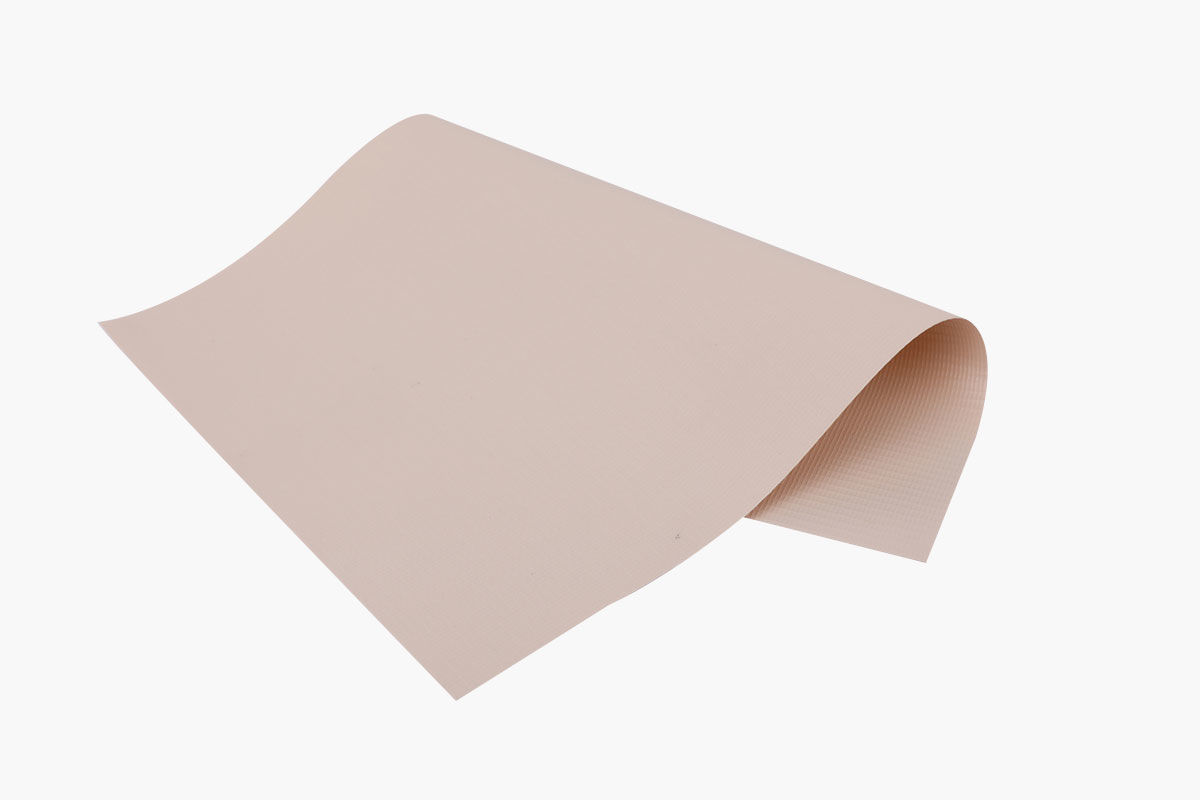 Heavy-Duty Reinforced Waterproof Tarpaulin
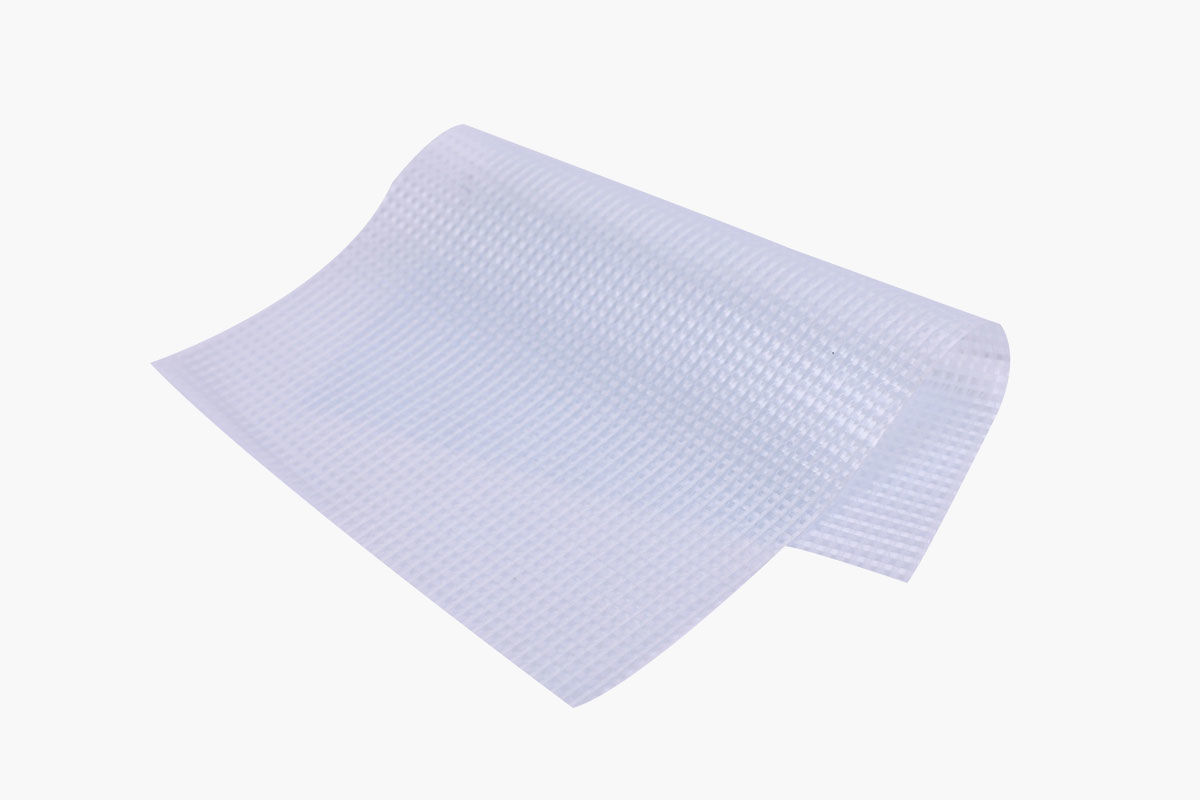 Industrial-Grade Reinforced UV-Resistant Clear Tarpaulin
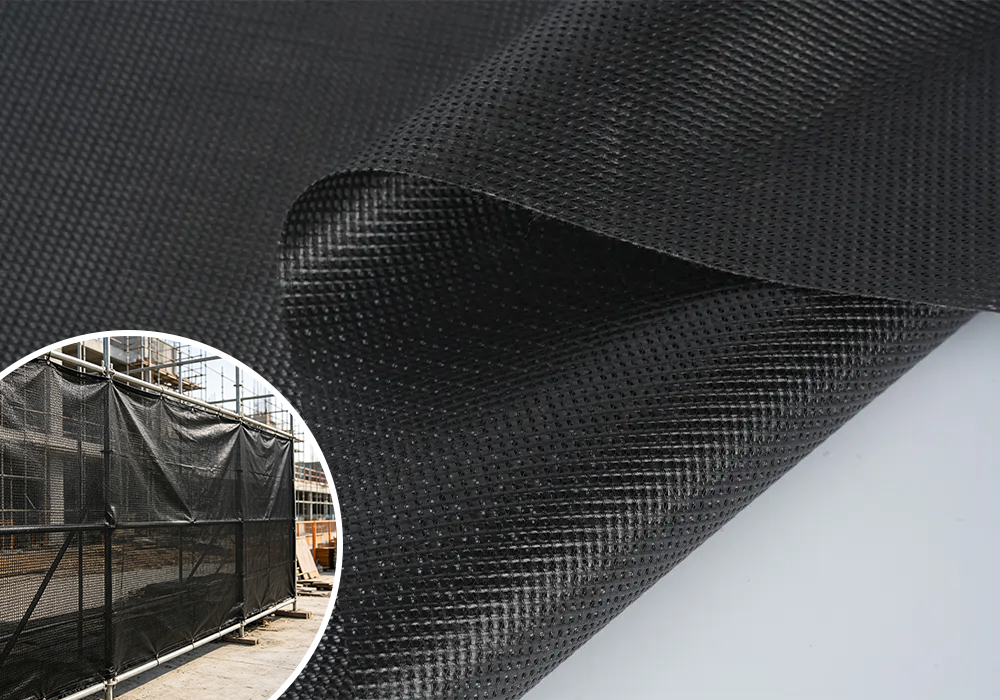 All Weather Heavy Duty Mesh Tarpaulin for Barrier Fencing
 Lightweight Foldable Mesh Tarpaulin for Event Promotion
 Dense Weave Light Block Mesh Tarpaulin for Commercial Display
 Custom Digital Printing Fabric Manufacturers

 Previous