

 English
 中文简体
 Español
News
Home / Author / Shen Yaqin — International Sales Manager / Medium-Thick Clear High-Strength Tarpaulin for Medical Isolation


Content
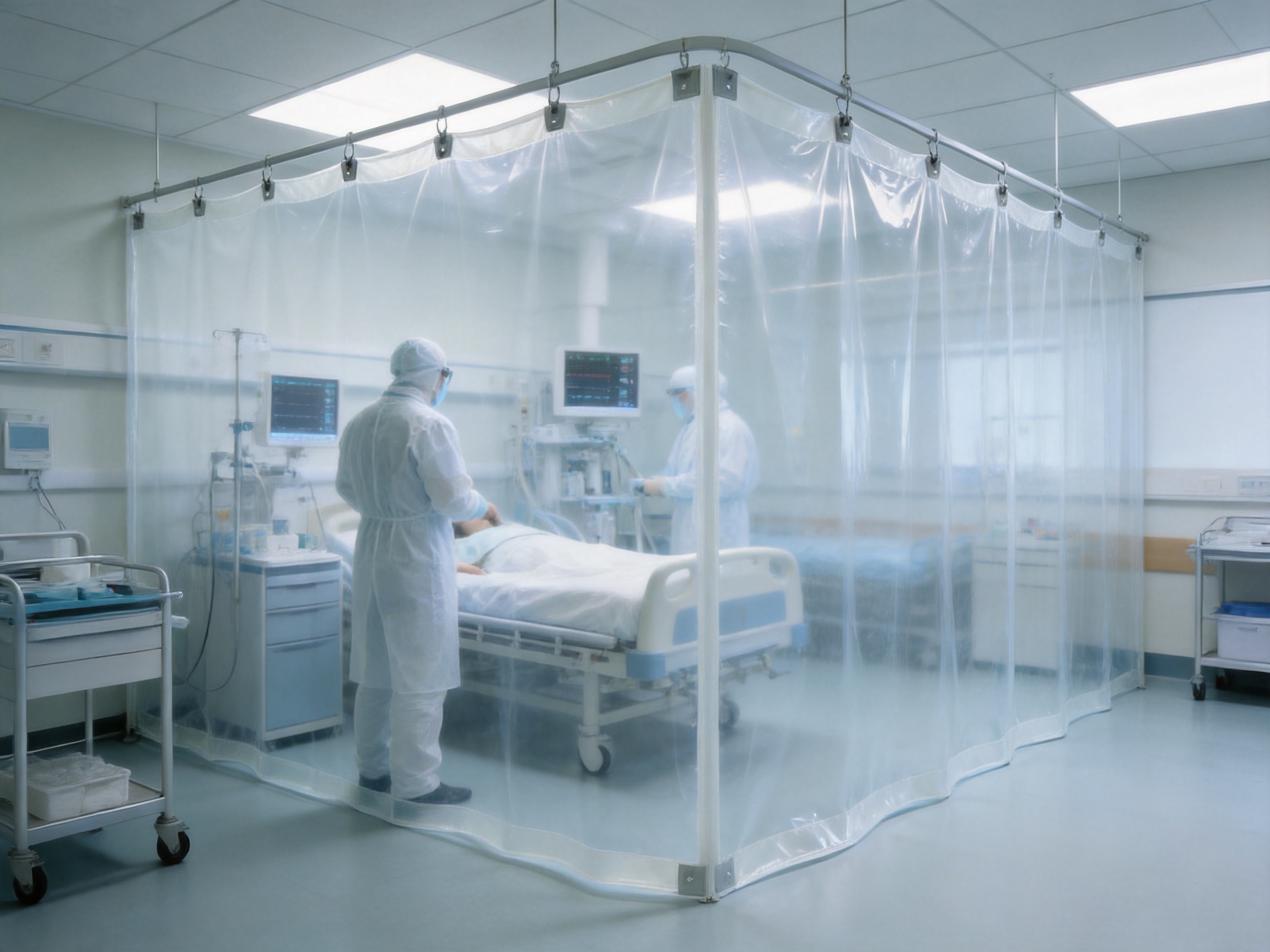
Medical isolation areas require more than a temporary visual divider. They need a reliable material that can create a controlled separation, withstand frequent handling, resist liquid penetration, and remain stable throughout extended use. At the same time, medical facilities often need visibility through the barrier so that staff can monitor activity, equipment, and patient movement without repeatedly opening or removing the partition. Medium-thick clear high-strength tarpaulin is designed to meet this combination of requirements.
This technical tarpaulin combines clear visual performance with a reinforced industrial construction. Its medium-thick structure is stronger and more stable than thin transparent films, while remaining sufficiently flexible for heat sealing, hot-wedge splicing, and heavy-duty sewing. The result is a practical material for medical ward separation, emergency isolation spaces, temporary treatment areas, equipment dust protection, and other controlled environments where transparency and physical durability must work together.
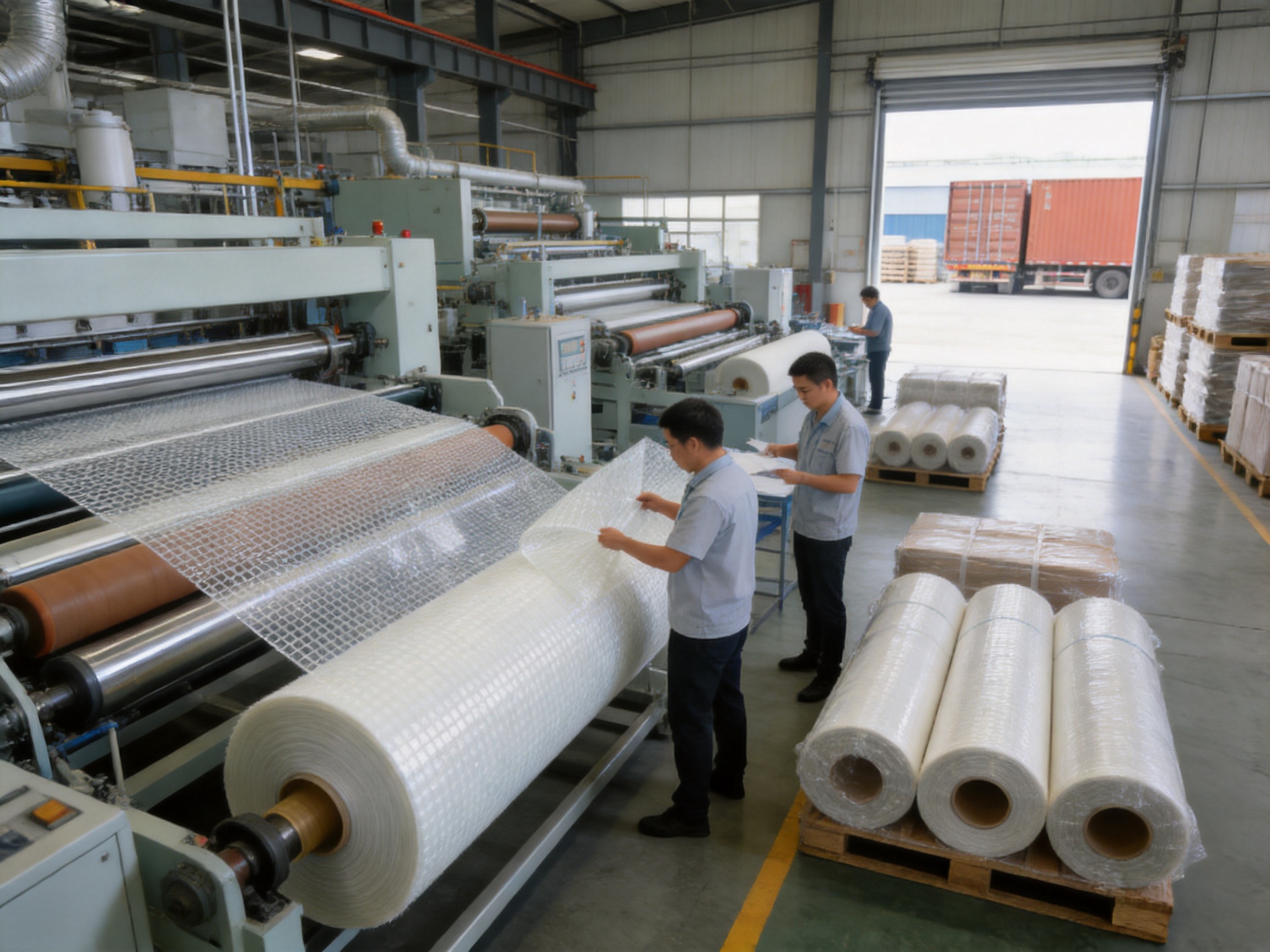
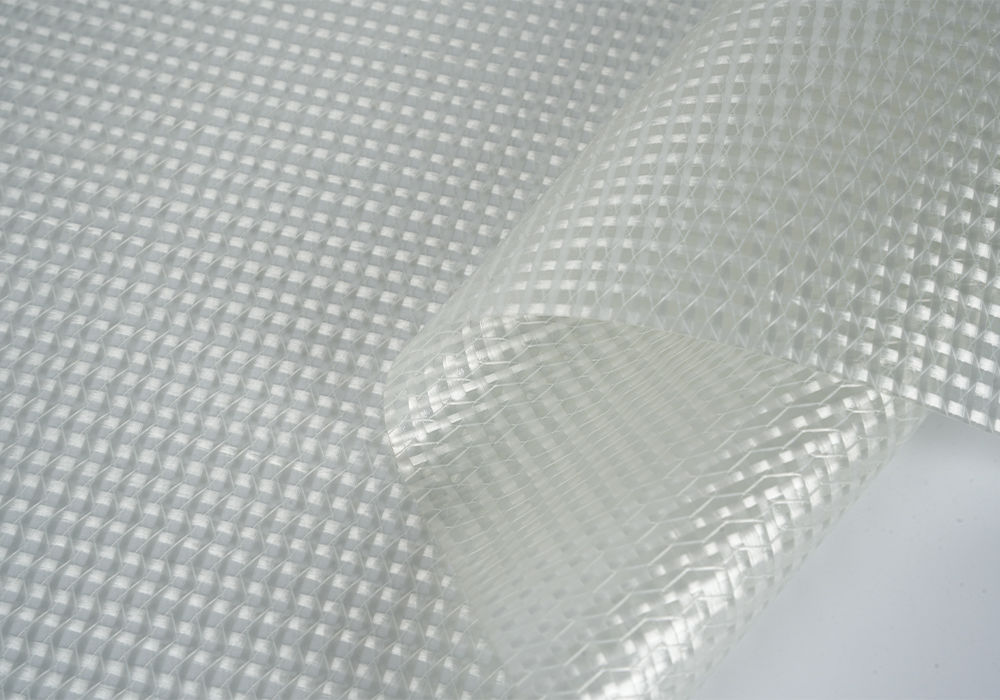
Manufactured by Haining Taiwei New Material Co., Ltd., the product uses a 1000D × 1300D, 6 × 6 industrial mesh skeleton and has a stated weight of 375 gsm. The reinforcement helps prevent excessive stretching, sagging, and bowing after long-term hanging. The clear surface provides visual access, while the dense coated structure forms a barrier against medical fluids and supports repeated sanitizing wiping.
For hospitals, medical equipment distributors, temporary healthcare contractors, and international buyers, this product offers a balanced alternative to both lightweight clear films and opaque heavy-duty tarpaulins. It is engineered to provide practical strength without sacrificing the transparency required for efficient medical observation and space management.
Medium Thick Clear High Strength Tarpaulin For Medical Isolation
Isolation barriers are used in many healthcare situations. Hospitals may need to divide wards, establish emergency treatment zones, protect clean areas from contaminated traffic, or separate equipment from dust and incidental splashing. During renovation, seasonal outbreaks, emergency admissions, or capacity expansion, permanent construction is not always practical. A flexible tarpaulin partition can be installed rapidly and adapted to changing floor plans.
However, ordinary partition materials may not meet the needs of a medical environment. Thin plastic sheets can become loose, tear around attachment points, or develop folds that interfere with visibility. Fabric curtains may absorb moisture or require more complex cleaning. Opaque tarpaulins can provide physical separation but prevent staff from observing activity on the other side. A clear, reinforced coated textile addresses these limitations by combining a visible barrier with a stronger structural body.
Transparency supports workflow efficiency. Medical personnel can check movement, equipment status, and general conditions without opening a curtain or entering a separated zone. Supervisors can monitor a temporary isolation area more easily, and patients may experience less of the closed-in feeling associated with opaque barriers. In emergency environments, visual access can also help staff identify changing conditions quickly.
Transparency alone, however, is not enough. A medical isolation barrier may remain suspended for days or weeks. It can be pulled during installation, exposed to repeated wiping, moved for access, and subjected to tension from hanging hardware. If the material stretches or sags, the partition may lose its intended shape. If it tears, liquid resistance and separation performance can be compromised. The medium-thick reinforced construction is therefore central to the product’s value.
The clear medical isolation tarpaulin is a medium-thick coated technical textile designed for applications requiring a combination of transparency, strength, cleanability, and processing flexibility. It is suitable for producing large partitions, enclosed barriers, temporary screens, protective covers, and equipment dust shields.
| Product Attribute | Specification or Performance Description |
| Product type | Medium-thick clear high-strength tarpaulin |
| Recommended application | Medical isolation partitions, ward separation, emergency isolation, equipment dust protection |
| Mesh construction | 1000D × 1300D, 6 × 6 industrial mesh skeleton |
| Product weight | 375 gsm |
| Tensile strength | 700/750 N per 5 cm |
| Tearing strength | 230/250 N |
| Adhesion | 70 N per 5 cm |
| Processing methods | High-frequency thermal welding, hot-wedge splicing, and heavy-duty sewing |
| Surface characteristics | Clear appearance with dense liquid-barrier performance |
| Functional properties | Anti-mildew, flame-retardant, anti-static, and mild UV resistance as specified for the product range |
The listed technical values provide buyers with an initial basis for material selection and product comparison. Actual performance may depend on production conditions, finished dimensions, attachment design, environmental exposure, cleaning agents, and the construction method used by the fabricator. For large projects, customers can request project-specific technical confirmation and processing recommendations before mass production.
The most important structural feature of this tarpaulin is its industrial mesh skeleton. The 1000D × 1300D, 6 × 6 construction provides a strong internal framework that supports the coated clear material. This reinforcement is designed to distribute tension across the sheet rather than allowing the surface coating to carry all of the mechanical load by itself.
Thin clear films can be attractive because they are lightweight and easy to handle, but their limited structural support may become a disadvantage when used in wide or tall partitions. After long-term hanging, a thin sheet may stretch between suspension points, form a pronounced curve, or develop stress around fasteners. These changes can make the barrier look untidy and may increase the risk of tearing during later adjustment.
The reinforced construction helps the medium-thick tarpaulin retain a more stable shape. It is engineered to reduce stretching, sagging, and bowing in applications where the material must remain suspended for extended periods. Stable geometry is particularly valuable in hospitals because it can reduce the need for repeated adjustment and maintenance. A partition that remains properly aligned is easier to clean, easier to inspect, and less likely to interfere with nearby beds, carts, or equipment.
Strength is also important at the edges and around connection points. Medical partitions may use ropes, webbing, eyelets, rails, hooks, or sewn hems. A reinforced base fabric gives converters a stronger platform for incorporating these features. The final result still depends on the quality of edge construction and hardware installation, but the tarpaulin provides a more capable starting material than unsupported transparent film.
The product’s stated tensile strength of 700/750 N per 5 cm and tearing strength of 230/250 N indicate a material designed for demanding handling. These values are relevant when evaluating whether a finished partition can withstand installation tension, movement, and routine use. Buyers should also consider the planned span, suspension spacing, wind or airflow conditions, and the type of edge reinforcement used in the final assembly.
One of the product’s major advantages is its clear appearance. In medical environments, visibility supports better communication and observation. Staff can see whether a partitioned area is occupied, observe equipment indicators from outside the zone, and maintain awareness of movement without constantly opening the barrier.
Clear material can also help preserve natural or artificial light distribution. A transparent partition allows light to pass through, which may reduce the need for additional lighting in temporary spaces. This can be useful when converting part of a ward, corridor, treatment room, or equipment area into an isolated zone.
Compared with opaque tarpaulin, clear tarpaulin can make a temporary environment feel less restrictive. Patients and staff may retain a stronger sense of orientation, while authorized personnel can communicate visually across the barrier. This does not replace formal medical observation procedures, but it can support more efficient day-to-day operation.
The clear surface is not intended to eliminate privacy requirements. In applications where full privacy is necessary, the material can be combined with opaque sections, printed markings, curtains, or modular panels. This allows project designers to create hybrid barriers that provide visibility where it is useful and visual screening where privacy is required.
The degree of transparency and visual appearance may vary with lighting, viewing angle, surface condition, and the presence of reinforcement. Buyers should evaluate a physical sample when color neutrality, visibility, or appearance is critical to a project. Sample testing is especially useful when the tarpaulin will be used beside medical lighting, high-intensity lamps, or reflective equipment.
A medical isolation barrier must help separate spaces from incidental splashes, contaminated liquid contact, and routine cleaning moisture. The dense coated structure of this tarpaulin is designed to block medical fluid penetration and create a continuous, easy-to-wipe surface. This makes it more suitable for controlled medical environments than many ordinary woven fabrics.
The surface can support repeated sanitizing wiping when the correct cleaning procedure is used. A smooth coated layer generally allows operators to remove surface contamination more efficiently than an absorbent textile. It also reduces the likelihood that moisture will remain trapped within the material structure. For hospitals and contractors, this contributes to a more manageable routine cleaning program.
Cleaning compatibility must always be confirmed with the responsible infection-control department and the selected disinfectant supplier. Different disinfectants may contain alcohols, chlorine compounds, hydrogen peroxide, quaternary ammonium compounds, or other active ingredients. Concentration, temperature, contact time, wiping pressure, and drying conditions can affect the service life of any coated textile.
Before full-scale use, a small sample should be tested with the intended cleaning process. The test should check for surface tackiness, whitening, cracking, loss of clarity, color change, delamination, or reduced adhesion. A cleaning protocol should also specify the use of clean tools, suitable wiping direction, drying time, and inspection frequency.
The product’s liquid-barrier performance is valuable for partitions and protective covers, but it should not automatically be interpreted as a substitute for certified medical protective clothing, sterile packaging, or a regulated fluid-resistant barrier system. The final application, local regulations, and required certification determine whether the finished product is appropriate for a particular clinical use.
Medical facilities often require non-standard dimensions. A small examination area may need a compact screen, while an emergency isolation zone may require a large continuous partition with multiple access points. The ability to process the tarpaulin efficiently is therefore an important advantage.
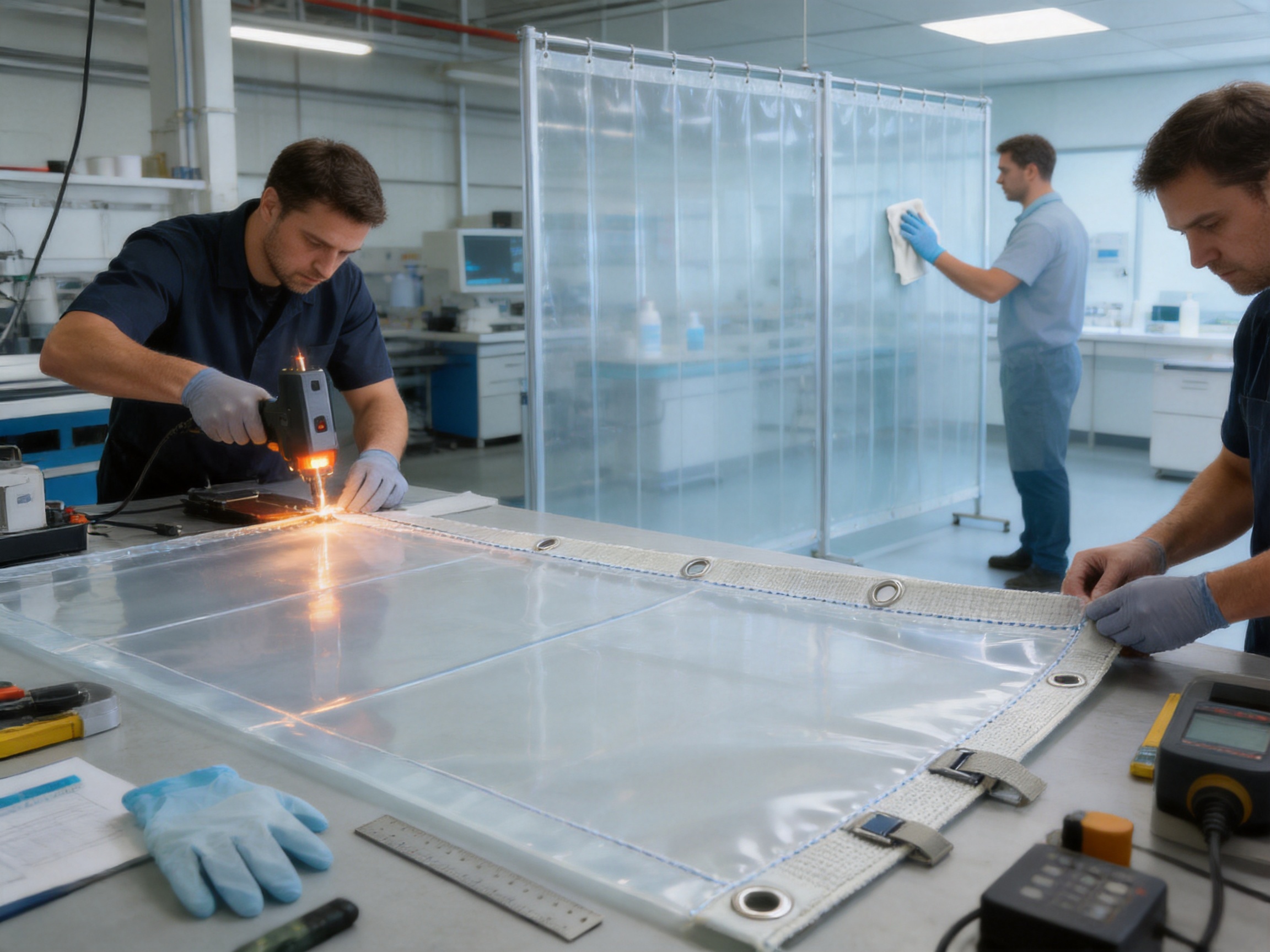
The material supports high-frequency thermal welding, hot-wedge splicing, and standard heavy-duty sewing. High-frequency welding can create clean, consistent seams in compatible coated materials. It is useful for producing continuous joints, sealed edges, reinforced pockets, and large panels. Hot-wedge splicing is suitable for long seams and large-format fabrication, especially when production lines need repeatable joining performance.
Heavy-duty sewing provides another practical option. Sewn construction can be used when a project requires hems, webbing, zippers, hook-and-loop components, curtain folds, eyelet reinforcement, or connection points that are easier to assemble mechanically. In some designs, welding and sewing may be combined so that each method is used where it offers the best performance.
Processing flexibility helps manufacturers produce oversized medical partitions without relying on a single fabrication method. It also supports different project requirements, including hanging curtains, framed panels, roll-up barriers, temporary enclosures, and protective equipment covers.
For high-volume production, stable processing behavior can improve material utilization and production yield. Fabricators can standardize cutting patterns, seam widths, reinforcement details, and inspection procedures. This helps distributors and contractors offer repeatable finished products across multiple hospital projects.
Before fabrication, converters should confirm welding temperature, pressure, dwell time, hot-wedge speed, sewing needle selection, thread type, seam allowance, and reinforcement layout. These settings depend on equipment and finished-product design. A production trial is recommended for large orders or technically demanding constructions.
Thin clear tarpaulin can be suitable for short-term, low-stress uses where low weight and economical installation are the primary concerns. It may work well for brief weather protection, temporary visual screening, or small covers. However, it may not provide the same stability for large medical partitions that remain suspended for long periods.
The medium-thick version is designed to bridge the gap between transparency and structural performance. It provides a stronger internal skeleton, higher stated tensile and tear resistance, and better resistance to deformation under sustained hanging. This can reduce the risk of early replacement and lower labor associated with repeated repositioning.
| Evaluation Factor | Thin Clear Film or Tarpaulin | Medium-Thick Reinforced Clear Tarpaulin |
| Visual visibility | Generally clear | Clear with reinforced industrial construction |
| Long-term hanging stability | May stretch or sag depending on design | Engineered to reduce stretching, sagging, and bowing |
| Resistance to handling | More vulnerable to puncture or tearing in demanding use | Higher structural support for repeated handling |
| Large-format fabrication | May require additional reinforcement | Suitable for welding, splicing, and heavy-duty sewing |
| Cleaning and wiping | Depends strongly on coating and thickness | Dense coated surface supports repeated sanitizing wiping when compatible procedures are used |
| Best application profile | Short-term or lower-stress screening | Extended medical partitions and protective barriers |
This comparison does not mean that every thin product is unsuitable or that every medium-thick product will perform identically in all environments. Design, installation, coating formulation, and maintenance remain important. The advantage of the reinforced medium-thick structure is that it provides a wider performance margin for demanding applications.
Opaque heavy-duty tarpaulin may deliver strong physical protection, but it prevents users from seeing through the barrier. In a medical setting, this can complicate observation and communication. Staff may need to open the partition more frequently, increasing movement through the controlled area.
Clear reinforced tarpaulin offers a different balance. It maintains a visible separation while retaining the strength associated with an industrial mesh-backed construction. This makes it suitable when a facility needs both a physical barrier and ongoing visual awareness.
The product can also be used as part of a combined system. Opaque panels may be positioned at patient-bed level for privacy, while clear sections are installed above or in observation zones. Clear panels can also be placed around equipment areas so that machines remain visible while protected from dust, incidental splashes, and unnecessary contact.
Hospitals and clinics can use the tarpaulin to divide larger wards into smaller functional areas. A clear partition may help create a temporary separation during renovation, infectious disease control, bed reorganization, or changes in patient capacity. Because the material is available for large-format processing, fabricators can produce panels that match the layout of the facility.
During emergency response, hospitals may need to establish controlled zones quickly. Tarpaulin partitions can be produced as modular screens, hanging curtains, or framed barriers. The clear surface helps staff observe the area while the reinforced structure supports rapid installation and repeated handling.
Medical centers, field clinics, and temporary treatment facilities may require flexible room divisions. A clear tarpaulin enclosure can help separate consultation, triage, or treatment areas without the cost and time associated with permanent walls. The material’s welding and sewing compatibility also allows doors, overlaps, sleeves, and service openings to be incorporated into the finished structure.
Medical equipment can be vulnerable to dust during construction, relocation, or storage. Clear tarpaulin covers allow technicians to see the protected equipment while reducing exposure to airborne particles and incidental moisture. The material can be fabricated into fitted covers, hanging curtains, or enclosure panels.
Controlled workspaces may need temporary separation during maintenance or workflow changes. The tarpaulin can be used as a flexible visual barrier where the applicable facility requirements permit its use. Any laboratory or pharmaceutical application should be reviewed against the site’s specific contamination-control procedures and regulatory requirements.
Mobile treatment units and emergency vehicles may require lightweight but durable partitions. The product can be adapted into roll-up screens, foldable sections, or removable covers. Designers should account for vibration, limited space, cleaning frequency, and attachment hardware in mobile applications.
The product information identifies anti-mildew, flame-retardant, and anti-static performance as part of the technical textile’s functional profile. These properties can provide additional value in medical and institutional environments, where moisture, electrical equipment, and fire-safety considerations may be present.
Anti-mildew performance is relevant in areas with high humidity, repeated wiping, limited ventilation, or temporary storage. Reducing the tendency for mildew growth can help preserve appearance and support more hygienic material management. Nevertheless, the tarpaulin should be cleaned, dried, and stored properly. No additive can compensate for prolonged wet storage or poor ventilation.
Flame-retardant performance may help reduce the risk of rapid flame spread when the product is used in a facility with defined fire-safety requirements. The required test method and classification vary by country, building type, and application. Buyers should request the relevant test documentation and confirm that the finished construction, including thread, webbing, printing, and accessories, meets the project’s required classification.
Anti-static performance can be beneficial around electronic medical equipment or in areas where static charge must be controlled. The actual performance depends on humidity, grounding, surface contamination, installation, and the design of the complete system. If static control is critical, the finished barrier should be tested under the expected operating conditions.
The tarpaulin provides mild UV resistance intended to slow yellowing and aging. This can be useful when partitions or protective covers are exposed to daylight, window light, or temporary outdoor conditions. Improved resistance helps preserve the material’s appearance and reduces premature degradation compared with an unprotected clear film.
UV exposure varies significantly between indoor and outdoor environments. Direct sunlight, altitude, season, geographic location, temperature, and exposure duration all influence aging. The product is primarily suited to medical and institutional applications, but if it is used outdoors for an extended period, buyers should confirm the expected service life and any project-specific UV requirements.
Clear materials may show visual changes more readily than opaque materials because yellowing, haze, and surface aging are easier to notice. Proper storage before installation, avoidance of unnecessary sunlight exposure, and regular inspection can help preserve appearance. Cleaning should be performed with compatible products so that the surface is not weakened by aggressive chemicals.
Haining Taiwei New Material Co., Ltd. was established in July 2010 and operates in Haining Dingqiao Industrial Park, Zhejiang Province, China. Its location provides access to transportation routes serving Shanghai and Ningbo ports, which supports export-oriented production and international order fulfillment.
The company specializes in PVC films, digital printing fabrics, tarpaulin films, frontlit and backlit materials, double-sided printing fabrics, mesh, and other light box cloth products. This broad product portfolio is relevant to the clear medical isolation tarpaulin because it reflects experience with coated flexible materials, industrial textile structures, surface treatment, and roll-based production.
The factory is equipped with advanced calendering equipment, multiple production lines, and professional bonding facilities. Calendering is an important process for producing consistent coated flexible materials. It helps combine polymer compounds and textile reinforcement into a controlled structure while managing thickness, surface appearance, and material uniformity.
Multiple production lines provide flexibility for different specifications, widths, weights, colors, and technical requirements. They can also support capacity planning for repeated orders and project-based demand. Professional bonding facilities support seam and lamination-related production needs, helping the company serve customers that require fabricated or fabrication-ready materials.
The company reports an annual output of 45 million square meters, demonstrating substantial production capacity for distributors, contractors, and large commercial projects. More than 98% of its products are exported to Europe, America, the Middle East, Southeast Asia, and other regions. This export experience is valuable for customers who need documentation, packaging, communication, and production coordination for international supply chains.
Production begins with the preparation of polymer compounds, additives, and industrial mesh reinforcement. The formulation must be selected according to the desired flexibility, clarity, adhesion, flame-retardant properties, anti-mildew performance, anti-static behavior, and resistance to environmental exposure. Consistent raw material preparation helps reduce variation between production batches.
The 1000D × 1300D, 6 × 6 mesh skeleton serves as the internal structural framework. Correct alignment is important because uneven mesh placement can affect tensile behavior, cutting accuracy, visual uniformity, and finished-product stability. Industrial production controls help maintain consistent mesh positioning across the roll width and length.
During calendering, the prepared polymer material is formed and combined with the textile reinforcement under controlled pressure and temperature. The process influences the finished thickness, surface smoothness, adhesion, clarity, and overall appearance. For a clear medical isolation tarpaulin, balanced processing is necessary because excessive surface defects may reduce visibility, while insufficient bonding may weaken the finished material.
Functional additives and surface treatments may be incorporated to provide the specified characteristics, including mild UV resistance, anti-mildew performance, flame retardancy, and anti-static behavior. These properties should be evaluated through appropriate testing rather than assumed solely from the formulation. Customers requiring regulated applications should request the applicable reports and declarations.
After forming, the material is cooled and rolled under controlled tension. Correct winding helps prevent wrinkles, telescoping, edge damage, and unnecessary deformation. Stable roll formation is especially important for downstream converters that use automated cutting, welding, printing, or sewing equipment.
Quality inspection may include checking width, weight, thickness, appearance, clarity, tensile strength, tearing strength, adhesion, surface defects, and roll condition. Production samples can also be evaluated for welding, sewing, wiping, and cleaning behavior. For project orders, an agreed inspection standard can help align the manufacturer, distributor, converter, and end user.
International buyers often require more than a technically suitable material. They need reliable communication, repeatable quality, production capacity, packaging discipline, and support with customization. Haining Taiwei New Material Co., Ltd. has built its business around export manufacturing, with products supplied to Europe, America, the Middle East, Southeast Asia, and other markets.
Its broad product range allows customers to consolidate related sourcing needs. A buyer may require clear isolation tarpaulin together with mesh, PVC film, digital printing fabric, frontlit material, backlit material, or other flexible coated products. Working with a manufacturer familiar with several product categories can simplify technical discussions and logistics planning.
The company’s annual production capacity supports both standard inventory and larger project requirements. Buyers can discuss roll dimensions, product weight, reinforcement, packaging, processing compatibility, and application-specific requirements before placing a production order. Custom manufacturing is particularly useful when a hospital contractor needs a consistent material across multiple locations.
The company’s position near major Chinese ports can also support export logistics. The final transportation schedule depends on order quantity, production planning, destination, shipping conditions, and customs requirements. Buyers should confirm lead time, packing details, documentation, and delivery terms during quotation.
Although the product is identified as a clear medium-thick tarpaulin, many project details can be customized or selected according to application requirements. These may include roll width, roll length, edge reinforcement, seam design, eyelet spacing, webbing placement, access openings, hanging systems, and finished panel dimensions.
Fabricators may request material optimized for high-frequency welding, hot-wedge splicing, or sewing. If the finished product requires a combination of these methods, this should be stated at the quotation stage. The manufacturer can then provide guidance on suitable construction and sample testing.
Clear sections may be combined with printed warning panels, opaque privacy areas, colored borders, or identification markings. Because the company also manufactures digital printing fabrics and PVC-related products, it has experience with materials used for visual communication and flexible display applications. Any printing or marking process should be tested for adhesion, cleaning resistance, and compatibility with the intended disinfectant.
For large hospital projects, customers should prepare a technical specification that includes material weight, mesh construction, tensile and tear requirements, adhesion, clarity expectations, cleaning procedure, flame classification, anti-static requirements, packaging, and inspection standards. A complete specification reduces misunderstandings and supports consistent purchasing across different project phases.
Good installation is essential to achieving the benefits of a high-strength tarpaulin. The finished partition should be supported at intervals appropriate to its width, height, weight, and expected handling. Excessive unsupported span can create unnecessary stress even when the base material has strong mechanical properties.
Edges should be reinforced when the barrier will be tensioned, rolled, moved, or attached repeatedly. Webbing, sewn hems, welded hems, eyelets, rails, or other hardware may be selected according to the design. Fasteners should not be installed too close to the edge, and sharp hardware should be isolated from the clear surface to reduce cutting or abrasion.
Installers should avoid pulling the material excessively tight. Moderate, even tension is generally preferable to concentrated force at a few attachment points. The partition should be checked after installation to confirm that there are no sharp folds, blocked access routes, unsafe gaps, or contact points with hot equipment.
Where the tarpaulin is used near electrical devices, the installation should account for grounding and static-control procedures. Where it is used in a fire-regulated building, the finished assembly should be reviewed rather than relying only on the base fabric’s declared performance.
Routine maintenance begins with visual inspection. Users should check for cuts, punctures, delamination, excessive haze, surface cracking, loose stitching, damaged eyelets, and weakened suspension points. Small defects should be assessed promptly so that the barrier does not fail during handling.
Surface cleaning should follow the facility’s approved procedure. Loose dust and debris can be removed before wiping. The selected disinfectant should be used at the specified concentration and contact time. Abrasive pads, sharp tools, and unapproved solvents should be avoided because they may scratch or weaken the surface.
After cleaning, the material should be allowed to dry before folding or storage. Wet storage can encourage mildew and may increase odor or surface deterioration. If the product is removed between uses, it should be rolled or folded without sharp creases and stored in a clean, dry, ventilated location away from direct sunlight and heat sources.
Long-term storage should include protection from compression, heavy loads, oils, solvents, and objects that could puncture the roll. Stock rotation can help ensure that older material is used appropriately and inspected before installation. Distributors should retain batch information and product documentation for traceability.
The correct product specification depends on the final application rather than on transparency alone. Buyers should first identify whether the material will be used indoors, outdoors, or in a mobile environment. They should then estimate the required size, hanging duration, cleaning frequency, attachment method, and expected handling load.
For large suspended partitions, tensile and tear resistance should be reviewed together with the mesh construction. For barriers that require sealed seams, welding compatibility and adhesion are important. For covers that will be frequently removed, sewing strength, edge reinforcement, and folding resistance may be more significant.
In hospitals, buyers should also identify whether the material must meet a particular flame, hygiene, anti-static, or cleaning standard. Regional regulations and facility policies vary. A supplier’s general product description should be supplemented with project-specific documentation when the material is part of a regulated environment.
Requesting a sample is recommended. A sample can be used to evaluate visibility, surface feel, clarity, cutting, welding, sewing, wiping, disinfectant compatibility, and appearance after exposure. Sample approval before mass production helps reduce the risk of selecting a material that is technically strong but unsuitable for the facility’s practical workflow.
Its main advantage is the balance between clear visibility and reinforced structural strength. The 1000D × 1300D, 6 × 6 industrial mesh skeleton is designed to reduce stretching, sagging, and bowing during long-term hanging, while the clear surface supports visual monitoring.
It is designed for medical isolation partitions, ward separation, emergency isolation, and equipment dust protection. Suitability for a specific hospital should be confirmed against the facility’s infection-control procedures, fire requirements, cleaning chemicals, and applicable local regulations.
Yes. The product supports high-frequency thermal welding and hot-wedge splicing. It can also be processed through standard heavy-duty sewing lines. Fabricators should conduct trials to determine the correct machine settings and seam construction for the intended finished product.
Yes. Its reinforced structure and processing flexibility make it suitable for large custom medical partitions. The finished design should include appropriate support spacing, edge reinforcement, and attachment hardware to distribute load evenly.
The product is described as having a dense liquid barrier that blocks medical fluid penetration. Actual performance depends on the integrity of the surface, seams, edges, and finished construction. Seams and connection points should be designed and tested for the intended level of protection.
It is designed to support repeated sanitizing wiping for long-term sterile-space maintenance. The cleaning chemical, concentration, contact time, and wiping method should be verified through sample testing and approved by the responsible facility department.
The product has mild UV resistance intended to slow yellowing and aging. It should not automatically be considered suitable for unlimited direct outdoor exposure. Projects involving extended sunlight exposure should request specific UV performance information.
The listed tensile strength is 700/750 N per 5 cm, the tearing strength is 230/250 N, and the adhesion value is 70 N per 5 cm. These values should be reviewed together with the test method, production batch, finished design, and installation conditions.
Gsm means grams per square meter. A weight of 375 gsm indicates the approximate mass of the material per square meter. It provides a useful reference for handling, shipping, and product comparison, although weight alone does not determine strength or service life.
Customization may include roll dimensions, fabrication requirements, edge reinforcement, finished panels, and processing preferences. Customers should provide drawings or technical specifications when they require custom partitions, access openings, welded seams, or special installation features.
Haining Taiwei New Material Co., Ltd. is located at No. 20-1, Fenghuang Road, Qianjiang Industrial Park, Dingqiao Town, Haining City, Zhejiang Province, China. The factory is positioned near transport connections serving major export ports.
The company produces PVC films, digital printing fabrics, tarpaulin films, frontlit and backlit materials, double-sided printing fabrics, mesh, and other light box cloth products. This product range reflects experience in flexible coated materials and industrial textile manufacturing.
Medium-thick clear high-strength tarpaulin provides a practical solution for medical facilities that need visibility, liquid resistance, structural stability, and fabrication flexibility in one material. Its reinforced 1000D × 1300D, 6 × 6 mesh skeleton is designed to reduce sagging and deformation during extended hanging, while the clear construction supports observation and communication across a partition.
The product’s stated tensile strength, tearing strength, adhesion, 375 gsm weight, and compatibility with thermal welding, hot-wedge splicing, and heavy-duty sewing make it suitable for a wide range of custom medical barriers. Anti-mildew, flame-retardant, anti-static, and mild UV-resistant characteristics provide additional functional value when matched to the requirements of the finished application.
Haining Taiwei New Material Co., Ltd. supports the product with calendering equipment, multiple production lines, bonding facilities, broad flexible-material manufacturing experience, and reported annual output of 45 million square meters. Its strong export orientation and experience serving Europe, America, the Middle East, Southeast Asia, and other markets make it a capable manufacturing partner for distributors, contractors, fabricators, and institutional buyers.
For the best result, customers should select the material according to the actual partition design, cleaning program, environmental exposure, and regulatory requirements. Sample testing, correct edge reinforcement, controlled installation, and routine inspection will help ensure that the finished medical barrier performs reliably throughout its intended service life.
1. Product specification information for medium-thick clear high-strength tarpaulin, including mesh construction, weight, tensile strength, tearing strength, and adhesion values.
2. Manufacturer-provided company information for Haining Taiwei New Material Co., Ltd., including production capabilities, product categories, export markets, and factory location.
3. General technical guidance on coated textile fabrication, high-frequency welding, hot-wedge splicing, and heavy-duty sewing.
4. General hospital facility practices concerning temporary partitions, cleaning procedures, equipment protection, and controlled-area separation.
5. General principles for textile material inspection, storage, maintenance, and application-specific performance testing.
Medium Thick Clear High Strength Tarpaulin For Medical Isolation
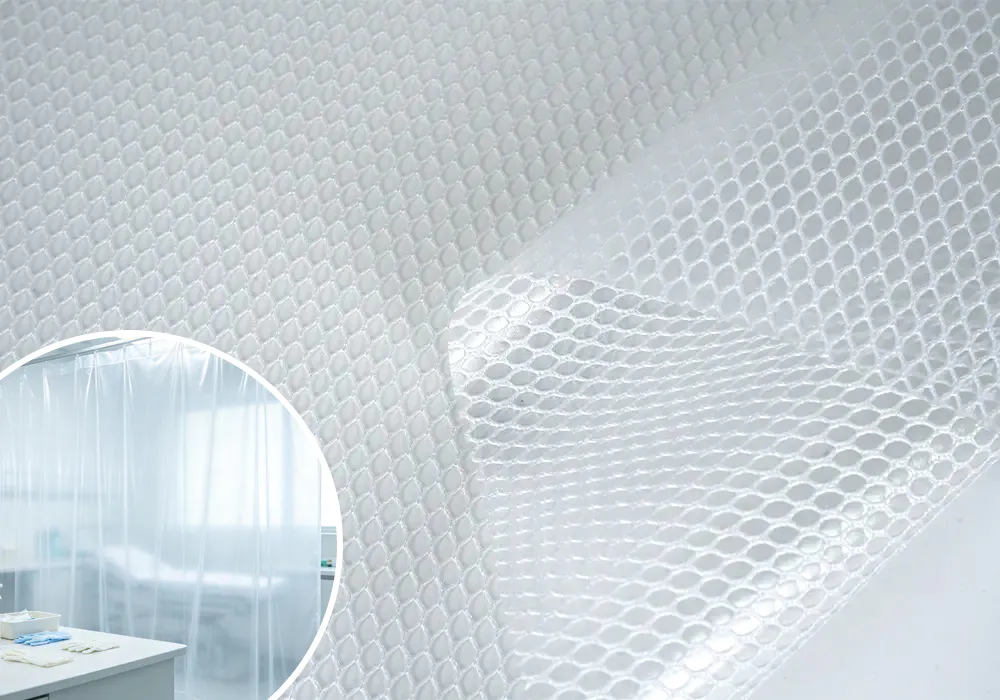 Clear Liquid Isolation Sterilizable Tarpaulin For Medical Application
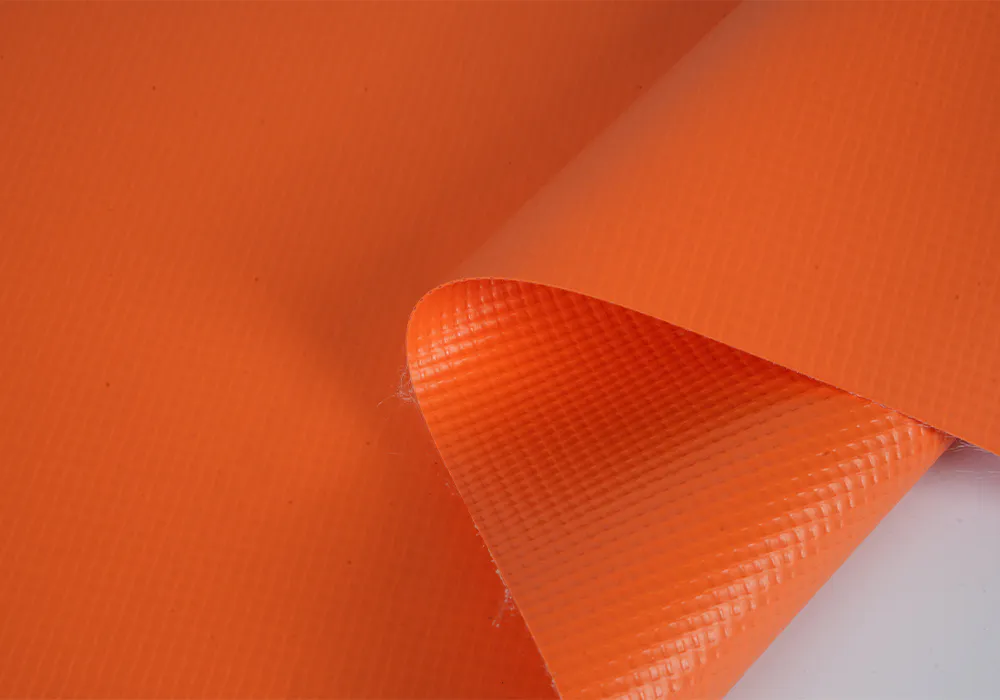 High Strength Wind Resistant Tarpaulin For Air Duct Wind Sleeve
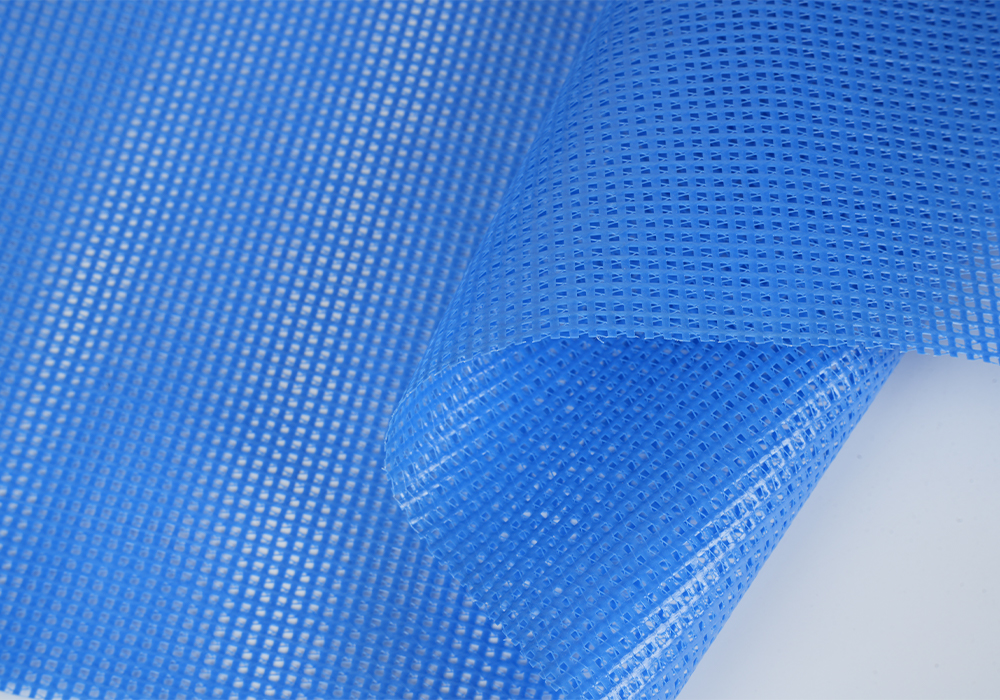 High Tensile Tear Proof Large Format Mesh Tarpaulin
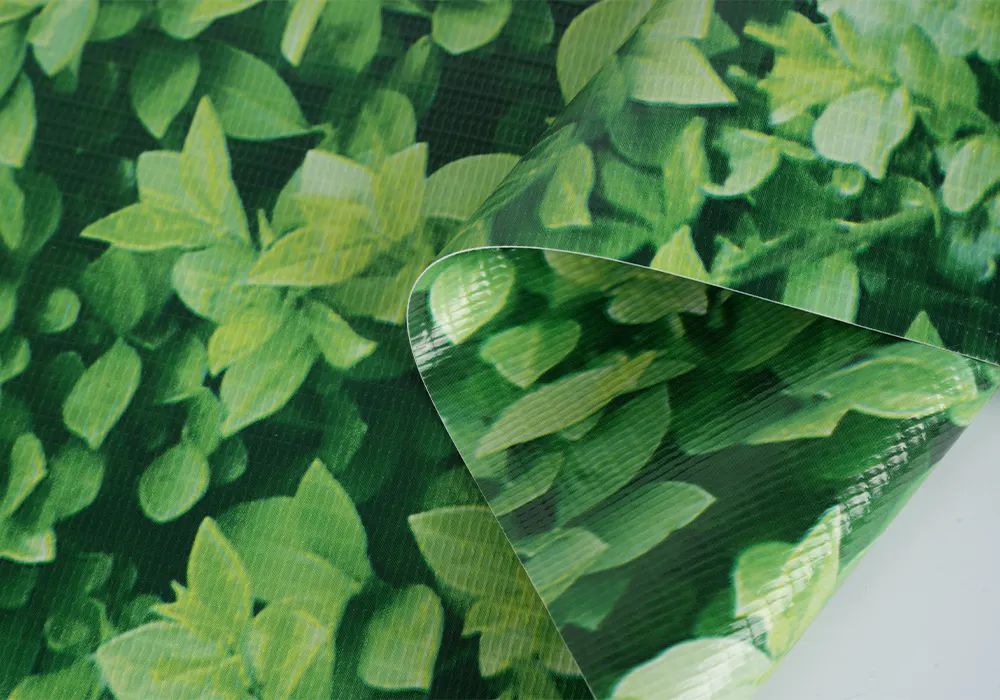 Thickened Privacy Waterproof Tarpaulin For Garden Barrier Fence
 Heavy-Duty High-Performance Camouflage-Printed Tarpaulin
 Custom Digital Printing Fabric Manufacturers

 Previous