

 English
 中文简体
 Español
News
Home / Author / Shen Yaqin — International Sales Manager / Dense Weave Light Block Mesh Tarpaulin for High-Performance Commercial Displays


Content
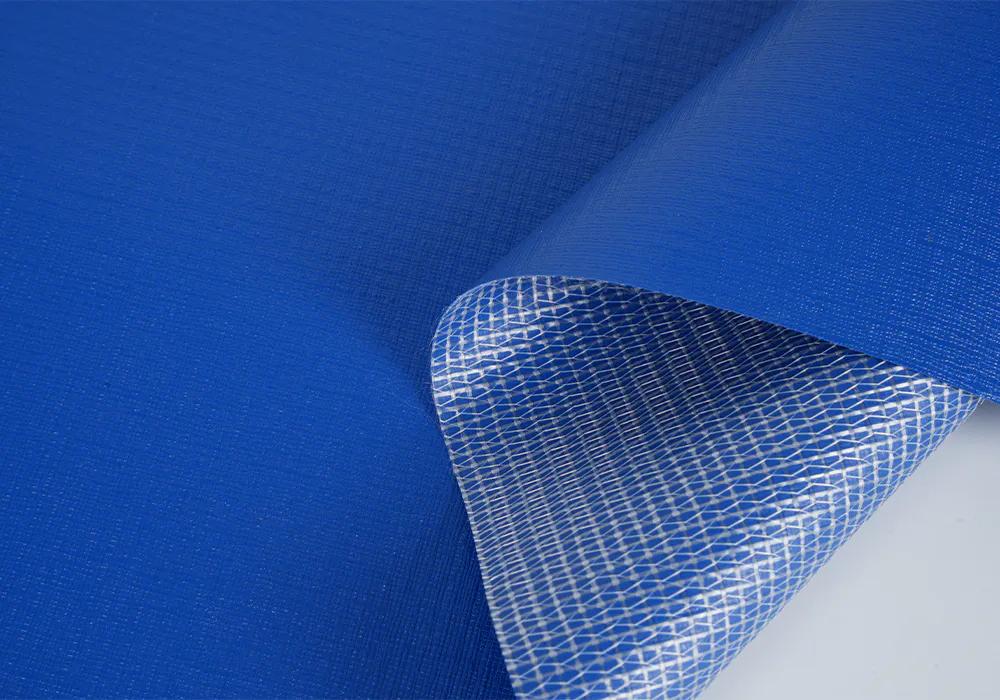
Commercial display materials must do more than carry a printed image. They must maintain visual impact, withstand outdoor exposure, tolerate repeated installation, and perform reliably when subjected to wind, tension, rain, sunlight, handling, and transportation. The Dense Weave Light Block Mesh Tarpaulin is designed to address these combined requirements in one practical material. With a dense 1000D × 1000D, 12 × 12 construction and an optimized weight of 260gsm, it provides a carefully balanced combination of coverage, wind permeability, tensile performance, tear resistance, print protection, and handling efficiency.
Unlike ordinary solid tarpaulin, which can create substantial wind loads when installed over large areas, this mesh tarpaulin incorporates tiny, uniform openings throughout its structure. These openings allow controlled air passage while the dense weave limits excessive transparency and helps preserve the appearance of printed graphics. The result is a material that is appropriate for shopping street barriers, exhibition perimeter graphics, outdoor stage backdrops, construction-site advertising, event fencing, and other high-visibility commercial applications.
The product is manufactured by Haining Taiwei New Material Co., Ltd., a China-based producer of PVC films, digital printing fabrics, tarpaulin films, frontlit and backlit materials, double-sided printing fabrics, mesh products, and light box cloth materials. Established in July 2010, the company combines specialized material development with large-scale production capability, advanced calendering equipment, multiple manufacturing lines, and professional bonding facilities. Its annual production capacity reaches approximately 45 million square meters, while more than 98% of its products are exported to Europe, America, the Middle East, Southeast Asia, and other international markets.
This article examines the structure, performance, commercial value, manufacturing strengths, application possibilities, and purchasing considerations associated with this dense weave light block mesh tarpaulin.
Large-format outdoor graphics are exposed to conditions that are rarely encountered by ordinary indoor signage. A banner may need to remain mounted for weeks or months while facing ultraviolet radiation, rain, strong wind, repeated temperature changes, and frequent contact during installation. At the same time, the material must be printable, visually consistent, easy to finish, economical to transport, and strong enough to support grommets, ropes, cables, or other fixing systems.
Traditional solid PVC tarpaulin offers excellent opacity and image coverage, but a large uninterrupted sheet can behave like a sail. Strong wind may exert considerable pressure on the banner, its seams, its eyelets, and the supporting frame. This can increase installation risk and may require more substantial structural support. Conventional open mesh materials reduce wind pressure effectively, but some lightweight mesh products may allow excessive see-through, reduce perceived image density, or suffer from weak yarns and premature distortion.
The Dense Weave Light Block Mesh Tarpaulin is intended to occupy the practical middle ground between these two material categories. Its tiny uniform holes provide wind permeability, while its dense construction limits the visual weakness associated with widely spaced mesh. The product is therefore suitable for situations where advertisers need both air movement and a strong, relatively solid-looking printed surface.
This balance is particularly important in commercial display projects. A shopping street barrier may need to protect pedestrians and nearby structures from unnecessary wind pressure while still presenting a vivid campaign message. An exhibition perimeter banner may need to remain neat and visually continuous from a normal viewing distance. An outdoor stage backdrop may need to resist wind while retaining a darker, less transparent appearance behind performers, scenery, or lighting equipment.
A material that performs acceptably in only one of these areas may create additional costs elsewhere. A weak banner may need frequent replacement. An overly heavy product may increase shipping and handling costs. A highly transparent mesh may require additional backing materials or stronger artwork preparation. A solid banner may need expensive reinforcement or a heavier support system. By addressing several of these concerns within one 260gsm mesh substrate, the product supports a more efficient approach to commercial display production.
The central specification of this product is its 1000D × 1000D, 12 × 12 mesh construction. The denier designation indicates the use of high-tenacity yarns, while the 12 × 12 construction refers to the approximate arrangement of warp and weft yarns within the base fabric. Together, these characteristics create a dense and stable substrate intended for demanding display use.
The product has a nominal weight of 260gsm. This weight is significant because it avoids two common extremes. It is not so light that the material becomes difficult to tension or vulnerable to distortion, and it is not so heavy that installation, rolling, storage, and international transportation become unnecessarily difficult. The resulting composition is suitable for distributors, sign companies, event contractors, and rental businesses that need a versatile product for multiple projects.
| Product characteristic | Specification or performance value | Commercial significance |
| Material type | Dense weave light block mesh tarpaulin | Balances visual coverage with wind permeability |
| Base construction | 1000D × 1000D, 12 × 12 | Supports structural strength and repeated handling |
| Nominal weight | 260gsm | Combines durability with manageable handling and shipping |
| Tensile strength | 1300/1200 N per 5 cm | Provides strong resistance to pulling and installation tension |
| Tearing strength | 400/380 N | Helps control damage around stress concentration points |
| Adhesion | Not specified in the supplied test data | Should be confirmed according to the intended finishing method |
| Primary use areas | Commercial displays, barriers, exhibitions, stages, and outdoor graphics | Suitable for temporary and semi-permanent promotional installations |
The listed tensile strength of 1300/1200 N per 5 cm demonstrates the product’s ability to resist high longitudinal and transverse loads. This is important when the material is pulled into position, fixed to a frame, or exposed to repeated wind movement. The listed tearing strength of 400/380 N further indicates strong resistance to the spread of damage from a cut, hole, eyelet, edge, or other localized stress point.
These values should be understood as performance indicators rather than a substitute for project-specific engineering. Actual performance depends on banner dimensions, installation height, fixing intervals, frame design, wind exposure, finishing quality, and the way the material is tensioned. Nevertheless, the figures establish a strong technical basis for commercial display applications.
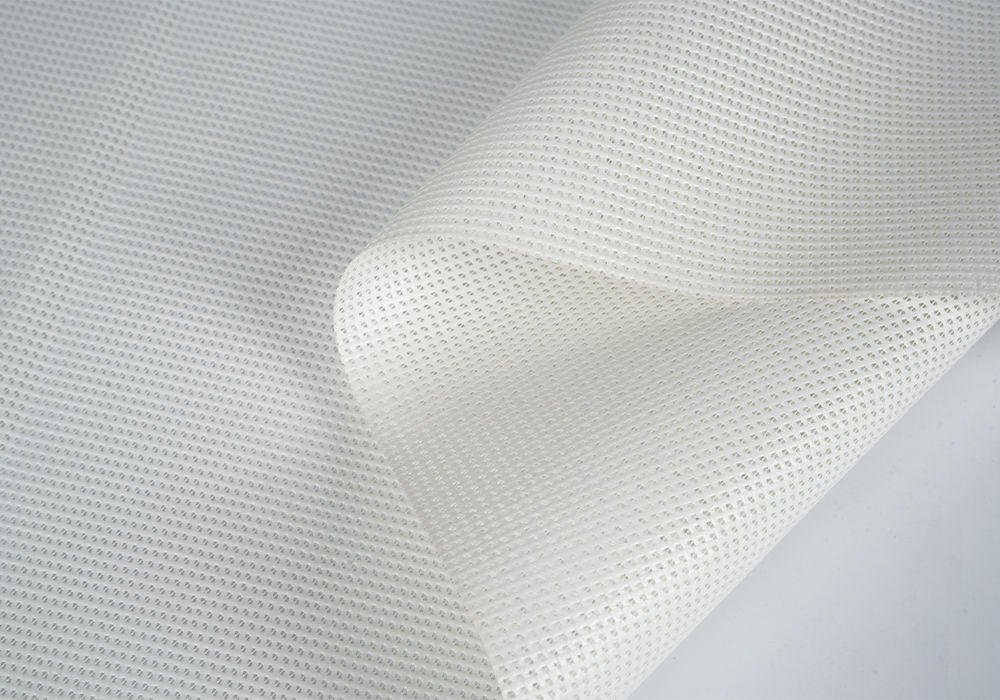
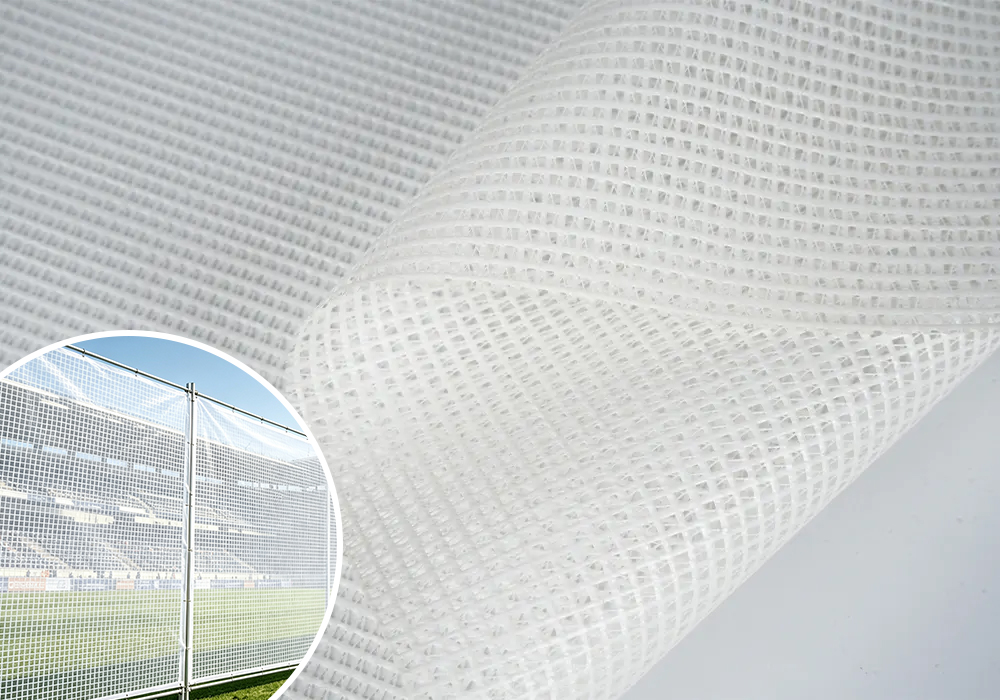
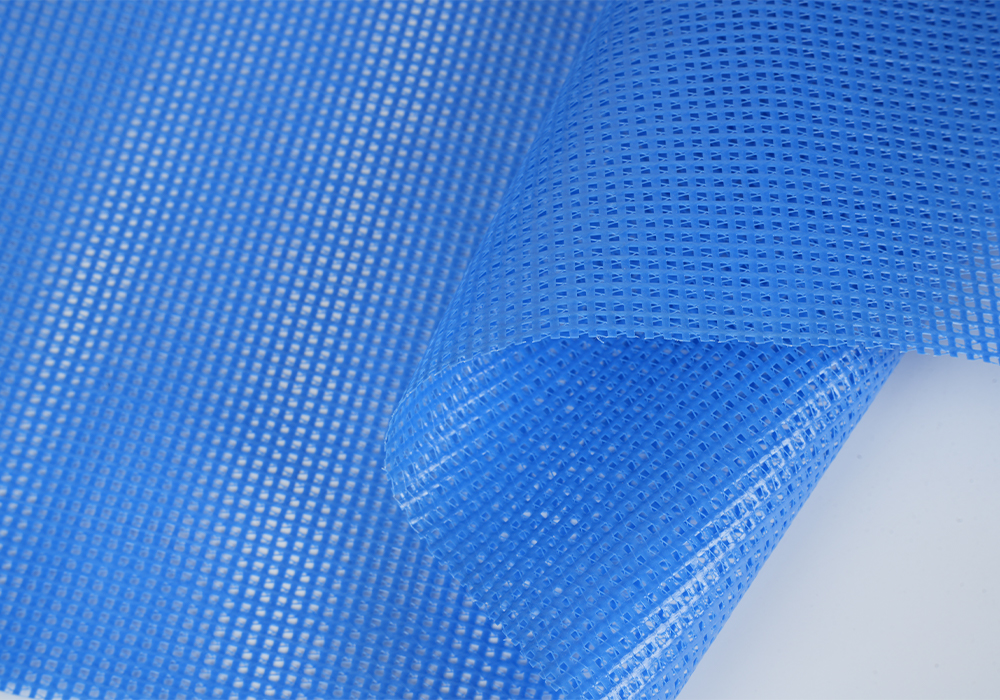
The visual character of mesh tarpaulin is strongly influenced by the size, frequency, and consistency of its openings. Large or irregular openings may make printed graphics appear weak, fragmented, or excessively transparent. The dense weave construction used in this product creates tiny uniform holes that maintain controlled air passage without making the entire printed image look visually hollow from normal viewing distances.
This light-blocking effect is particularly useful when the display must present a more substantial appearance. A dense mesh can help reduce the impression of faded graphics caused by excessive background visibility. It is also useful where the reverse side of a barrier, stage area, exhibition zone, or temporary enclosure should not be strongly visible through the printed surface.
The product does not function as an entirely opaque solid sheet, because it remains a mesh material by design. However, its dense arrangement provides a stronger visual screen than many more open mesh constructions. This makes it possible to combine the functional benefit of airflow with a more convincing promotional image.
For advertisers, this visual balance can reduce the need for secondary liners, backing fabrics, or additional concealment systems. Fewer auxiliary materials may simplify production and installation. The display can remain comparatively lightweight while delivering stronger image presence than an open, low-density mesh.
Light-blocking performance also influences color perception. When the background is less dominant, printed colors may appear more stable and saturated to viewers. The final appearance will depend on ink system, printer settings, artwork, viewing distance, illumination, and the color of the structure behind the banner. Professional print testing is still recommended, especially for brand colors and high-value campaigns.
Dense Weave Light Block Mesh Tarpaulin for Commercial Display
Many commercial graphics are not installed only once. Exhibition contractors, event rental companies, advertising distributors, and retail display providers often move the same material between locations. Each cycle may include unloading, unfolding, tensioning, removing, folding or rolling, transporting, and reinstalling. These operations create mechanical stress that can gradually weaken a low-quality substrate.
The reinforced 1000D × 1000D base fibers are designed to improve resistance to yarn breakage, fraying, and loss of shape. The specified tensile values of 1300/1200 N per 5 cm show that the material is engineered for a substantial load level. In practical terms, this supports more secure handling during installation and helps the finished banner tolerate the pulling forces associated with commercial mounting systems.
Yarn stability matters because a mesh product can fail progressively rather than all at once. A few broken yarns may begin at a corner, around a grommet, or along an edge. Repeated tension can then enlarge the weakened area, creating distortion or visible fraying. A stronger base construction slows this process and helps preserve the usable life of the banner.
The product’s structural stability is an advantage for multi-season rental projects. A rental inventory must generate value across numerous assignments, and every additional reuse can reduce the average material cost per event. A banner that remains dimensionally consistent after several installation cycles is also easier to print, finish, pack, and reinstall.
In comparison with lighter or less reinforced mesh products, this construction offers a stronger margin for routine commercial handling. It is not necessary to treat the material as indestructible; careless dragging, sharp contact, excessive point loading, or poorly designed fixing systems can still cause damage. However, the high-tenacity base improves the material’s ability to withstand normal professional use.
Structural stability also contributes to the quality of the displayed image. When a banner stretches unevenly, the artwork may become visibly distorted. Text can lose alignment, logos may appear irregular, and repeated patterns may no longer match the intended layout. A more stable substrate helps maintain the original proportions of the printed design when the material is tensioned on a frame or fence.
This benefit is especially relevant to large logos, architectural renderings, sponsor walls, retail campaigns, and event graphics where visual consistency is important. A stable banner presents a more professional appearance and reduces the likelihood that an installer will need to compensate for dimensional changes during mounting.
Commercial banners are commonly finished with grommets, reinforced hems, ropes, straps, webbing, welding, or other attachment systems. These fixing points concentrate force in relatively small areas. If the substrate has poor tear resistance, the material may split outward from a grommet or along an edge when tension is applied.
The listed ripping resistance of 400/380 N provides an important level of protection against this type of progressive damage. It allows installers to apply substantial tension through grommets and structural ties while reducing the risk of immediate perimeter splitting. This does not eliminate the need for correctly spaced eyelets, reinforced hems, and appropriate fixing hardware, but it strengthens the material at one of the most vulnerable stages of use.
Higher tear resistance can reduce several forms of project disruption. It may decrease the number of banners rejected during finishing inspection, reduce on-site repairs, and lower the risk of replacement after installation. For a display contractor working under a fixed event deadline, avoiding a last-minute tear can be as valuable as reducing the original material price.
Edge integrity is also important during transportation. Rolls may be moved by forklifts, loaded into trucks, or handled by several workers. If the edge is prone to fraying, minor contact can produce damage that spreads across the roll. A stronger fabric structure makes routine logistics more manageable, although proper packaging and handling procedures remain essential.
For demanding installations, the substrate should be finished with a method appropriate to the intended load. Grommets should be installed at suitable intervals rather than concentrated only at corners. Hems may be reinforced with compatible materials, and the fixing system should distribute tension evenly. Sharp metal edges and abrasive frame surfaces should be avoided or protected.
Where the banner is exceptionally large, installed at a high elevation, or exposed to severe weather, the support structure should be evaluated by a qualified installer or engineer. The product’s strong tear and tensile properties provide a robust material foundation, but the entire installation system determines final performance.
Wind management is one of the primary reasons businesses select mesh tarpaulin instead of a solid banner. A solid sheet can catch wind across its entire surface. A mesh sheet allows a portion of the airflow to pass through the openings, potentially reducing the force transferred to the graphic, its attachments, and the supporting structure.
The dense weave light block design aims to create a controlled compromise. The openings are small and uniform enough to support a strong visual surface, while still providing permeability that is valuable in outdoor applications. This characteristic is particularly useful for long barriers, temporary fences, building wraps, event perimeters, and stage backdrops.
Reduced wind loading can offer practical benefits during installation. Crews may find the material easier to position and tension than a comparable solid sheet, especially when working along an exposed fence or elevated frame. The supporting system may also be designed with airflow in mind rather than relying solely on heavier structural components.
Wind permeability should never be interpreted as a guarantee of suitability for every weather condition. Wind force varies according to banner size, orientation, height, local geography, surrounding buildings, fixing intervals, and the duration of installation. Temporary graphics should be inspected regularly, and installations should be removed or secured when conditions exceed the project’s safety limits.
Within a properly planned installation, however, the mesh construction provides a significant advantage over fully closed materials. It supports large-format visual communication while acknowledging the environmental forces that affect outdoor displays.
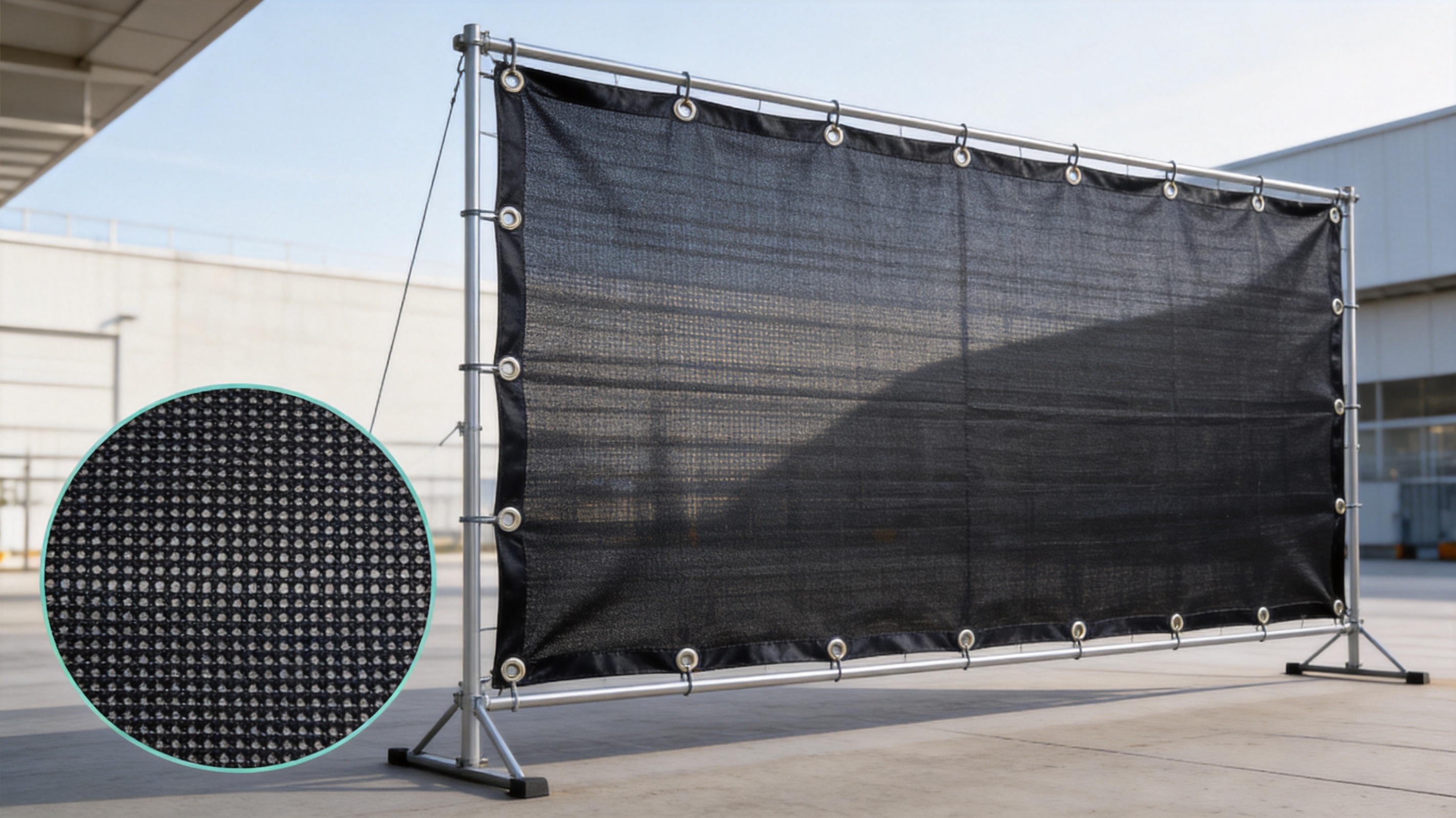
Outdoor graphics must remain exposed to sunlight and moisture without losing their commercial value. Ultraviolet radiation can cause fading, while repeated rain and drying cycles may affect the surface, print layer, seams, and finishing points. Dirt, airborne pollutants, and temperature changes can further influence appearance and performance.
The product incorporates an all-weather topcoat intended to protect the surface from sun and rain. This surface treatment helps the printed material retain a bright, presentable appearance during year-round outdoor use. It also forms part of the product’s broader resistance package, working together with the reinforced base fibers and dense weave construction.
Surface protection is especially important for campaigns that remain in place for extended periods. A banner may represent a retailer, property developer, event sponsor, transport company, or public venue for several weeks or months. If the colors fade quickly or the surface begins to deteriorate, the display may communicate a lower-quality image than the campaign intended.
Weather resistance is influenced by more than the topcoat alone. Ink chemistry, printer profiles, curing or drying, edge finishing, cleaning, storage, and local climate all affect the final service life. Coastal salt exposure, desert dust, industrial pollution, freezing temperatures, and high humidity may impose different demands. Buyers should therefore request application-specific technical guidance and, when necessary, conduct outdoor validation tests.
Outdoor display products often move through a complete seasonal cycle. They may be installed during a summer festival, removed for storage, and reused during a winter promotion. The material must tolerate not only environmental exposure but also changes in temperature and handling conditions.
The high-tenacity substrate is well suited to this type of use because it is designed to resist stretching and yarn breakage during repeated installation and dismantling. When rolled correctly and stored in a dry, clean location, it can support a more organized inventory system and reduce unnecessary replacement.
For best results, banners should be cleaned using methods compatible with the coating and ink. They should be fully dry before storage, protected from sharp objects, and stored away from prolonged direct sunlight when not in use. These basic practices help preserve both the fabric and the printed surface.
Material weight affects more than installation effort. It influences roll size, transportation cost, warehouse handling, labor requirements, packing efficiency, and the number of personnel needed for deployment. An excessively heavy banner may provide strength but create avoidable cost throughout the supply chain.
At 260gsm, this mesh tarpaulin is positioned as a practical commercial-grade material that combines substantial outdoor durability with manageable handling. It can be rolled tightly for more efficient storage and lower-cost international shipping. Its weight also supports easier movement around event sites, retail properties, exhibition halls, and temporary construction zones.
For distributors, logistics efficiency can improve inventory planning. More material may fit within available warehouse and transport capacity, allowing companies to serve a wider range of projects without proportionally increasing storage space. This is particularly relevant when a distributor supplies multiple standard widths, printed designs, or regional campaigns.
For installers, a moderate-weight substrate can reduce physical strain during unfolding and mounting. This may be valuable when a banner must be installed by a small crew or positioned in a location with limited access. Lighter handling does not mean that the material lacks strength; the high-tenacity base fibers provide the structural performance needed for commercial use.
The balance between weight and durability is one of the product’s strongest competitive advantages. Some lightweight materials sacrifice tear resistance or dimensional stability. Some heavy materials create higher freight and labor costs. This 260gsm composition is intended to deliver a more commercially useful midpoint.
Mesh tarpaulin is used primarily as a visual communication medium, so print performance remains central to its value. A successful substrate should accept graphics consistently while preserving the intended color balance, image sharpness, and readability of text. The dense construction helps reduce the visual fragmentation that can occur with highly open mesh.
Artwork should be prepared with the viewing distance and mesh structure in mind. Small text, thin lines, and delicate details may need adjustment depending on the project scale. Large, high-contrast elements generally remain more effective in outdoor conditions, where viewers may encounter the banner under changing daylight, shadows, or artificial illumination.
The all-weather topcoat supports the retention of bright prints in outdoor environments. It is particularly beneficial for promotional campaigns that depend on strong brand colors, product photography, sponsor logos, or directional messaging. Consistent coating and surface quality also help professional printers achieve more predictable results across production batches.
Before beginning a large production run, printers should confirm the suitable ink technology, curing settings, color profile, and finishing process. A physical proof or sample panel can help evaluate image density, transparency, color appearance, folding behavior, and compatibility with the planned installation method.
The product is well suited to graphics that need to appear substantial without eliminating all airflow. Examples include retail campaigns, construction site branding, exhibition walls, sports-event barriers, sponsor backdrops, outdoor stage graphics, and decorative screens for public spaces.
For shopping street barriers, the banner can conceal unattractive temporary structures while presenting a coordinated commercial message. For exhibition perimeter banners, it can define the event area and reinforce branding without requiring a completely solid sheet. For stage backdrops, it can provide a strong visual surface while allowing air movement in outdoor venues.
Because it combines a dense visual field with wind permeability, the product is also appropriate for businesses that need one material to cover a range of display requirements. This versatility can simplify purchasing and reduce the number of separate substrates held in inventory.
Conventional open mesh products may provide strong airflow, but the openness can reduce graphic density. Background structures, daylight, and objects behind the banner may remain highly visible. From a distance, fine details may disappear, and color areas may appear lighter than expected.
The dense weave light block construction addresses this limitation by using smaller, more uniform openings. It retains the functional advantage of mesh while providing stronger coverage and a more continuous-looking image. This can improve perceived print quality in retail, event, and exhibition environments where appearance directly affects brand value.
The reinforced 1000D × 1000D base also distinguishes the product from low-density mesh fabrics designed primarily for short-term use. Its tensile and tear values support more demanding mounting conditions and repeated handling. For rental businesses and advertising distributors, this may result in a lower cost over the product’s useful life.
The 260gsm weight creates another point of differentiation. A product that is too light may be economical at the time of purchase but less suitable for repeated outdoor deployment. A product that is much heavier may be strong but costly to ship and difficult to handle. The optimized composition seeks to provide commercial durability without excessive logistical burden.
Solid tarpaulin remains useful where maximum opacity or complete weather separation is required. However, for large outdoor display structures, its closed surface can increase wind pressure. This may demand stronger frames, more fixings, or additional engineering measures.
The mesh tarpaulin offers an alternative when the project requires airflow. Its tiny openings can help reduce the sail effect while still preserving a dense, visually effective printed surface. The resulting installation may be easier to manage in exposed locations, provided that it is correctly designed for local conditions.
The mesh format can also reduce material weight in comparison with some solid alternatives. This may improve portability and make the banner more convenient for event crews, touring productions, and temporary retail installations. It can also reduce the amount of material required for large-area freight.
Choosing between mesh and solid tarpaulin should always be based on the project’s priorities. If complete opacity, liquid separation, or full environmental enclosure is essential, solid tarpaulin may be preferable. If wind permeability, lighter handling, and visual display are more important, the dense weave mesh option provides a compelling alternative.
The reliability of a commercial display substrate depends not only on its formulation but also on manufacturing consistency. Variations in coating thickness, base fabric alignment, surface treatment, bonding, and roll winding can affect printing and installation. A capable manufacturer must therefore combine suitable equipment with process control and experienced personnel.
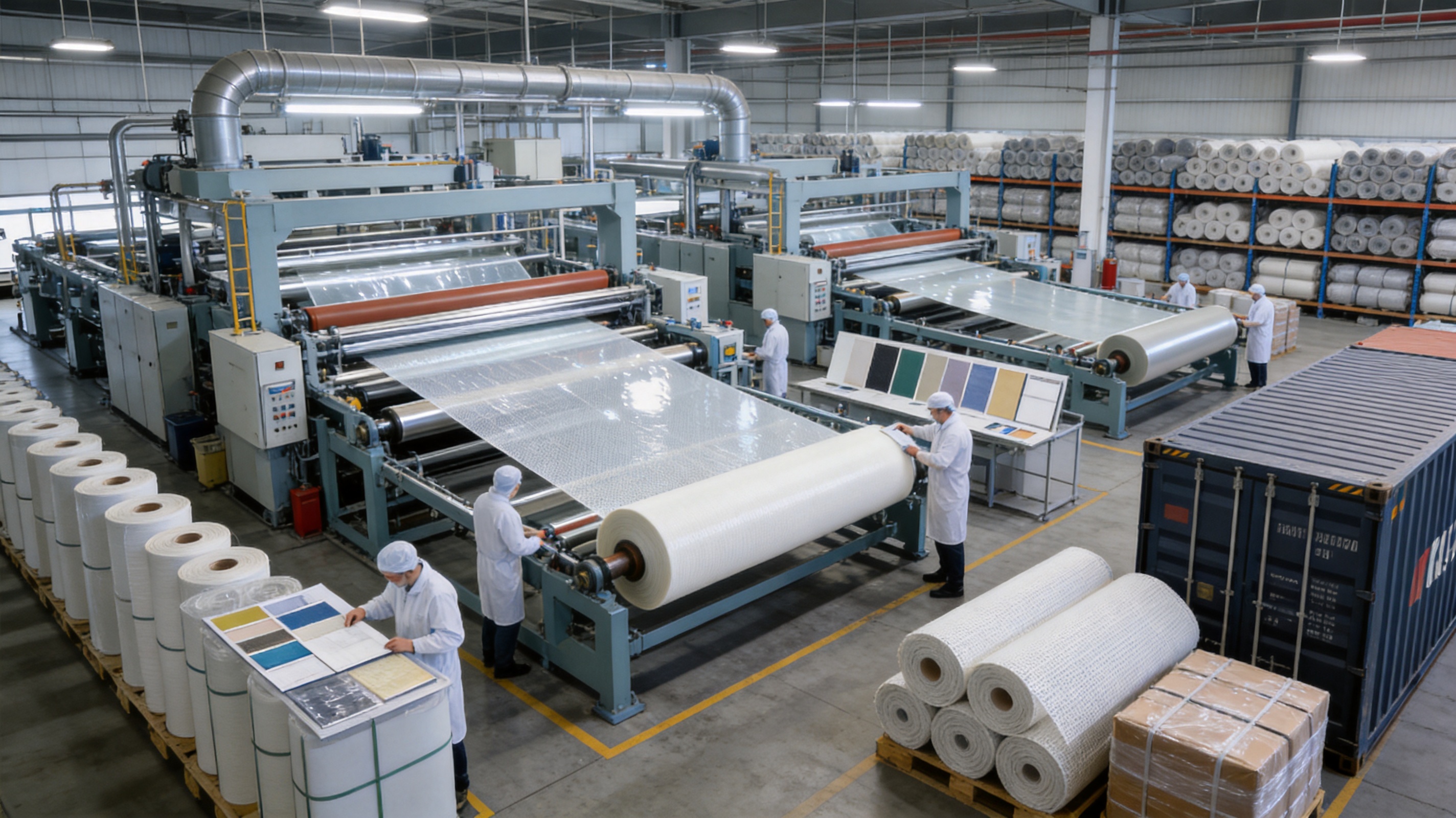
Haining Taiwei New Material Co., Ltd. operates advanced calendering equipment, multiple production lines, and professional bonding facilities. Calendering is a key process for producing coated flexible materials because it enables controlled formation of the polymer layer, integration with the textile base, and adjustment of surface characteristics. Consistent temperature, pressure, speed, and material feeding are important for obtaining stable thickness and reliable surface quality.
Multiple production lines provide manufacturing flexibility and capacity. They support the production of different PVC films, digital printing fabrics, tarpaulin films, frontlit and backlit materials, double-sided printing fabrics, mesh, and other light box cloth products. This broad product portfolio indicates experience across several related flexible-material categories.
Professional bonding facilities add value where the finished material requires secure lamination, reinforcement, or component integration. Strong bonding helps support the structural relationship between layers and reduces the risk of separation during handling and outdoor use. The exact bonding approach may vary according to the product construction, finishing requirements, and customer specification.
The company’s annual output of approximately 45 million square meters provides the capacity required for domestic and international supply programs. Large-scale production can support continuity of supply, standardized manufacturing, and more efficient planning for distributors with recurring demand.
The supplied company information identifies technological innovation, high-quality products, and customer service as central priorities. These priorities are relevant to buyers seeking more than a single shipment of material. Commercial distributors often need technical communication, consistent repeat orders, product customization, and support with application selection.
The company’s product range includes materials with cold resistance, flame retardancy, ultraviolet resistance, antistatic properties, mildew resistance, and antibacterial characteristics. Not every listed property should automatically be assumed for every mesh tarpaulin specification; buyers should confirm which treatments apply to the selected product. However, the range demonstrates experience in developing flexible materials for different environmental and performance requirements.
Product development in this sector typically involves balancing several properties that can compete with one another. Increasing weight may improve strength but reduce handling efficiency. Opening the mesh may improve airflow but reduce visual density. Increasing coating thickness may improve coverage but affect flexibility. Improving surface protection may influence print reception or cost. A capable manufacturer must manage these relationships according to the intended application.
The Dense Weave Light Block Mesh Tarpaulin reflects this type of application-focused development. Its specification is not based on a single headline property. Instead, it combines high-tenacity yarns, controlled mesh openings, 260gsm weight, strong tensile performance, high tear resistance, and weather-protective surface treatment.
More than 98% of the company’s products are exported to Europe, America, the Middle East, Southeast Asia, and other regions. International distribution requires attention to packaging, documentation, production scheduling, communication, and consistency across different climate and application environments.
Export experience is especially valuable for commercial display materials because buyers may require different roll formats, widths, packaging methods, print compatibility, labeling, and inspection procedures. A supplier accustomed to international orders is better positioned to discuss shipping requirements and coordinate production for overseas projects.
The company’s location in Haining Dingqiao Industrial Park provides convenient access to Shanghai and Ningbo ports. Port access can support more efficient export logistics, especially for full-container orders, recurring distributor programs, and large event projects with fixed delivery schedules.
For international buyers, supply reliability should be evaluated together with product performance. A technically suitable material is only commercially useful if it can be produced, packed, and delivered according to the required schedule. Manufacturing capacity, export experience, and port access therefore complement the physical advantages of the mesh tarpaulin.
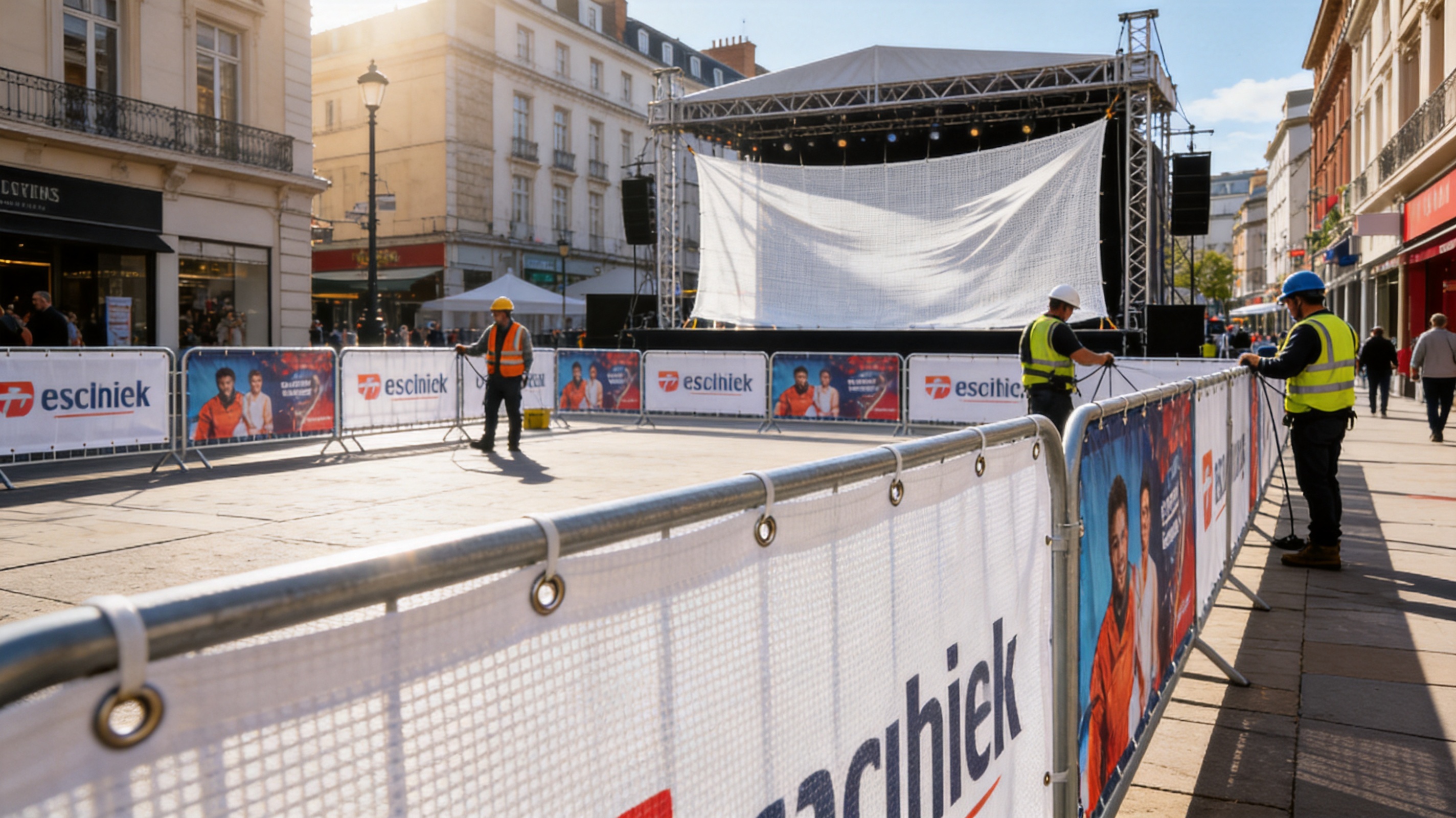
Shopping streets often use temporary barriers during renovation, public works, seasonal events, and promotional campaigns. The barrier must improve the visual environment while remaining practical around pedestrians, vehicles, and changing weather. The dense mesh can cover unattractive temporary structures and carry high-resolution promotional graphics while permitting some air passage.
The 260gsm weight supports efficient installation along long runs. Strong tensile and tear performance help protect the banner when it is secured with grommets, ties, or perimeter ropes. For pedestrian areas, edges should be finished smoothly and all fixings should be checked regularly to prevent loose components or sharp exposed hardware.
Exhibitions require clear branding and organized space definition. Perimeter graphics can separate visitor areas, guide traffic, hide service zones, or display sponsor messages. The product’s dense weave helps maintain a relatively solid appearance, while its manageable weight supports rapid installation and removal between event sessions.
Because exhibition graphics may be reused at different venues, dimensional stability and resistance to repeated handling are important. The high-tenacity base fibers are designed to reduce stretching and yarn breakage, helping the material remain suitable for rental and touring applications.
Outdoor stages expose banners to wind, rain, sunlight, and repeated setup cycles. A solid backdrop may impose excessive wind load, particularly when installed above the audience or behind a temporary stage structure. A mesh tarpaulin can provide a more suitable balance when airflow is part of the structural planning.
The dense appearance is valuable for sponsor logos, event titles, scenic graphics, and broadcast backgrounds. The all-weather topcoat supports continued visual quality during outdoor performances, while the reinforced substrate helps the backdrop withstand handling by stage crews.
Construction fences and property-development barriers are often used for months rather than days. They must improve site appearance, communicate project information, and endure changing outdoor conditions. The product’s combination of visual coverage, tear resistance, and weather protection makes it appropriate for these long-running promotional displays.
Installers should consider the dimensions of each panel, the spacing of fixings, the stability of the fence, and the exposure of corners. Large uninterrupted areas may require planned panel segmentation or additional support so that wind forces are distributed appropriately.
Rental companies benefit from products that can be used repeatedly across different campaigns. A strong but manageable substrate reduces the risk of damage during transport and installation. The 260gsm construction can be rolled and stored efficiently, while the high-tenacity yarns support repeated deployment.
Rental operators should maintain inspection records, check grommets and hems after each use, and store the material dry and protected. Proper inventory procedures extend the value of the product and help identify damage before the next event.
Correct installation begins with a review of the site. The installer should identify wind direction, exposure, mounting height, frame strength, edge conditions, access limitations, and potential contact with sharp or abrasive surfaces. The banner should be unrolled on a clean surface and inspected before it is lifted into position.
Fixings should be distributed evenly rather than concentrated at a few points. Uneven tension can create wrinkles, local stress, and image distortion. Excessive tension can also damage grommets or tear the surrounding material. The goal is a smooth, secure presentation with force distributed across the finished perimeter.
During use, the banner should be inspected for loose fixings, edge fraying, punctures, accumulated dirt, and changes in tension. Early attention to small defects can prevent larger failures. If severe weather is expected, the display should be removed, lowered, or reinforced according to the site’s safety plan.
Cleaning should be performed using a soft cloth or suitable low-abrasion method and a cleaning agent compatible with the surface coating and printed image. Strong solvents, abrasive brushes, and aggressive pressure may damage the topcoat or ink. After cleaning, the material should be completely dry before rolling or storage.
For long-term storage, banners should be rolled rather than tightly folded when possible. They should be separated from sharp tools, chemicals, excessive heat, and direct sunlight. Clearly labeling each roll can also reduce unnecessary handling and make future deployment more efficient.
Buyers should identify the intended application before finalizing an order. Important factors include indoor or outdoor use, expected service duration, wind exposure, required print method, finished width, roll length, edge treatment, grommet spacing, color requirements, and anticipated reuse.
Although the supplied specification lists tensile strength, tearing strength, and nominal weight, buyers may require additional data for a particular project. These may include width tolerance, thickness, coating characteristics, color fastness, temperature range, flame performance, mildew resistance, surface energy, and recommended printing parameters. Such information should be confirmed directly for the selected production specification.
Sample approval is recommended for high-volume orders. A sample can be used to check the appearance of the dense weave, print density, light-blocking effect, flexibility, edge finishing, welding or bonding compatibility, and performance under the planned fixing method.
For recurring orders, buyers should establish a reference sample and agreed inspection criteria. Consistent specifications are important when graphics are produced over multiple batches or when the same material is supplied to several regional branches.
Customization may be available according to order requirements. Potential variables can include roll dimensions, surface treatment, color, reinforcement, finishing method, and packaging. The feasibility of each option depends on production volume, equipment, and application needs. Technical discussions before production can help prevent mismatches between the material and the final installation.
The purchase price of a display fabric is only one part of total cost. Freight, storage, installation labor, replacement frequency, finishing waste, and project downtime also influence the commercial result. A product that performs reliably over several uses may deliver better value than a cheaper material that requires frequent replacement.
The Dense Weave Light Block Mesh Tarpaulin supports life-cycle efficiency in several ways. Its 260gsm weight can help reduce transportation and handling costs. Its dense visual coverage may reduce the need for additional backing materials. Its tensile and tear performance can lower the likelihood of installation damage. Its all-weather topcoat can support longer outdoor presentation. Its reusable construction is suitable for rental and multi-season projects.
For advertising distributors, these advantages can improve inventory flexibility. One material can serve multiple display categories instead of requiring separate products for every project. A versatile stock item may reduce purchasing complexity and allow faster response to customer requirements.
For end users, the value appears in fewer disruptions and more consistent presentation. A banner that arrives in good condition, installs efficiently, stays visually strong, and can be removed for later reuse contributes to a more predictable project budget.
Durable materials can support more responsible resource use when they remain in service for multiple campaigns instead of being discarded after one installation. Reusability is especially relevant for rental companies, exhibition contractors, and businesses that update graphics on a planned cycle.
Efficient transportation also affects operational resource consumption. A material that rolls tightly and has a manageable weight can help optimize packaging and freight capacity. Buyers should nevertheless consider responsible disposal or recycling options at the end of the product’s service life according to local regulations and available facilities.
Operational efficiency can be improved by designing banners for reuse from the beginning. Standardized finishing, replaceable attachment components, careful removal procedures, and proper storage all help extend useful life. The product’s reinforced construction provides a strong basis for these practices, but the complete life-cycle result depends on how the material is managed.
The Dense Weave Light Block Mesh Tarpaulin offers a clear set of advantages for businesses that need durable, visually effective, and wind-permeable display materials. Its tiny uniform holes support airflow, while the dense structure helps prevent excessive transparency and weak-looking graphics. The 1000D × 1000D, 12 × 12 construction provides a strong foundation for repeated installation and outdoor handling.
Its 1300/1200 N tensile strength and 400/380 N tearing strength offer meaningful protection against pulling forces and localized damage. The 260gsm weight supports a practical balance between rugged use and manageable logistics. The all-weather topcoat helps preserve printed appearance under sun and rain, while the manufacturing company’s advanced equipment and export experience support consistent commercial supply.
Compared with highly open mesh, the product offers stronger visual coverage. Compared with solid tarpaulin, it provides valuable wind permeability and easier handling. Compared with weak lightweight materials, it offers improved resistance to yarn breakage, fraying, stretching, and edge splitting. These combined characteristics make it suitable for commercial display projects where appearance, durability, and operating cost must be considered together.
It is a mesh-based display material with small, uniform openings and a relatively dense construction. The openings allow controlled airflow, while the dense weave provides stronger visual coverage and helps reduce excessive see-through compared with more open mesh products.
The specified weight is 260gsm. This composition is designed to combine outdoor durability with manageable handling, rolling, storage, and international transportation.
The supplied specification lists tensile strength at 1300/1200 N per 5 cm and tearing strength at 400/380 N. These values indicate strong resistance to pulling forces and localized tearing, although final installation performance also depends on finishing and support design.
Yes. It is suitable for outdoor stage backdrops when the installation is properly designed for local wind, rain, height, and structural conditions. Its mesh construction supports airflow, while its dense appearance helps present sponsor logos, event graphics, and scenic images.
Yes. The reinforced 1000D × 1000D base fibers are designed to resist yarn breakage, fraying, stretching, and deformation during repeated installation and dismantling. Proper handling and storage are still necessary to achieve the best service life.
No. It is a mesh product and therefore includes openings for air passage. Its dense weave and tiny uniform holes provide a stronger light-blocking and visual-screening effect than open mesh, but the actual appearance depends on lighting, viewing distance, print design, and the background structure.
No. Solid tarpaulin may be more appropriate where complete opacity, liquid separation, or full environmental enclosure is required. The mesh tarpaulin is better suited to display applications where wind permeability and lighter handling are important.
Printers should confirm the appropriate ink system, color profile, curing or drying requirements, and artwork scale. A physical sample is recommended for checking color density, transparency, image sharpness, and the visual effect of the dense mesh before full production.
The banner should be fixed with evenly distributed attachment points and suitable reinforced hems or grommets. Installers should avoid excessive tension, sharp edges, uneven loading, and unsupported large spans. Site-specific wind and structural conditions should be evaluated before installation.
The material should be cleaned when necessary, completely dried, rolled carefully, and stored away from sharp objects, chemicals, excessive heat, and prolonged direct sunlight. Proper storage helps preserve both the fabric and the printed surface.
The manufacturer operates advanced calendering equipment, multiple production lines, and professional bonding facilities. It produces PVC films, digital printing fabrics, tarpaulin films, frontlit and backlit materials, double-sided printing fabrics, mesh, and other light box cloth products, with an annual output of approximately 45 million square meters.
Yes. More than 98% of its products are exported to Europe, America, the Middle East, Southeast Asia, and other regions. Its location provides access to Shanghai and Ningbo ports, supporting international logistics and export orders.
The Dense Weave Light Block Mesh Tarpaulin is engineered for commercial display projects that demand more than basic printability. Its dense mesh construction helps combine wind permeability with strong visual coverage. Its reinforced 1000D × 1000D, 12 × 12 base supports tensile performance, tear resistance, and repeated installation. Its 260gsm composition provides a useful balance between durability, handling, storage, and freight efficiency. Its all-weather topcoat supports the retention of bright graphics during outdoor use.
For shopping street barriers, exhibition perimeters, stage backdrops, construction-site branding, event graphics, and rental inventories, the product offers a practical alternative to both overly open mesh and fully solid tarpaulin. Its commercial value is strengthened by the manufacturer’s advanced calendering equipment, multiple production lines, professional bonding facilities, large annual capacity, broad product portfolio, and established export experience.
When paired with correct printing, professional finishing, suitable structural design, and responsible maintenance, this mesh tarpaulin can provide a durable and visually effective foundation for demanding commercial displays across multiple seasons and applications.
1. Product specification information supplied for Dense Weave Light Block Mesh Tarpaulin for Commercial Display.
2. Technical data supplied for 1000D × 1000D, 12 × 12 mesh construction, 260gsm weight, tensile strength, and tearing strength.
3. Company information supplied for Haining Taiwei New Material Co., Ltd., including manufacturing equipment, product categories, production capacity, export markets, and company history.
4. General principles of large-format outdoor graphic installation, banner finishing, grommet reinforcement, and wind-load management.
5. General textile and coated-fabric considerations relating to tensile strength, tear resistance, mesh openness, surface coating, printing, storage, and reuse.
Dense Weave Light Block Mesh Tarpaulin for Commercial Display
 Lightweight Foldable Mesh Tarpaulin for Event Promotion
 Heavy-Duty High-Performance Camouflage-Printed Tarpaulin
 High Tensile Tear Proof Large Format Mesh Tarpaulin
 High Ink Absorption Blackback Commercial Promo Flex banner Material
 Light Economical Liquid Proof Tarpaulin For Medical Nursing
 Custom Digital Printing Fabric Manufacturers

 Previous