

 English
 中文简体
 Español
News
Home / Author / Shen Yaqin — International Sales Manager / Reflective Outdoor Advertisement Flex Banner: Durable, High-Visibility Materials for Modern Outdoor Promotion


Content
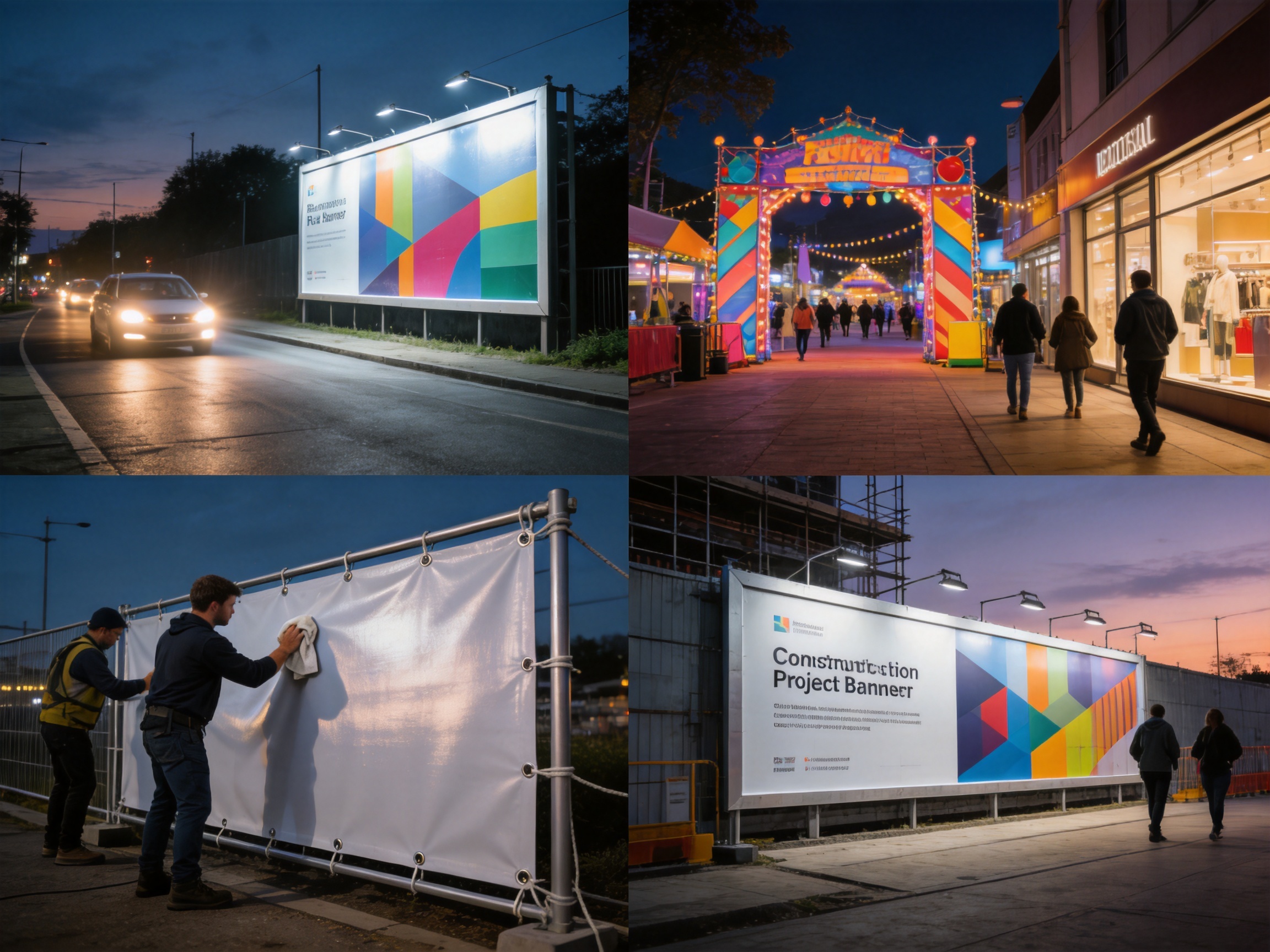
Outdoor advertising continues to play an important role in brand communication, public information, event promotion, transportation advertising, and retail marketing. Although digital media has expanded rapidly, printed outdoor signage remains highly effective because it is visible to large audiences for long periods and can operate continuously without electricity, screens, or recurring media fees. The performance of the printed substrate, however, determines whether an outdoor campaign looks professional and remains effective throughout its service life.
The Reflective Outdoor Advertisement Flex Banner is designed for applications in which visibility, weather resistance, durability, and installation convenience are essential. Its reflective surface helps printed graphics attract attention in daylight and remain noticeable in low-light environments when illuminated by vehicle headlights, street lighting, or other light sources. This capability makes the material especially suitable for advertising near roads, commercial facilities, outdoor venues, construction areas, event entrances, and other locations where messages must be seen at different times of day.
Unlike ordinary advertising cloth designed primarily for daytime use, this flex banner combines a robust textile-reinforced construction with a reflective finish. The result is a versatile advertising material that can support large-format digital printing while offering improved nighttime visibility. It is manufactured with an 840 by 840 denier base structure, a 9 by 9 thread configuration, and a total weight of approximately 550 grams per square meter. These characteristics give the material a substantial balance of strength, flexibility, printability, and handling performance.
Outdoor messages compete with traffic, buildings, storefronts, vehicles, street furniture, weather, and changing light conditions. A banner that appears attractive at noon may become difficult to recognize after sunset. Reflective material addresses this limitation by returning part of the incoming light toward its source. When a vehicle approaches a roadside banner, for example, the headlights can activate the reflective surface and make the sign more noticeable than a conventional non-reflective banner.
Reflective visibility does not replace good design or adequate illumination, but it adds a valuable layer of performance. Logos, text, directional information, promotional graphics, and safety-related messages can remain more visually prominent during evening hours. This is particularly useful for businesses that operate late, venues that host night events, and advertisers seeking exposure beyond standard daylight periods.
The material is also suitable for campaigns that need a stronger visual impact without relying entirely on external lighting equipment. A conventional banner may require floodlights, light boxes, or illuminated frames to remain visible at night. A reflective flex banner can reduce dependence on those supporting systems in suitable applications. This can simplify installation, lower energy requirements, and make temporary advertising easier to deploy.
Reflective performance is valuable in several environments:
Roadside advertising can benefit from increased recognition when motorists approach from a distance.
Retail and commercial signs can remain visually active after sunset, supporting businesses with extended opening hours.
Festival and concert banners can guide visitors and reinforce event branding during evening programs.
Outdoor fairs and exhibitions can use reflective graphics to maintain a consistent appearance throughout the day.
Construction and temporary project signage can become easier to notice when ambient light decreases.
Transportation, logistics, and industrial facilities can use printed reflective panels for identification and directional communication, subject to applicable safety requirements.
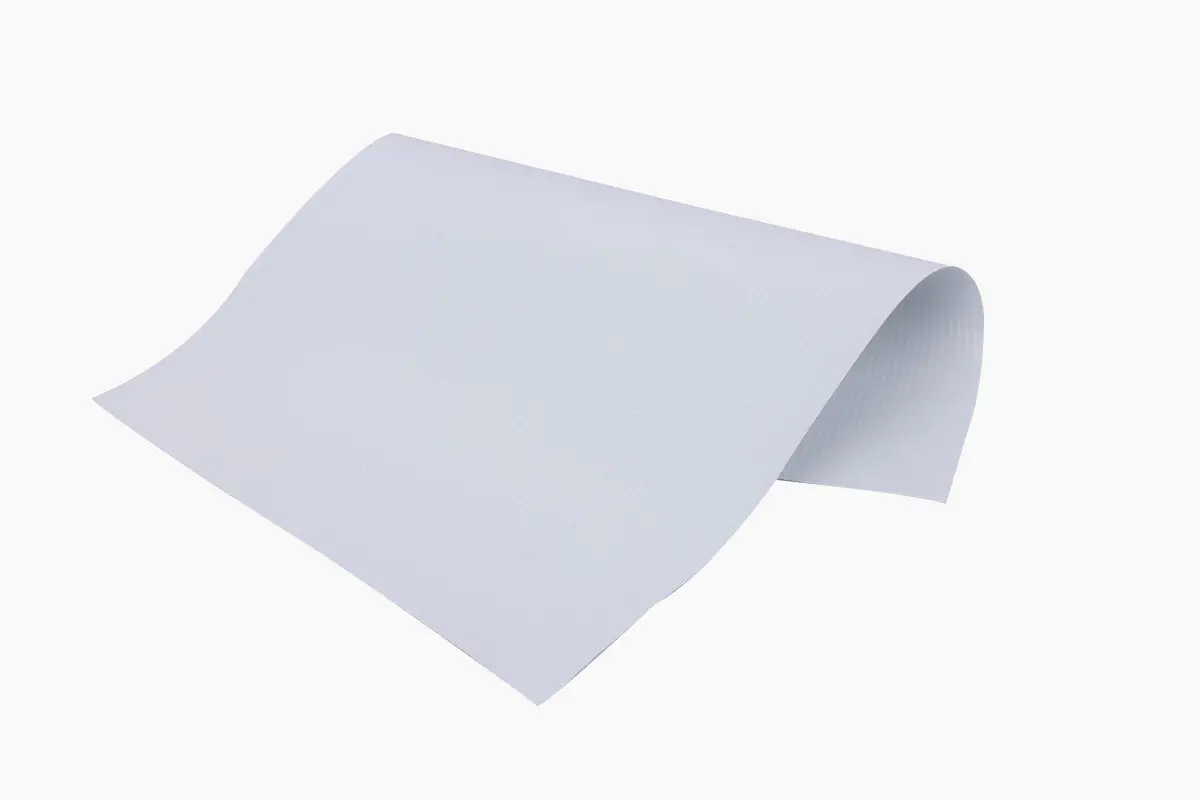
Reflective Outdoor Advertisement Flex Banner
The product is constructed as a coated, textile-reinforced flex banner intended for demanding outdoor advertising applications. The fabric foundation provides dimensional support, while the polymer coating protects the internal structure and creates a suitable surface for printing and finishing. This construction is more reliable for large-format use than a thin, unsupported film because the woven reinforcement helps the banner resist stretching and tearing during installation, transport, and exposure to wind.
The listed item number is TWF8484-550. The designation reflects the product’s substantial 840 by 840 denier yarn structure and 550 gsm total weight. A heavier substrate generally provides a more solid appearance and improved resistance to handling damage compared with lightweight materials. The 550 gsm construction is suitable for large advertising panels where the banner may be tensioned over a frame, mounted using eyelets, or installed with ropes, hooks, welding, or other finishing systems.
The 9 by 9 thread arrangement indicates a balanced woven reinforcement designed to support tensile stability in both principal directions. Balanced construction is important for large-format printing because excessive directional distortion can affect graphic alignment, panel joining, edge finishing, and installation quality. A stable base also helps printed images maintain their intended proportions when the material is cut and mounted.
The banner offers a listed tensile strength of 1000/800 N per 5 cm. This value represents the material’s resistance to pulling forces in its principal directions. The exact interpretation of the first and second figures depends on the testing orientation, but the figures indicate a strong substrate suitable for outdoor tensioning when properly finished and installed. The listed tearing strength is 200/180 N, supporting resistance against the growth of small cuts or punctures under normal handling conditions.
Adhesion is listed at 60 N per 5 cm. Strong adhesion between the coating layers and the textile reinforcement is important because outdoor banners experience repeated flexing, temperature changes, wind loading, and handling stress. If the coating separates from the fabric, the banner may develop blisters, delamination, or weak areas. Adequate interlayer adhesion helps preserve structural integrity over the intended service period.
Outdoor advertising materials must withstand more than occasional rain. They can be exposed to direct ultraviolet radiation, repeated wetting and drying, wind, dust, temperature changes, folding, rolling, and contact with mounting hardware. The Reflective Outdoor Advertisement Flex Banner is designed to address these conditions through a combination of reinforced construction, weather-resistant coating, UV-resistant properties, and water resistance.
UV resistance helps slow the fading of printed colors and protects the surface from the damaging effects of prolonged sunlight. Every outdoor print eventually experiences some color change, but a UV-resistant material can help maintain a more stable and attractive appearance. This is especially important for corporate colors, product photography, detailed illustrations, and advertising campaigns in which visual consistency affects brand recognition.
Water resistance helps prevent rain and moisture from quickly penetrating the banner structure. The surface can be wiped and maintained more easily, and the printed message is better protected during wet weather. Water resistance does not mean that every installation can be submerged or exposed indefinitely without consequences. Proper edge finishing, drainage, tensioning, and installation remain essential, particularly where water could collect or remain trapped behind the banner.
The listed temperature resistance is approximately -15°C to +70°C. This range makes the material suitable for many outdoor climates and seasonal applications. It can be used in cool winter conditions as well as hot summer environments, provided that the final installation is properly engineered for local wind, sunlight, humidity, and temperature conditions. At the limits of any stated range, installers should consider thermal expansion, contraction, tension changes, and the behavior of mounting accessories.
Wind is one of the most important external forces affecting a large banner. A solid banner presents a broad surface to moving air, so the supporting frame, attachment points, eyelets, ropes, and surrounding structure must be selected carefully. The material’s tensile and tear resistance support reliable installation, but no substrate can compensate for inadequate engineering. For unusually windy locations, installers should evaluate banner size, edge reinforcement, fixing distance, perforation requirements, and local building or safety regulations.
Compared with lower-grade promotional cloth, a heavier reinforced flex banner is less likely to appear flimsy, wrinkle excessively, or suffer premature edge damage during installation. Its strength also supports reuse in some temporary applications when the banner is removed, stored, and transported correctly. Reuse depends on the quality of finishing and the absence of permanent creasing, punctures, chemical damage, or excessive fading.
The most notable advantage is enhanced visibility in low-light conditions. Standard frontlit or general-purpose banners can communicate effectively during the day but may lose visual impact after sunset. The reflective surface gives the product an additional visual function without requiring a separate rigid sign or illuminated cabinet in every situation.
A second advantage is application flexibility. The banner can support promotional campaigns, event signage, directional displays, roadside messages, commercial identification, and temporary outdoor communication. It can be produced in different sizes, and the maximum listed width is up to 5 meters. Wide-format production reduces the number of vertical seams required for large displays, which can improve visual continuity and reduce finishing labor.
A third advantage is the combination of visibility and mechanical strength. Some highly visible films are thin and vulnerable to tearing, while some heavy outdoor materials are durable but offer limited nighttime impact. This product is intended to balance these characteristics through a woven 840 by 840 denier base, a 550 gsm weight, and a reflective printable surface.
A fourth advantage is ease of transportation. Although the banner is robust, it remains lightweight enough for practical handling compared with rigid panels, metal signs, or acrylic structures of comparable display area. It can be rolled or folded according to the recommended handling method, moved to temporary venues, and installed without heavy lifting equipment in many ordinary applications.
A fifth advantage is design freedom. The material can be customized with advertising messages, logos, photographs, illustrations, promotional offers, or event information. Digital printing allows one campaign to be produced in a single design and another campaign to be made in a different design without the tooling requirements associated with certain rigid signage methods.
In competitive comparison, material selection should consider the complete application rather than only the lowest purchase price. A less expensive substrate may require more frequent replacement, additional lighting, more intensive maintenance, or earlier reprinting. A reflective, UV-resistant, water-resistant, reinforced banner can provide better value when visibility and outdoor service life are important purchasing criteria.
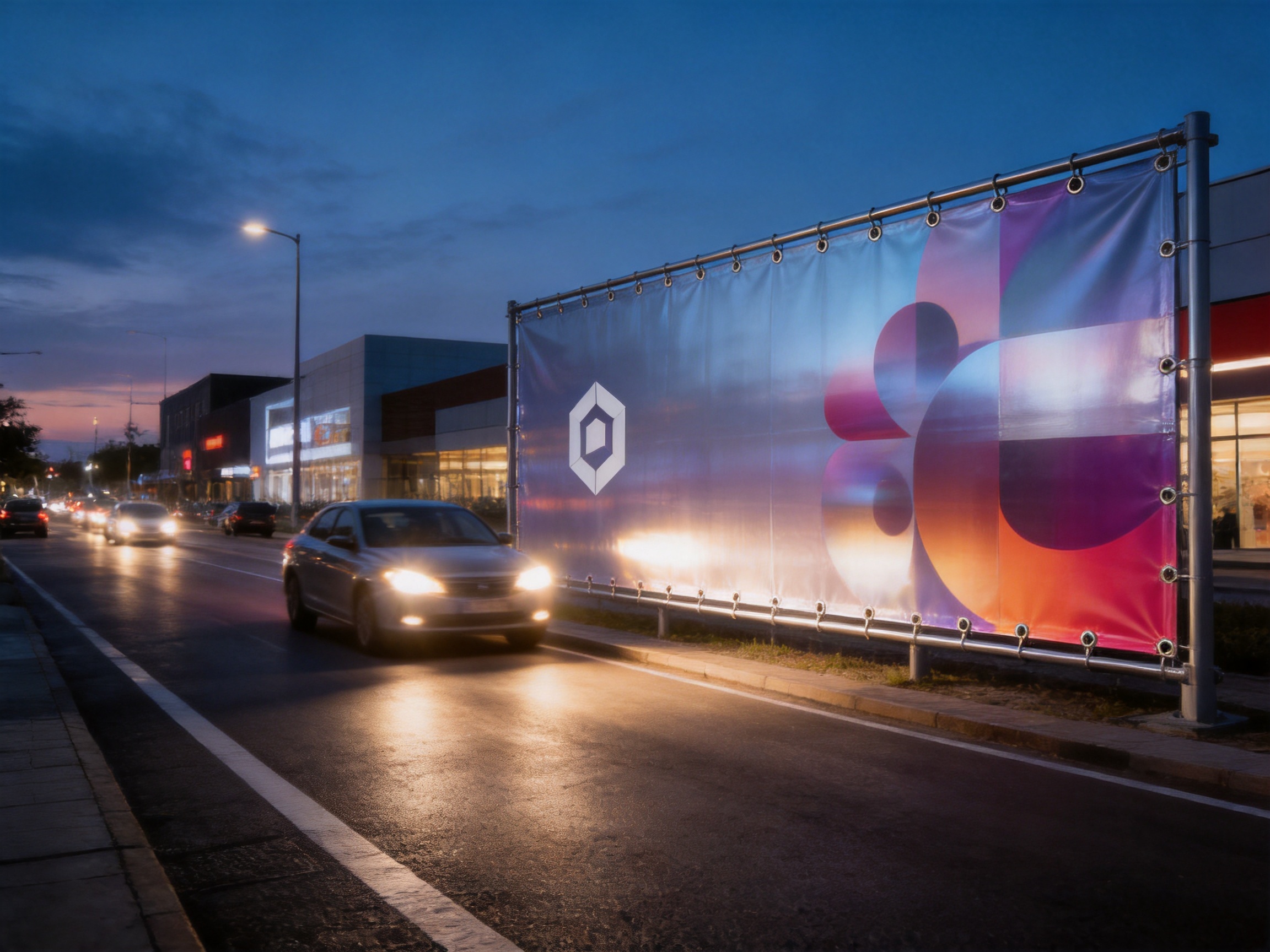
The effectiveness of any advertising banner depends on the relationship between the substrate and the printing process. A high-performance flex banner should present a uniform surface that accepts ink consistently across the full width. Smooth coating quality helps reduce unwanted texture and supports clearer reproduction of text, gradients, product images, and brand colors.
Before printing, the production team should confirm ink compatibility, curing requirements, color-management settings, image resolution, and the intended viewing distance. Large roadside graphics are often viewed from far away, so strong contrast, simple composition, large typography, and clear visual hierarchy may be more important than extremely fine detail. Event banners viewed at close range may require sharper small text and more detailed graphics.
Reflective surfaces can interact with color in a different way from ordinary matte or standard frontlit materials. Designers should test important colors, white areas, dark backgrounds, and photographic elements before proceeding with a very large production run. A physical proof or small-scale sample can help confirm the appearance under daylight and under the type of light expected at the installation site.
For maximum readability, artwork should include sufficient contrast between text and background. Designers should avoid placing small low-contrast text over complex images. If the banner will be viewed by passing motorists, the main message should be understood quickly. A concise headline, prominent logo, limited color palette, and clear call to action generally perform better than an overcrowded layout.
Reflective properties should be considered during photography and inspection. A banner may appear different when viewed directly, obliquely, under diffuse daylight, or under focused headlights. Quality evaluation should therefore consider several viewing angles and lighting conditions. The advertiser should approve the final visual effect based on the actual intended use rather than on a single indoor sample under uniform lighting.
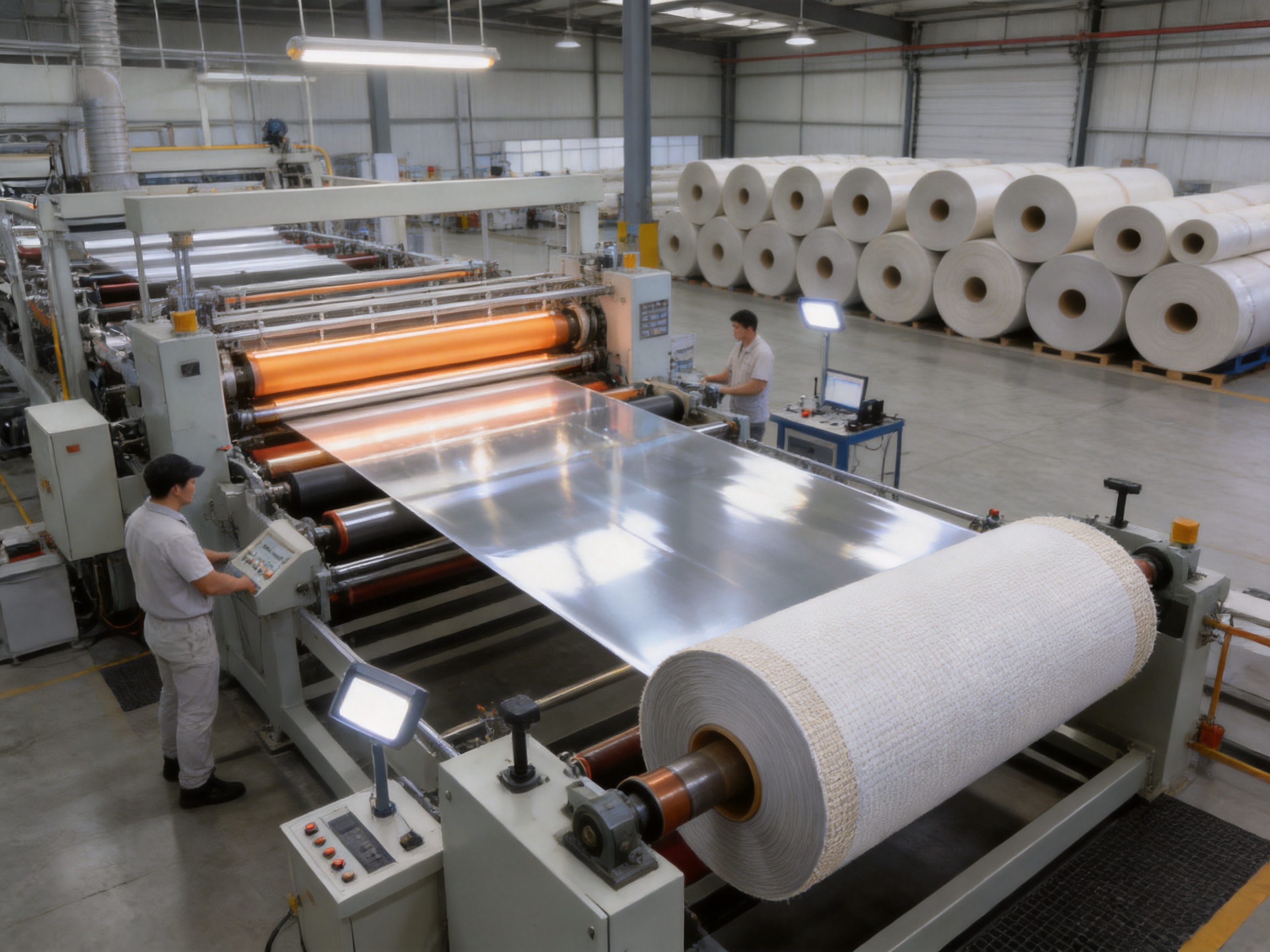
Reliable product performance begins with controlled raw materials. The manufacturing process uses a textile reinforcement selected for denier, weave density, and mechanical stability. The base fabric must be inspected for yarn consistency, surface defects, width uniformity, and contamination before coating. Variations at this stage can influence final strength, appearance, printing quality, and dimensional stability.
During coating, polymer layers are applied to the fabric through industrial calendering or related coating technology. Calendering uses controlled pressure, heat, and roller settings to form a uniform layer over the textile. The process must be adjusted according to resin formulation, coating thickness, production speed, surface finish, and the desired balance of flexibility and strength. Stable processing conditions help create a consistent banner surface across long production runs.
The reflective layer requires particular control because uneven reflective performance can produce visible differences between rolls or across a single sheet. Surface preparation, coating uniformity, curing conditions, and handling cleanliness all influence the final result. A professional manufacturing system should monitor appearance, thickness, adhesion, gloss or reflectivity, and roll consistency throughout production.
After coating, the material is cooled and stabilized before inspection and winding. Correct winding tension is important. Excessive tension can deform the material or create edge stress, while insufficient tension can result in loose rolls, wrinkles, or telescoping. Finished rolls should be protected from dust, moisture, excessive heat, and impact during storage and transport.
Quality control should include both physical testing and visual inspection. Typical evaluations may include total weight, width, tensile strength, tear strength, coating adhesion, temperature resistance, surface appearance, and print suitability. The supplied specifications list a fire protection reference of DIN 75200 with a result below 100 mm per minute, or below 3.9 inches per minute, and a tension test reference of GB/T 3923.1-2013. Buyers should confirm the exact test configuration, sample direction, certification scope, and local compliance requirements for their intended market.
Quality assurance is more effective when it is integrated into every production stage rather than performed only at the end. Incoming material checks, process monitoring, laboratory testing, production records, roll identification, and final release procedures together create a traceable system. This approach helps manufacturers identify variation early and allows customers to receive more consistent material from one order to the next.
The manufacturer operates advanced calendering equipment, multiple production lines, and professional bonding facilities. This combination supports the production of coated fabrics, PVC films, tarpaulin films, frontlit and backlit materials, double-sided printing fabrics, mesh, and light box cloth products. A broad equipment base is valuable because it allows production parameters to be matched to different constructions rather than forcing all products through a single generic process.
Multiple production lines can improve scheduling flexibility and reduce the risk that a single equipment interruption will delay an entire order program. They also support separate manufacturing conditions for different widths, weights, surface finishes, or product families. Professional bonding facilities are useful for large-format products that require joining, reinforcement, edge preparation, or specialized fabrication before shipment.
The stated annual output is approximately 45 million square meters. Such capacity can support large commercial projects, ongoing distributor programs, and repeat orders for international customers. Capacity alone does not guarantee quality, so it should be considered together with process control, technical service, inspection standards, and the ability to maintain consistency across high-volume production.
Haining Taiwei New Material Co., Ltd. was established in July 2010 and is located in Haining Dingqiao Industrial Park in Zhejiang Province, China. The location provides access to major transportation routes and convenient connections to Shanghai and Ningbo ports. For international buyers, access to established ports can support more efficient export planning and provide practical options for different shipping arrangements.
The company operates as a manufacturer and exporter rather than only a trading intermediary. This distinction can provide customers with more direct communication regarding product specifications, production schedules, customization, technical questions, and quality requirements. Direct factory communication is particularly valuable when an order involves unusual widths, special surface treatments, customized packaging, large quantities, or repeat procurement.
The company’s product portfolio includes PVC films, digital printing fabrics, tarpaulin, frontlit and backlit materials, double-sided printing fabrics, mesh, and other light box cloth products. This product breadth indicates experience with several related polymer-coated textile categories. It also gives customers the opportunity to consolidate different material requirements with one specialized supplier.
Reported product features across the company’s manufacturing range include cold resistance, flame retardancy, UV resistance, antistatic performance, mildew resistance, and antibacterial properties. The exact properties available for a particular product should always be confirmed by its technical data sheet and relevant test documentation. Different constructions and grades may not provide identical performance.
More than 98 percent of the company’s products are reported to be exported to Europe, America, the Middle East, Southeast Asia, and other regions. International experience can help a supplier understand export packaging, documentation, container loading, communication across time zones, and the practical requirements of overseas customers. The company also identifies ISO9001:2015 and GB/T19001-2016 quality-management references, which indicate an emphasis on organized quality procedures.
For buyers, these strengths can reduce procurement risk in several ways. A manufacturer with established production lines may be better positioned to support container-scale orders. A supplier with export experience may be familiar with common shipping terms such as FOB, CIF, and CNF. A factory with technical capabilities can also help customers select a suitable product rather than treating every outdoor application as identical.
Roadside advertising requires rapid recognition and durable performance. The reflective surface can make key graphics more noticeable when illuminated by headlights, while the reinforced structure supports large-format installation. Because driver attention must remain focused on the road, designs should use short messages, large letters, strong contrast, and clear brand identification. Installation must comply with local rules concerning traffic safety, visibility, setbacks, support structures, and permitted advertising locations.
Stores, shopping centers, restaurants, property developments, and service businesses can use the banner for seasonal campaigns, grand openings, sales announcements, tenant identification, and directional information. The material’s customization potential allows businesses to change the message according to marketing schedules. A well-finished banner can provide a professional appearance while remaining more economical and easier to replace than a rigid sign.
Outdoor events often operate during both daytime and nighttime hours. Reflective banners can reinforce event identity after dark, support entrance and wayfinding systems, and display sponsor messages around stages, fences, or temporary structures. The lightweight nature of the material also benefits event organizers who must transport banners between venues. Reusable finishing systems may further simplify setup and removal.
Trade fairs and outdoor exhibitions require materials that can be produced quickly, transported efficiently, and installed without complex construction. Custom-printed flex banners can cover temporary walls, fences, booths, and display frames. Reflective details may add visual interest in evening exhibitions or outdoor hospitality areas. After the event, the banners can be stored for later use if the graphics and physical condition remain suitable.
Construction projects frequently use large printed panels to present project names, developer information, architectural renderings, public notices, or safety messages. The weather-resistant material can remain on site through changing conditions. Since construction environments involve dust, wind, and mechanical contact, the banner should be attached securely and inspected regularly for damage.
Warehouses, factories, loading areas, and logistics centers may use printed banners for identification, visitor directions, campaign communication, and temporary notices. Reflective visibility can be helpful in areas that operate during low-light periods. Industrial applications require careful consideration of fire performance, local occupational safety requirements, forklift traffic, and the distance between the banner and heat or ignition sources.
Proper installation begins with an accurate site survey. The installer should measure the frame or mounting area, identify wind exposure, check the condition of fixing points, and determine whether the banner will be viewed primarily during the day, at night, or under artificial lighting. The final size should allow for finishing allowances, tensioning, hems, pockets, or other attachment features.
Edges should be finished according to the expected load. Hemming, welding, webbing, reinforced eyelets, ropes, or other systems can distribute stress and reduce the risk of localized tearing. Eyelets should be installed at consistent intervals and should not be placed too close to an edge. The spacing must reflect banner size, wind exposure, frame design, and local installation practice.
The banner should be tensioned evenly. Excessive tension can distort the print, damage eyelets, and transfer unnecessary stress to the substrate. Insufficient tension can create wrinkles, flapping, noise, and water-collecting pockets. A professional installer should adjust the fixing system so that the banner is smooth without being overstretched.
During transport and storage, the material should be protected from sharp objects, oil, solvents, excessive moisture, and prolonged high heat. Rolls should be stored in a clean, dry environment and supported to prevent crushing or deformation. If folding is necessary, the material should be folded carefully along clean, broad folds rather than sharply creased repeatedly. When possible, rolling is preferable for preserving surface appearance.
Routine cleaning can usually be performed with water and a soft cloth or sponge. Mild, compatible cleaning agents may be used when necessary, but harsh solvents, abrasive pads, aggressive brushes, and untested chemicals should be avoided. Before cleaning a large area, the operator should test the method on an inconspicuous section. Dirt and pollutants should be removed periodically because accumulated contamination can reduce visual quality and may complicate later maintenance.
Installed banners should be inspected after severe weather and at regular intervals. Check for loose fasteners, edge wear, punctures, wrinkles, coating damage, frame movement, and signs of water retention. Early correction can prevent a minor defect from becoming a major failure. If the banner is installed in a public area or near traffic, inspections should follow applicable safety procedures.
| Product | Reflective Outdoor Advertisement Flex Banner |
| Category | Flex Banner |
| Item number | TWF8484-550 |
| Base specification | 840 by 840 denier |
| Thread configuration | 9 by 9 |
| Total weight | Approximately 550 gsm |
| Tensile strength | 1000/800 N per 5 cm |
| Tearing strength | 200/180 N |
| Adhesion | 60 N per 5 cm |
| Temperature resistance | Approximately -15°C to +70°C |
| Available width | Up to 5 meters |
| Primary features | Reflective surface, UV resistance, water resistance, outdoor durability, customizable printing |
| Suggested uses | Roadside advertising, events, retail promotion, construction signage, commercial displays, temporary outdoor campaigns |
| Manufacturing location | China |
| Business type | Manufacturer and exporter |
| Quality references | ISO9001:2015 and GB/T19001-2016 references |
| Typical minimum order | One 20-foot container |
| Typical delivery time | Approximately 20 working days, subject to order confirmation |
| Payment terms | T/T or L/C; commercial terms may include FOB, CIF, or CNF |
Before placing an order, buyers should define the intended application, finished dimensions, printing method, required color appearance, reflective expectations, installation system, packaging format, and destination market. These details help the manufacturer confirm the most suitable construction and avoid misunderstandings concerning width, roll length, surface finish, and finishing allowances.
Customers requiring custom graphics should provide print-ready artwork in an agreed file format. The artwork should include correct dimensions, bleed, safe margins, color references, image resolution, and any instructions for panel joining. If the display is very large, the customer should identify the required viewing distance and whether the banner will be viewed under headlights, streetlights, floodlights, or general ambient light.
For a new application, a sample or trial order is recommended. Testing can verify printing behavior, reflective appearance, welding or sewing compatibility, installation tension, color reproduction, and performance under local conditions. A sample is particularly useful when the banner will be installed in a demanding climate or when it will be combined with an unfamiliar frame system.
The listed minimum order quantity is one 20-foot container, and the typical delivery time is approximately 20 working days. Actual lead time may vary according to material availability, production schedules, customization, inspection requirements, packaging, and shipping arrangements. Buyers should obtain a formal quotation that confirms product grade, quantity, width, roll length, packaging, payment terms, delivery terms, and documentation.
Material selection should include the complete lifecycle of the banner. A durable product that remains attractive for a longer period may reduce the frequency of replacement and reprinting. Longer service life can lower the amount of material consumed per campaign, although the environmental outcome depends on production, transportation, use, maintenance, and end-of-life handling.
Advertisers can improve resource efficiency by selecting an appropriate thickness and width rather than automatically choosing an oversized specification. Reusable hardware, modular frames, replaceable graphic skins, and planned campaign schedules can also reduce waste. When a banner is no longer suitable for its original use, organizations may explore reuse for temporary signage, protective covers, storage labeling, or educational projects, provided the material remains safe and structurally sound.
End-of-life management should follow local waste regulations. PVC-coated textile products may require specialized handling, and recycling availability varies by region. Buyers should discuss packaging reduction, roll protection, and potential recovery options with their suppliers and local waste-management providers.
The Reflective Outdoor Advertisement Flex Banner brings together several qualities that are often evaluated separately: low-light visibility, large-format printability, weather resistance, mechanical strength, flexible handling, and customization. Its reflective surface supports attention after dark, while the 840 by 840 denier reinforcement and 550 gsm weight provide a substantial foundation for demanding outdoor use.
Its performance profile is particularly valuable for campaigns that must remain visible beyond normal daylight hours. Instead of treating nighttime visibility as an afterthought, advertisers can select a substrate designed to contribute to the visual performance of the entire display. This makes the material appropriate for businesses, event organizers, property developers, transport-related advertisers, and organizations that need outdoor communication to work across changing conditions.
The manufacturing capabilities behind the product further strengthen its commercial value. Advanced calendering equipment, multiple production lines, professional bonding facilities, export experience, quality-management references, and high annual capacity provide a foundation for consistent supply. Customers can also benefit from the manufacturer’s broader expertise in PVC films, digital printing fabrics, tarpaulins, mesh, frontlit materials, backlit materials, and light box cloth products.
As with any outdoor substrate, successful results depend on correct printing, finishing, installation, maintenance, and compliance with local requirements. When these factors are managed properly, the Reflective Outdoor Advertisement Flex Banner can provide a durable and visually distinctive platform for outdoor communication.
It is a flexible, textile-reinforced advertising material with a reflective surface designed for large-format outdoor printing. The surface can help printed graphics become more noticeable when illuminated in low-light conditions, while the reinforced construction supports outdoor durability.
The surface returns part of the incoming light toward its source. Under vehicle headlights or other focused illumination, the printed banner can appear more noticeable than a conventional non-reflective banner. The actual effect depends on viewing angle, light intensity, graphic design, installation position, and surrounding conditions.
Yes. The banner is intended for continuous outdoor advertising and can display printed graphics in daylight as well as under low-light conditions. The reflective feature adds nighttime visibility rather than limiting the banner to evening use.
The listed total weight is approximately 550 grams per square meter. This gives the banner a durable, substantial construction suitable for large-format outdoor applications while keeping it easier to transport than rigid signage.
The listed tensile strength is 1000/800 N per 5 cm, the tearing strength is 200/180 N, and the adhesion value is 60 N per 5 cm. These values should be reviewed together with the relevant test methods and installation design.
The listed width is up to 5 meters. The final available width, roll length, and production tolerance should be confirmed for each order because they may depend on the selected construction, production schedule, and customization requirements.
Yes. It can be customized with advertising messages, logos, photographs, product images, event information, and other graphics. Buyers should confirm ink compatibility and approve a proof when color accuracy or reflective appearance is especially important.
Typical applications include roadside advertising, retail promotion, commercial identification, festivals, concerts, fairs, exhibitions, construction projects, property advertising, temporary campaigns, and selected industrial or logistics displays.
The listed temperature resistance is approximately -15°C to +70°C. Actual service performance also depends on sunlight, humidity, wind, installation tension, storage, and the behavior of the supporting hardware.
Not necessarily. Its reflective surface is intended to improve visibility when light reaches it, but the final result depends on the location and available light. External lighting may still be useful when the banner must be visible from many angles or when the site has very little illumination.
It should be installed on a suitable frame or support using properly spaced, reinforced fixing points. The banner should be tensioned evenly without excessive stretching. Wind exposure, banner dimensions, edge finishing, and local safety requirements should be evaluated by a qualified installer.
Routine cleaning can generally be performed with water and a soft cloth or sponge. Mild compatible cleaning agents may be used after testing. Abrasive tools, harsh solvents, and aggressive chemicals should be avoided because they may damage the coating or reflective surface.
The manufacturer reports advanced calendering equipment, multiple production lines, professional bonding facilities, an annual output of approximately 45 million square meters, export experience, and a broad range of related PVC-coated and digital-printing materials. These capabilities support customization, volume production, and international supply.
The listed minimum order quantity is one 20-foot container. Buyers should request a current quotation because minimum quantities may vary according to product grade, width, packaging, and production requirements.
The listed delivery time is approximately 20 working days. The confirmed schedule should be established after specifications, artwork, quantity, payment, inspection, and shipping arrangements are agreed.
The Reflective Outdoor Advertisement Flex Banner is a practical solution for advertisers seeking stronger visibility, dependable outdoor performance, and flexible large-format communication. Its reflective surface supports low-light recognition, while its reinforced 840 by 840 denier construction, 9 by 9 thread configuration, 550 gsm weight, tensile strength, tear resistance, and coating adhesion provide a durable foundation for demanding applications.
Its UV-resistant and water-resistant characteristics help preserve the appearance of printed campaigns in changing weather, while the available width of up to 5 meters supports large displays with fewer seams. The material is suitable for businesses, event organizers, retailers, construction companies, property developers, and other organizations that need a customizable advertising surface for outdoor use.
Supported by advanced calendering equipment, multiple production lines, professional bonding facilities, international export experience, and a broad product portfolio, the manufacturing operation is positioned to serve both standard and customized material requirements. When the product is correctly printed, finished, installed, and maintained, it can deliver a strong combination of visual impact, durability, and operational convenience.
1. Product technical information for Reflective Outdoor Advertisement Flex Banner, item TWF8484-550.
2. Manufacturer-provided specifications for denier structure, thread count, weight, tensile strength, tearing strength, adhesion, width, and temperature resistance.
3. DIN 75200, Road vehicle components: determination of burning behavior.
4. GB/T 3923.1-2013, Textiles: determination of maximum force and elongation at maximum force using the strip method.
5. ISO 9001:2015, Quality management systems: requirements.
6. GB/T 19001-2016, Quality management systems: requirements.
7. General principles of large-format digital printing, outdoor graphic installation, banner finishing, and textile-reinforced coated materials.
Reflective Outdoor Advertisement Flex Banner
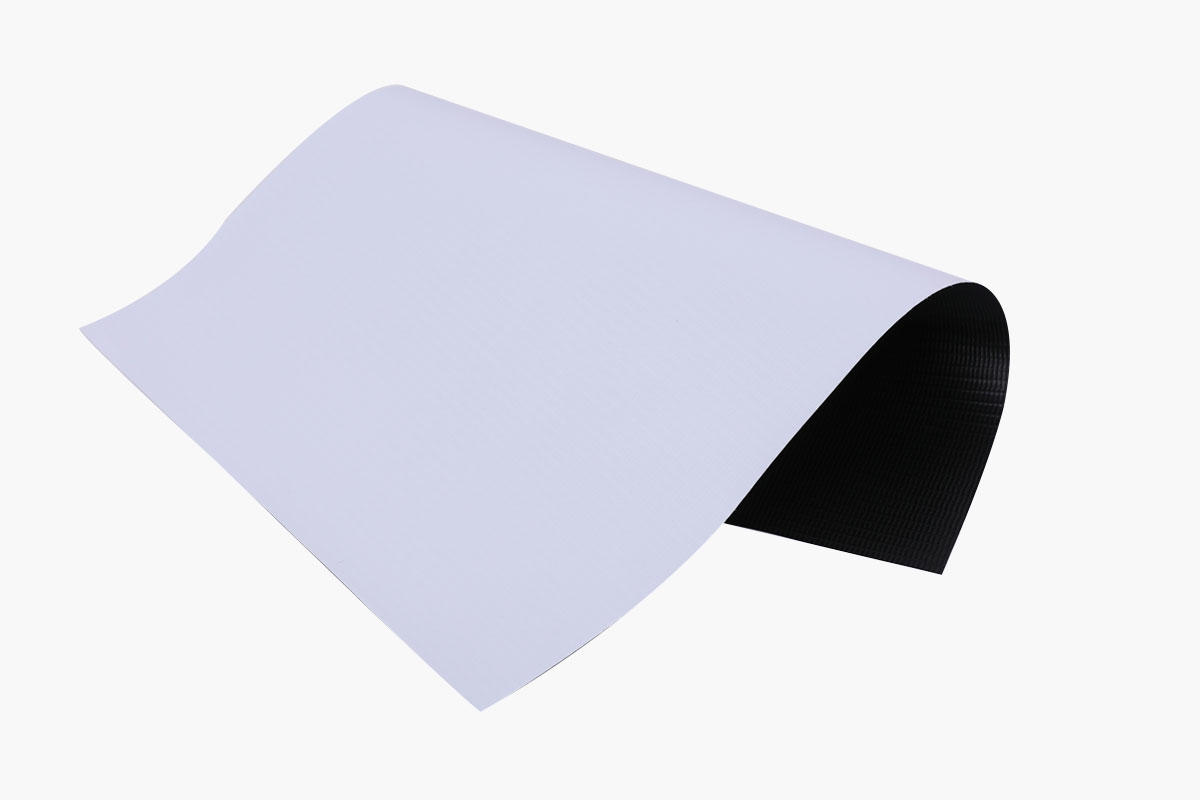 High-Resolution Durable PVC Flex Banner
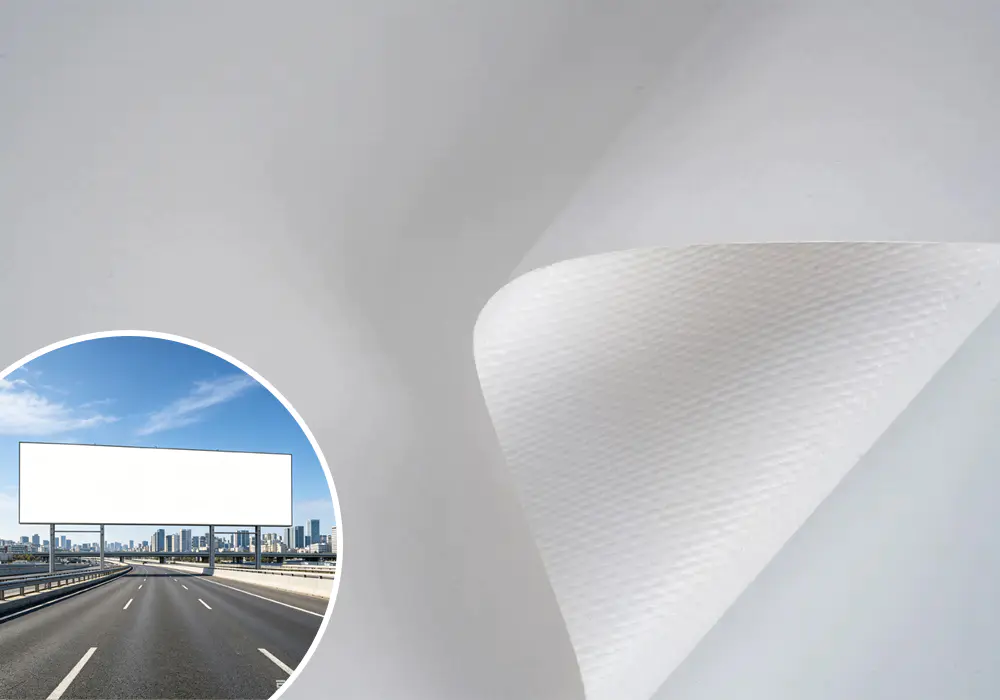 Tear Resistant Large Outdoor Flex Banner Print Cloth
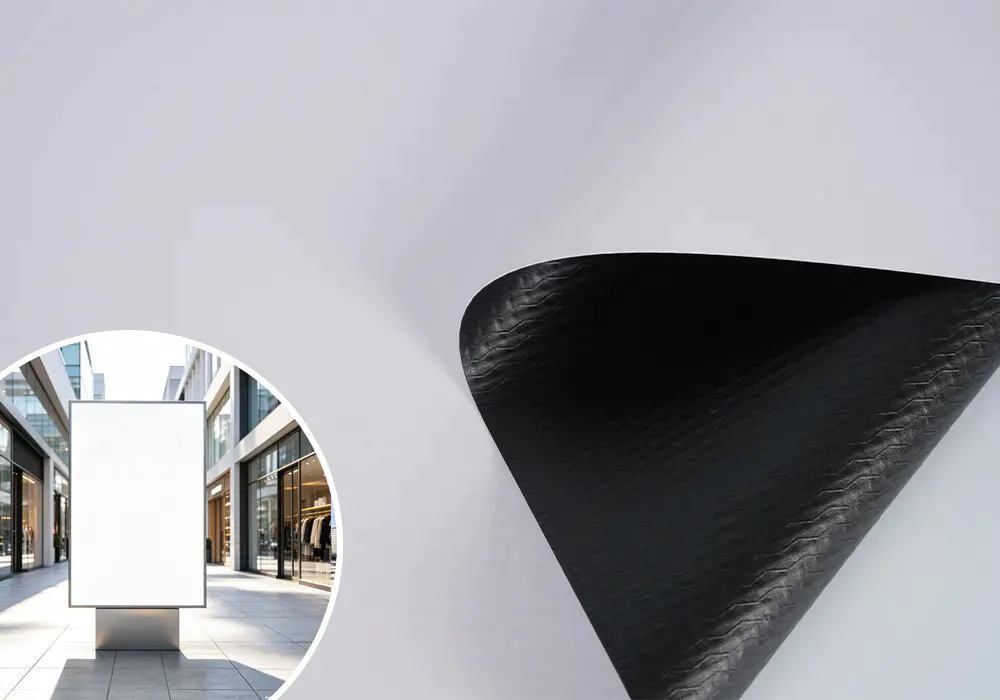 Anti UV Long Lasting Blackback Outdoor flex Banner Fabric
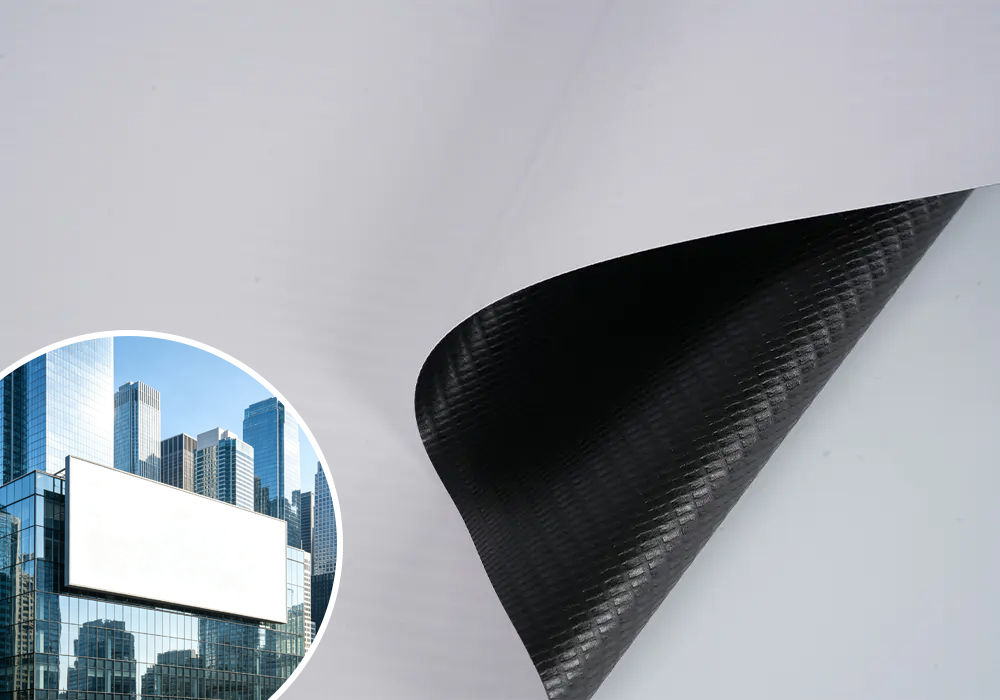 High Ink Absorption Blackback Commercial Promo Flex banner Material
 High Tensile Tear Proof Large Format Mesh Tarpaulin
 Custom Digital Printing Fabric Manufacturers

 Previous