

 English
 中文简体
 Español
News
Home / Author / Shen Yaqin — International Sales Manager / Thickened Privacy Waterproof Tarpaulin for Garden Barrier Fences


Content
Outdoor privacy has become an increasingly important consideration for homeowners, property managers, garden designers, balcony users, and retail distributors throughout Europe. A garden fence is expected to do more than define a boundary. It may need to reduce visibility, withstand wind and rain, preserve an attractive appearance, remain stable during seasonal changes, and install easily without requiring complex construction. The Thickened Privacy Waterproof Tarpaulin for Garden Barrier Fences is designed to meet these combined requirements in one practical screening solution.
Unlike lightweight screening cloth that may stretch, fray, or lose its visual coverage after prolonged outdoor exposure, this product uses a reinforced 300D×500D woven structure with an 18×12 construction and an approximately 450 gsm finished weight. Its dense internal composition supports high light-blocking performance, while the waterproof outer layer helps protect the fence screen from continuous rain. The result is a robust privacy barrier suitable for gardens, balconies, patios, residential boundaries, temporary outdoor spaces, and decorative fencing applications.
The product is manufactured for demanding outdoor use and is particularly suitable for European distribution channels. Its dimensions can be adapted to commonly used fence formats, including narrow pre-cut strips such as 0.19 m × 35 m or 0.19 m × 50 m. The roll structure also allows efficient cutting, packaging, and private-label retail preparation. For wholesalers and home improvement distributors, this flexibility can simplify stock planning while offering consumers a product that is straightforward to handle and install.
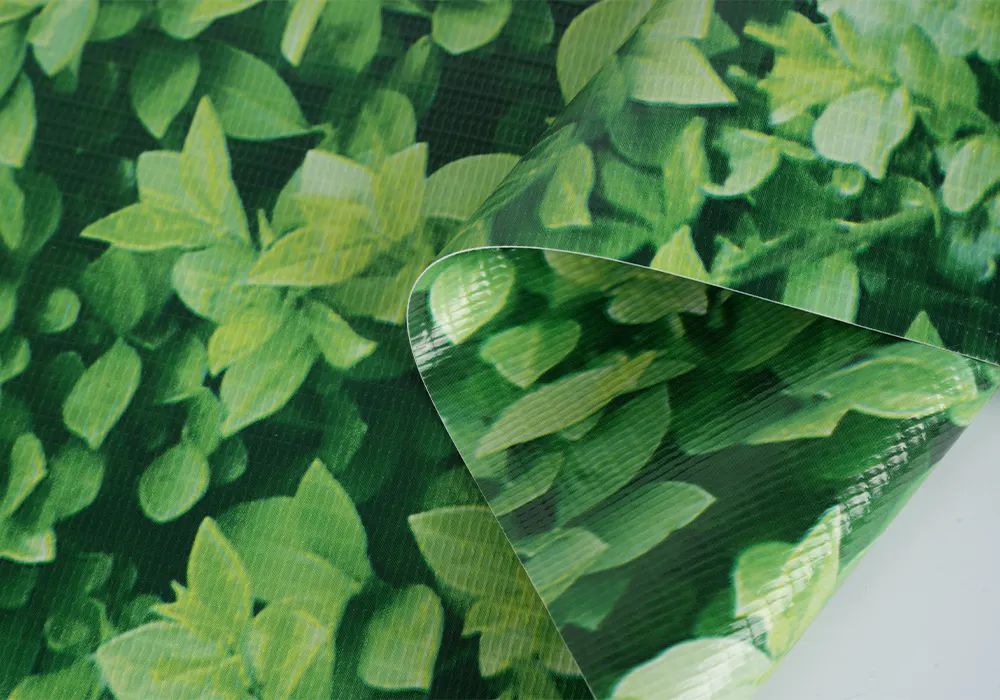
Thickened Privacy Waterproof Tarpaulin For Garden Barrier Fence
Many garden screens are marketed as privacy products, but not all screening materials provide the same level of coverage or durability. A basic woven cloth can reduce visibility under favorable conditions, yet it may permit silhouettes, shadows, or direct light transmission. When the material is installed beside a garden, balcony, or patio, incomplete coverage can reduce the sense of privacy that customers expect.
A high-performance privacy tarpaulin must solve several problems simultaneously. It should block views from outside, tolerate repeated folding and unrolling, remain stable when exposed to wind pressure, resist tearing around fixing points, and prevent rain from passing through the body of the material. It should also retain a consistent appearance after exposure to sunlight, moisture, temperature changes, and everyday contact with fences or walls.
The thickened construction of this screening tarpaulin addresses these needs through a combination of structural reinforcement and surface protection. The woven core provides mechanical strength, while the dense coating system helps create a continuous barrier against light and water. The product is therefore more substantial than ordinary decorative cloth and more visually refined than many purely industrial covers.
For homeowners, this difference can mean fewer maintenance concerns and a more complete privacy solution. For professional buyers, it can help reduce customer complaints associated with premature sagging, tearing, fading, or inadequate coverage. For distributors, a product with several functional advantages can serve multiple market segments rather than being restricted to a single low-cost application.
The primary function of a garden privacy screen is to limit unwanted visibility. The product uses an optimized internal light-blocking core layer designed to deliver a highly opaque barrier. When properly installed, it can cover the open spaces between fence posts or railing elements and substantially reduce the ability of passersby to see into a garden, balcony, or enclosed outdoor area.
Complete visual shielding is especially useful in residential neighborhoods where properties are close together. It can help create a more comfortable environment for outdoor dining, children’s play, relaxation, gardening, and social gatherings. On balconies, it can provide separation from neighboring buildings and nearby walkways. Around patios and terraces, it can help transform an exposed area into a more private extension of the home.
The material is also suitable for commercial and semi-public environments. Restaurants, holiday accommodations, campsite operators, recreational facilities, and construction-site managers may use privacy tarpaulin to create temporary or semi-permanent visual separation. In these applications, a dense screen can improve the appearance of the site while helping control visitor sightlines.
Compared with open mesh or loosely woven privacy fabric, the thickened tarpaulin offers a more consistent appearance across the entire panel. The absence of large transparent gaps helps maintain visual continuity. This is valuable where the screen is intended to function as a clearly defined barrier rather than merely a decorative accent.
Outdoor fence screens are regularly exposed to rain, drizzle, damp air, splashing water, and moisture retained by nearby vegetation. If a material absorbs water easily, it may become heavy, dirty, difficult to dry, and more vulnerable to mildew or surface degradation. A waterproof tarpaulin structure helps reduce these risks by preventing water from passing directly through the main body of the material.
The waterproof layer is designed to withstand continuous rain on fences, balcony railings, and ground-adjacent installations. This makes the product appropriate for climates where changing weather is a normal part of year-round outdoor use. Proper installation remains important: the screen should be tensioned correctly, fixed securely, and positioned so that water can drain rather than collect in folds or pockets.
Water resistance also supports easier maintenance. Rain can wash away some loose surface dust, while the coated surface can generally be cleaned with a soft cloth, water, and a mild neutral detergent when necessary. Abrasive cleaners, sharp tools, and aggressive scrubbing should be avoided because they may damage the printed or coated surface.
The waterproof design offers an advantage over untreated fabric screening. Traditional fabric may become saturated during bad weather, while a coated tarpaulin is better suited to repeated exposure. This distinction is important for products sold as permanent or seasonal fence coverings rather than short-term decorative materials.
The structural foundation of the product is a reinforced 300D×500D woven core with an 18×12 construction. The denier values describe the approximate linear density of the yarns, while the 18×12 specification indicates the woven arrangement. Together, these details identify a material engineered for a stronger and more stable performance than lightweight screening cloth.
The approximately 450 gsm finished weight contributes to the product’s substantial handling feel. A heavier material can provide better coverage and a more stable hanging profile when correctly fixed to a fence. It is less likely to flutter excessively than very light fabric, although all outdoor screens should still be installed with sufficient attachment points and suitable tensioning for local wind conditions.
Reinforced construction also helps distribute stress. Wind does not act on a screen at only one point; it creates repeated pressure across the entire surface. A strong woven framework can spread this pressure through the panel and toward the fixing points. This can reduce localized deformation and help limit warping, stretching, and friction-related sagging.
The material is designed to offer improved resistance to tearing and abrasion compared with standard screening cloth. This is particularly relevant at corners, edges, eyelets, cable routes, and areas that contact metal fencing. Nevertheless, correct installation is essential. Sharp fence edges should be covered or smoothed, fixing components should be compatible with the material, and excessive tension should be avoided.
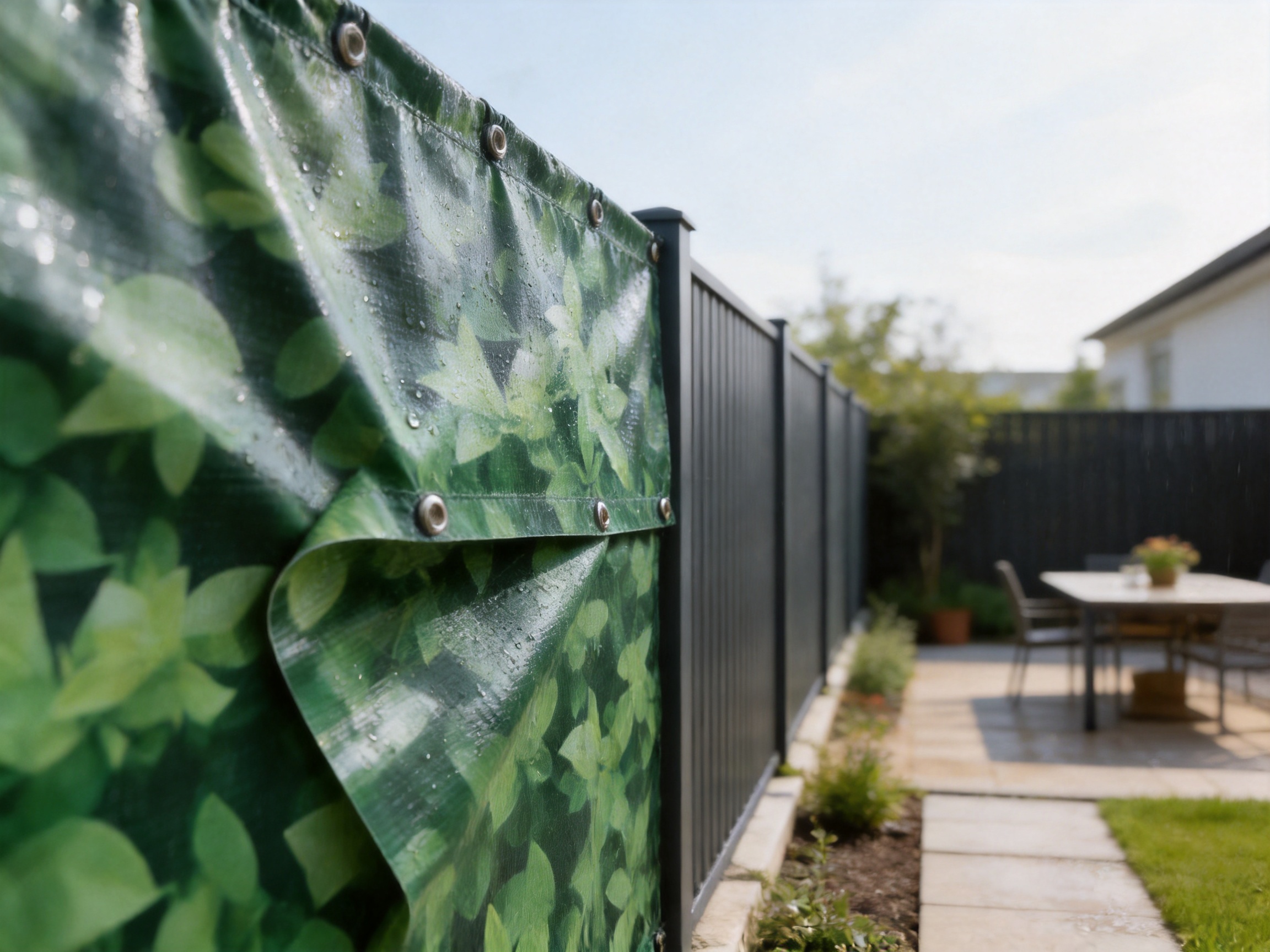
The following technical data describes the supplied tarpaulin construction. Actual performance may vary according to production batch, testing method, installation conditions, climate, and exposure duration. Buyers should confirm final specifications, tolerances, color requirements, and testing standards with the manufacturer before placing a large order.
| Item | Specification or Result | Practical Significance |
| Base construction | 300D×500D, 18×12 woven structure | Reinforced framework for outdoor screening and fence wrapping |
| Approximate finished weight | 450 gsm | Substantial coverage, improved hanging stability, and durable handling |
| Tensile strength, warp/weft | 200/180 N per 5 cm | Resistance to pulling forces during installation and outdoor use |
| Tearing strength, warp/weft | 100/80 N | Improved resistance to tear propagation after localized damage |
| Adhesion | 60 N per 5 cm | Bonding strength between the coating layers and fabric structure |
| Privacy function | High-density light-blocking construction | Helps prevent direct visibility through the installed screen |
| Water protection | Waterproof coated surface | Helps resist rain penetration during outdoor installation |
| Primary formats | Roll goods and custom-cut strips | Supports wholesale, retail, and project-specific requirements |
Tensile strength indicates how much pulling force the material can withstand under the stated test conditions. This property is important when the product is stretched along a fence or exposed to wind loads. Tearing strength measures resistance to the continuation of a cut or puncture. It is especially relevant at fastening points, where an improperly installed fixture may create a concentrated stress point.
Adhesion is another important property for coated tarpaulin. It reflects the bond between the coating and the supporting fabric. Strong adhesion helps prevent peeling, delamination, or separation during folding, installation, and outdoor exposure. Together, tensile strength, tearing strength, and adhesion provide a more complete view of product durability than weight alone.
Standard screening cloth may be attractive because it is lightweight and inexpensive, but it may not provide the performance expected from a long-term privacy barrier. Thin cloth can be more vulnerable to wind deformation, edge fraying, and reduced coverage after stretching. Its privacy level may also vary with sunlight direction and viewing angle.
The thickened tarpaulin offers several competitive advantages. First, its denser construction supports stronger light blocking. Second, its reinforced core provides greater resistance to mechanical stress. Third, its waterproof layer makes it more suitable for permanent outdoor exposure. Fourth, the heavier material offers a more substantial visual presentation for retail customers who associate weight and opacity with quality.
Compared with open privacy mesh, the product provides a more complete visual barrier. Open mesh can be useful where airflow is the main objective, but it may not deliver the desired level of seclusion. The tarpaulin is better suited to customers who prioritize privacy and weather protection, provided that the supporting fence and fixings are capable of handling the wind load generated by a more solid screen.
Compared with ordinary plastic sheet, the woven tarpaulin offers a more engineered structure. A plain sheet may split easily when pierced or may flap loudly in strong wind. The woven reinforcement helps improve dimensional stability and tear resistance. It also allows the product to be supplied in a range of roll widths and custom formats.
Compared with decorative fabric, the tarpaulin provides better resistance to rain and abrasion. Decorative textiles may offer attractive patterns but are not always designed for continuous outdoor exposure. This product combines decorative printing options with a functional waterproof construction, making it appropriate for customers who want both appearance and performance.
Wind is one of the most significant forces affecting an outdoor fence screen. A large, continuous panel can act like a sail, especially when installed on an exposed boundary. The reinforced woven structure helps distribute wind pressure across the screen, but no material can eliminate the need for correct installation and site assessment.
The product is designed to reduce warping, excessive stretching, and friction-induced sagging in normal outdoor use. Its strong framework can help the screen maintain a more even profile between attachment points. This can produce a cleaner appearance and reduce the likelihood that the lower section will drag against the ground or rub repeatedly against the fence.
For best results, installation should begin with an inspection of the fence or railing. Posts should be secure, metal edges should not be sharp, and damaged sections should be repaired before the screen is attached. The screen should be unrolled carefully and allowed to relax before final tensioning. Fixing points should be distributed evenly rather than concentrated only at the corners.
Suitable fixing methods may include UV-resistant cable ties, lacing cord, clips, eyelets, or other fastening systems compatible with the fence structure. The fastening interval should reflect the screen size, local wind exposure, and strength of the supporting fence. In high-wind locations, installers may need additional fixing points or a design that allows controlled airflow.
Although the product is substantially reinforced, it should not be treated as a substitute for a structural wind barrier. The screen does not replace a properly engineered fence, and customers should consider local building requirements, property boundaries, and weather conditions before installation.
Privacy does not need to compromise the appearance of a garden or balcony. The tarpaulin can be produced with decorative patterns that add visual character to an outdoor area. Printed designs may be selected to complement landscaping, building colors, seasonal retail collections, or specific project themes.
Color retention is supported by an anti-UV formulation designed for year-round European outdoor conditions. Sunlight can gradually cause untreated materials to fade, particularly when they are exposed to direct light throughout the day. UV-resistant construction helps the printed design maintain a more stable appearance over time, although the exact service life depends on climate, orientation, color selection, cleaning practices, and exposure intensity.
Decorative printing also creates opportunities for retail differentiation. Home improvement stores can offer neutral privacy patterns, botanical designs, modern geometric graphics, or seasonal collections. Landscape contractors can specify screens that coordinate with garden furniture and planting schemes. Property managers can use consistent printed panels to create a more organized appearance across multiple sites.
The printing surface should be handled carefully during cutting and installation. Sharp folding, dragging across rough ground, or contact with abrasive metal can damage the finish. Retail packaging should protect the roll from moisture, crushing, and prolonged direct sunlight before sale.
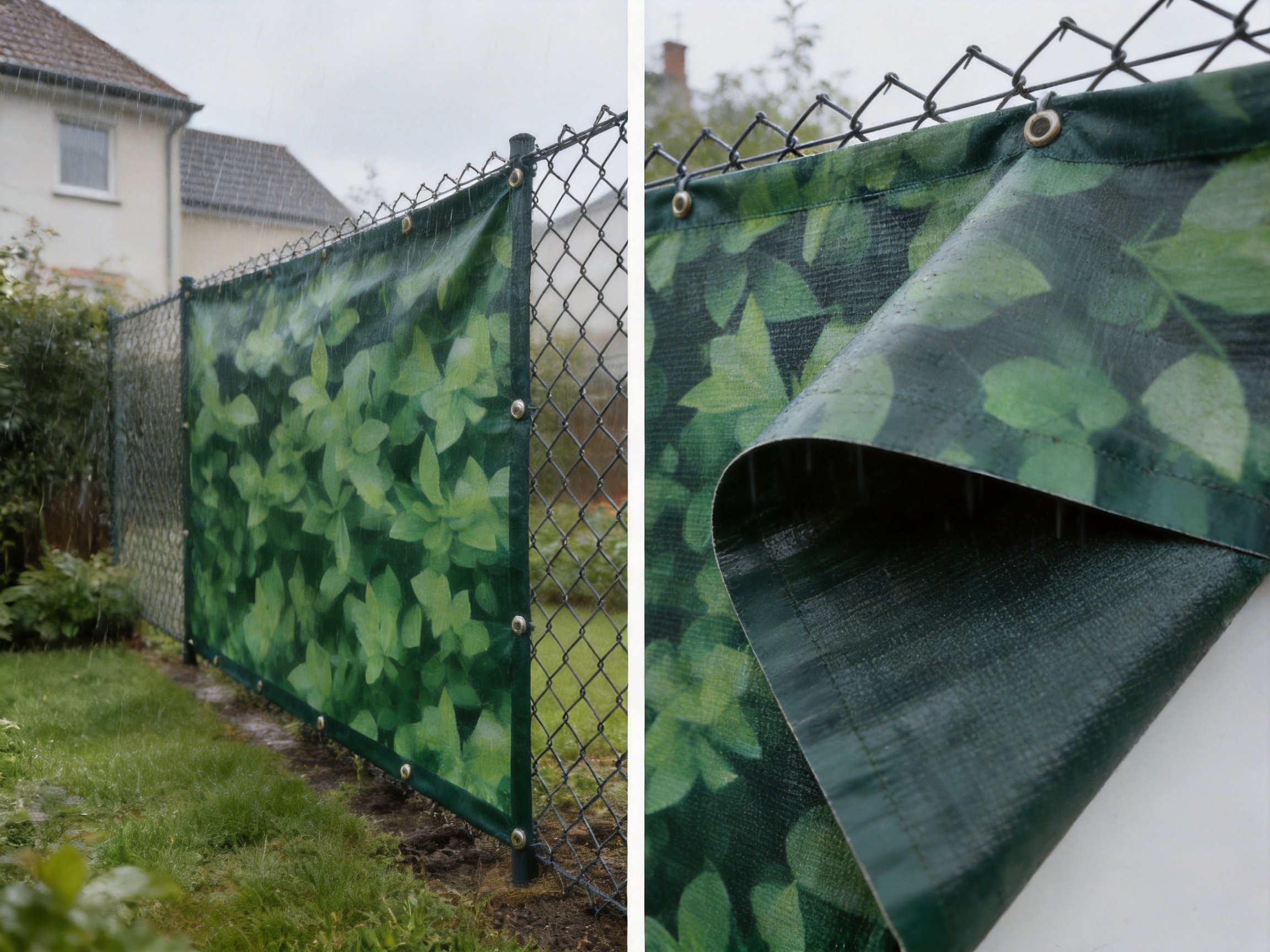
The product is suitable for a broad range of residential and commercial applications. In private gardens, it can be installed along chain-link fencing, welded wire panels, balcony rails, and other open boundary systems. It can provide privacy from neighboring houses, streets, footpaths, and shared outdoor spaces.
On balconies, the material can cover open railings and help create a more secluded area for seating or storage. Because balcony installations may experience strong wind, buyers should confirm that the railing is secure and that local property rules permit the use of external screening. Appropriate fastening is particularly important in elevated locations.
Patios and terraces can benefit from a screen that combines visual separation with rain resistance. The tarpaulin may be used along the sides of a pergola, beside an outdoor dining area, or around a recreational space. It can also help conceal storage areas, waste containers, utility equipment, or work zones without constructing a permanent wall.
Garden barrier applications include vegetable gardens, allotments, nurseries, pet areas, and poolside boundaries. In each case, the screen can reduce visibility and improve the visual order of the site. When used near plants or soil, adequate clearance and drainage should be maintained to reduce prolonged contact with damp ground.
Commercial users may install the material around restaurants, cafés, hotels, holiday parks, temporary event areas, and construction sites. It can create a cleaner perimeter, separate customer areas, and improve the appearance of temporary facilities. Because the material is supplied in rolls and can be cut, it is practical for different project lengths.
The product is calibrated for common European fence-screening requirements and can be supplied in formats such as 0.19 m × 35 m and 0.19 m × 50 m pre-cut rolls. These narrow strips are convenient for standard fence panels and can reduce the amount of on-site cutting required by consumers. They also support efficient shelf presentation and straightforward product labeling.
For wholesalers, roll-based supply simplifies inventory management. Different lengths can be selected according to the requirements of garden centers, home improvement retailers, online stores, and professional landscaping distributors. Custom widths and lengths may be considered for larger projects or private-label programs, subject to production quantities and technical confirmation.
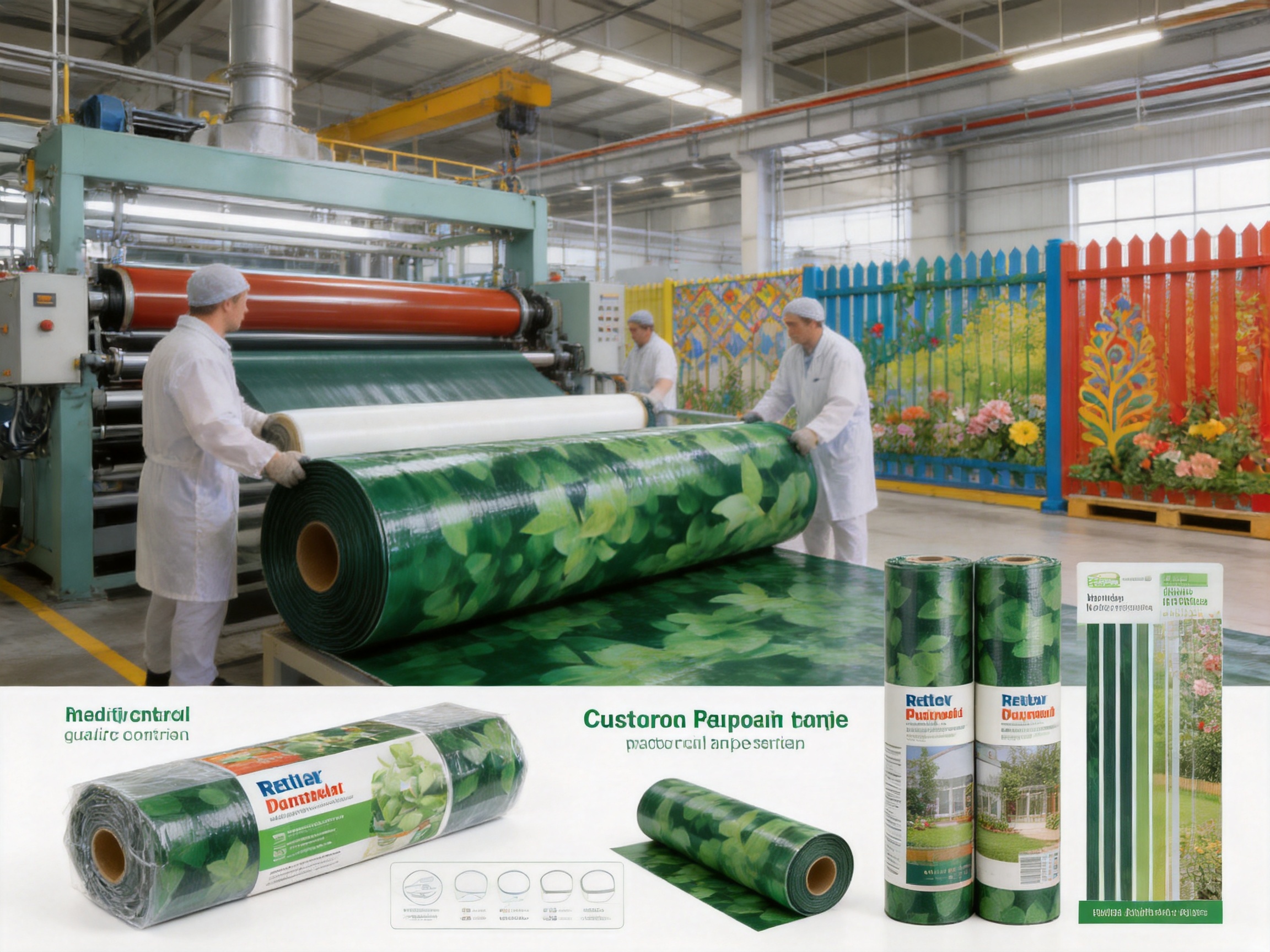
Colorful retail carton packaging can improve product visibility and help communicate the main selling points: privacy, waterproof performance, reinforced construction, UV resistance, and easy installation. Packaging may include application photographs, dimensions, fixing recommendations, care instructions, and safety information. Clear labeling is particularly useful when several similar roll sizes are displayed together.
Retailers should ensure that package claims accurately reflect the confirmed specification. Important information includes roll length, width, material weight, construction, color, recommended applications, installation method, and any limitations related to wind exposure. Professional product information reduces confusion and supports customer confidence.
The product’s export orientation is supported by the manufacturer’s experience supplying international markets. More than 98 percent of the company’s products are exported to Europe, America, the Middle East, Southeast Asia, and other regions. This international focus can assist buyers who need coordinated production, export documentation, packaging preparation, and communication across different markets.
The manufacturer operates in Haining Dingqiao Industrial Park and benefits from convenient access to the ports of Shanghai and Ningbo. This location supports the movement of raw materials and finished goods and can be advantageous for export orders requiring scheduled container loading and international shipment.
The company specializes in PVC films, digital printing fabrics, tarpaulin films, frontlit and backlit materials, double-sided printing fabrics, mesh, and other light box cloth products. This product range indicates experience with coated flexible materials, reinforced substrates, printing surfaces, and visual communication applications.
Advanced calendering equipment is used in the production process. Calendering can help form and control polymer layers, regulate material thickness, and create a consistent surface finish. Consistency is important for tarpaulin because uneven thickness may affect appearance, coating adhesion, flexibility, waterproof performance, and roll handling.
Multiple production lines allow the company to manage different material categories and order requirements. Production flexibility is valuable for buyers seeking standard products as well as customized widths, printed patterns, roll lengths, packaging formats, and performance options. A diversified production setup can also support more stable scheduling when demand changes across product categories.
Professional bonding facilities support the joining and coating-related processes required for flexible composite materials. Strong bonding is essential for maintaining the integrity of a coated woven structure. It helps connect the surface layers with the reinforcing fabric and contributes to the adhesion value specified for the product.
The stated annual output is approximately 45 million square meters. This capacity provides a foundation for serving wholesale and export customers while supporting repeat orders and larger project quantities. Capacity alone does not guarantee quality, but when combined with established processes, technical experience, and production management, it can help deliver reliable supply at commercial scale.
The company’s product portfolio includes materials designed with cold resistance, flame retardancy, UV resistance, antistatic, mildew-proof, and antibacterial properties. Not every characteristic necessarily applies to every product or configuration, so buyers should confirm which properties are included in the selected tarpaulin specification. The broader capability is nevertheless relevant because it demonstrates experience in developing flexible materials for different environmental and functional requirements.
For privacy fence tarpaulin, the most important product-development priorities include opacity, waterproof performance, tear resistance, coating adhesion, surface appearance, color stability, and practical installation. These properties must work together. A screen with strong fabric but poor adhesion may delaminate. A waterproof surface with inadequate tear resistance may fail around fixings. A visually attractive print may not satisfy customers if the material stretches or fades quickly.
Technical development therefore involves balancing polymer formulation, fabric construction, coating thickness, curing conditions, printing compatibility, surface treatment, and roll handling. Process control at each stage can help maintain consistent results from the first roll to the last. Buyers with specific performance requirements should request samples and technical documents before approving mass production.
Product development can also address different market preferences. Some customers may prioritize a neutral dark color and maximum privacy. Others may want a printed garden pattern or a lighter decorative surface. Certain projects may require flame-retardant treatment, special cold-weather flexibility, custom packaging, or a different roll width. A manufacturer experienced with PVC films and printed fabrics is better positioned to evaluate these adaptations.
The roll structure supports clean custom slitting and can be adapted for retail or project-specific formats. Custom slitting may allow a distributor to offer lengths that correspond to common fence modules, reducing waste for end users. It may also make the product easier to display, transport, and store.
Private-label customers can consider customized carton artwork, barcode labels, instruction sheets, color collections, and product naming. Packaging should communicate the product’s actual functions without overstating performance. A well-designed retail presentation can distinguish the product from generic screening materials and help consumers understand why a heavier waterproof tarpaulin may offer better value.
Printing customization can include decorative patterns, logos, color schemes, and coordinated product series, subject to artwork review and minimum order requirements. For commercial properties, branded screening can provide a consistent appearance around outdoor dining areas, events, or construction projects. For garden retailers, seasonal designs can support spring and summer promotions.
Before production, buyers should confirm the following details: finished width, roll length, gsm tolerance, base fabric specification, color reference, print resolution, waterproof requirements, UV expectations, edge treatment, eyelet spacing, packaging method, carton dimensions, and shipping marks. A written specification helps reduce misunderstandings and supports repeat-order consistency.
Before installation, measure the fence length and height carefully. Allow for the method of attachment and determine whether the screen will be installed on the inner or outer side of the fence. Check local property rules and confirm that the screen will not obstruct gates, drainage, emergency access, or neighboring property.
Inspect the support structure for loose posts, broken wires, sharp edges, rust, or protruding hardware. Repair or cover problem areas before attaching the tarpaulin. Sharp points can cause cuts, while rough surfaces may create abrasion during windy conditions.
Unroll the material on a clean surface and identify the top and bottom edges. If cutting is necessary, use a clean, sharp tool and make a straight cut. For repeated outdoor use, an edge treatment or reinforced fastening zone may be appropriate. The material should not be dragged over gravel, concrete debris, or metal surfaces.
Attach the screen from one end and work progressively toward the other. Keep the material aligned with the fence and apply moderate tension. Excessive stretching can place unnecessary stress on the fabric and fixing points. Insufficient tension, on the other hand, may create folds that collect water or move excessively in the wind.
Use UV-resistant fasteners suitable for outdoor exposure. Space the fixings evenly along the upper, lower, and side edges. Where the screen is exposed to strong wind, additional intermediate attachment points may be necessary. The fence itself must be strong enough to support the additional load created by a relatively solid privacy barrier.
After installation, inspect the screen after the first period of strong wind or rain. Check for loose fixings, rubbing points, water pockets, or contact with sharp edges. Early adjustment can prevent minor installation issues from becoming larger problems.
Routine maintenance is simple when the screen is installed correctly. Remove leaves, branches, and other debris that may accumulate along the top or bottom edge. Organic matter can retain moisture and create staining if it remains in contact with the material for long periods.
For general cleaning, use clean water and a mild neutral detergent. Apply the solution with a soft sponge or cloth, then rinse thoroughly. Allow the surface to dry naturally. Avoid solvents, strong acids, abrasive powders, wire brushes, and high-pressure cleaning methods that may damage the coating or printed finish.
Inspect the fixing points at least once per season and after severe weather. Replace damaged cable ties, clips, or cords promptly. If a small cut appears, repair it with a compatible outdoor repair method before wind pressure enlarges the opening. Do not continue using a panel that has become dangerously loose or detached.
Service life depends on many variables, including sunlight intensity, wind exposure, temperature, installation tension, cleaning practice, contact with chemicals, and the strength of the supporting fence. Anti-UV treatment and reinforced construction can support long-term performance, but they do not make the material immune to environmental aging.
When the product is stored before installation, keep it in a dry, ventilated area away from direct sunlight and heat sources. Avoid placing heavy objects on top of the rolls. Original packaging should remain intact until the material is ready for use whenever possible.
For homeowners, the main value is the combination of privacy, rain protection, attractive appearance, and manageable installation. One product can address several common concerns without the need to construct a solid wall. It can also be replaced, repositioned, or changed more easily than a permanent structure.
For landscaping contractors, the roll format and cutting flexibility support different fence lengths and project layouts. The reinforced construction can make the product suitable for customers who want a more durable alternative to lightweight cloth. Decorative printing provides an additional design option for gardens where appearance is important.
For retailers, the product offers a clear set of selling points that can be communicated on packaging and displays. Its 450 gsm weight, waterproof coating, high-density privacy function, reinforced woven structure, and decorative options create a stronger product story than an undifferentiated generic screen.
For wholesalers and importers, export-ready production, scalable manufacturing, port access, and customizable formats can support regular supply programs. Standard rolls can serve general demand, while custom specifications can be developed for larger accounts or private-label ranges.
For property managers and commercial operators, the screen can offer a practical way to improve privacy and appearance across multiple locations. Standardized colors and dimensions can help create a consistent visual identity, while waterproof performance reduces concerns associated with fabric becoming saturated during bad weather.
Choosing the correct privacy screen requires more than comparing price per square meter. Buyers should consider the intended installation period, local weather, fence strength, privacy expectations, roll dimensions, color stability, maintenance requirements, and available fixing systems.
A solid privacy screen can increase wind load on a fence. In exposed locations, buyers should seek advice from a qualified installer or engineer and confirm that the supporting structure is appropriate. The product should not be installed where it creates an unsafe obstruction or conflicts with local regulations.
Product samples are recommended before large-scale purchase. A sample can help evaluate opacity, surface appearance, flexibility, print quality, edge behavior, color, and compatibility with proposed fasteners. It can also be used for package photography and retail approval.
Technical documentation should be reviewed carefully. Buyers should distinguish between measured values, typical values, and marketing descriptions. Final requirements may include independent testing for UV aging, flame retardancy, waterproof performance, or chemical compliance depending on the destination market and application.
It is primarily used as a privacy and weather-resistant screen for garden fences, balcony railings, patios, terraces, decorative barriers, and other outdoor boundary structures. It can also be used for temporary visual separation in commercial or event environments.
The product uses a high-density light-blocking core designed to provide a highly opaque barrier. When installed correctly without gaps, it can substantially reduce visibility through the fence. Privacy performance may still be affected by openings around posts, gates, corners, or improperly overlapped sections.
These figures describe the woven base construction. The denier values relate to yarn linear density, while 18×12 refers to the woven arrangement. The specification indicates a reinforced fabric framework intended to provide improved strength and stability compared with lighter screening cloth.
The supplied specification identifies an approximate finished weight of 450 gsm, meaning 450 grams per square meter. Actual production tolerances should be confirmed with the manufacturer for a particular order.
Yes. It is designed with a waterproof coated surface that helps resist rain penetration during outdoor use. Correct installation is still essential because water may enter through unsealed cuts, open seams, gaps, or areas where the material is folded and allowed to collect moisture.
It can be used on suitable balcony railings, provided that the installation is permitted and the railing can safely support the screen. Balcony locations may experience high wind, so secure fixing and professional assessment may be necessary.
Yes. The roll format supports clean custom slitting and cutting. Cutting should be performed with a sharp, clean tool, and the new edge should be installed or treated in a way that limits fraying, tearing, or water entry where applicable.
Decorative printing options are available subject to the selected design, production process, minimum order quantity, and artwork approval. Buyers should confirm color references, print dimensions, and UV-performance expectations before production.
The thickened tarpaulin is designed to provide stronger light blocking, better waterproof protection, and greater structural toughness than many lightweight privacy meshes. Open mesh may provide more airflow, while the tarpaulin is better suited to customers who prioritize opacity and weather resistance.
The reinforced woven structure improves resistance to wind-related deformation, but the screen remains a large outdoor surface that can receive substantial wind pressure. The fence, posts, fixing system, and installation spacing must be suitable for local conditions. In highly exposed locations, professional advice is recommended.
Use clean water and a mild neutral detergent with a soft cloth or sponge. Avoid abrasive tools, strong chemicals, solvents, and aggressive pressure washing. Remove leaves and dirt regularly so that moisture does not remain trapped against the material.
The manufacturer operates calendering equipment, multiple production lines, and professional bonding facilities. It specializes in PVC films, digital printing fabrics, tarpaulin films, frontlit and backlit materials, mesh, and related flexible materials. Its stated annual output is approximately 45 million square meters, with extensive international export experience.
Yes. The product can be supplied in roll formats and pre-cut strips suited to European fence dimensions. Retail carton packaging, custom slitting, colorful presentation, and private-label preparation can be discussed according to order requirements.
Buyers should confirm width, roll length, finished weight, base construction, color, print artwork, waterproof requirements, UV expectations, edge treatment, fixing-hole or eyelet details, packaging, labeling, testing documents, production lead time, and shipping specifications.
The Thickened Privacy Waterproof Tarpaulin for Garden Barrier Fences is designed as a higher-performance alternative to basic outdoor screening cloth. Its reinforced 300D×500D 18×12 woven core, approximately 450 gsm construction, high-density light-blocking layer, waterproof coating, anti-UV formulation, and decorative printing capability address the practical and visual requirements of modern outdoor privacy applications.
Its advantages are relevant to both end users and commercial buyers. Homeowners receive a more substantial barrier for gardens, balconies, patios, and terraces. Contractors gain a flexible roll product that can be cut and installed across different fence layouts. Retailers and wholesalers can offer a clearly differentiated privacy solution supported by standard European formats, customizable packaging, and international manufacturing experience.
The manufacturing capabilities behind the product further strengthen its commercial potential. Calendering equipment, multiple production lines, professional bonding facilities, broad flexible-material expertise, substantial annual capacity, and extensive export experience provide a foundation for consistent supply and product customization.
As with any outdoor screening system, performance depends on correct installation, appropriate fixing, suitable fence strength, and regular maintenance. When these factors are properly managed, the thickened tarpaulin can provide durable privacy, reliable rain resistance, attractive visual coverage, and practical value for residential and commercial outdoor spaces.
1. Manufacturer-provided product specification for reinforced 300D×500D, 18×12, 450 gsm privacy tarpaulin.
2. Manufacturer-provided tensile strength, tearing strength, and coating adhesion data.
3. General principles of woven coated-fabric construction and polymer calendering.
4. General outdoor textile guidance concerning UV exposure, waterproof coatings, cleaning, storage, and installation.
5. General European garden fencing and balcony-screening application practices.
6. Manufacturer-provided company profile, production capabilities, product categories, export markets, and annual output information.
Thickened Privacy Waterproof Tarpaulin For Garden Barrier Fence
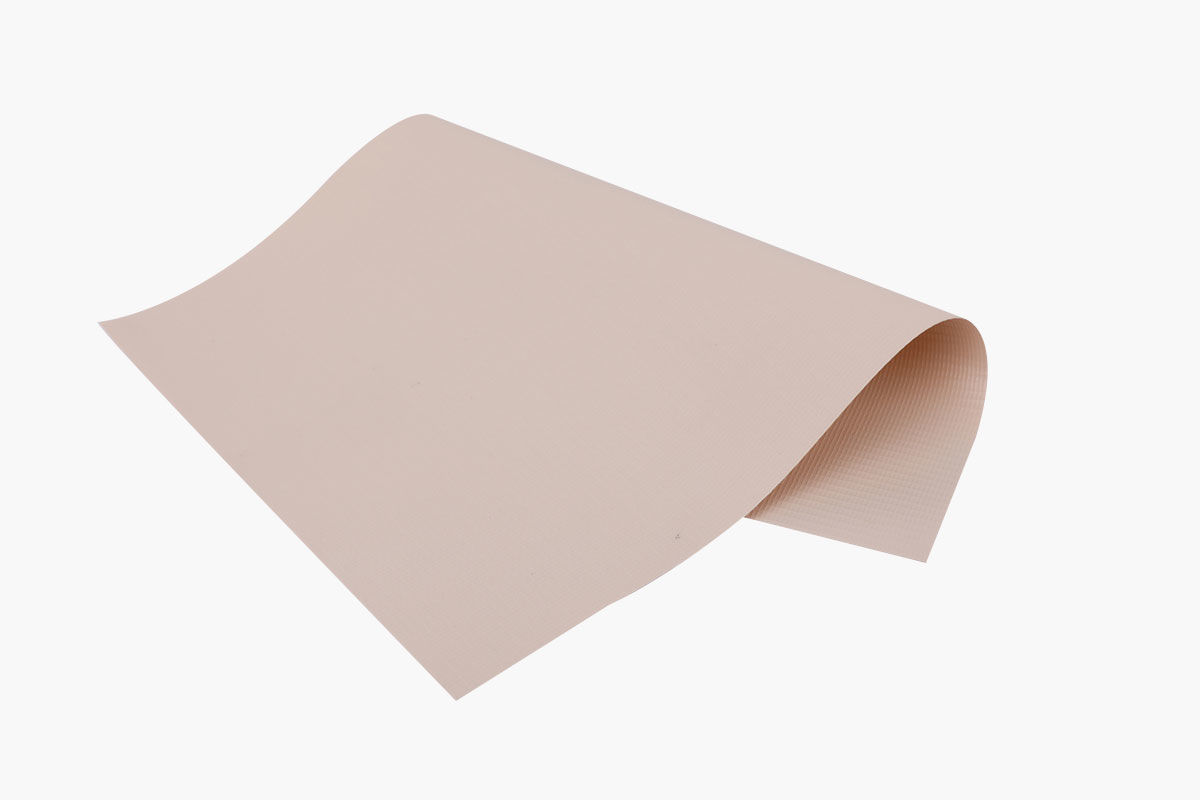 Heavy-Duty Reinforced Waterproof Tarpaulin
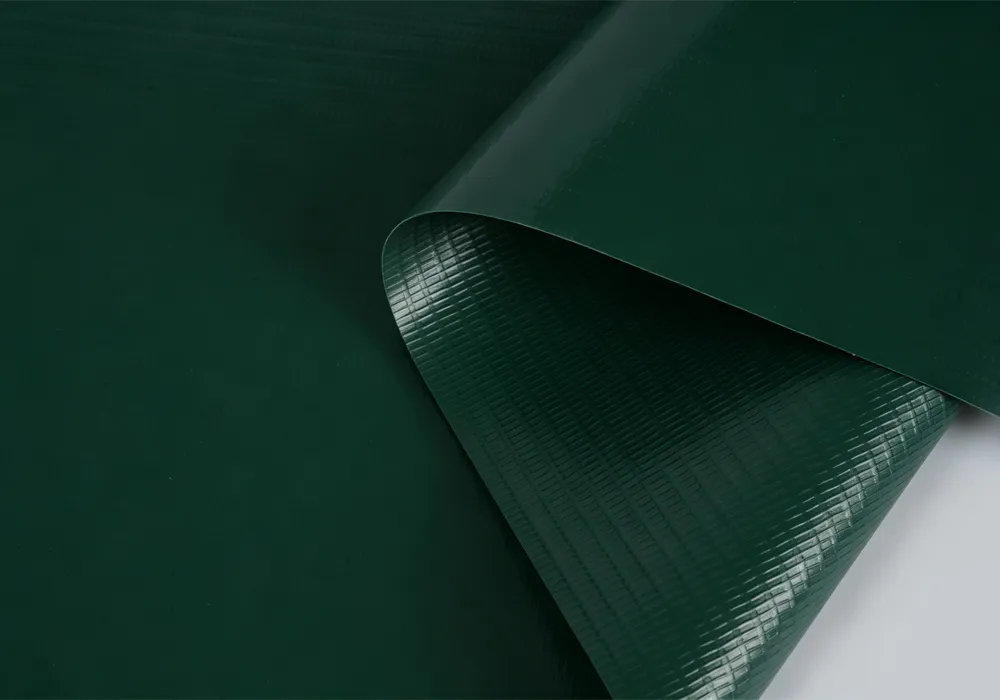 Decorative Waterproof Tarpaulin For Garden Fence Screening
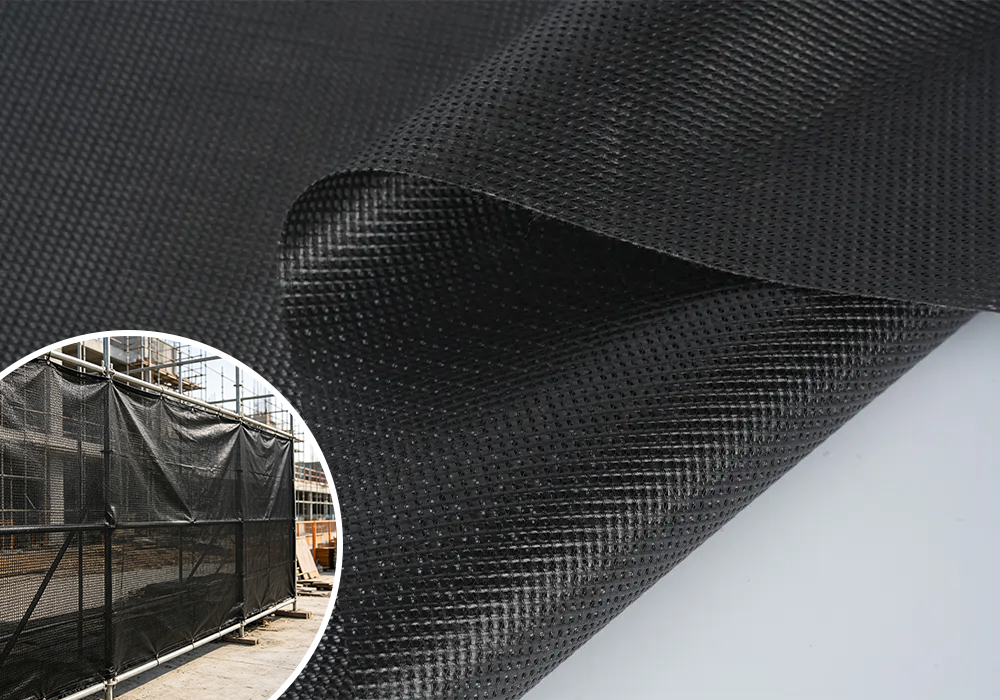 All Weather Heavy Duty Mesh Tarpaulin for Barrier Fencing
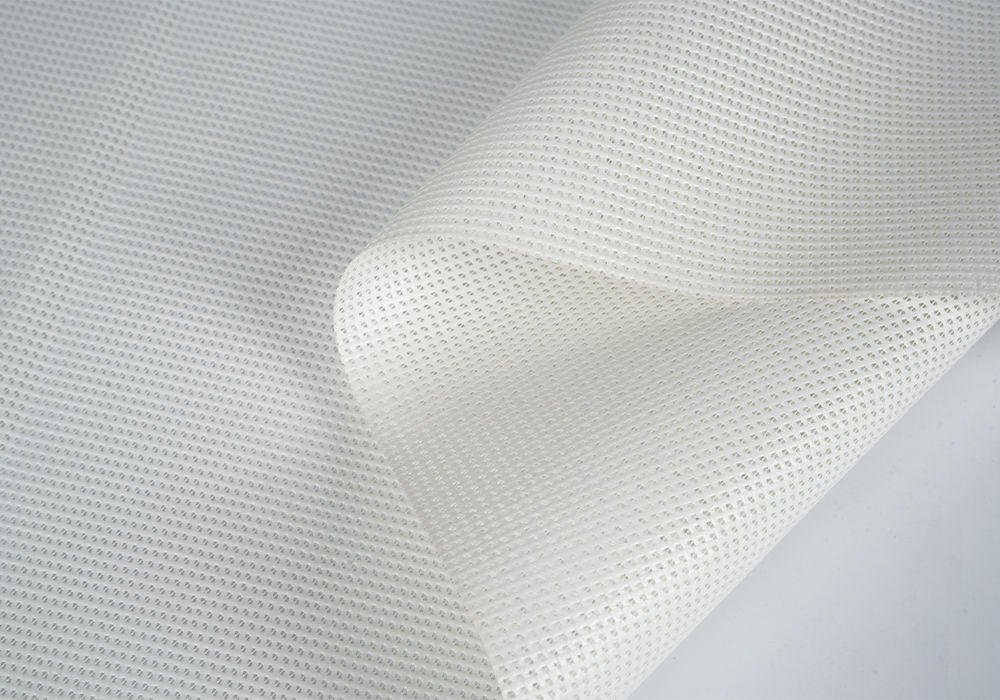 Dense Weave Light Block Mesh Tarpaulin for Commercial Display
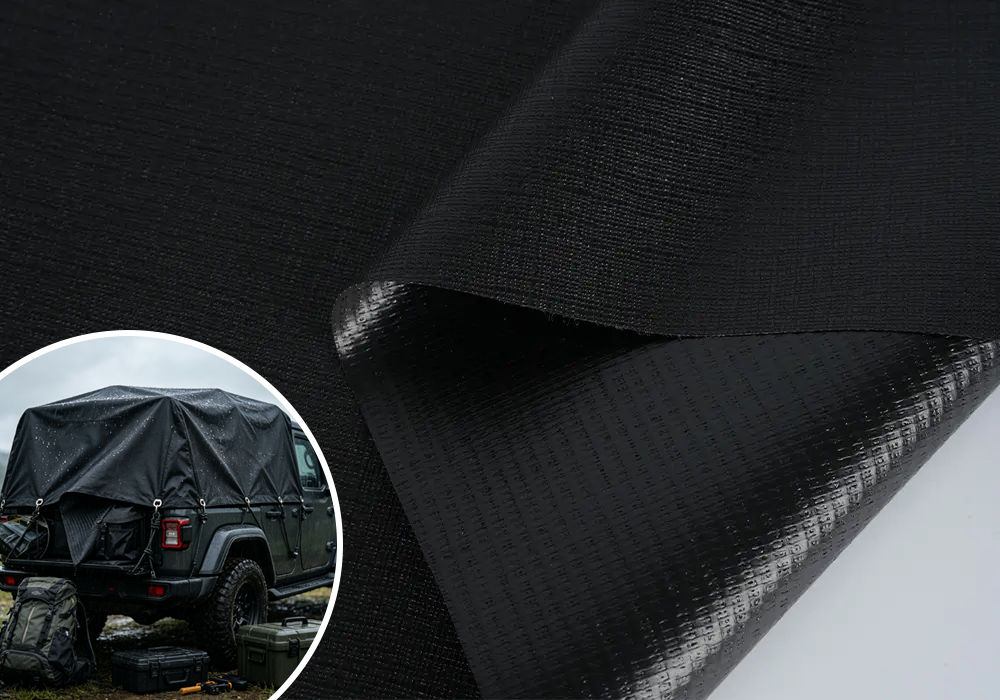 Weatherproof Printable Waterproof Tarpaulin For Camper RV
 Custom Digital Printing Fabric Manufacturers

 Previous