

 English
 中文简体
 Español
News
Home / Author / Dai Shuying — Technical Customer Support Manager / Premium Tear-Resistant All-Weather UV-Resistant Tarpaulin Fabric for Demanding Applications


Content
Reliable covering material is essential wherever equipment, cargo, construction supplies, agricultural products, vehicles, or outdoor facilities must be protected from changing weather conditions. A tarpaulin is not simply a sheet placed over an object. It is a technical textile expected to resist tearing, withstand repeated handling, remain stable under temperature changes, and provide dependable protection against rain, wind, snow, sunlight, dust, and general outdoor exposure.
Premium Tear-Resistant All-Weather UV-Resistant Tarpaulin Fabric is designed for users who require a stronger and more durable solution than ordinary lightweight covers. Built with a 1000 × 1000 denier base fabric, a 6 × 6 thread construction, and a total weight of 480 grams per square meter, this material combines structural strength with practical flexibility. Its performance profile makes it suitable for demanding commercial, industrial, agricultural, logistical, and general outdoor applications.
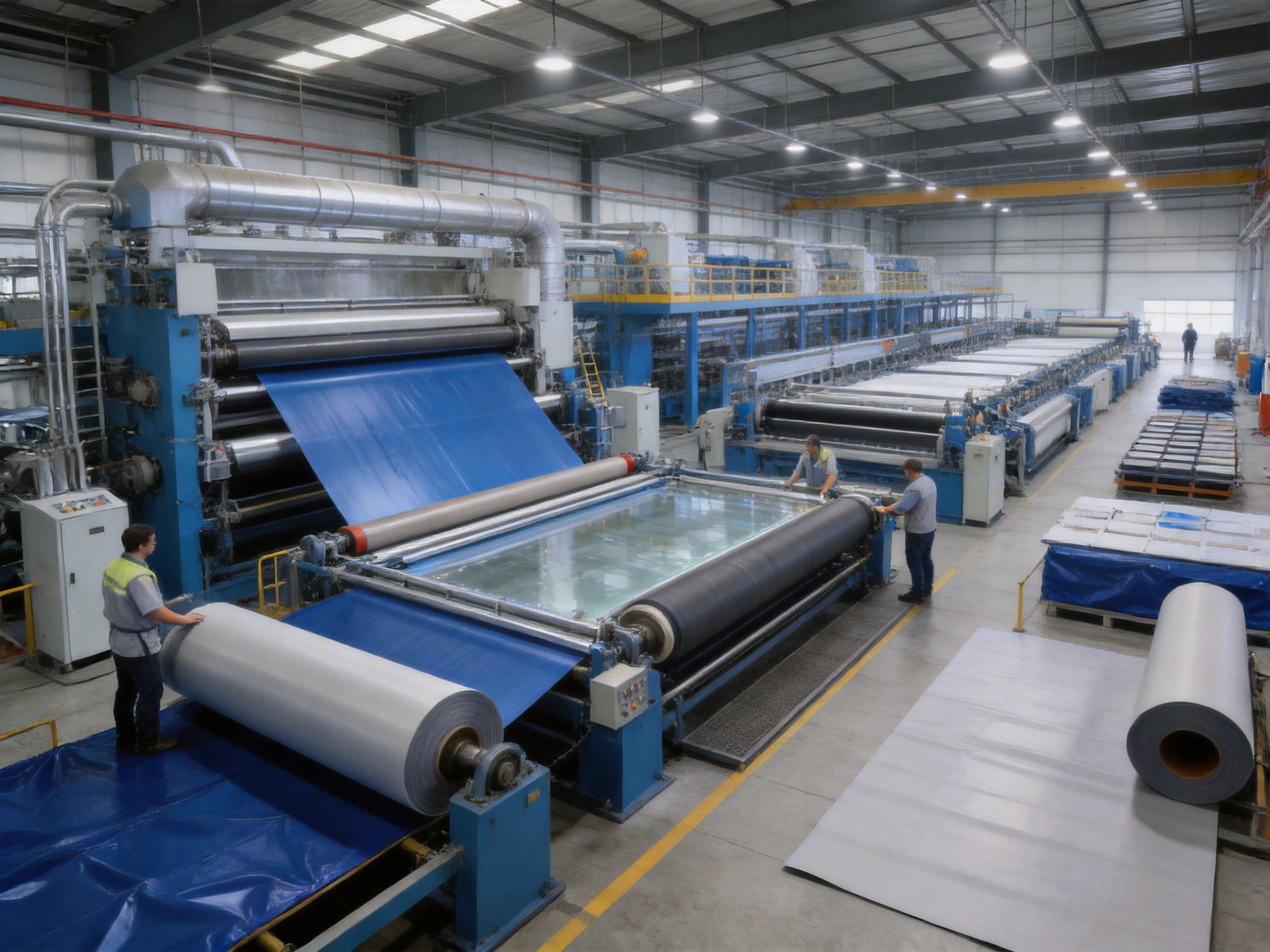
The product is manufactured by Haining Taiwei New Material Co., Ltd., a Chinese manufacturer and exporter specializing in PVC films, digital printing fabrics, tarpaulin films, frontlit and backlit materials, mesh products, and related flexible materials. Through advanced calendering equipment, multiple production lines, and professional bonding facilities, the company produces materials intended for international markets and diverse operating environments.
Outdoor covers are exposed to forces that can quickly damage low-quality materials. Wind creates continuous pulling and flapping stress. Rain increases the weight of the covered material and may expose weak seams or pinholes. Direct sunlight gradually degrades many polymers and textile coatings. Cold temperatures can make some materials stiff and brittle, while excessive heat can soften or distort them.
A suitable tarpaulin must therefore perform across several dimensions at the same time. It should have enough tensile strength to resist pulling, sufficient tear strength to prevent small cuts from spreading, strong adhesion between layers, and a surface engineered for weather resistance. It should also be practical to transport, install, fold, store, clean, and reuse.
The 480gsm construction of this product provides a substantial material body without making the fabric impractical for normal covering operations. Its heavy-duty structure gives it a more robust feel than thin consumer-grade sheets, while the reinforced woven base helps distribute loads across the surface. This balance is important for buyers who need a reusable cover rather than a temporary disposable barrier.
The foundation of the product is a 1000 × 1000 denier fabric construction. Denier describes the linear density of the yarn used in the woven base. A higher-denier yarn generally contributes to improved mechanical strength and durability, although final performance also depends on the weave, coating, lamination, bonding, and quality-control process.
The listed 6 × 6 thread construction indicates a balanced woven arrangement designed to support dimensional stability and load distribution. When a tarpaulin is pulled from one direction, a well-formed woven structure helps transfer stress through both the longitudinal and transverse directions. This reduces the likelihood that localized force will immediately damage the cover.
With a total weight of 480gsm, the fabric is positioned as a heavy-duty tarpaulin suitable for applications where durability is more important than extreme lightness. The weight contributes to a stable covering surface and can help the material resist excessive movement in moderate wind when it is correctly installed and secured.
The product information lists tensile strength of 1100/950 N per 5 centimeters and tearing strength of 300/260 N. These figures reflect performance in the two principal fabric directions. Directional values are important because a tarpaulin may experience unequal stress depending on how it is cut, fitted, tied, welded, or installed.
| Property | Specification | Practical Significance |
|---|---|---|
| Item number | TWP-1010-480 | Product identification for purchasing and production coordination |
| Base construction | 1000 × 1000D | Heavy-duty woven support structure |
| Thread construction | 6 × 6 | Balanced reinforcement in both fabric directions |
| Total weight | 480gsm | Substantial cover body for demanding applications |
| Tensile strength | 1100/950 N per 5cm | Resistance to pulling and stretching forces |
| Tearing strength | 300/260 N | Resistance to the spread of cuts and damage |
| Adhesion | 60 N per 5cm | Bond strength between coated or laminated layers |
| Temperature resistance | -15°C to +70°C | Operating range for cold and warm outdoor conditions |
| Maximum width | Up to 3.20m | Supports wide-format fabrication and covering |
These specifications help purchasing teams compare the material with other tarpaulins according to measurable performance characteristics rather than appearance alone. In practical procurement, fabric weight, yarn construction, tensile strength, tear strength, adhesion, width, temperature range, and compliance documentation should all be evaluated together.
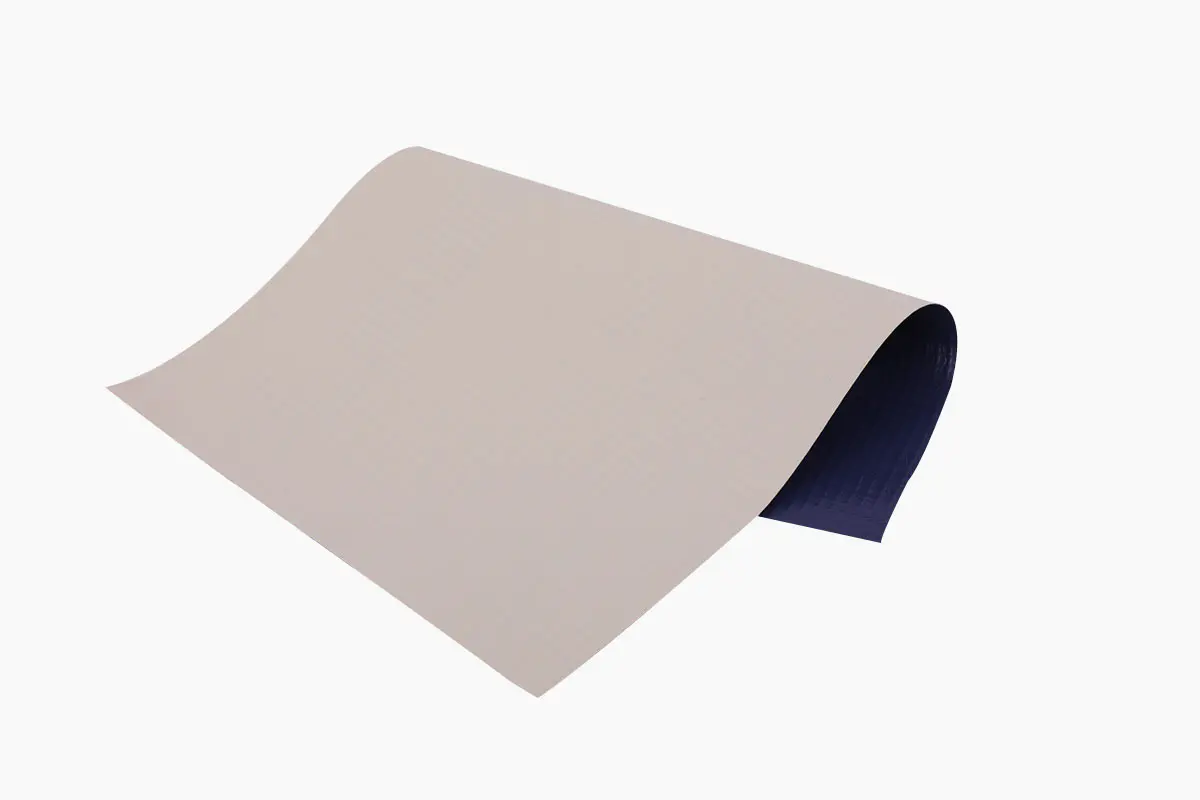
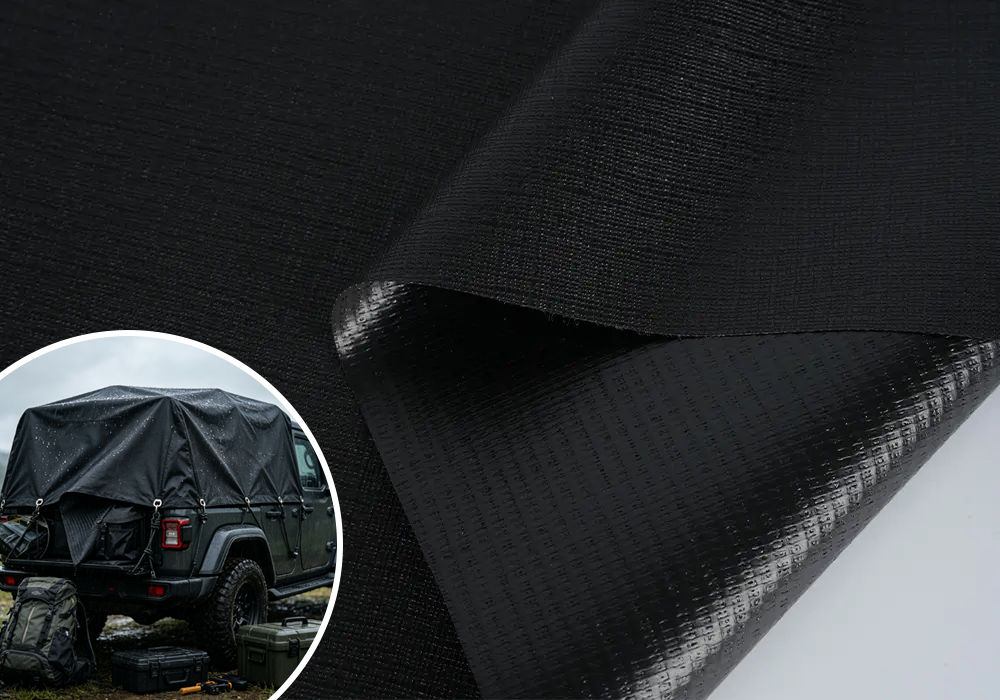
Premium Tear-Resistant All-Weather UV-Resistant Tarpaulin Fabric
Tear resistance is one of the most important advantages of a heavy-duty tarpaulin. A small puncture or cut can become a long split when a cover is pulled over a load, exposed to wind, or repeatedly folded. Once the tear begins, the damaged area can expand rapidly unless the fabric has a strong structure capable of stopping or slowing propagation.
The reinforced woven base of this material is engineered to support resistance against tearing and puncturing. Its high-strength yarns create a load-bearing framework beneath the coated surface. If the cover encounters an edge, branch, corner, tool, or other abrasive object, the woven structure helps provide a stronger barrier than a thin, unreinforced sheet.
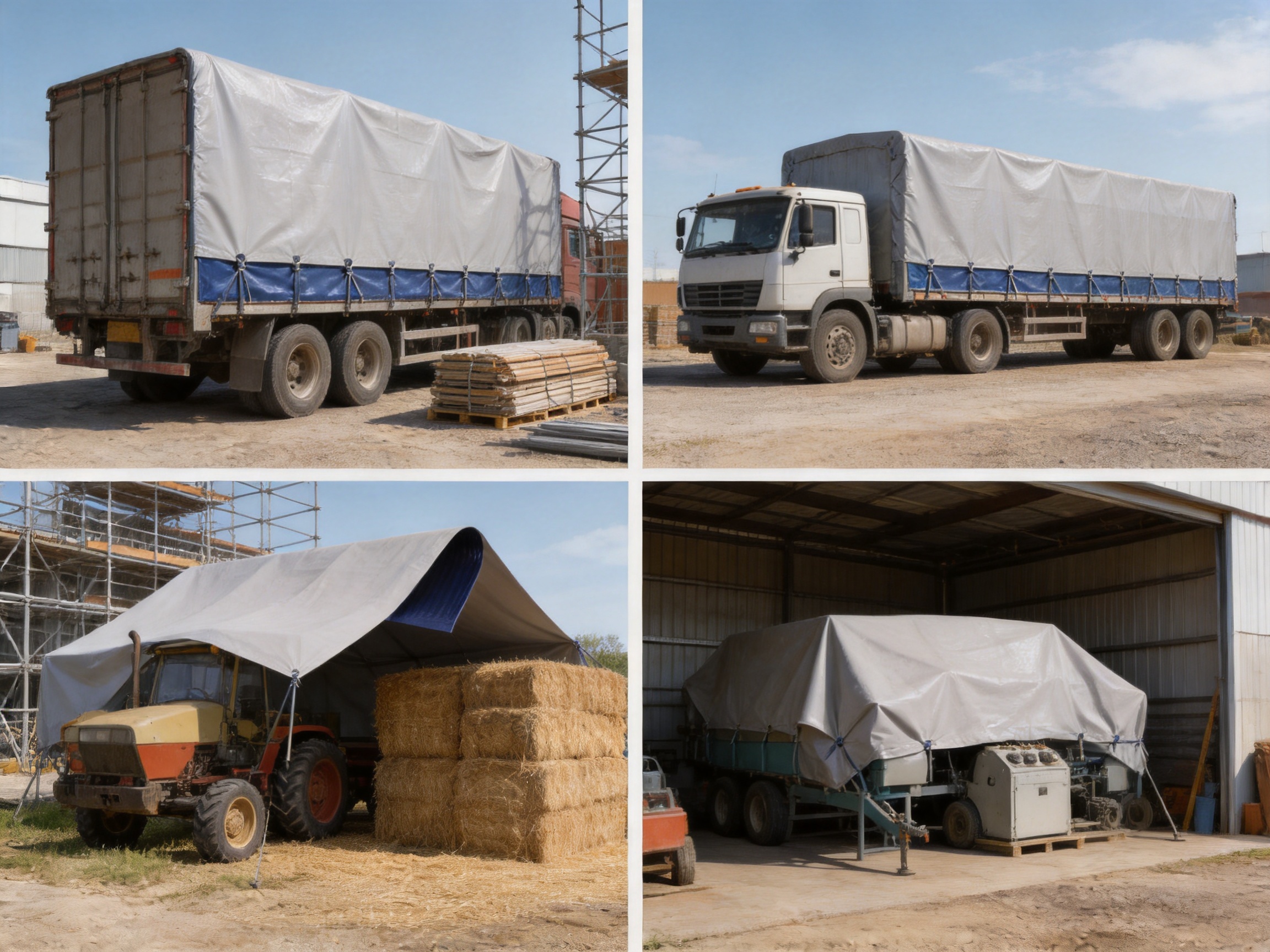
Tear resistance is particularly valuable in transportation and logistics. Covers are often installed quickly, pulled across cargo, secured with ropes or straps, and removed under time pressure. A material that can tolerate repeated handling helps reduce replacement frequency and lowers the risk of cargo exposure during transit.
Construction sites also place unusual demands on covering materials. Tarpaulins may be moved across rough ground, placed over scaffolding, draped around equipment, or used to protect building materials from rain and dust. The stronger fabric construction gives contractors a more dependable option for temporary enclosures, material protection, and site partitioning.
In agricultural operations, covers are exposed to contact with machinery, fencing, wood, soil, and stored goods. A tear-resistant tarpaulin can be used for hay, feed, equipment, crop-related storage, and temporary shelter applications when the material is selected and installed appropriately for the intended use.
The all-weather design is intended to help the fabric perform across a broad range of outdoor conditions. The listed temperature resistance extends from -15°C to +70°C. This range supports use in many seasonal environments, although actual service life will also depend on exposure time, installation method, mechanical stress, cleaning, storage, and local climate.
Rain protection is a central function of tarpaulin fabric. A properly manufactured coated textile provides a barrier that helps prevent water from reaching covered items. This is valuable for equipment, building materials, outdoor furniture, agricultural products, packaged goods, and transportation loads that must remain shielded from precipitation.
Wind resistance depends on both the fabric and the installation. A strong tarpaulin can tolerate pulling and flapping more effectively than a weak sheet, but no cover should be left loose in severe wind. Correctly positioned tie-down points, reinforced edges, suitable ropes or straps, and adequate tension are necessary to reduce wind-related stress.
Snow and cold weather create additional challenges. Accumulated snow adds weight, while low temperatures can reduce the flexibility of some materials. The specified low-temperature resistance helps the product remain suitable for cold-weather use within its stated range. Users should still remove excessive snow accumulation when safe to do so and avoid dragging frozen fabric across sharp surfaces.
Heat resistance is equally important in outdoor storage and industrial settings. Covers may be exposed to hot sunlight, warm equipment, or elevated ambient temperatures. The stated upper temperature resistance of +70°C supports applications in warm conditions, subject to the specific exposure profile and the requirements of the end use.
Ultraviolet radiation is one of the most damaging long-term influences on outdoor polymer materials. Continuous sunlight can gradually weaken coatings, fade colors, reduce flexibility, and cause cracking or brittleness. Once a fabric becomes brittle, folding, tensioning, or impact can produce damage more easily.
The UV-resistant coating of this tarpaulin is intended to help the fabric maintain its integrity during extended exposure to direct sunlight. This feature is especially valuable for covers used in open yards, transport applications, construction projects, agricultural settings, outdoor events, and semi-permanent shelters.
UV resistance provides several practical advantages. First, it can help preserve the functional strength of the material. Second, it can reduce the likelihood of premature cracking caused by solar exposure. Third, it may help extend replacement intervals when the cover is used and maintained properly. Longer service life can reduce material waste, purchasing frequency, labor costs, and downtime.
UV protection does not mean that a tarpaulin is immune to all environmental aging. The intensity of sunlight varies by region, altitude, season, and installation position. Abrasion, chemical exposure, water retention, extreme tension, and poor storage can also reduce service life. Even so, UV-resistant construction gives buyers an important advantage over ordinary fabrics that are not designed for prolonged outdoor exposure.
For long-term projects, buyers should consider how the tarpaulin will be installed and maintained. Water should not be allowed to pool unnecessarily on the surface. Sharp contact points should be padded or redesigned. When the material is not needed, it should be cleaned, dried, loosely folded, and stored away from direct sunlight and excessive heat.
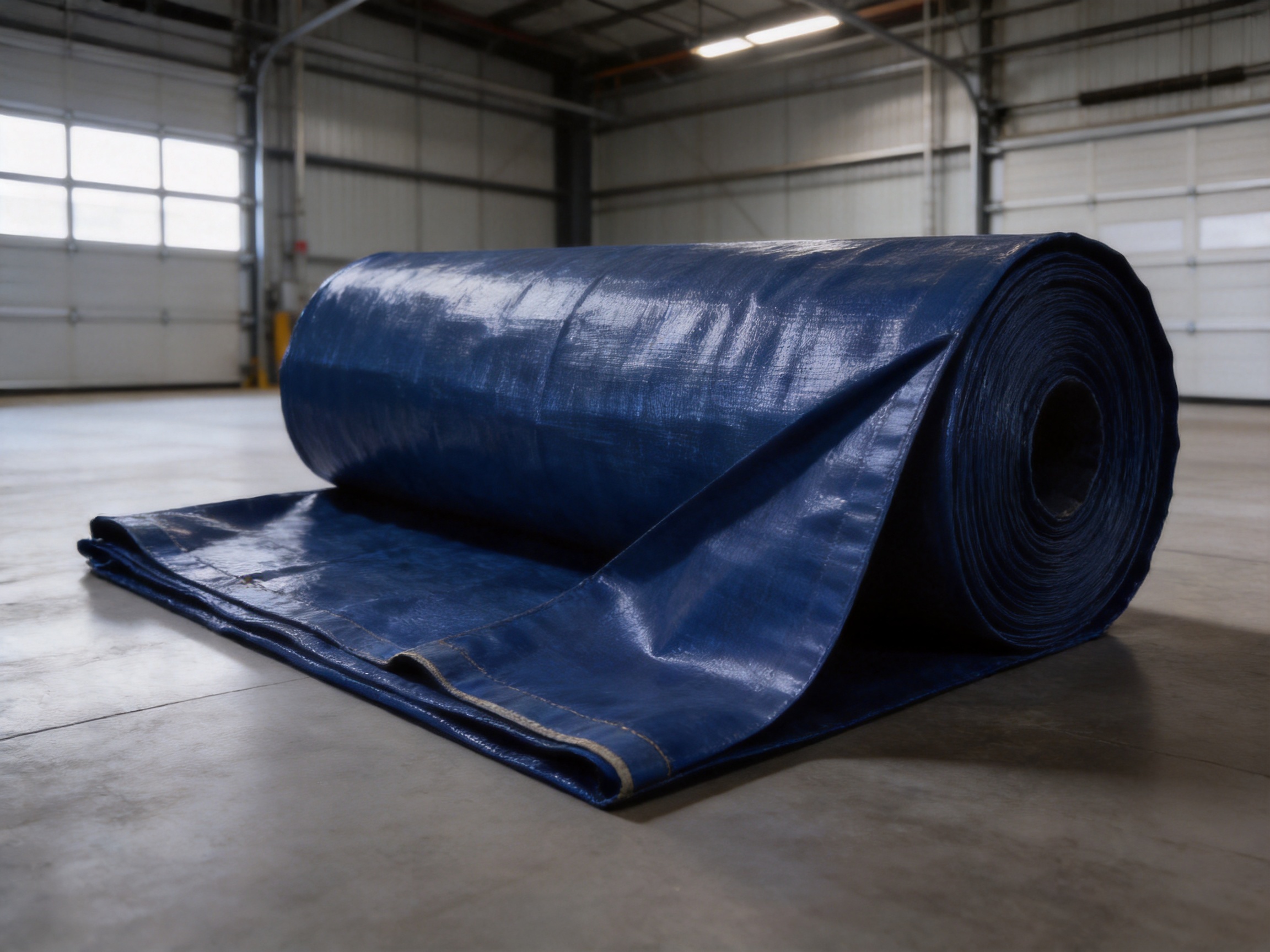
Many basic tarpaulins are designed primarily for low initial cost. They may be thin, lightly coated, or intended for short-term use. Such products can be appropriate for simple applications, but they may not provide the strength, weather durability, or dimensional stability required for commercial and industrial work.
The principal advantage of this 480gsm fabric is its combination of properties. A product may have high tensile strength but inadequate tear resistance, or strong fabric but poor UV performance. This material is positioned as a more balanced solution, combining a reinforced base, substantial weight, weather protection, UV resistance, and measurable adhesion.
Compared with lightweight polyethylene covers, a coated woven tarpaulin can offer a more substantial structure and better suitability for repeated handling. Compared with uncoated woven fabrics, the coated surface can provide improved protection against moisture and environmental exposure. Compared with low-grade laminated materials, stronger adhesion can help reduce premature layer separation under normal use.
Another advantage is production flexibility. A maximum width of up to 3.20 meters supports the manufacture of broad panels and customized covers. Wider material can reduce the number of joins needed for certain applications. Fewer seams may simplify fabrication and reduce potential weak points, although the suitability of any finished product depends on the conversion method and seam quality.
The product can also be considered for organizations seeking more consistent procurement. An identifiable item number, documented specifications, stated test standards, and a defined manufacturing source can make it easier for distributors, fabricators, importers, and project managers to organize repeat orders.
Extremely heavy materials can be difficult to install, fold, transport, and remove. Extremely light materials may be easy to handle but fail sooner in demanding conditions. At 480gsm, this tarpaulin aims to provide a practical middle ground for buyers who need substantial durability without selecting an unnecessarily heavy industrial membrane.
The correct balance depends on the intended use. A small temporary cover may not require this level of material strength, while a truck cover, machinery cover, construction enclosure, or long-term storage cover may benefit from it. Evaluating the actual mechanical and environmental demands helps prevent both over-specification and premature failure.
Reusable covers deliver value when they survive multiple installation and removal cycles. Repeated folding, tying, tensioning, and cleaning can expose weaknesses in low-quality materials. A stronger woven foundation and durable coating are intended to support a longer working life under normal conditions.
Reuse also supports more efficient resource management. When a cover remains serviceable for longer, users may reduce the number of replacement sheets purchased over a project or operating period. The economic benefit is not limited to the material price; it may also include reduced labor, fewer interruptions, and lower disposal requirements.
Tarpaulins used in transportation must protect cargo while tolerating movement, wind pressure, loading operations, and frequent handling. This product can be considered for truck covers, trailer curtains, open-load protection, temporary cargo covers, and related logistics applications, subject to the required fabrication and fastening method.
The tear-resistant construction is valuable when the fabric is pulled across cargo with irregular shapes. Its UV-resistant design also supports repeated outdoor use, where a truck or trailer may remain exposed to sunlight during loading, parking, or transit.
For transport covers, edges and attachment points should be reinforced according to the load requirements. Grommets, webbing, ropes, buckles, or other fastening systems must be selected to match the expected wind and tension forces. A high-quality fabric cannot compensate for insufficient attachment design.
Construction projects frequently require temporary protection from rain, wind, dust, and sunlight. Tarpaulin fabric can be used for material storage, scaffolding protection, temporary partitions, equipment covers, floor or wall protection, and site enclosures.
The broad width availability can be useful when contractors need large panels. The all-weather characteristics support outdoor work across changing conditions, while the fabric strength helps it tolerate contact with tools, structural components, and repeated movement around the site.
For scaffolding or enclosure applications, professional installation is essential. The cover must be secured without creating dangerous wind loads or obstructing ventilation. Where the fabric is used near heat, sparks, chemicals, or electrical equipment, the project team must confirm that the material is appropriate for the specific hazard.
Agricultural users need versatile covers for machinery, feed, hay, seed, tools, harvested products, and temporary storage. A UV-resistant and weather-resistant tarpaulin can help protect these items from direct sunlight and precipitation.
The material may also be useful in horticultural and nursery environments for temporary shelter, windbreak structures, storage partitions, and equipment protection. However, the cover should be selected with attention to ventilation, condensation, temperature buildup, and the sensitivity of the products being protected.
When used near food, feed, or agricultural products, buyers should confirm that the intended application meets all relevant local requirements. Product specifications should not be interpreted as a declaration of suitability for every regulated contact application.
Industrial facilities often require flexible protection for machinery, spare parts, raw materials, pallets, and work-in-progress goods. Tarpaulin can provide a practical temporary barrier during maintenance, relocation, expansion, or seasonal storage.
The material can also be fabricated into covers, curtains, dividers, and protective panels. Its adhesion and tear-resistance characteristics support conversion processes such as cutting, welding, sewing, and edge reinforcement when handled by an experienced fabricator.
Outdoor events, markets, exhibitions, and temporary facilities require covers that present a clean appearance while handling changing weather. The fabric can be considered for temporary roofs, sidewalls, equipment covers, storage screens, and protective partitions.
Event organizers should carefully evaluate wind conditions, anchoring, emergency access, fire-safety requirements, and local regulations. A tarpaulin is a flexible material, but it should not be used as a structural element unless the complete system has been professionally designed and approved for that purpose.
The performance of a tarpaulin is determined not only by its raw materials but also by the consistency of its manufacturing process. Variations in coating thickness, fabric tension, lamination temperature, bonding pressure, surface treatment, and finishing can affect the final result. A capable manufacturer must therefore combine suitable equipment with process control, technical experience, and inspection procedures.
Haining Taiwei New Material Co., Ltd. was established in July 2010 and operates in Haining Dingqiao Industrial Park in Zhejiang Province, China. Its location provides convenient access to the ports of Shanghai and Ningbo, supporting international shipment and export coordination.
The company operates advanced calendering equipment for the production of PVC-related materials and flexible coated products. Calendering is a controlled process in which polymer material is formed into a continuous film or coating through precision rolls. Appropriate control of temperature, pressure, speed, and material formulation is important for achieving consistent thickness and surface quality.
Multiple production lines allow the company to serve a range of product categories and specifications. This manufacturing structure supports the production of PVC films, digital printing fabrics, tarpaulin films, frontlit and backlit materials, double-sided printing fabrics, mesh, and other light-box cloth products.
Professional bonding facilities provide additional support for laminated and multi-layer materials. Strong bonding between layers is essential because separation can reduce waterproofing, appearance, flexibility, and mechanical performance. The product information lists adhesion of 60 N per 5 centimeters, providing a measurable reference for layer-bonding performance.
The company reports an annual output of 45 million square meters. Such capacity can be valuable to distributors and project buyers who require stable supply, repeat orders, and coordination across multiple product types. Large-scale production must still be supported by quality control, but capacity provides a foundation for serving international demand.
The material information identifies DIN 75200 and GB/T 3923.1-2013 in connection with listed technical properties. DIN 75200 is associated with flammability testing for materials used in vehicle interiors, while GB/T 3923.1-2013 addresses textile tensile properties. Buyers should verify the exact test reports, sample preparation, test conditions, and application scope before using the material in a regulated project.
The company also identifies ISO9001:2015 and GB/T 19001-2016 certification information. A quality-management certification framework can help establish documented procedures for production, inspection, corrective action, and customer service. Certification should be reviewed through current supporting documentation when required for formal procurement.
Technical documentation is particularly important for international buyers. It allows purchasers to compare grades, verify specifications, communicate with fabricators, and define acceptance criteria. For large projects, buyers may request samples, batch records, inspection reports, color references, packaging details, and pre-shipment checks.
More than 98% of the company’s products are reported to be exported to Europe, America, the Middle East, Southeast Asia, and other regions. Experience in export markets can help a manufacturer understand the importance of packaging, documentation, production scheduling, container utilization, and communication across different time zones and commercial requirements.
The company identifies itself as a manufacturer and exporter rather than only a trading intermediary. Direct manufacturing capability can provide greater coordination between technical specifications and production execution. It may also allow buyers to discuss customized widths, product series, packaging arrangements, and application requirements with a source familiar with the production process.
For this tarpaulin product, the stated minimum order quantity is one 20-foot container. The listed delivery time is 20 working days, although actual timing should be confirmed based on quantity, color, customization, raw material availability, production schedule, inspection, and shipping arrangements.
Payment terms include an earnest payment plus balance through T/T or L/C. Delivery terms can include FOB, CIF, and CNF arrangements. Importers should confirm the exact commercial terms, port, insurance responsibility, documentation, packaging, and applicable customs requirements before placing an order.
Purchasing a tarpaulin by price alone can lead to unexpected operating costs. Buyers should first identify the environment in which the material will be used. Important questions include whether the cover will be temporary or semi-permanent, whether it will face direct sunlight, how often it will be handled, what loads or objects it will cover, and whether there are special fire, chemical, food-contact, or transportation requirements.
The next step is to compare technical specifications. Fabric weight gives an indication of material density, but it should be considered alongside tensile strength, tear strength, adhesion, temperature range, width, coating type, and test standards. A heavier fabric is not automatically better for every application, and a lower-cost fabric may be suitable for light-duty use.
Sample evaluation is recommended before a large order. A buyer can inspect surface uniformity, flexibility, smell, color consistency, edge quality, coating appearance, roll winding, and compatibility with planned fabrication methods. Practical trial installation can reveal whether the material folds, welds, sews, or fastens as expected.
Buyers should also discuss packaging. Rolls need adequate protection from moisture, dirt, crushing, and excessive heat during transport. Packaging labels should identify the product, quantity, batch information where available, dimensions, and handling instructions.
For repeat orders, buyers may establish an agreed specification sheet. This document can include acceptable tolerances, color requirements, roll length, width, weight, tensile values, tear values, adhesion, packaging, inspection procedures, and labeling. Clear specifications reduce misunderstandings and support consistency across shipments.
Even a high-performance tarpaulin can fail prematurely if it is installed incorrectly. Before installation, users should inspect the fabric for sharp edges, protruding hardware, excessive abrasion points, and objects that could puncture the cover. Contact areas should be padded or adjusted where practical.
The cover should be positioned so that water can drain rather than collect in low areas. Standing water adds weight and can create concentrated stress. On large covers, a suitable slope or supporting framework may be necessary to reduce pooling.
Fasteners should be distributed evenly. Pulling a large sheet from only a few points can place excessive force on individual grommets or seams. Straps, ropes, webbing, and tie-down systems should be selected according to the size of the cover and expected wind conditions.
Cleaning should normally be carried out with water and a mild cleaning solution suitable for the material. Abrasive brushes, aggressive solvents, and harsh chemicals may damage the coating or affect flexibility. Users should test any cleaning agent on a small, inconspicuous area before applying it across the entire fabric.
Before storage, the tarpaulin should be cleaned and allowed to dry fully. Folding wet material can encourage mildew, odor, staining, or coating deterioration. The stored roll or folded sheet should be kept in a dry, ventilated area away from direct sunlight, excessive heat, sharp objects, and incompatible chemicals.
Durability contributes to resource efficiency because a reusable product can reduce the frequency of replacement. A tarpaulin that remains functional through repeated seasons or project stages may provide a lower total cost of ownership than a cheaper cover that must be replaced after limited use.
Longer service life can also reduce labor associated with removal, disposal, purchasing, and installation. In transportation, a dependable cover can help avoid disruption caused by damaged cargo protection. In construction, a reusable cover may serve multiple work areas or project phases when properly maintained.
At the end of its service life, users should follow local waste-management rules for coated textiles and PVC-related materials. Recycling or recovery options may depend on the local processing infrastructure and the specific material composition. Buyers seeking sustainability documentation should request relevant information from the manufacturer before ordering.
Working directly with an experienced manufacturer can simplify product selection and technical communication. The supplier can help identify the appropriate series, clarify available widths, discuss production quantities, and coordinate documentation. This is especially useful when a buyer needs several related products, such as tarpaulin, mesh, digital printing fabric, frontlit material, or backlit material.
Haining Taiwei New Material Co., Ltd. offers a broad product portfolio within the flexible PVC and coated textile sector. Its manufacturing equipment, production lines, bonding facilities, export orientation, and reported annual capacity provide a platform for serving distributors, fabricators, and project buyers.
The company’s product range includes materials with cold resistance, flame-retardant properties, UV resistance, antistatic characteristics, mildew resistance, and antibacterial features. Not every property applies automatically to every product, so buyers should match the required performance to the selected specification and request product-specific confirmation.
Its location in Zhejiang Province, together with access to major Chinese ports, supports international logistics. The company’s stated commitment to technological innovation, product quality, and customer service also aligns with the needs of buyers seeking long-term supply relationships rather than one-time purchases.
Its main advantage is the combination of tear resistance, all-weather performance, UV resistance, and a substantial 480gsm construction. The product is designed for users who need more dependable outdoor protection than a basic lightweight cover can provide.
It refers to the denier construction of the woven base fabric. The 1000 × 1000D specification indicates high-strength yarns in both primary fabric directions. Final performance also depends on weave structure, coating, bonding, and manufacturing quality.
Yes, the fabric is designed with UV-resistant properties for outdoor use and prolonged exposure to sunlight. However, service life depends on sunlight intensity, exposure duration, mechanical stress, maintenance, and installation conditions.
The stated temperature resistance is -15°C to +70°C. Users should evaluate the complete application, including direct solar heating, contact with hot equipment, cold-weather flexibility, and mechanical stress.
The listed tensile strength is 1100/950 N per 5 centimeters, and the listed tearing strength is 300/260 N. The two values represent performance in the principal fabric directions.
It can be considered for truck and trailer covers because of its heavy-duty construction, tear resistance, weather protection, and UV resistance. The final cover must be properly fabricated with suitable edges, seams, grommets, webbing, and fastening systems.
Yes, it can be used for equipment covers, material protection, temporary partitions, and outdoor enclosures. Construction users should evaluate wind loads, fire requirements, ventilation, contact with sharp edges, and local safety regulations.
The listed maximum width is up to 3.20 meters. Actual available width should be confirmed for the selected color, specification, order quantity, and production schedule.
The stated minimum order quantity is one 20-foot container. Buyers should confirm the current minimum quantity and whether mixed specifications or colors can be included in one order.
The listed delivery time is 20 working days. The final schedule depends on product details, quantity, customization, raw material availability, inspection, packaging, and shipping arrangements.
The company identifies ISO9001:2015 and GB/T 19001-2016 certification information. Buyers requiring formal certification should request current supporting documents and verify that the certification scope covers the relevant manufacturing activities.
It should be cleaned, dried completely, loosely folded or properly rolled, and stored in a dry, ventilated area away from direct sunlight, excessive heat, sharp objects, and incompatible chemicals.
No. UV resistance helps reduce solar aging, but no flexible outdoor material is permanent under every condition. Abrasion, extreme weather, chemical exposure, poor installation, water pooling, and repeated mechanical stress can all affect service life.
The manufacturer offers various product series and flexible-material solutions. Buyers should discuss available colors, widths, roll lengths, finishing, fabrication, packaging, and other requirements before placing an order.
Premium Tear-Resistant All-Weather UV-Resistant Tarpaulin Fabric is designed for users who require dependable protection in demanding outdoor and industrial environments. Its 1000 × 1000 denier woven construction, 6 × 6 thread arrangement, 480gsm weight, strong tensile performance, tear resistance, 60 N per 5-centimeter adhesion, and -15°C to +70°C temperature range create a balanced specification for heavy-duty covering applications.
The material’s UV-resistant coating supports longer outdoor service by helping reduce damage caused by direct sunlight. Its all-weather design makes it suitable for transportation, construction, agriculture, warehousing, industrial protection, and temporary outdoor facilities when correctly installed and maintained.
The manufacturer adds value through advanced calendering equipment, multiple production lines, professional bonding facilities, broad product expertise, international export experience, and a reported annual output of 45 million square meters. These capabilities support buyers seeking stable supply, technical coordination, and access to related PVC and coated-fabric products.
For the best result, buyers should evaluate the complete application rather than relying on one specification. Proper fabrication, fastening, drainage, cleaning, storage, and periodic inspection are essential to achieving the expected service life. When selected for the right environment, this tarpaulin fabric offers a durable and versatile solution for protecting valuable goods, equipment, materials, and work areas from changing weather conditions.
1. Product technical information for TWP-1010-480 Premium Tear-Resistant All-Weather UV-Resistant Tarpaulin Fabric.
2. DIN 75200, Flammability Testing of Materials Used in Vehicle Interiors.
3. GB/T 3923.1-2013, Textiles—Tensile Properties of Fabrics—Determination of Maximum Force and Elongation at Maximum Force Using the Strip Method.
4. ISO 9001:2015, Quality Management Systems—Requirements.
5. GB/T 19001-2016, Quality Management Systems—Requirements.
6. Manufacturer-provided company information concerning PVC films, digital printing fabrics, tarpaulin films, mesh, flexible materials, production facilities, export markets, and manufacturing capacity.
Premium Tear-Resistant All-Weather UV-Resistant Tarpaulin Fabric
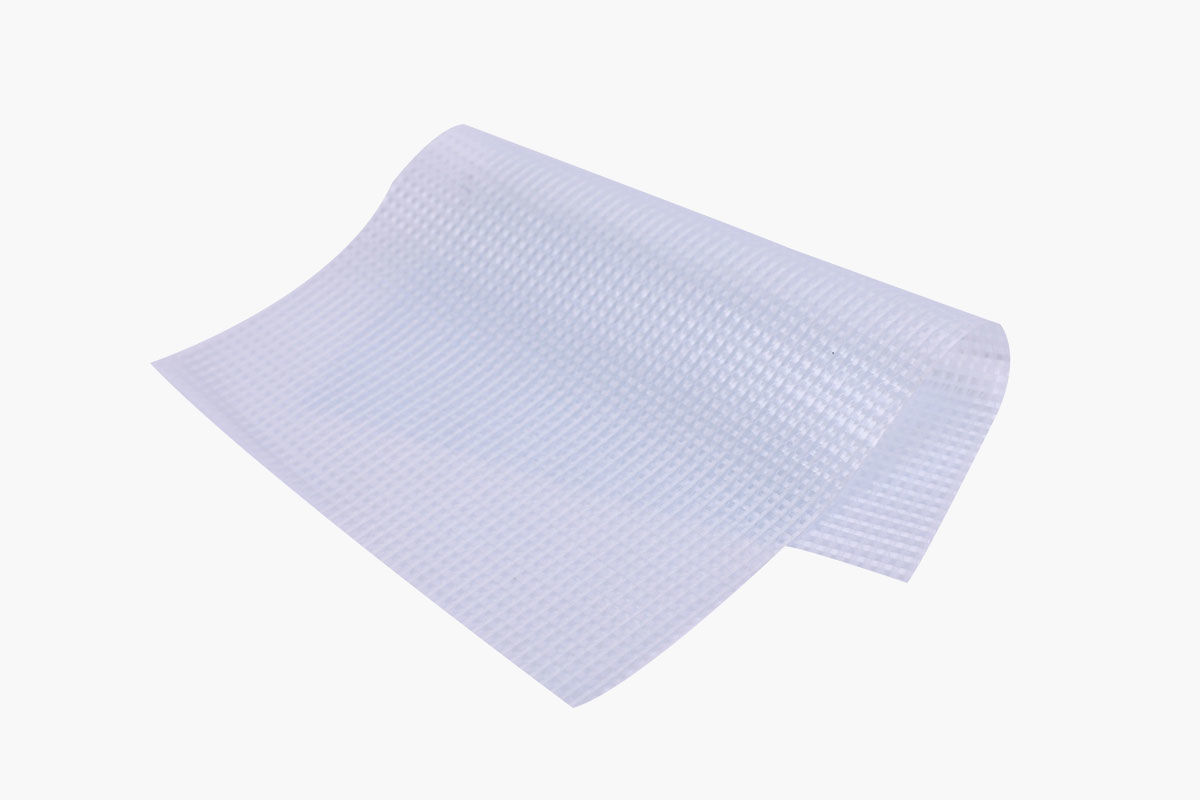 Industrial-Grade Reinforced UV-Resistant Clear Tarpaulin
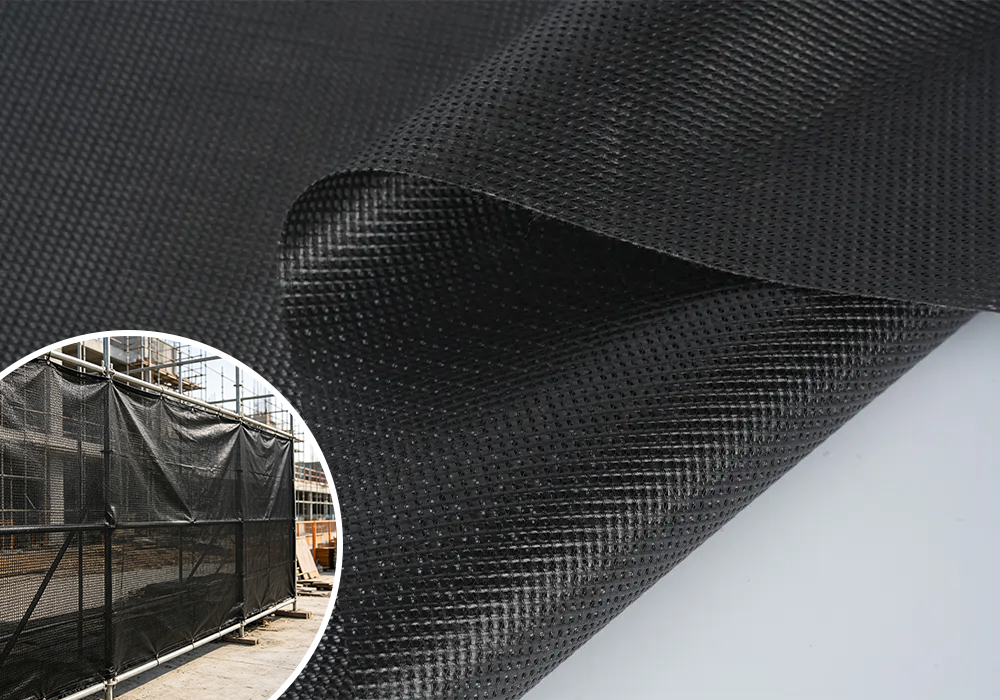 All Weather Heavy Duty Mesh Tarpaulin for Barrier Fencing
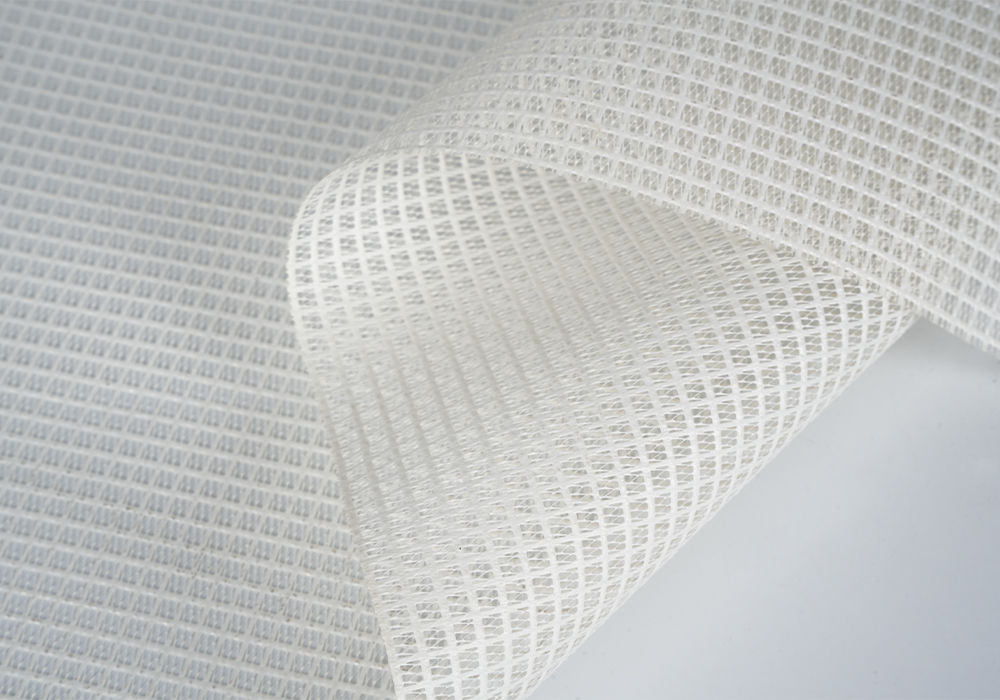 Breathable Wind Resistant Mesh Tarpaulin for Advertising
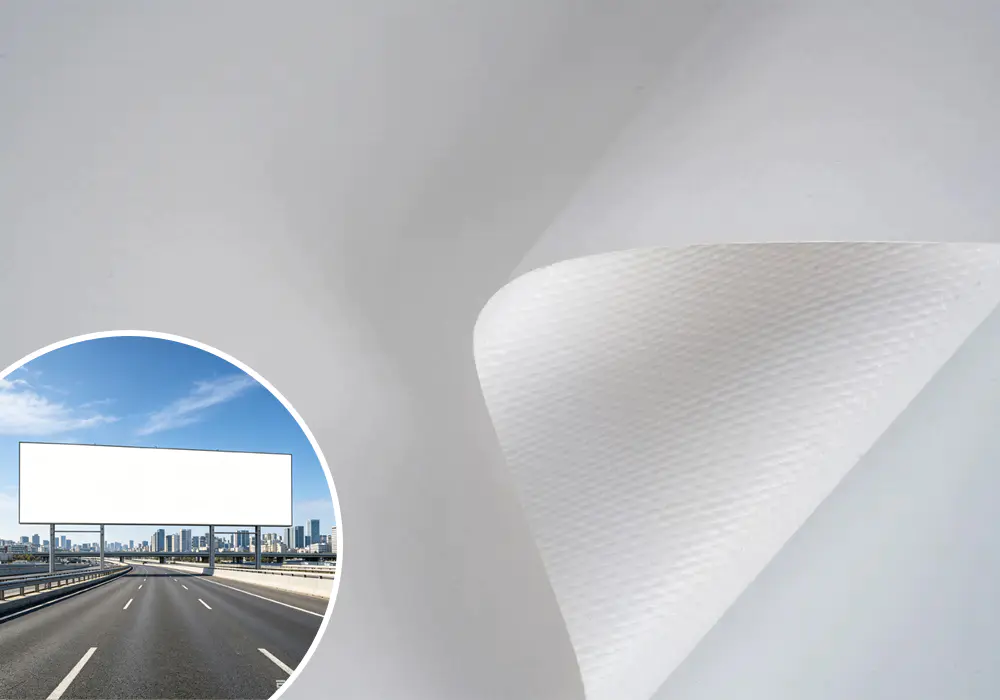 Tear Resistant Large Outdoor Flex Banner Print Cloth
 Weatherproof Printable Waterproof Tarpaulin For Camper RV
 Custom Digital Printing Fabric Manufacturers

 Previous