

 English
 中文简体
 Español
News
Home / Author / Luo Zhen — Product After-Sales Service Specialist / Heavy-Duty Printable UV-Block Tarpaulin for RV Awnings: Performance, Protection, and Custom Printing Value


Content
Outdoor recreation vehicles require materials that can perform under changing weather, repeated handling, and long periods of exposure. An RV awning is not simply a shade accessory. It is a functional extension of the vehicle that helps create a cooler, more comfortable, and more usable outdoor living area. To perform effectively, the awning fabric must resist wind, sand, rain, sunlight, abrasion, rolling, and temperature changes while maintaining an attractive appearance.
The Heavy Duty Printable UV Block Tarpaulin for RV Awning is designed for these demanding applications. Built with a 1000D by 1000D industrial base fabric and a 9 by 9 construction at approximately 460 grams per square meter, it combines structural strength with flexibility. Its reinforced composition supports strong tensile and tearing performance, while the waterproof coating helps protect campers and equipment from rain. At the same time, the UV-blocking function helps reduce solar heat entering the covered area.
Unlike ordinary tarpaulins intended only for temporary covering, this material is developed for applications that require both technical performance and visual customization. Its printable surface supports digital graphics, brand logos, decorative patterns, and promotional designs. The specialized surface treatment helps ink adhere securely, reducing the risk of peeling, cracking, or color bleeding when the printed fabric is exposed to outdoor conditions.
This combination of protection, printability, flexibility, and durability makes the material suitable for motorhome awnings, trailer extensions, side curtains, recreational shelters, mobile advertising structures, and other outdoor textile applications. It is manufactured by Haining Taiwei New Material Co., Ltd., a Chinese producer of PVC films, digital printing fabrics, tarpaulin films, frontlit and backlit materials, mesh, and related light-box textiles.
With advanced calendering equipment, multiple production lines, professional bonding facilities, and an annual production capacity of approximately 45 million square meters, the manufacturer is positioned to support both standard and customized material programs. More than 98 percent of its products are exported to Europe, America, the Middle East, Southeast Asia, and other international markets.
For buyers comparing outdoor tarpaulin materials, the product offers a practical balance between mechanical strength, weather protection, printing performance, processing flexibility, and supply capability.
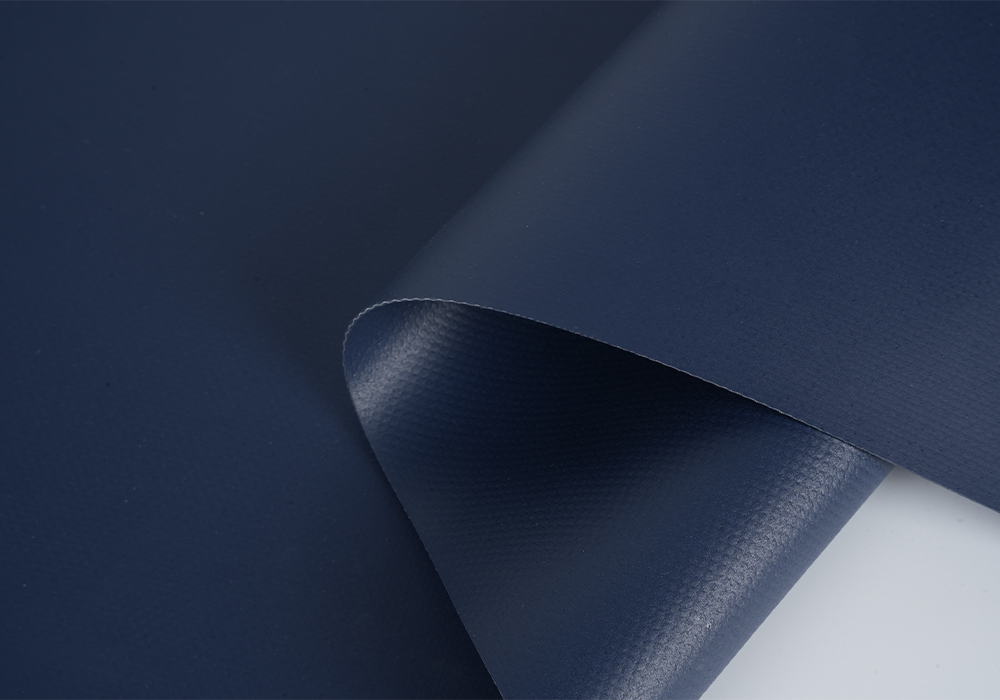
Heavy Duty Printable UV Block Tarpaulin For RV Awning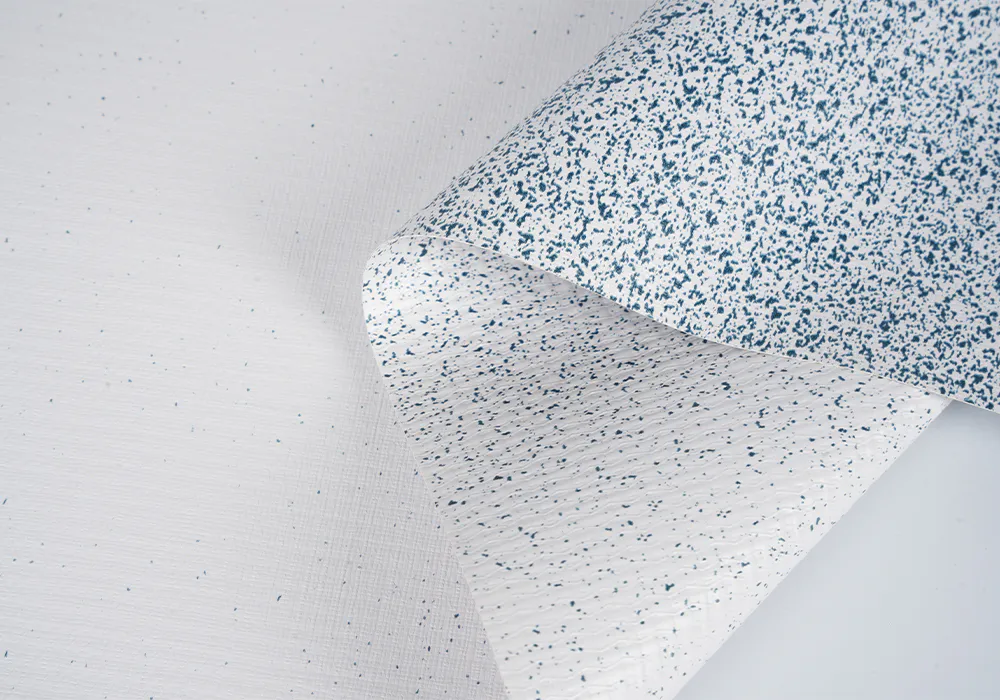
An RV awning is exposed to several kinds of stress at the same time. During travel, the material may be rolled tightly and subjected to vibration. At a campsite, it may be pulled across a retractable frame and exposed to wind uplift. In coastal, desert, or off-road environments, airborne dust and sand can abrade the surface. During summer, the fabric can absorb intense solar radiation and heat. During wet seasons, it may need to withstand rain, humidity, and repeated drying cycles.
A basic waterproof sheet may prevent water penetration, but it may not provide sufficient tear resistance, print adhesion, flexibility, or UV protection. A fabric that is strong but too rigid can develop permanent creases after repeated rolling. A material that prints well but has weak adhesion may lose its graphics after exposure to sunlight and rain. A lightweight textile may be easy to handle but can suffer from edge damage when tensioned on a frame.
The Heavy Duty Printable UV Block Tarpaulin is designed around the complete use cycle of an RV awning. The material is intended to be installed, extended, rolled, stored, transported, and reused. Its construction addresses both the structural requirements of the awning and the appearance requirements of printed surfaces.
For RV manufacturers, dealers, fleet operators, and custom fabricators, this broader performance profile can reduce the need to combine several separate materials. A single technical textile can provide shade, water resistance, branding space, and dimensional flexibility. This can simplify fabrication and help create a more consistent finished product.
The material uses a 1000D by 1000D industrial base construction. The denier designation refers to the approximate fineness and mass of the yarn used in the reinforcing fabric. A 1000D by 1000D structure provides a substantial woven skeleton capable of supporting demanding outdoor applications.
Its listed construction is 9 by 9, with a nominal weight of approximately 460 grams per square meter. This specification gives the finished material a robust hand and a solid foundation for coating and printing. The reinforcement helps distribute stress across the fabric instead of allowing a small cut, puncture, or abrasion point to expand rapidly.
According to the supplied product specifications, the material provides a tensile strength of 1000 N/5 cm in one direction and 800 N/5 cm in the other direction. Its tearing strength is listed as 200 N and 180 N, respectively, while adhesion is listed at 60 N/5 cm. These values indicate a material engineered for demanding tensioned and outdoor applications.
| Product Attribute | Specification | Application Value |
|---|---|---|
| Base construction | 1000D by 1000D | Provides a strong industrial reinforcement structure |
| Fabric construction | 9 by 9 | Supports dimensional stability and resistance to stress |
| Nominal weight | Approximately 460 g/m² | Balances durability with practical handling |
| Tensile strength, direction one | 1000 N/5 cm | Helps resist pulling and frame tension |
| Tensile strength, direction two | 800 N/5 cm | Supports cross-directional stability |
| Tearing strength, direction one | 200 N | Helps limit tear propagation |
| Tearing strength, direction two | 180 N | Improves resistance to accidental damage |
| Adhesion | 60 N/5 cm | Supports coating and surface integrity |
In practical terms, this construction helps the tarpaulin tolerate tension around hems, corners, fastening points, and frame connections. These are common stress locations on RV awnings. Stronger reinforcement can also be beneficial when the fabric is processed through welding, sewing, hemming, or edge reinforcement operations.
Wind is one of the most challenging environmental forces for an extended RV awning. Wind pressure can create repeated flapping, pulling, and vibration. If airborne sand is present, the moving particles can act like an abrasive, gradually wearing down exposed surfaces and edges. Weak materials may become thin, develop pinholes, or tear from fastening points.
The heavy-duty construction of this tarpaulin is intended to improve resistance to these conditions. Its industrial base helps withstand repeated loading, while the coated surface provides an additional barrier against moisture and surface wear. When properly installed and tensioned, the material can provide reliable service in demanding outdoor environments.
Although every awning should be retracted during unsafe storms or severe weather, a durable material provides greater tolerance during ordinary gusts and changing campsite conditions. It can help reduce the likelihood of damage caused by moderate wind movement, accidental contact with nearby equipment, or repeated daily deployment.
Compared with lightweight promotional fabrics or thin temporary covers, the 460-gram-per-square-meter construction offers a more substantial structure. This is particularly valuable for users who expect frequent use, long outdoor stays, or repeated installation and removal.
Edge design and installation remain important. Even a strong material can be damaged if it is fastened with unsuitable hardware, stretched unevenly, or exposed to excessive wind while deployed. For best results, manufacturers and installers should select appropriate hems, eyelets, welding methods, frame dimensions, and tensioning systems.
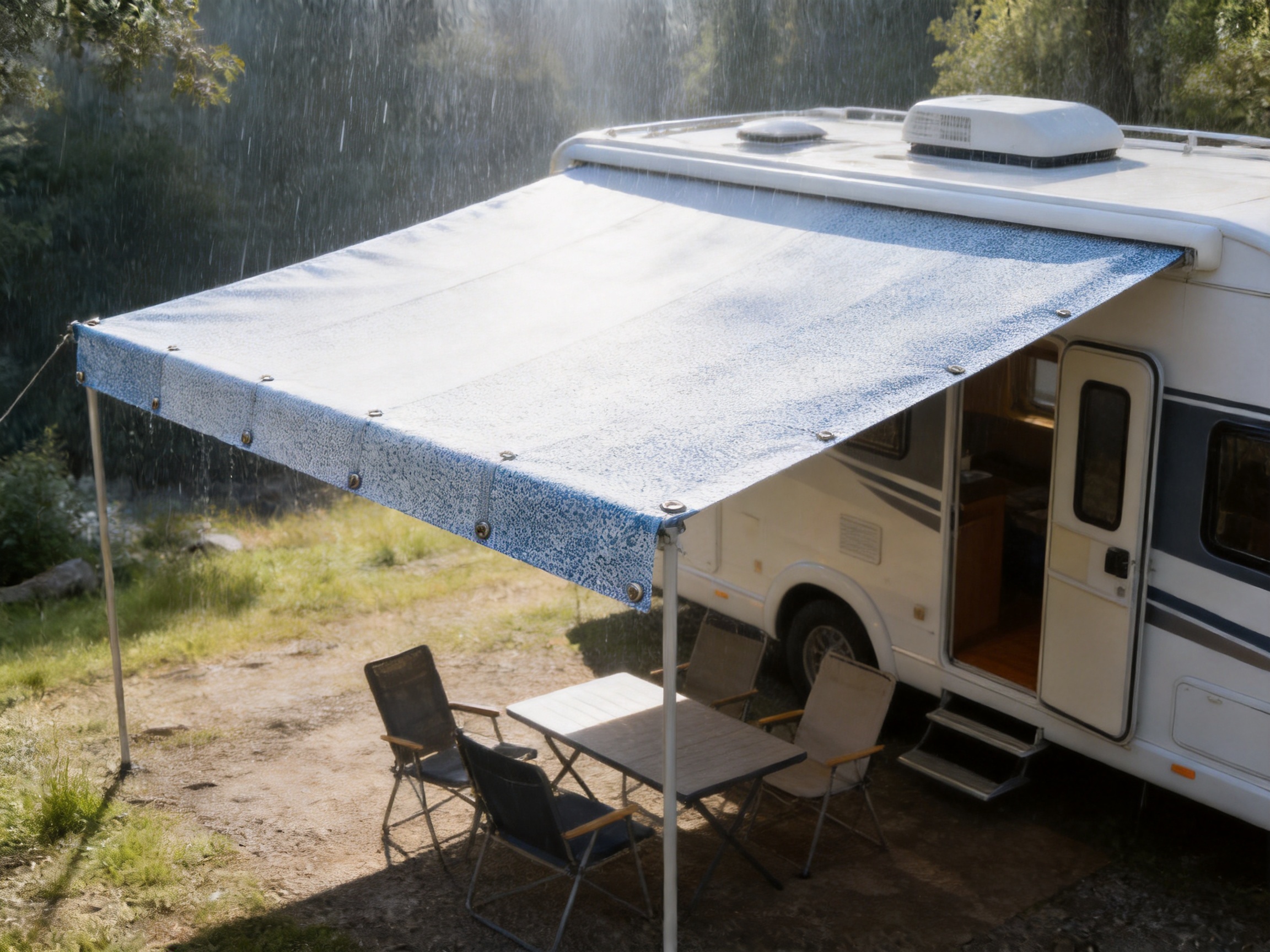
Solar radiation affects both the comfort of people under an awning and the temperature inside an RV. Direct sunlight can heat the roof, windows, sidewalls, and outdoor living area. Excessive heat may increase the use of air conditioning and make long summer stays less comfortable.
The tarpaulin is designed with a strong UV-blocking function that helps reduce the amount of intense solar radiation passing through the awning. By creating a more effective shaded zone, it can support a cooler area beside the vehicle and help reduce heat gain around covered sections.
UV resistance also plays an important role in the service life of the material itself. Prolonged ultraviolet exposure can weaken polymers, fade printed colors, embrittle coatings, and reduce the performance of ordinary fabrics. A UV-resistant formulation helps the material maintain its physical properties and appearance during extended outdoor use.
For printed RV awnings, UV protection has two connected benefits. First, the base material is better prepared for long-term sunlight exposure. Second, the printed design receives additional protection from the conditions that can cause color fading. The exact level of performance depends on the ink system, printing equipment, curing process, design density, exposure time, and local climate, but the material is intended for outdoor digital printing applications.
UV blocking should not be confused with complete elimination of sunlight or heat. The amount of thermal reduction depends on the color, opacity, installation angle, ventilation, air temperature, and surrounding conditions. Nevertheless, a purpose-designed UV-blocking tarpaulin can offer a more effective outdoor shading solution than an untreated textile or basic cover.
Rain protection is a core requirement for any RV awning. A suitable awning fabric must prevent water from passing through the main panel while maintaining enough flexibility for rolling and deployment. It must also retain coating integrity around seams, hems, edges, and attachment points.
The product uses a full waterproof coating to create a rain-sheltering surface. This helps protect people, furniture, cooking areas, luggage, and outdoor equipment placed beneath the awning. It can also help reduce the chance that moisture will reach the vehicle sidewall or enter through an adjacent opening.
Waterproof performance is especially useful for long-term camping, touring, outdoor events, and mobile commercial applications. A rain-resistant printed awning can serve a dual purpose: it provides practical shelter while also displaying a company logo, destination graphic, club emblem, or customized pattern.
Proper design remains essential for reliable rain management. The awning should be installed with suitable pitch so that water can drain instead of pooling. Standing water creates excessive weight and stress, even on strong fabric. Seams should be properly welded or sewn according to the fabricator’s chosen method, and all attachment hardware should be sealed where necessary.
The tarpaulin’s coating also supports easier maintenance. A coated surface can generally be cleaned more easily than an untreated woven textile. Dust, light dirt, and ordinary outdoor residue can often be removed with appropriate cleaning methods that do not damage the printed surface or coating.
One of the most important advantages of this product is that it is designed for digital printing. RV awnings are increasingly used as visible branding surfaces by rental fleets, outdoor organizations, tourism businesses, event operators, and recreational clubs. A printable tarpaulin allows the awning to function as both a protective cover and a communication platform.
The surface treatment is formulated for chemical compatibility with digital inks. This supports stable ink anchoring and helps printed graphics remain attached to the coated surface. When the correct ink, printer settings, drying conditions, and finishing process are used, graphics can achieve strong visual quality and improved outdoor durability.
Potential design applications include company logos, travel themes, nature scenes, geographic graphics, sports designs, sponsor marks, promotional messages, and coordinated fleet branding. Custom printing can also help RV manufacturers differentiate models or create distinctive packages for specific customer groups.
Print adhesion is especially important for a material that is repeatedly rolled. A weakly bonded graphic may crack along fold lines, flake when the fabric is flexed, or lose color during cleaning. The product is intended to reduce these problems by providing a surface that supports ink fixation and continued flexibility.
Color stability is another important advantage. Printed graphics exposed to rain, sunlight, and temperature changes can suffer from bleeding, peeling, or fading. The specialized topcoat helps maintain a stable relationship between the ink and the fabric surface, supporting a cleaner and longer-lasting appearance.
Buyers should still conduct print trials before large-scale production. Ink compatibility varies by printer, ink chemistry, curing method, color density, and finishing equipment. A professional test should evaluate color reproduction, surface drying, rub resistance, folding, rolling, water exposure, and accelerated weathering when appropriate.
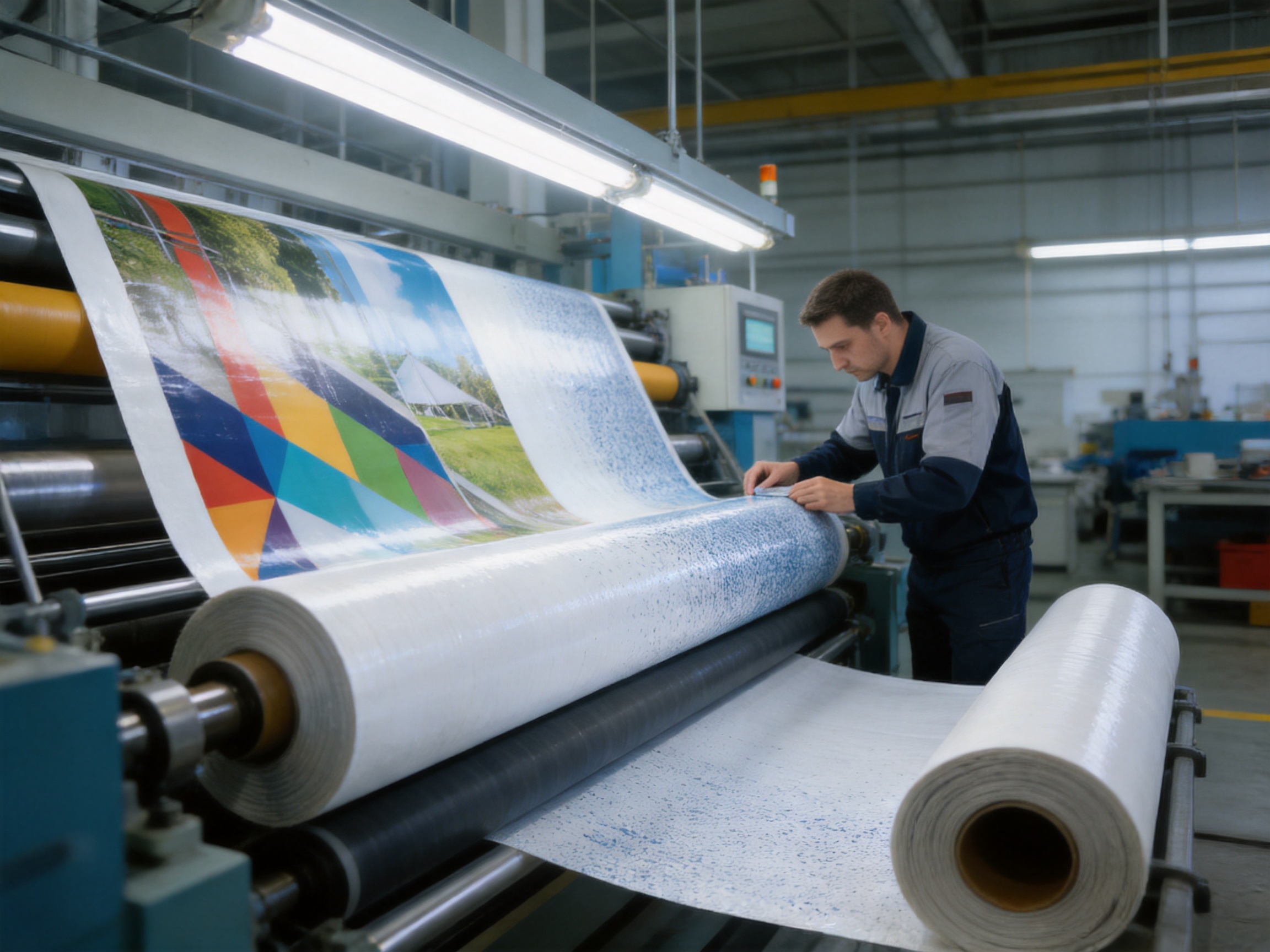
RV awnings often need to retract into a compact roll or cassette. This places special requirements on the fabric. A material that is too rigid may resist folding, create bulky rolls, or develop permanent creases. A material that is too soft may lack the dimensional stability needed to remain properly tensioned.
The tarpaulin is designed to maintain a flexible hand while retaining the strength associated with its industrial base. This makes it suitable for retractable awning frames, extension awnings, side curtains, and related structures that are opened and closed repeatedly.
Flexibility also benefits processing. Fabricators can cut the material into custom patterns, create hems, form reinforced corners, and join panels through suitable sewing, welding, or bonding methods. The choice of processing technique depends on the equipment, design, seam requirements, and end-use specifications.
Repeated rolling should always be carried out with the printed and coated surface kept clean. Sand, grit, or hard particles trapped inside a roll can create pressure marks and abrasion. Proper storage, controlled tension, and avoidance of sharp folds can help preserve the material’s appearance and service performance.
The product’s balance of flexibility and mechanical strength gives it an advantage over rigid sheets and some heavy industrial covers. It can adapt to moving frames while still providing reliable coverage. This is particularly useful for mobile applications where compact storage and frequent deployment are part of normal operation.
Outdoor recreational products must often operate through different seasons. In summer, the material may experience strong sunlight and high surface temperatures. In winter, it may be exposed to cold temperatures that can make some plastics stiff or brittle. During humid seasons, stored materials may face mildew and moisture-related problems.
The product incorporates an all-weather formulation intended to maintain flexibility in both hot and cold conditions. This supports year-round use on motorhomes, travel trailers, side curtains, and outdoor shelters. Maintaining a supple texture is important because brittle or excessively stiff material is more vulnerable to cracking during folding, rolling, or installation.
The material also provides water resistance and is designed to help reduce mildew-related concerns during humid storage. No outdoor textile should be stored wet for extended periods, but a water-resistant and mildew-conscious formulation can provide an additional level of protection when storage conditions are less than ideal.
For distributors, seasonal durability can help reduce maintenance requirements and product returns. A material that performs across a broader temperature range is easier to position for different markets, from warm coastal regions to colder inland and northern climates.
Actual performance depends on the environment, installation method, cleaning routine, storage practice, and exposure duration. Buyers serving extreme climates may request additional testing or samples that reflect their local conditions.
The manufacturer operates from Haining Dingqiao Industrial Park in Zhejiang Province, China, with convenient access to Shanghai and Ningbo ports. This location supports efficient transportation of raw materials and finished goods for domestic and export orders.
Haining Taiwei New Material Co., Ltd. was established in July 2010. Its product range includes PVC films, digital printing fabrics, tarpaulin films, frontlit and backlit materials, double-sided printing fabrics, mesh, and other light-box cloth products. This broad product experience is relevant to the production of printable tarpaulin because many of the required capabilities involve coating control, surface treatment, printing compatibility, and flexible composite construction.
The company is equipped with advanced calendering equipment, multiple production lines, and professional bonding facilities. Calendering is an important manufacturing process for polymer-coated textiles and films. It can be used to form, laminate, and control polymer layers with consistent thickness and surface quality. Careful process control helps support dimensional stability, coating uniformity, and repeatable product performance.
Multiple production lines provide manufacturing flexibility. They can support different product widths, weights, surface treatments, backing constructions, and order quantities. For customers with varied requirements, this may simplify sourcing by allowing several related materials to be purchased from one experienced supplier.
Professional bonding facilities support the creation of strong composite structures. In a coated tarpaulin, the relationship between the base fabric and polymer coating is essential. Good bonding helps prevent delamination, surface separation, and premature loss of performance. The listed adhesion value of 60 N/5 cm reflects the importance placed on maintaining coating integrity.
The reported annual output of approximately 45 million square meters demonstrates substantial manufacturing scale. Production capacity is valuable for distributors, converters, and large project buyers that need stable supply across repeated orders. It can also support private-label programs and customized material development, subject to technical review and minimum order requirements.
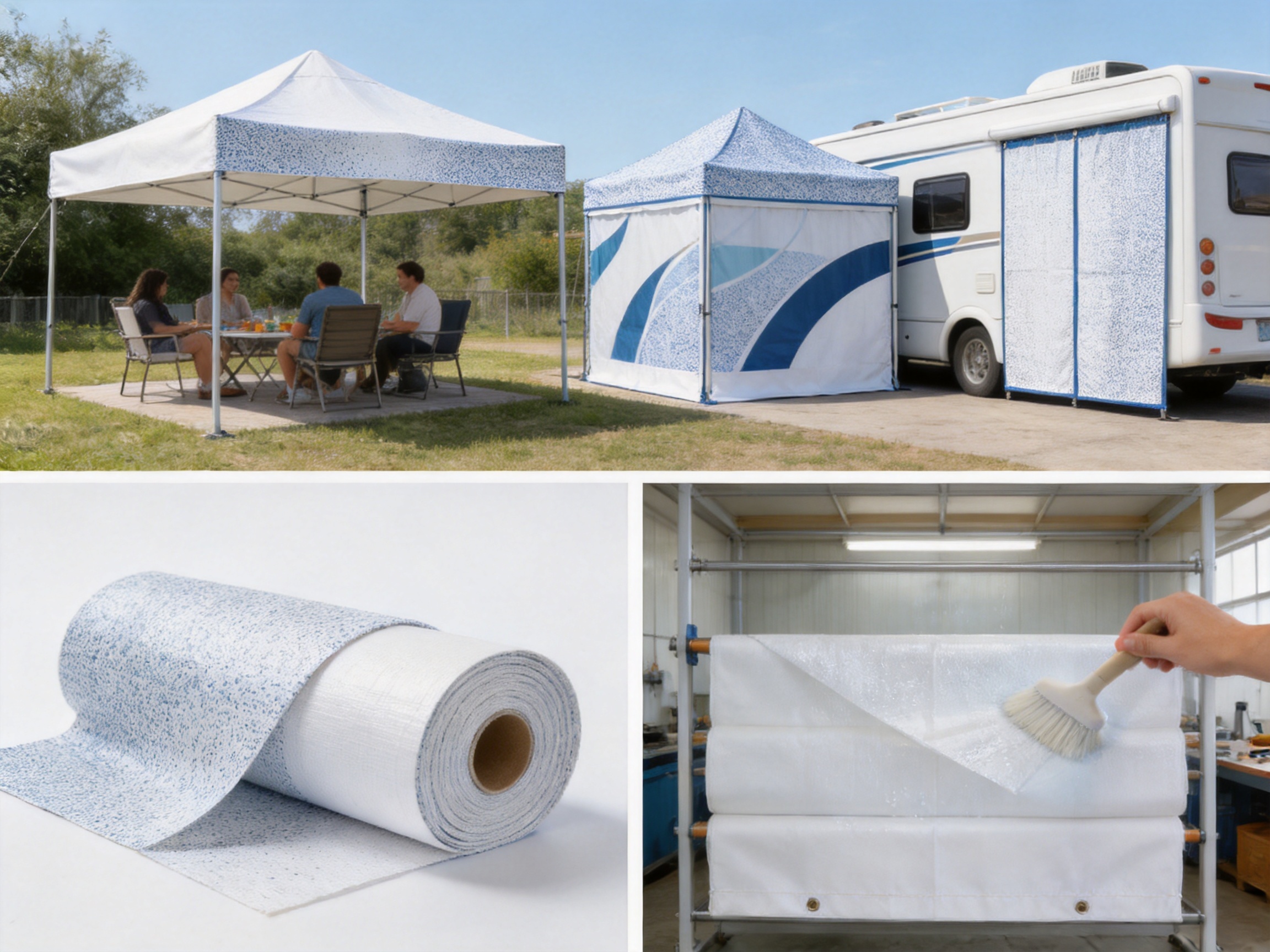
Reliable tarpaulin production requires control at several stages. Raw materials must be selected consistently, the woven reinforcement must meet construction requirements, and polymer compounds must be prepared with suitable additives. During coating and calendering, temperature, pressure, line speed, and thickness should be controlled to achieve repeatable results.
Surface treatment is particularly important for printable products. The print side must provide suitable surface energy and chemical compatibility without compromising flexibility or water resistance. Coating uniformity helps reduce visible variation across a roll and supports more predictable color output during digital printing.
Mechanical tests can include tensile strength, tear strength, adhesion, thickness, weight, dimensional stability, and seam performance. Additional evaluations may include water resistance, accelerated weathering, low-temperature flexibility, mildew resistance, and ink adhesion after environmental exposure.
For customized products, quality control should also address width tolerance, roll length, winding condition, surface cleanliness, color consistency, and packaging. These factors affect the efficiency of downstream cutting, printing, fabrication, and installation.
Buyers should request a technical data sheet and confirm the testing methods used for each listed value. Test results can vary according to laboratory equipment, sample preparation, direction of testing, and standard selection. A clear specification agreement helps ensure that suppliers and buyers evaluate performance on the same basis.
The product’s main competitive advantage is its combination of properties. Many outdoor fabrics are optimized for one primary function, such as low weight, low cost, basic waterproofing, or decorative printing. This tarpaulin is designed to combine several requirements in a single material.
Compared with lightweight promotional fabrics, the 1000D by 1000D structure provides greater mechanical reinforcement for awning use. Compared with unprinted industrial tarpaulin, its specialized printable surface provides more opportunities for customization and branding. Compared with rigid plastic sheet, its flexible construction is more suitable for rolling and retractable systems.
The approximately 460-gram-per-square-meter weight also represents a practical middle ground. Very heavy materials may provide substantial strength but can become difficult to handle and store. Very light materials may be easier to install but can offer less resistance to tearing and abrasion. The selected construction aims to balance durability, handling, and fabrication needs.
Another advantage is the manufacturer’s experience across related product categories. A supplier producing PVC film, mesh, frontlit, backlit, and digital printing materials can draw on broader knowledge of coating, lamination, print compatibility, and flexible composite production. This can be valuable when a customer needs a material adjusted for a particular printer, climate, application, or fabrication process.
Although the product is specifically suited to RV awnings, its combination of strength, waterproofing, UV protection, flexibility, and printability allows it to serve other applications.
Side curtains can protect storage areas, outdoor kitchens, seating zones, and vehicle extensions from sun and rain. Printed side curtains can also create a coordinated appearance across a vehicle fleet.
Event operators can use the material for branded shelter walls, temporary canopies, and promotional structures. The printable surface allows sponsor graphics and event identity to remain visible in outdoor conditions.
The material can support durable banners and display panels where strong fabric reinforcement is preferred. Its weather-resistant surface is useful for long-term promotional installations, subject to appropriate printing and finishing methods.
Service companies, rental operators, tourism businesses, and outdoor equipment providers can use printed covers to protect equipment while displaying logos and contact information.
The tarpaulin may be considered for outdoor partitions, equipment shelters, temporary shade structures, and customized recreational accessories. Designers should confirm load requirements and processing suitability before adopting it for specialized structures.
Before beginning full production, converters should test the selected ink system on the actual material. The test should confirm color density, drying or curing, rub resistance, adhesion, flexibility, and resistance to water and sunlight.
Artwork should be prepared with the final viewing distance and material width in mind. Large graphics, logos, and text should be positioned away from seams, hems, fasteners, and high-stress corners whenever possible. Designers should also consider how the graphic will appear when the awning is extended, partially rolled, or viewed from an angle.
During cutting, clean equipment and accurate templates help prevent edge damage. If the awning includes curved corners, reinforced pockets, or attachment sleeves, the design should distribute stress smoothly rather than concentrating it at sharp points.
Seams may be sewn, heat welded, or bonded depending on the equipment and product design. A trial panel can help determine the correct temperature, pressure, speed, thread, tape, or adhesive. Any joining method should be evaluated for strength, waterproofing, flexibility, and appearance.
Eyelets and other fasteners should be installed with suitable reinforcement. Excessive pressure or poorly supported holes can create local stress concentrations. Reinforced hems and patches can help improve performance around high-load attachment points.
Regular maintenance can extend the useful life of a printed RV awning. Loose dirt should be removed before it becomes embedded in the surface. Cleaning should generally use mild methods appropriate for coated and printed materials. Strong solvents, abrasive brushes, and unapproved chemicals may damage the coating or printed image.
The awning should be allowed to dry before long-term storage. Rolling wet material can encourage mildew growth and create unwanted odor. If the material becomes contaminated with sand or grit, it should be cleaned carefully before rolling to reduce surface abrasion.
Storage should be carried out in a dry, ventilated location away from sharp objects, excessive heat, and direct sunlight. The roll should not be compressed under heavy loads, and the material should be protected from contact with oils, fuels, and chemicals that may affect polymer coatings or printed graphics.
Users should inspect hems, seams, corners, attachment points, and areas around hardware at regular intervals. Early repair of minor damage can help prevent a small cut or loose seam from becoming a larger structural problem.
Different markets may require different widths, colors, surface finishes, printing systems, packaging methods, and fabrication formats. A manufacturer with multiple production lines and professional bonding facilities can often support a wider range of technical discussions than a supplier focused on a single commodity material.
Customers may request samples to review hand feel, opacity, flexibility, surface appearance, print quality, and processing behavior. For larger orders, it is advisable to approve a reference sample or production standard before mass manufacturing.
Customization may include material weight, coating color, surface finish, printable side, roll dimensions, packaging, and technical construction. Feasibility depends on order volume, production scheduling, raw material availability, and testing requirements.
The manufacturer’s export experience can also help international buyers coordinate documentation, packaging, shipping, and repeat orders. Its customer base across Europe, America, the Middle East, Southeast Asia, and other regions indicates experience with international product requirements and logistics.
Buyers should compare more than price per square meter. A meaningful evaluation should include tensile strength, tear resistance, coating adhesion, waterproofing, UV performance, print adhesion, flexibility, low-temperature behavior, mildew resistance, roll quality, and expected service conditions.
It is also important to compare the complete fabrication cost. A material with better print adhesion may reduce rework and rejected graphics. A stronger base may reduce repairs around fasteners and seams. A more stable coating may improve production consistency and reduce customer complaints.
For distributors, supply reliability and product range are also competitive factors. A manufacturer capable of producing several related materials may offer better sourcing efficiency than multiple small suppliers. Technical communication, sample support, packaging quality, and after-sales response should be included in the purchasing decision.
The Heavy Duty Printable UV Block Tarpaulin is particularly suitable for buyers who need one fabric to deliver multiple functions: outdoor shelter, solar protection, water resistance, custom printing, repeated rolling, and mechanical durability.
Its primary use is as a durable, printable fabric for RV awnings, including motorhome awnings, trailer extension awnings, retractable systems, and side curtains. It can also be adapted for other outdoor shelter and display applications.
It describes the denier construction of the reinforcing woven base. The 1000D by 1000D structure indicates a substantial industrial fabric skeleton designed to support high tensile and tear resistance.
Yes. The surface is designed for digital printing and includes a treatment intended to improve ink anchoring and color fixation. Printer, ink, curing, and finishing compatibility should be confirmed through sample testing before production.
The material is designed to remain flexible for retractable awning systems and repeated rolling. To protect the surface, users should remove sand and dirt before rolling and avoid sharp folds, excessive compression, and improper storage.
Yes. Its UV-blocking function helps reduce solar radiation and supports shade performance. UV resistance also helps protect the material and printed graphics during outdoor exposure.
The product includes a full waterproof coating intended to provide rain shelter. Correct installation, suitable drainage, and properly finished seams remain necessary for complete awning performance.
The supplied specifications list tensile strength of 1000 N/5 cm and 800 N/5 cm, tearing strength of 200 N and 180 N, and adhesion of 60 N/5 cm. The base construction is listed as 1000D by 1000D, 9 by 9, at approximately 460 grams per square meter.
The all-weather formulation is intended to maintain flexibility across hot and cold seasonal conditions. Buyers operating in extreme climates should request samples and conduct low-temperature testing appropriate to their application.
Yes. The printable surface can display logos, fleet identification, promotional graphics, custom patterns, and sponsor designs. This makes it useful for rental fleets, tourism businesses, outdoor events, and recreational organizations.
It should be cleaned and dried before storage, then kept in a dry, ventilated location away from direct sunlight, sharp objects, oils, fuels, and excessive heat. Avoid storing it under heavy compression.
The supplier operates multiple production lines and uses advanced calendering equipment and professional bonding facilities. It produces PVC films, digital printing fabrics, tarpaulin films, frontlit and backlit materials, mesh, and other flexible display products, with an annual output of approximately 45 million square meters.
Customers should contact the supplier to discuss samples, printing tests, construction options, roll dimensions, packaging, and custom requirements. Technical confirmation is recommended before placing a large production order.
The Heavy Duty Printable UV Block Tarpaulin for RV Awning is developed for applications where outdoor protection and visual customization must work together. Its 1000D by 1000D reinforcement, 9 by 9 construction, and approximately 460-gram-per-square-meter weight provide a strong foundation for demanding use. The listed tensile, tear, and adhesion values further support its suitability for tensioned awnings and flexible outdoor structures.
Its waterproof coating helps create dependable rain shelter, while the UV-blocking function supports shade and thermal comfort. The flexible construction is suitable for retractable awning frames and repeated rolling, and the all-weather formulation is intended to perform through changing seasonal conditions.
For brands and commercial users, the printable surface adds significant value. Digital graphics, logos, custom patterns, and promotional designs can turn an RV awning into a long-lasting communication surface. Improved ink anchoring and color fixation help protect the appearance of the finished product during outdoor use.
The manufacturing capabilities of Haining Taiwei New Material Co., Ltd. strengthen the product proposition. Since its establishment in 2010, the company has developed experience in PVC films, coated fabrics, digital printing materials, mesh, frontlit and backlit products, and related flexible textiles. Its advanced calendering equipment, multiple production lines, bonding facilities, export experience, and large annual production capacity provide a foundation for consistent supply and customized development.
For RV manufacturers, fabricators, distributors, fleet operators, and outdoor branding companies, this tarpaulin offers a balanced solution that combines structural durability, weather resistance, printing performance, flexibility, and manufacturing support.
1. Product technical information supplied for Heavy Duty Printable UV Block Tarpaulin for RV Awning.
2. Manufacturer information supplied for Haining Taiwei New Material Co., Ltd., including company history, product range, production facilities, export markets, and annual capacity.
3. General principles of coated woven textile construction, polymer calendering, flexible composite bonding, and digital printing surface treatment.
4. General outdoor awning design practices covering drainage, tensioning, seam construction, hardware reinforcement, cleaning, and storage.
5. General quality evaluation practices for tensile strength, tearing strength, coating adhesion, waterproofing, UV resistance, and printed outdoor textiles.
Heavy Duty Printable UV Block Tarpaulin For RV Awning
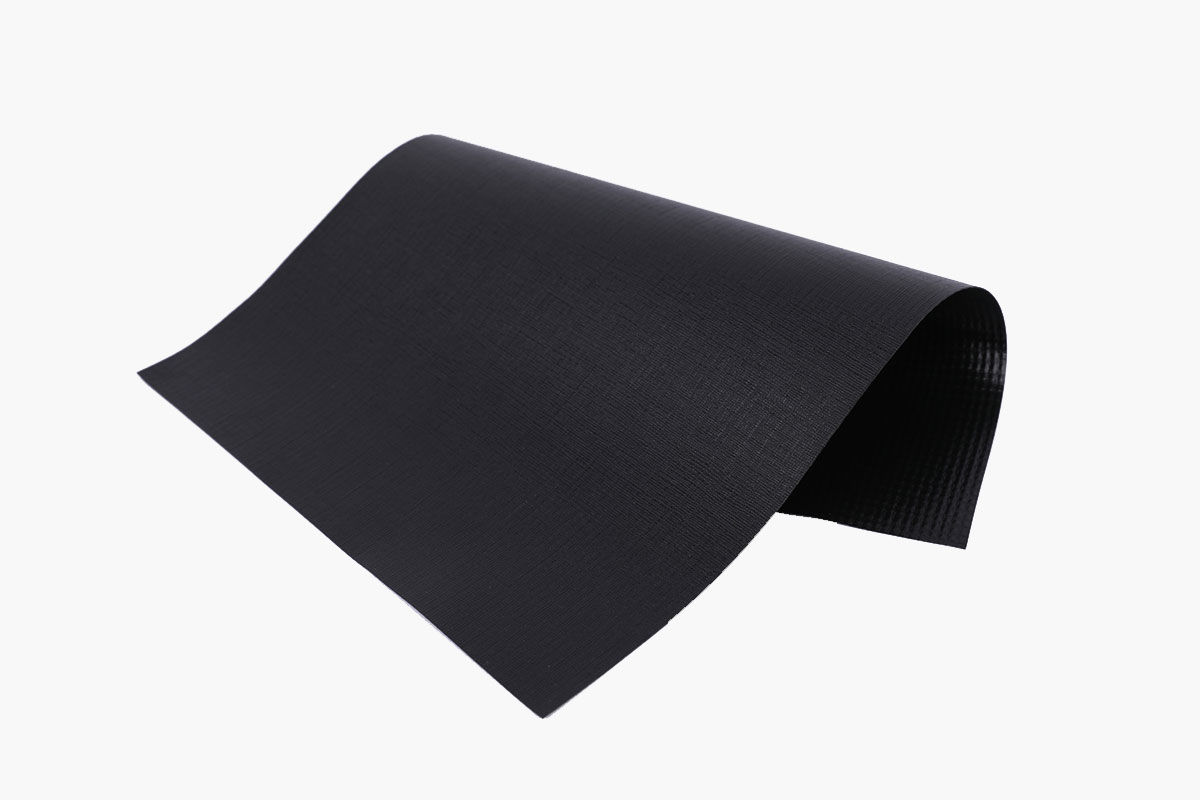 Heavy-Duty High-Performance Camouflage-Printed Tarpaulin
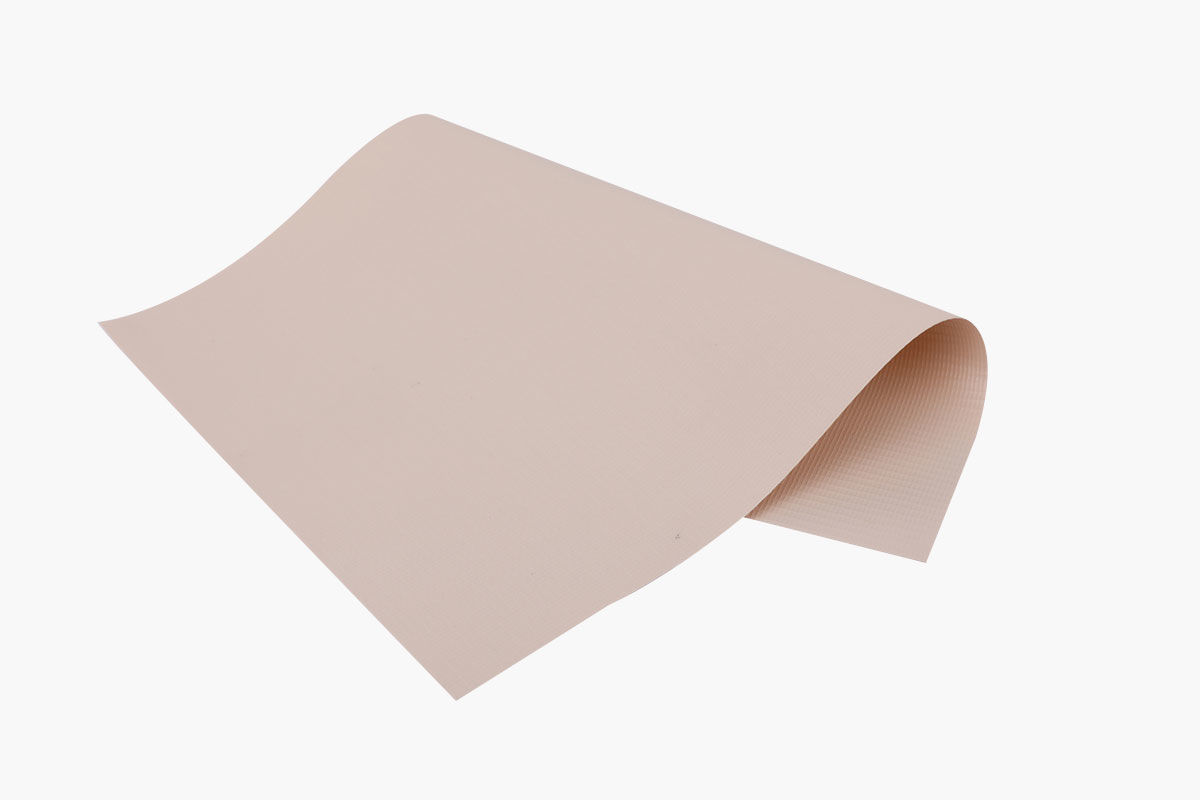 Heavy-Duty Reinforced Waterproof Tarpaulin
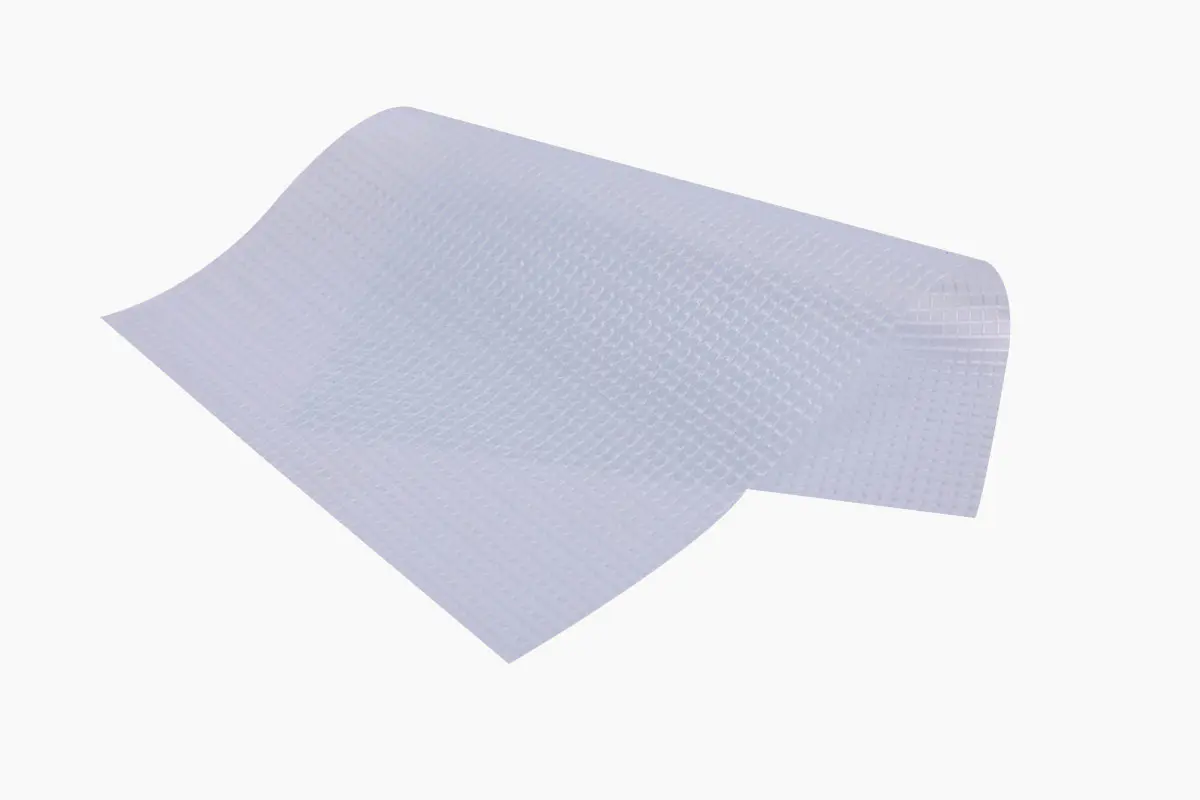 Heavy-Duty Waterproof Clear Tarpaulin
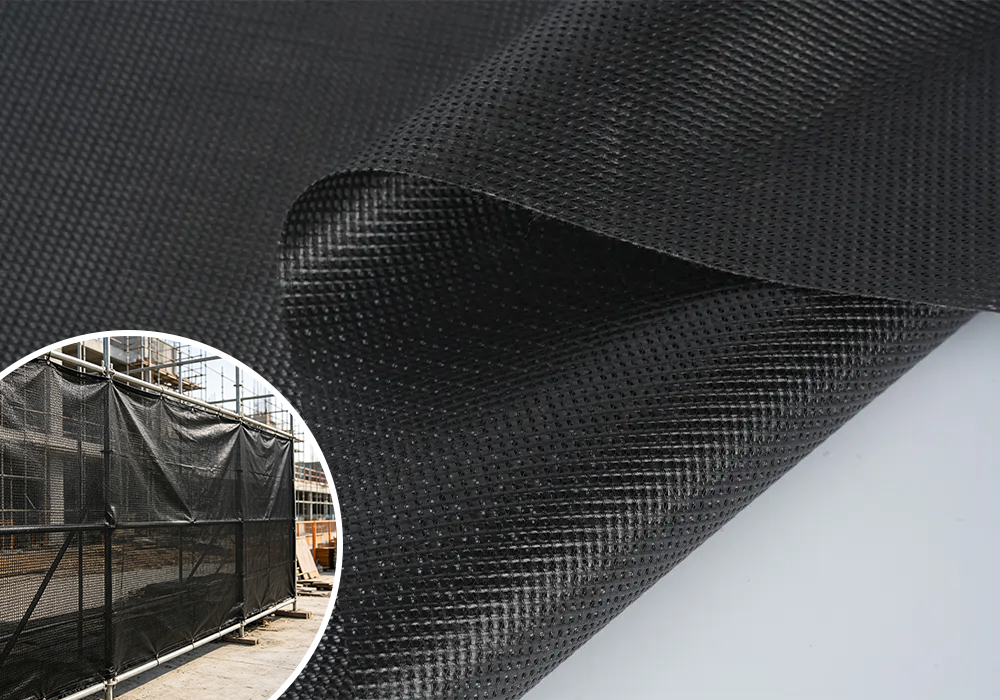 All Weather Heavy Duty Mesh Tarpaulin for Barrier Fencing
 Heavy Duty Waterproof Tarpaulin For Truck Side Curtain
 Custom Digital Printing Fabric Manufacturers

 Previous