

 English
 中文简体
 Español
News
Home / Author / Luo Zhen — Product After-Sales Service Specialist / Lightweight Liquid-Proof Tarpaulin for Efficient Medical Nursing Protection


Content
Medical nursing environments require protective materials that are practical, economical, easy to handle, and dependable under frequent cleaning. Bed underlays, mattress protectors, temporary bed covers, and surface barriers are exposed to moisture, body fluids, medicines, disinfecting solutions, friction, folding, and repeated movement. A material that is too heavy can slow installation and increase storage costs. A material that is too rigid may create uncomfortable folds or rough contact points. A material that lacks liquid resistance can allow contamination to reach mattresses, bed frames, floors, or other underlying surfaces.
The lightweight liquid-proof tarpaulin for medical nursing is designed to address these operating conditions with a balanced construction. Produced at an approximately 240gsm profile, it offers a combination of flexibility, liquid resistance, cleanability, and cost efficiency. Its 500*500D polyester base and 9*9 construction provide a practical level of mechanical support for temporary medical applications, while the relatively low weight helps staff cut, fold, carry, and deploy the material quickly.
This tarpaulin is suitable for temporary medical beds, folding beds, emergency nursing stations, mobile treatment areas, mattress protection, disposable or limited-cycle bed underlays, and other environments where liquid control and rapid surface cleaning are important. It is particularly useful for clinics, temporary medical stations, care facilities, field hospitals, nursing centers, and healthcare supply distributors seeking a cost-effective protective textile for high-turnover use.
Compared with heavier PVC tarpaulins or rigid plastic sheets, this material provides a softer and more manageable handling experience. Compared with uncoated woven fabrics, it offers a protective surface that helps resist moisture penetration and simplifies cleaning. Compared with very thin disposable films, its woven reinforcement offers improved handling strength and better resistance to tearing during positioning, folding, and routine use.
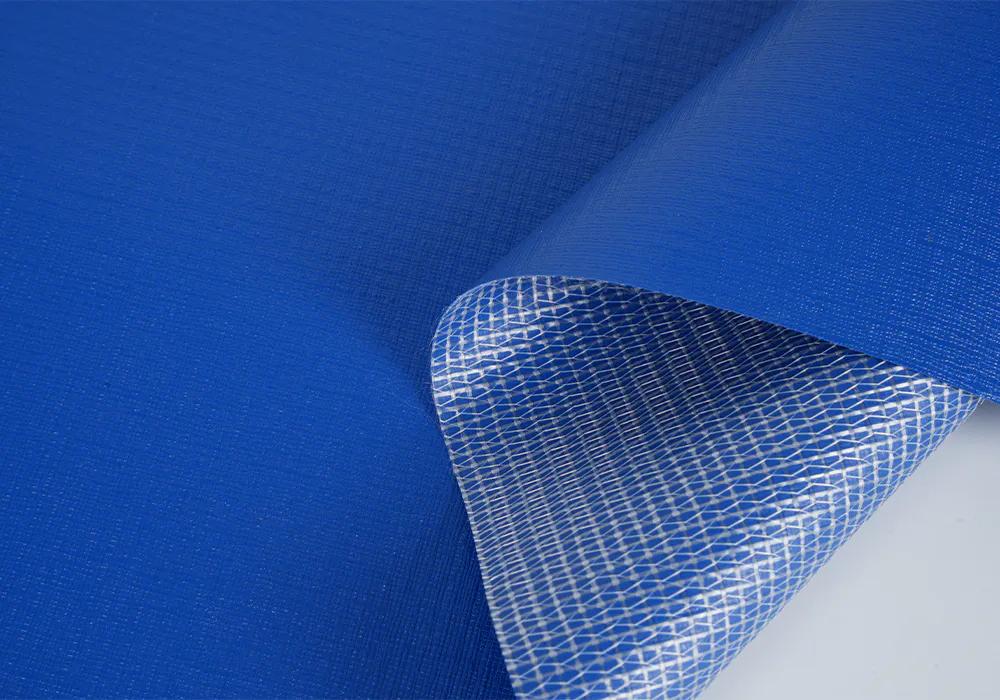
Light Economical Liquid Proof Tarpaulin For Medical Nursing
The product is a lightweight, liquid-proof tarpaulin developed for medical nursing protection. Its main purpose is to create a barrier between the patient, nursing fluids, medicines, and the underlying mattress or bed surface. The material can be cut into different dimensions according to bed sizes or application requirements. It can also be supplied in rolls for further processing, conversion, or bulk distribution.
The smooth outer surface is designed to repel moisture and make ordinary contamination easier to remove. In a nursing environment, this can reduce the time required to clean and prepare a bed between users. Staff can wipe the surface with an appropriate standard cleaning or disinfecting product according to the facility’s own procedures. The non-porous coated face helps prevent liquid from immediately soaking into the textile structure, which supports more efficient surface management.
At 240gsm, the tarpaulin remains light enough for quick installation and storage. Staff can place it on a mattress, fold excess material around the edges, or cut it into smaller protective pieces without requiring heavy equipment. The material is also appropriate for temporary beds and folding frames because its flexible construction can follow moderate curves and changes in support position without behaving like a stiff board.
The product combines a woven polyester foundation with a protective coating system. The polyester base supplies dimensional support and handling strength. The coating provides the liquid-resistant surface, contributes to cleanability, and helps protect the textile from ordinary environmental exposure. This construction is suitable for medical support applications where the material must remain economical while delivering more functional value than basic fabric or unreinforced film.
The principal product characteristics include a lightweight 240gsm construction, a 500*500D yarn specification, a 9*9 weave arrangement, liquid-proof surface performance, flexible handling, easy cutting, and a surface suitable for wipe-clean maintenance. The material also provides basic resistance to aging and is available for disposable or reusable operating models depending on the customer’s hygiene policy and application conditions.
The product is not intended to replace specialized medical devices, certified sterile barriers, or clinical products requiring a specific regulatory classification. Instead, it serves as a practical protective textile for bed and surface management. Buyers should evaluate the intended use, cleaning chemicals, temperature, contact time, and local medical requirements before placing the product into a formal healthcare protocol.
| Item | Specification or Characteristic | Practical Importance |
|---|---|---|
| Product type | Lightweight liquid-proof tarpaulin | Provides a protective barrier for beds and temporary nursing surfaces |
| Nominal weight | 240gsm | Reduces handling, shipping, and storage burden compared with heavier tarpaulins |
| Base construction | 500*500D polyester, 9*9 | Supports practical tensile and tearing performance during routine handling |
| Tensile strength | 500/480 N/5cm | Helps the material withstand positioning and moderate pulling forces |
| Tearing strength | 150/130 N | Supports resistance to tear propagation during cutting and installation |
| Adhesion | 60 N/5cm | Indicates coating-to-fabric bonding performance |
| Surface behavior | Smooth, water-resistant, wipe-clean | Facilitates faster cleaning and routine moisture management |
| Application format | Disposable or reusable, subject to use conditions | Allows buyers to select a suitable operating and purchasing model |
Moisture control is one of the most important functions of a nursing underlay. Water, saline solution, liquid medicine, cleaning residues, and body fluids can quickly pass through ordinary fabric. Once fluid reaches a mattress or upholstered support, it may be difficult to remove completely. The resulting cleaning work can require additional staff time, extended drying periods, and temporary removal of the bed from service.
The coated surface of this tarpaulin is designed to limit liquid penetration under normal application conditions. When liquid remains on the surface, staff can remove it promptly using an appropriate wiping procedure. This helps protect the underlying mattress and reduces the chance that routine spills will become deep-surface contamination events.
A liquid-proof barrier also improves operational consistency. Instead of using a different improvised sheet for every bed, clinics and temporary treatment stations can standardize protective layers according to bed dimensions and patient-care procedures. Standardization may simplify purchasing, inventory management, staff training, and replacement planning.
The material is especially valuable in high-turnover environments. Emergency stations, temporary treatment areas, recovery spaces, and mobile nursing facilities may need to prepare beds repeatedly throughout the day. A lightweight underlay that can be installed, wiped, folded, replaced, or discarded quickly can help support a more efficient workflow.
The smooth exterior helps reduce the retention of visible liquid and organic residue compared with a rough, absorbent textile. This does not make the product self-sterilizing, and it should not be interpreted as a substitute for an approved infection-control system. However, a surface that is easier to wipe can support routine cleaning and disinfection procedures when used together with suitable chemicals, contact times, and staff practices.
The surface may also help restrain the accumulation of moisture that can contribute to bacterial or microbial growth. Effective hygiene depends on prompt cleaning, sufficient drying, and proper disposal or reuse procedures. Buyers should test compatibility with their selected sanitizers because strong chemicals, excessive concentrations, extended soaking, or high temperatures may affect coating performance over time.
For reusable applications, the facility should establish a clear cleaning cycle. The procedure may include removal of visible contamination, application of an approved cleaning agent, disinfection where required, rinsing if specified by the chemical manufacturer, drying, visual inspection, and storage in a clean area. The tarpaulin should be removed from service if it develops holes, severe coating damage, delamination, or other defects that compromise liquid resistance.
Many protective materials offer liquid resistance by using thick, rigid, or heavily coated structures. These products can be durable, but they may be less comfortable and more difficult to manage on temporary beds. Hard folds can form pressure lines. Stiff corners can lift or move during patient transfer. Heavy sheets can also create unnecessary noise, storage demands, and handling fatigue.
The 240gsm construction is intended to provide a more flexible alternative. The material can follow the general shape of a mattress or folding bed without forming the same degree of rigid creasing associated with thick plastic sheets. Its pliability is useful when staff need to tuck the edges, reposition the bed, or fold the material for transport.
A softer textile-based structure can also reduce friction against bedding and minimize the sensation of a hard sheet beneath a patient. Comfort will depend on the complete bedding arrangement, including sheets, blankets, mattress type, and the duration of contact. The tarpaulin is best used as a protective layer beneath an appropriate clinical sheet or other designated patient-contact covering when required by the facility.
Light weight also improves staff ergonomics. A roll or folded stack of 240gsm material is easier to move than an equivalent quantity of heavy tarpaulin. Staff can carry multiple cut pieces to a treatment area, and distributors can package more usable square meters per shipment. These benefits become increasingly important for clinics with limited storage space or temporary stations that must be assembled quickly.
Temporary medical beds often have adjustable sections, folding joints, movable frames, or uneven support surfaces. A stiff cover may resist these changes and create gaps where liquid can collect. A flexible tarpaulin can be positioned with fewer sharp folds and adjusted as the bed configuration changes.
The material can also be cut into custom shapes for mattress corners, side protection, instrument areas, transport surfaces, or other temporary barriers. Easy cutting allows healthcare suppliers to convert a master roll into standardized kits. A distributor may prepare different sizes for single beds, examination couches, folding stretchers, or smaller nursing surfaces.
When cutting the material, buyers should consider edge treatment and the intended exposure level. In some applications, a simple cut edge may be sufficient. In others, hems, binding, heat sealing, or reinforced corners may improve service life. The manufacturer or converter can advise on suitable processing methods based on the final use and required dimensions.
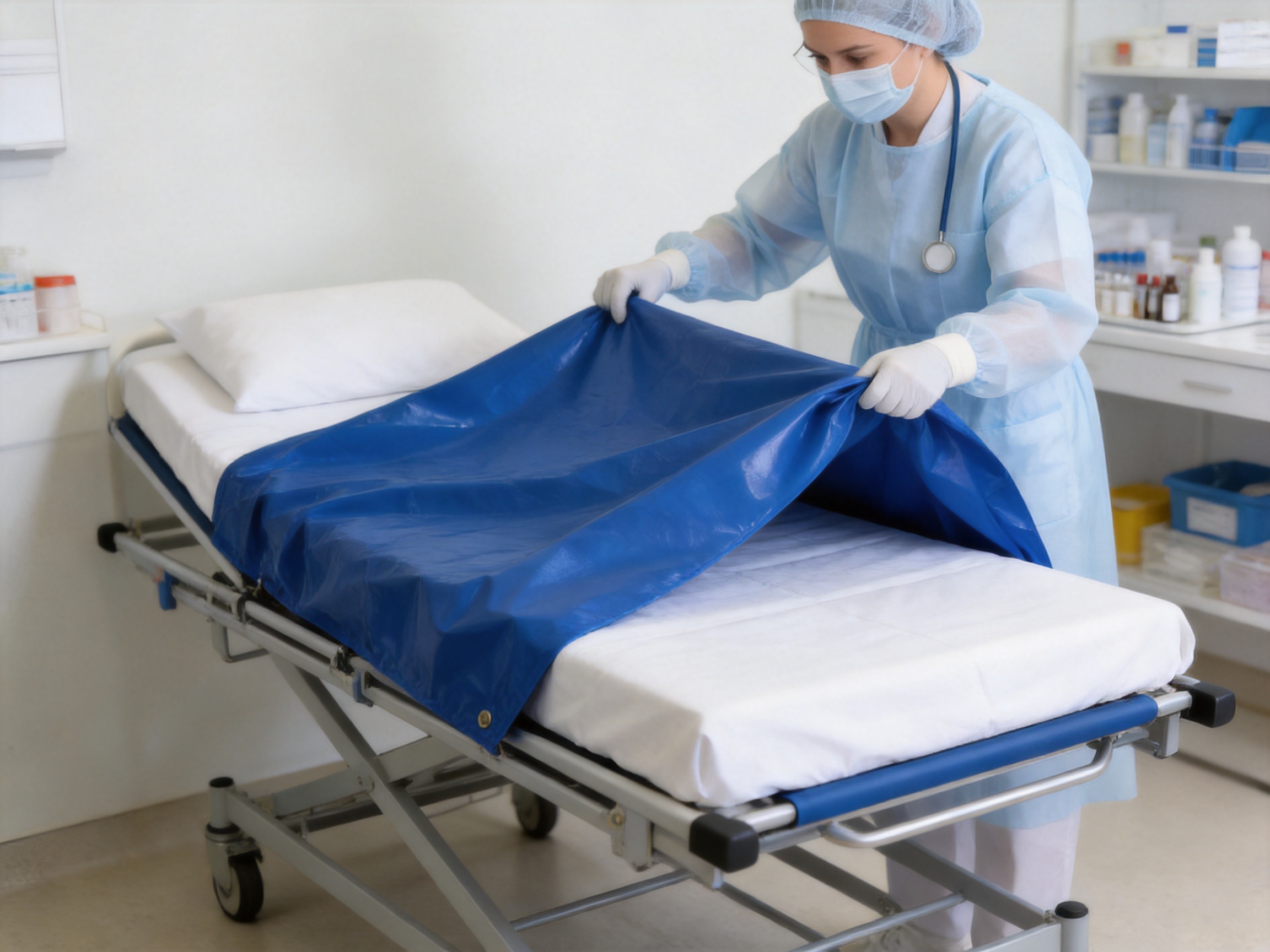
Medical buyers rarely compare only one technical property. They usually assess cost, weight, liquid protection, cleanability, durability, comfort, conversion efficiency, and supply reliability together. The value of this tarpaulin lies in its balance across these factors rather than in excessive thickness or unnecessary construction complexity.
Uncoated woven fabric can be soft and inexpensive, but it generally absorbs liquid. Once contaminated, it may require washing, drying, inspection, and replacement. It can also allow moisture to pass through to the mattress. The coated tarpaulin provides a more suitable barrier for applications where liquid resistance is a primary requirement.
The coated surface also makes visible residue easier to identify and remove. While ordinary fabric may hide moisture within its fibers, the smooth tarpaulin surface allows staff to see and manage surface contamination more promptly. This can support more consistent bed preparation and reduce dependence on repeated laundering for every minor spill.
Very thin plastic film is lightweight and inexpensive, but it may tear easily when pulled over a mattress or shifted during patient movement. It can also make installation difficult because it lacks a reinforcing textile structure. The 500*500D woven foundation of this product offers more practical handling strength than unreinforced film while retaining a relatively low total weight.
The tarpaulin can therefore support a wider range of routine handling operations. Staff can lift, fold, cut, and reposition it with less concern that a small snag will immediately split the entire sheet. It remains important to avoid sharp edges and excessive force, but the woven construction gives the product a more useful working margin.
Heavy tarpaulin can provide strong physical protection, but its weight may be excessive for temporary nursing covers. It can be more difficult to fold, slower to place, and more expensive to transport. Thick materials may also create uncomfortable or rigid folds beneath bedding.
The 240gsm profile offers a lighter alternative for situations where extreme abrasion resistance is not required. It is designed for protective bed and surface applications rather than heavy-duty construction, truck-cover, or industrial ground-sheet use. By selecting a product appropriate to the actual duty cycle, buyers can avoid paying for material thickness that provides little additional value in a medical nursing environment.
Some medical laminates are engineered for tightly defined clinical applications and may include specialized certifications, controlled biocompatibility data, or highly specific barrier performance. Those products can be appropriate where such requirements are mandatory, but they may also involve higher purchasing costs and more limited customization.
This tarpaulin is positioned as an economical protective textile for general nursing support, temporary medical stations, bed underlays, and mattress protection. It can be considered when the buyer needs dependable liquid resistance and practical handling but does not require a specialized sterile barrier or a product with a particular medical-device classification. Final suitability should always be confirmed against the regulations and internal standards of the intended market.
| Comparison Factor | Lightweight Liquid-Proof Tarpaulin | Uncoated Fabric | Thin Plastic Film | Heavy Tarpaulin |
|---|---|---|---|---|
| Liquid resistance | Designed for liquid-proof surface protection | Usually limited because the fabric absorbs moisture | Usually high, depending on film integrity | Generally high |
| Handling weight | Low at approximately 240gsm | Low to medium | Very low | Medium to high |
| Resistance to routine tearing | Supported by woven 500*500D construction | Varies by fabric | May be vulnerable to puncture and splitting | Generally high |
| Flexibility | Soft and pliable for temporary beds | Usually flexible | Flexible but may cling or wrinkle | May be relatively stiff |
| Cleaning convenience | Smooth surface supports wiping | May require laundering | Easy to wipe if not damaged | Can be wiped but may be less flexible |
| Conversion and cutting | Suitable for cutting and roll processing | Easy to cut | Easy to cut but vulnerable to tearing | May require more effort |
| Typical value position | Balanced protection and economy | Low initial cost but higher cleaning burden | Low cost but limited handling strength | Higher material and logistics cost |
Haining Taiwei New Material Co., Ltd. was established in July 2010 and operates in Haining Dingqiao Industrial Park in Zhejiang Province, China. The company benefits from access to major transportation routes and ports, including convenient connections toward Shanghai and Ningbo. This location supports raw-material procurement, finished-goods logistics, export coordination, and communication with international customers.
The company specializes in PVC films, digital printing fabrics, tarpaulin films, frontlit and backlit materials, double-sided printing fabrics, mesh, and other light-box cloth products. This product range gives the manufacturer experience across coated textiles, flexible films, printing substrates, and related composite materials. Such experience is relevant to the production of a lightweight medical tarpaulin because coating uniformity, fabric preparation, bonding control, winding, and surface quality all influence final performance.
According to the supplied company information, the factory has an annual output of approximately 45 million square meters. Multiple production lines and advanced calendering equipment support large-volume manufacturing. Professional bonding facilities further contribute to the production of laminated or coated structures that require stable adhesion between the textile foundation and surface layers.
Calendering is an important process in flexible coated-material manufacturing. During calendering, heat, pressure, and controlled gaps are used to form or apply a polymer layer. Stable process control helps determine the final thickness, surface smoothness, coating distribution, and appearance of the material.
For a 240gsm medical nursing tarpaulin, weight consistency is important. If the coating is uneven, some areas may become too thin and lose liquid resistance, while other areas may become unnecessarily heavy or stiff. Controlled calendering helps the manufacturer target a balanced structure that remains lightweight while maintaining practical surface protection.
Temperature and pressure must be managed carefully because excessive heat can affect the textile base, while insufficient heat or pressure may reduce bonding quality. Production teams monitor the relationship between the fabric, coating compound, line speed, roller condition, and cooling stage. The objective is to create a stable coated surface that can be wound, transported, cut, and converted without premature separation.
The supplied product information lists an adhesion value of 60 N/5cm. Adhesion reflects how effectively the coating remains attached to the textile foundation when the material is subjected to handling and stress. Strong bonding is especially important for a product that may be folded repeatedly, cut into smaller pieces, or wiped during routine use.
Poor bonding can lead to peeling, bubbling, delamination, or surface separation. These defects may reduce liquid resistance and make cleaning more difficult. Professional bonding facilities allow the manufacturer to control the joining of material layers and improve consistency from roll to roll.
Bonding performance must be considered together with the intended cleaning method. Even a well-bonded product may be damaged by highly aggressive chemicals, prolonged immersion, abrasive scrubbing, or inappropriate temperatures. The company can work with buyers to identify suitable cleaning conditions and, where necessary, conduct application-specific testing.
The 500*500D, 9*9 construction provides a practical reinforcement network within the tarpaulin. The woven base helps distribute pulling forces across the material instead of allowing every load to concentrate at one point. This is useful during installation, folding, cutting, packaging, and transport.
The listed tensile strength is 500/480 N/5cm, while the listed tearing strength is 150/130 N. These values indicate performance in the machine and cross directions as represented by the supplied specification. Buyers should confirm the applicable test standard, sampling conditions, and acceptance criteria before using the figures for formal qualification.
A woven foundation also supports better dimensional stability than a simple unsupported film. The material is less likely to behave as a loose, easily stretching sheet during positioning. This helps staff place it more accurately over mattresses and allows converters to process the product into repeatable sizes.
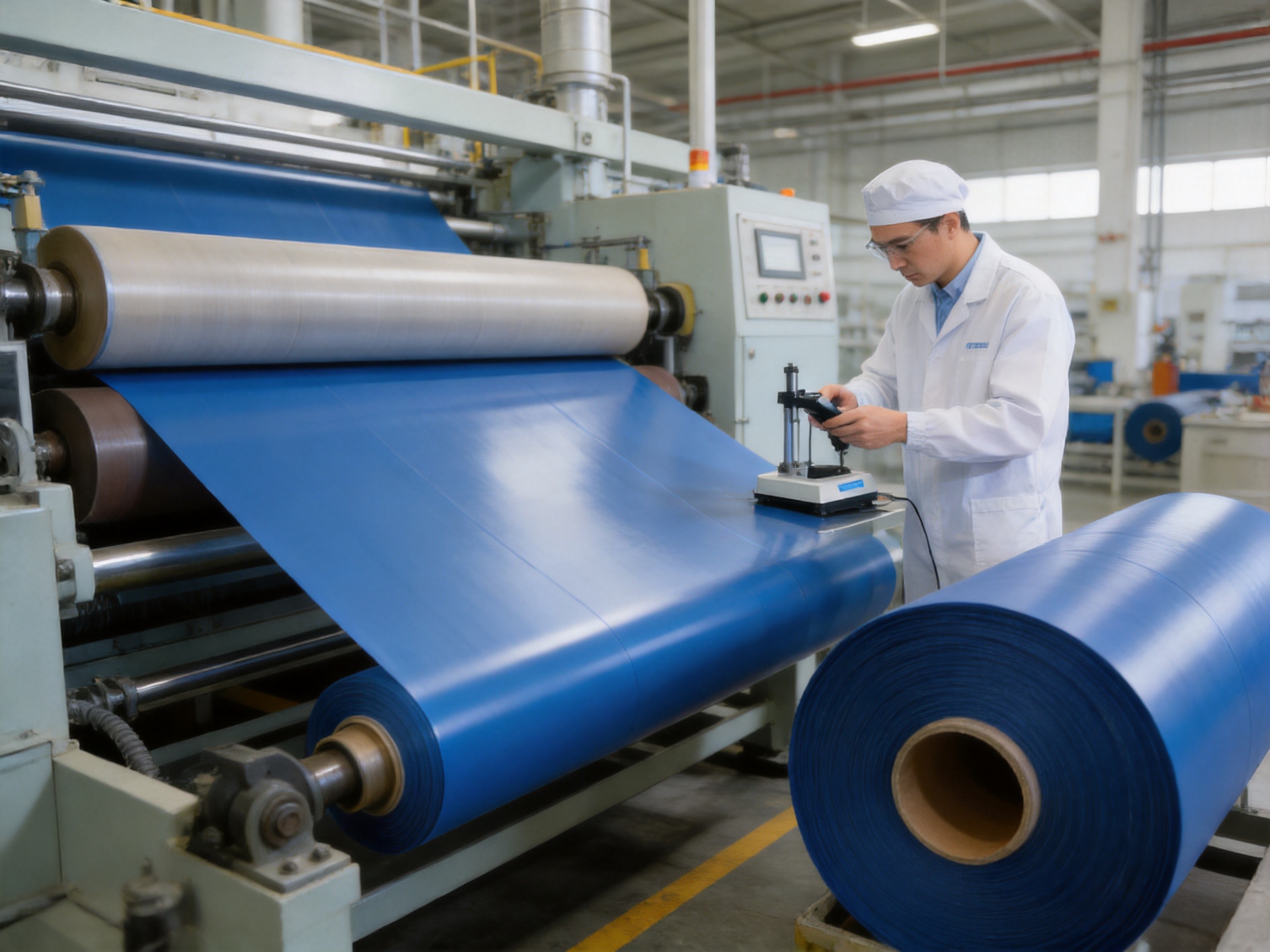
The company reports that more than 98% of its products are exported to Europe, America, the Middle East, Southeast Asia, and other regions. An export-oriented manufacturing model requires attention to packaging, documentation, production consistency, communication, and shipment coordination. International buyers often require stable specifications across repeat orders, and suppliers must be prepared to manage different market expectations.
For the medical nursing tarpaulin, quality management should cover fabric weight, coating uniformity, color or appearance, tensile strength, tear resistance, adhesion, roll length, width tolerance, winding quality, and liquid resistance. These checkpoints help identify production variation before the material is converted or shipped.
Quality inspection may include visual examination under controlled lighting, weight measurement, thickness evaluation, tensile testing, tear testing, adhesion testing, and application trials. Liquid-resistance tests can be selected according to the customer’s technical requirements. When the product is intended for repeated cleaning, buyers may also request wiping-cycle tests or chemical compatibility evaluations using the actual cleaning agents employed at the destination facility.
Export packaging is another important consideration. Rolls should be protected from moisture, crushing, contamination, and excessive heat during storage and transportation. Suitable outer wrapping, core support, labeling, palletization, and container loading can reduce the risk of damage before the goods reach the customer.
Medical supply distributors may require more than a standard roll. They may need pre-cut bed underlays, specific widths, printed handling marks, private-label packaging, defined roll lengths, or multiple sizes for different bed types. The manufacturer’s experience with flexible films and coated fabrics supports a practical foundation for customized orders.
Potential customization options can include width, length, color, packaging format, roll diameter, core size, cutting dimensions, edge treatment, and surface appearance. Customers should provide drawings, tolerance requirements, expected order volume, and intended application details at the quotation stage.
For high-volume buyers, production planning can be coordinated around forecast demand. This may help reduce repeated setup changes and support more consistent delivery. A clear technical specification should define the nominal weight, fabric construction, coating type, test methods, product width, packing method, and inspection requirements.
The most direct application is as a protective layer over or beneath a mattress cover. The tarpaulin helps limit fluid transfer to the mattress structure and can make routine bed preparation more efficient. It may be used in hospitals, clinics, care homes, nursing facilities, temporary shelters, or field medical stations, subject to the facility’s hygiene requirements.
Bed underlays can be cut to cover the central area of a mattress where spills or moisture are most likely to occur. This format reduces material consumption compared with covering the entire bed. It is suitable for cost-sensitive operations that need targeted protection and quick replacement.
Temporary stations often operate with limited storage, limited laundry capacity, and rapidly changing bed assignments. Lightweight tarpaulin rolls or pre-cut pieces can be transported easily and deployed without complex installation. After use, the material can be wiped, inspected, reused, or discarded according to the site’s procedures.
Folding beds and emergency cots may have flexible frames and irregular support surfaces. The tarpaulin’s pliable construction can follow these surfaces more easily than a rigid sheet. It can also be folded with the bed during storage if the bed manufacturer’s instructions permit, although the material should not be trapped against sharp hinges or heated equipment.
Small sections can be cut for examination couches, treatment tables, procedure areas, and equipment platforms. The smooth surface helps staff remove ordinary spills from the protective layer. The final application should be evaluated for patient contact, chemical exposure, and any specific requirements related to sterile or critical environments.
Mobile nursing teams and field stations often prioritize low weight, compact storage, and rapid deployment. A 240gsm material can provide useful surface protection without adding the bulk associated with heavy tarpaulin. Roll-based supply also makes it possible to cut only the quantity required for each location.
The product can support either disposable or reusable use models, depending on the buyer’s process. A disposable model may be appropriate when contamination risk, labor cost, or turnaround speed is more important than maximum material life. Pre-cut pieces can be supplied in sealed packs or grouped by bed size for efficient distribution.
A reusable model may be suitable when the tarpaulin remains intact after use and the facility has an approved cleaning procedure. Reuse can reduce material consumption, but it requires inspection and documented control. The facility should define the maximum number of cleaning cycles, acceptable appearance, permissible coating wear, and conditions for removal from service.
Cost comparison should include more than the purchase price per square meter. Buyers should consider labor for installation, wiping, laundering, drying, replacement, storage, and disposal. The lightweight liquid-proof construction may offer a favorable total-use cost when it reduces cleaning time and protects more expensive mattresses or bed components.
Before reuse, staff should inspect the material for visible holes, pinholes, cuts, coating loss, delamination, severe creasing, damaged edges, persistent stains, or changes in liquid behavior. A simple water or liquid-resistance check may be included in the facility’s internal procedure, provided that it does not replace the required technical validation.
Material that no longer provides a reliable barrier should be removed from service. Reuse should never be based solely on visual appearance if the application involves critical liquid containment or regulated healthcare requirements. Documentation can help the facility identify recurring damage patterns and adjust cutting, placement, or handling practices.
Rolls should be stored in a clean, dry, and ventilated area away from direct sunlight, open flames, sharp objects, and excessive heat. Avoid placing heavy loads on top of rolls because crushing can create permanent deformation or edge damage. If the material is stored for an extended period, rotate inventory according to a first-in, first-out system.
During transport inside a facility, staff should lift or carry rolls with adequate support rather than dragging them across rough floors. Dragging can damage the edges and introduce contamination. Pre-cut pieces should be stored in clean packaging and separated from used material.
Cutting blades should be sharp and clean. A dull blade may stretch the textile and create a rough or irregular edge. For larger-scale conversion, automated cutting equipment can improve size consistency and reduce labor. If the final product will be folded, bound, heat sealed, or sewn, the converter should validate the selected process on production samples.
Sharp bed components, exposed springs, damaged frames, and rough floor surfaces can puncture any flexible protective material. Before installation, the receiving surface should be checked and repaired where possible. Proper sizing is also important: excessive tension can increase stress at the corners, while too much loose material can create folds or movement.
Material efficiency is important for both healthcare budgets and logistics planning. A lightweight 240gsm construction uses less material mass per square meter than many heavy-duty alternatives. This can reduce shipping weight, simplify handling, and allow distributors to carry a larger usable area within the same warehouse space.
Cut-to-size conversion can further reduce waste. Instead of placing a full-width sheet on every bed, buyers can select dimensions matched to the area requiring protection. Production remnants may be suitable for smaller equipment covers or accessory pieces, depending on cleanliness and conversion controls.
Reusable operation may reduce the number of disposable pieces consumed, while disposable operation may reduce labor and water use associated with laundering. The most efficient approach depends on local waste rules, labor costs, infection-control procedures, cleaning facilities, and product life. Buyers should evaluate the complete operating cycle rather than selecting only the lowest initial purchase price.
The company’s broad experience with PVC films, tarpaulin films, printing fabrics, mesh, and light-box materials also supports production flexibility. A manufacturer capable of working with multiple flexible-material categories can often offer more practical solutions for packaging, surface treatment, roll handling, and customized conversion.
Before ordering, customers should identify the exact purpose of the tarpaulin. Important questions include whether it will be placed beneath a sheet, whether it will contact patients directly, whether it will be disposable or reusable, what liquids it will encounter, how often it will be cleaned, and what local regulations apply.
Buyers should request samples for practical testing. A sample can be placed on the intended bed or mattress, folded around corners, wiped with the selected cleaning agent, and evaluated after repeated handling. It is also useful to check whether the material slides, wrinkles, creates noise, or interferes with bed adjustment.
Technical documentation should confirm the nominal weight, construction, width, tensile strength, tear strength, adhesion, roll length, packing method, and applicable test standards. If the material will be used in a regulated medical environment, the buyer should also request the declarations, test reports, or compliance documents required by the destination market.
Commercial discussions should cover minimum order quantity, sample policy, lead time, production capacity, payment terms, shipping terms, inspection arrangements, and replacement procedures for nonconforming goods. Clear communication at the beginning of the project reduces the risk of confusion during mass production.
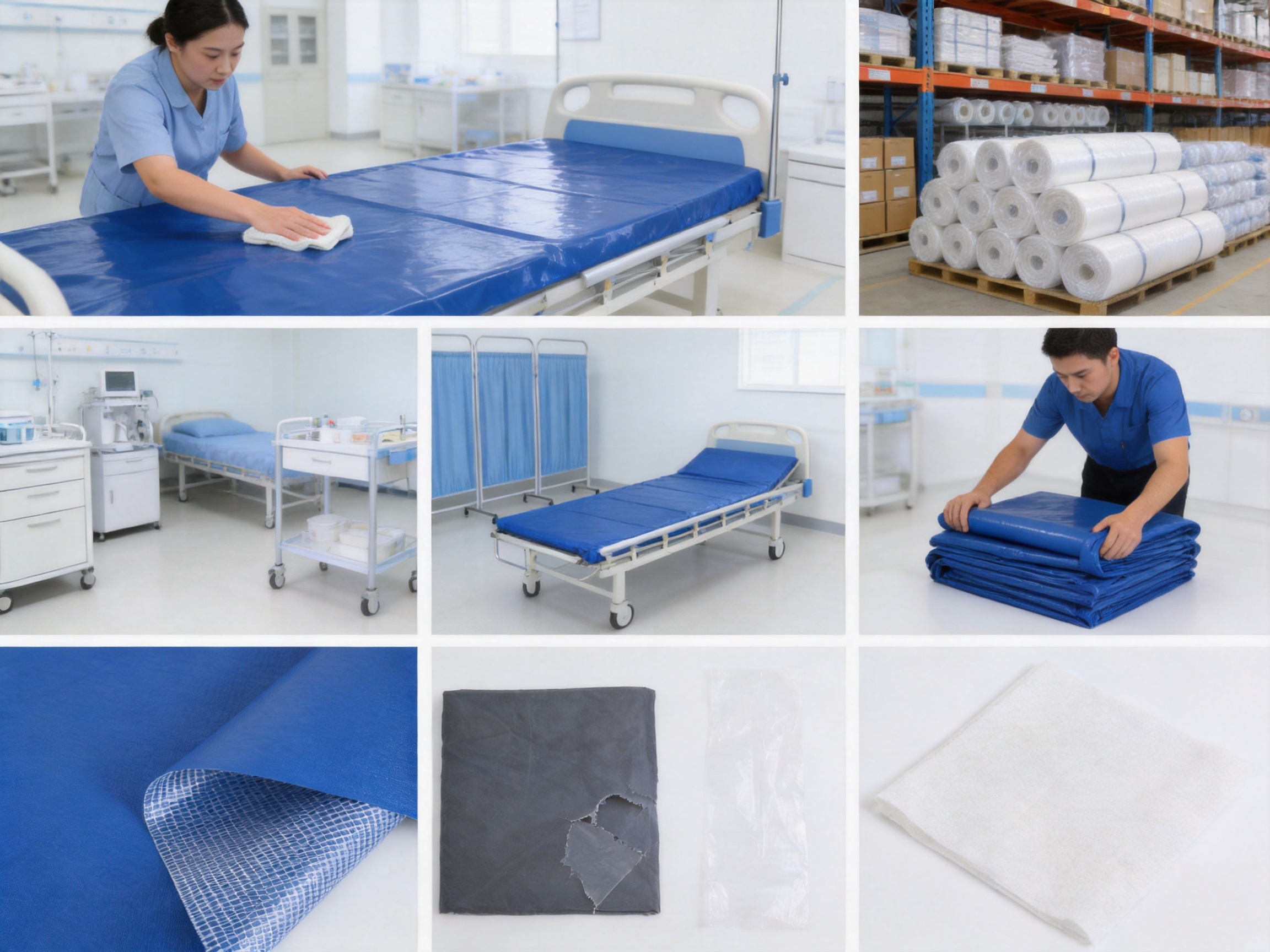
The central advantage of this medical nursing tarpaulin is balance. It is light but not an unsupported film. It is flexible but still reinforced by a woven polyester base. It is economical but offers more functional protection than ordinary fabric. It is suitable for wiping and moisture management while remaining easy to cut and convert.
The product is therefore well matched to temporary, high-turnover, and cost-sensitive medical environments. It can help protect mattresses, reduce routine cleaning burden, simplify bed preparation, and support standardized supply programs. Its performance profile is practical rather than excessive, making it a strong option for buyers who need broad utility across multiple nursing applications.
The manufacturing capabilities of Haining Taiwei New Material Co., Ltd. add further value. Experience in coated films and textile materials, advanced calendering equipment, multiple production lines, professional bonding facilities, export experience, and high annual production capacity provide a suitable foundation for stable supply. Customers can work with the company on standard rolls, converted pieces, or customized specifications according to their distribution and application needs.
For clinics, distributors, temporary medical stations, and care facilities, the material provides a straightforward way to improve surface protection without adopting an unnecessarily heavy or expensive construction. When properly selected, installed, cleaned, and inspected, it can become a useful component of a broader nursing protection system.
Its main purpose is to provide a lightweight liquid-resistant barrier for medical beds, mattresses, temporary nursing surfaces, and related applications. It helps limit the transfer of body fluids, medicines, and other moisture to underlying surfaces.
The listed product specification is 240gsm. This lightweight profile makes the material easier to cut, fold, transport, store, and install than many heavier tarpaulin products.
It identifies the woven textile construction. The 500D designation refers to the yarn denier, while 9*9 describes the approximate weave arrangement in the machine and cross directions. This woven foundation supports the material’s tensile and tear performance.
The product is described as liquid-proof and is designed to resist ordinary liquid penetration under normal use. Actual performance depends on coating condition, seams, punctures, chemical exposure, pressure, temperature, and duration. Buyers should conduct application-specific testing for critical liquid-containment requirements.
Yes, it is suitable for use as a mattress protector or bed underlay where a flexible liquid-resistant layer is required. The facility should determine whether it should be placed beneath a patient-contact sheet and should follow its own hygiene and safety procedures.
It can be considered for reusable use when it remains intact and the facility has an appropriate cleaning and inspection procedure. Reuse limits depend on the type of contamination, cleaning chemicals, mechanical handling, and the condition of the coating.
Yes. The material can be cut and packed as disposable bed underlays or surface covers. The preferred format depends on the customer’s operating model, contamination-control requirements, waste-management rules, and budget.
The material is relatively thin, soft, and pliable for a coated tarpaulin. It is generally intended to function as a protective layer beneath appropriate bedding rather than as the sole patient-contact surface. Overall comfort depends on the complete bed-covering system.
The smooth surface supports wipe-clean maintenance, but compatibility must be confirmed with the selected disinfectant. Customers should test their actual chemicals, concentrations, contact times, and cleaning frequency because aggressive formulations may affect coating or adhesion.
The supplied specifications list tensile strength of 500/480 N/5cm, tearing strength of 150/130 N, and adhesion of 60 N/5cm. Buyers should confirm the testing standards and acceptance criteria before using these values for formal qualification.
Potential customization may include width, roll length, color, packaging, cutting dimensions, private-label presentation, edge treatment, and other conversion details. Custom requirements should be discussed with the manufacturer before quotation and production.
The product is manufactured by Haining Taiwei New Material Co., Ltd. in Haining, Zhejiang Province, China. The company operates in Dingqiao Industrial Park and exports products to Europe, America, the Middle East, Southeast Asia, and other markets.
The company produces PVC films, digital printing fabrics, tarpaulin films, frontlit and backlit materials, double-sided printing fabrics, mesh, and other light-box cloth products. These materials serve advertising, display, flexible-cover, printing, industrial, and related applications.
Buyers should request samples, confirm the technical specification, test liquid resistance, evaluate folding and cutting behavior, apply the intended cleaning agents, inspect the material after repeated handling, and verify any regulatory or documentation requirements applicable to the destination market.
Lightweight liquid-proof tarpaulin for medical nursing offers a practical combination of protection, flexibility, cleanability, and economy. Its approximately 240gsm construction reduces handling and logistics burdens, while the 500*500D 9*9 woven base provides useful reinforcement for routine installation and conversion. The smooth coated surface supports moisture management and wipe-clean maintenance, making the material suitable for mattress protectors, bed underlays, folding beds, temporary medical stations, and mobile nursing environments.
Its advantage over basic fabric is liquid resistance. Its advantage over unsupported film is woven handling strength. Its advantage over heavy tarpaulin is lighter weight and improved flexibility. This balanced performance makes it suitable for buyers who need a dependable protective layer without unnecessary thickness or cost.
Backed by experience in coated films and flexible textile products, advanced calendering equipment, professional bonding facilities, multiple production lines, and international export capability, Haining Taiwei New Material Co., Ltd. can support both standard and customized supply programs. With proper technical evaluation and application-specific testing, this product can help medical and temporary-care operators improve bed protection, simplify routine cleaning, and manage high-turnover nursing environments more efficiently.
1. Product specification information supplied for the 500*500D 9*9, 240gsm liquid-proof tarpaulin.
2. Manufacturer-provided company profile for Haining Taiwei New Material Co., Ltd.
3. General textile testing principles for tensile strength, tear strength, coating adhesion, and fabric construction.
4. General healthcare environmental-cleaning and surface-hygiene practices.
5. General guidance on coated textile handling, storage, conversion, and inspection.
Light Economical Liquid Proof Tarpaulin For Medical Nursing
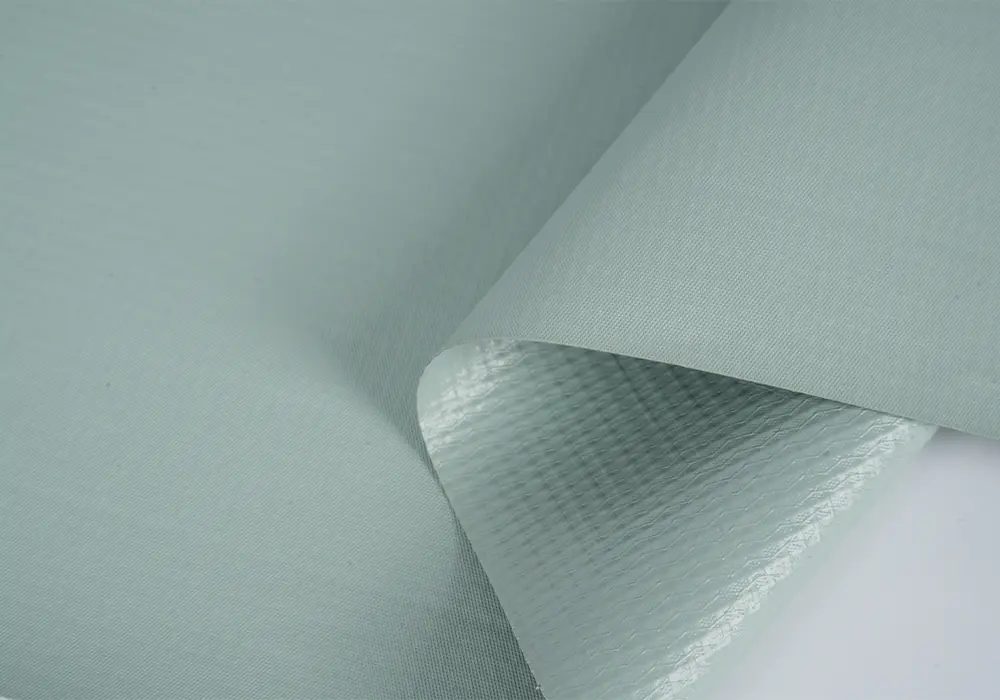 Liquid Barrier Anti Bedsore Tarpaulin For Medical Use
 Lightweight Foldable Mesh Tarpaulin for Event Promotion
 Clear Liquid Isolation Sterilizable Tarpaulin For Medical Application
 Breathable Wind Resistant Mesh Tarpaulin for Advertising
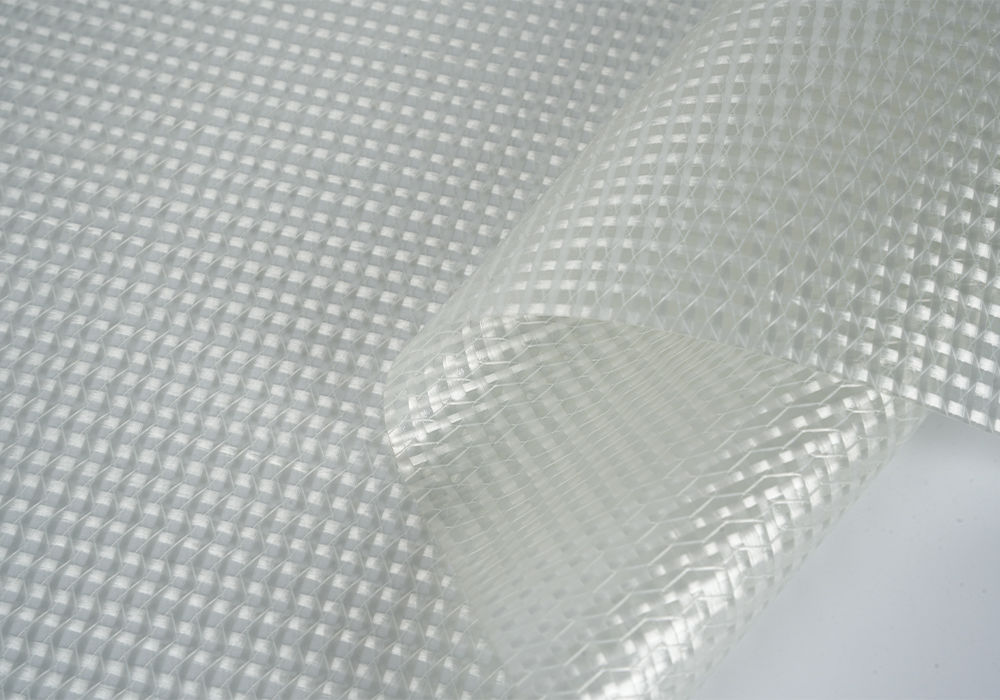 Medium Thick Clear High Strength Tarpaulin For Medical Isolation
 Custom Digital Printing Fabric Manufacturers

 Previous