

 English
 中文简体
 Español
News
Home / Author / Shen Yaqin — International Sales Manager / Decorative Waterproof Tarpaulin for Garden Fence Screening: A Durable, Printable Privacy Solution


Content
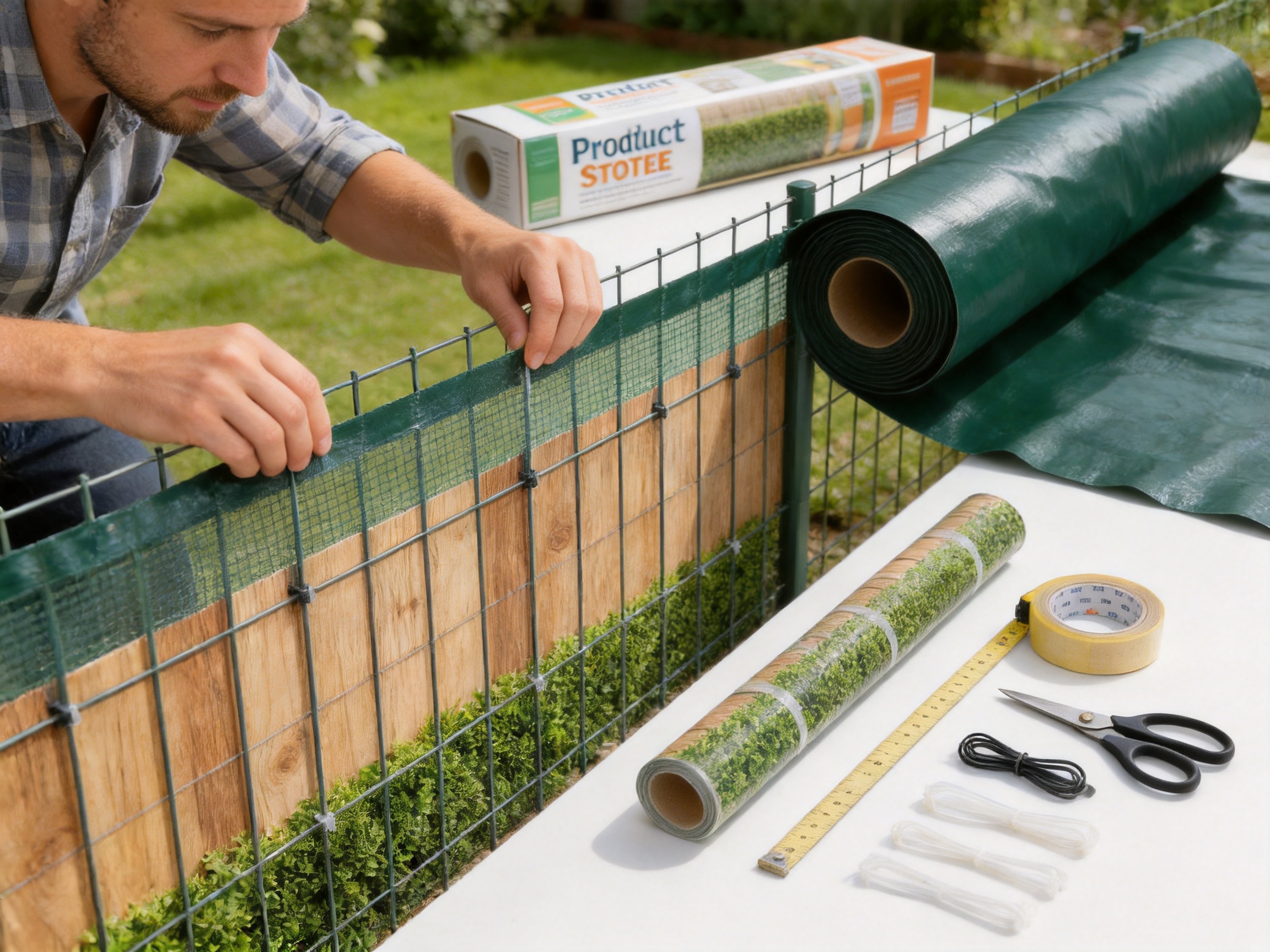
Garden boundaries serve more than a practical function. They define the character of an outdoor space, create privacy, reduce visual distractions, and help homeowners make better use of patios, balconies, terraces, allotments, and landscaped yards. Traditional fencing can provide security, but it may not always offer sufficient privacy or visual appeal. Open metal railings, wire mesh, and grid fences often leave gardens exposed to neighboring properties, public walkways, wind, rain, and unwanted views.
Decorative waterproof tarpaulin for garden fence screening offers an efficient way to improve these conditions without replacing an existing fence. Designed to combine dense visual coverage, weather protection, printable decoration, and convenient installation, this material can transform ordinary garden railings into attractive and more private outdoor boundaries. It is suitable for residential users, garden centers, home improvement retailers, do-it-yourself customers, landscaping contractors, and distributors seeking a flexible outdoor screening material.
The product is manufactured from 300*500D tarpaulin fabric with an 18*12 construction and a stated weight of 450 gsm. Its technical performance includes tensile strength of 200/180 N/5 cm, tearing strength of 100/80 N, and adhesion of 60 N/5 cm. These characteristics provide a useful balance between durability, flexibility, handling convenience, and long-term outdoor performance.
Unlike ordinary shade cloth or lightweight privacy fabric, this decorative tarpaulin is designed around a dense, coated structure. It can help reduce direct visibility through a fence while resisting rainwater penetration, mildew growth, ultraviolet exposure, and the general demands of outdoor use. Its printable surface also enables realistic stone, hedge, wood-grain, botanical, and landscape designs that can complement different garden styles.
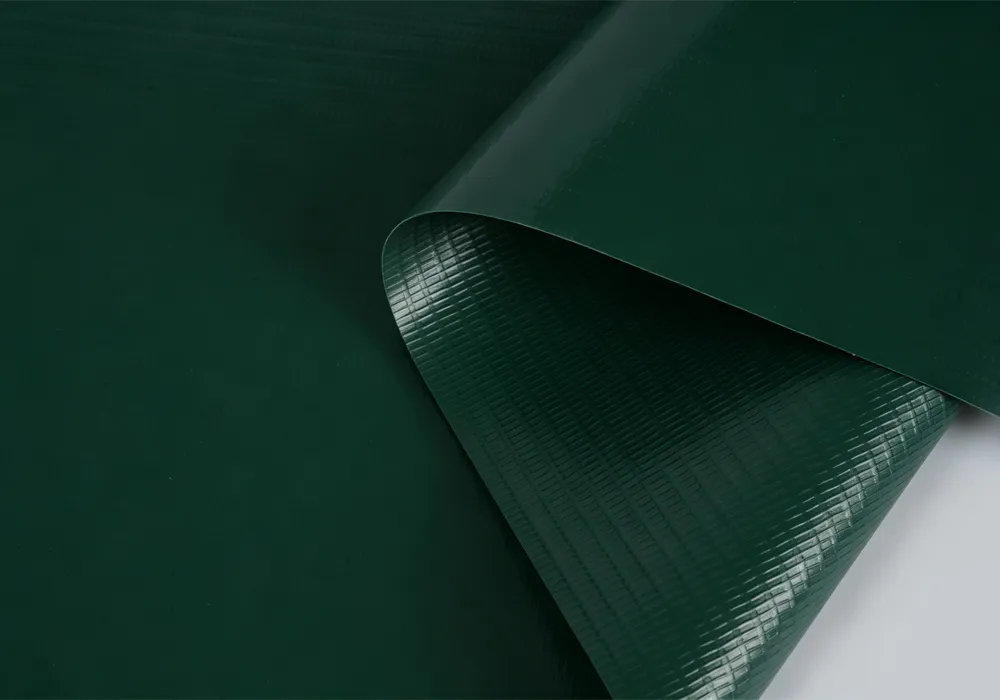
Decorative Waterproof Tarpaulin For Garden Fence Screening
Privacy has become a major consideration in modern residential design. Homes are often built closer together, and many gardens are bordered by shared pathways, roads, apartment buildings, or neighboring yards. Even when a fence meets basic property requirements, open gaps can make the garden feel exposed. Residents may hesitate to relax outdoors, entertain guests, or allow children to play when there is no effective visual separation.
Garden fence screening provides a practical answer to this problem. It can be added to existing fences without extensive construction, helping users improve privacy while retaining the original support structure. This is particularly useful for metal grid fences and railings that are strong enough to remain in place but visually open.
A screening material must perform several functions at the same time. It should block or reduce unwanted views, remain stable in changing weather, resist tearing during installation, and maintain its appearance after repeated exposure to sunlight and rain. It should also be easy to cut, roll, transport, and install using commonly available fixing accessories.
Decorative waterproof tarpaulin is designed to address these requirements in one material. Its dense structure supports privacy screening, while the waterproof coating helps limit moisture penetration. Its flexible composition makes it easier to adapt to different fence lengths and layouts than rigid panels. At the same time, digital or surface printing allows the screen to become part of the garden decoration rather than appearing as a purely functional barrier.
The primary application is visual privacy. The dense weave and coated construction are intended to reduce direct lines of sight through wire fencing or open railings. This can create a more secluded environment for dining, resting, gardening, or family activities.
Privacy screening can also be useful in temporary situations. Tenants may want to improve a balcony or garden without making permanent structural changes. Homeowners carrying out renovation work may need to hide unfinished areas. Event organizers, landscape contractors, and property managers may require a screen that can be installed quickly and removed when circumstances change.
Many conventional fence screens are available only in plain green, black, gray, or beige. While these colors may be suitable for basic screening, they do not always support a carefully planned landscape design. A printable tarpaulin surface offers more creative possibilities.
Patterns resembling stone walls, clipped hedges, timber boards, flowering gardens, bamboo, countryside scenery, or natural foliage can alter the visual impression of a fence. A narrow urban garden can appear greener, while a simple boundary can gain the appearance of a designed feature wall. The print can also be developed for seasonal promotions, retail campaigns, hospitality environments, or branded outdoor displays when appropriate.
The product specification identifies a 300*500D tarpaulin base with an 18*12 construction and a weight of 450 gsm. These figures are important because they indicate the material’s intended position between lightweight fabric and heavy industrial tarpaulin. It is substantial enough for outdoor screening applications while remaining manageable for cutting, rolling, transporting, and installation.
| Specification | Stated Value | Relevance to Fence Screening |
|---|---|---|
| Base material | 300*500D tarpaulin | Provides a coated, flexible foundation for outdoor use and printing |
| Construction | 18*12 | Supports fabric density and structural consistency |
| Weight | 450 gsm | Balances coverage, durability, handling, and transport efficiency |
| Tensile strength | 200/180 N/5 cm | Helps the material withstand pulling forces during installation and use |
| Tearing strength | 100/80 N | Supports resistance to propagation of damage from small cuts or punctures |
| Adhesion | 60 N/5 cm | Indicates bonding performance within the coated structure |
| Typical retail strip example | 0.19 m × 35 m or 0.19 m × 50 m | Convenient for weaving through conventional grid fencing |
Technical figures should always be interpreted together with the actual installation method, climate, fence design, fixing accessories, and maintenance conditions. Nevertheless, the specification demonstrates that the material has been developed for more demanding outdoor use than ordinary decorative fabric or loosely woven mesh.
A fence screen must be dense enough to reduce visibility but flexible enough to follow the shape of the fence. If the material is too open, it will not provide satisfactory privacy. If it is too rigid, installation becomes difficult and the screen may resist the natural movement of the fence during wind.
The tarpaulin construction provides a controlled balance. It can be cut to length, folded around fence edges, and threaded or fixed along a fence line. This flexibility also assists with storage and logistics because the material can be supplied in rolls rather than bulky rigid sections.
Wind places repeated pulling forces on an outdoor screen. The pressure is not limited to a single direction because air can move around the fence, through gaps, and across the surface. A material with appropriate tensile strength is better positioned to resist stretching and deformation when correctly installed.
Tearing strength is equally important. During installation, a fixing point may experience concentrated stress. A small cut or puncture can become larger if the fabric is weak or if the edge is not reinforced. The stated tearing performance supports the product’s suitability for practical fence screening, although installers should still avoid over-tightening ties and should distribute fixing points along the length of the screen.
Coated tarpaulin contains more than a base fabric. The coating must remain adequately bonded to the supporting structure so that it does not separate easily during folding, rolling, handling, or outdoor exposure. The stated adhesion value of 60 N/5 cm indicates attention to the connection between the layers.
Good adhesion helps preserve water resistance and surface appearance. It also supports the printing process by providing a stable surface for decorative patterns. When a material is repeatedly exposed to rain, ultraviolet radiation, temperature changes, and movement, the quality of its bonded construction becomes an important part of its service performance.
Garden screens are exposed to rain from multiple directions. Water may fall directly onto the surface, run down from nearby structures, or be driven sideways by wind. Ordinary fabrics can absorb water, become heavy, develop odor, and provide favorable conditions for mildew. A waterproof coated tarpaulin is designed to reduce these risks.
The dense coated surface helps prevent rainwater from passing through the screen. This is useful in regions where gardens experience frequent rainfall, damp air, and long periods of limited sunlight. European climates, including many parts of Germany and neighboring markets, can produce repeated wetting and drying cycles. A screen that remains comparatively stable in these conditions can offer greater convenience than untreated textile fabric.
When a screening fabric absorbs water, several problems may occur. It can become heavier, place more load on fixing points, dry slowly, and retain dirt. Continued dampness may encourage mildew or discoloration. The waterproof coating of this tarpaulin is intended to limit moisture absorption and reduce the likelihood of these problems.
Waterproofing does not eliminate the need for correct installation and maintenance. Leaves, soil, and organic debris should not be allowed to remain against the screen for long periods. The fence should also have enough ventilation around its edges to support drying after prolonged rain. With sensible care, the coated construction can help maintain a cleaner and more stable screening surface.
Green mold, mildew, and moss are common concerns in shaded and humid outdoor spaces. They can make a fence screen look neglected and may shorten the useful life of untreated materials. The product is developed with a waterproof, dense surface intended to discourage moisture retention and mildew cultivation.
For garden centers and professional buyers, anti-mildew performance is an important selling point because customers often judge a screening product by how it looks after several months of use. A screen that keeps its appearance in damp conditions can reduce replacement frequency and improve user satisfaction.
Outdoor materials are exposed to ultraviolet radiation every day, even when temperatures are moderate. Over time, UV exposure can cause fading, brittleness, cracking, and weakening. A garden fence screen must therefore be selected not only for its appearance at the time of installation but also for its ability to remain functional after seasonal exposure.
The tarpaulin includes anti-UV treatment designed to slow sun-related fading and deterioration. This is particularly valuable for decorative printing, where the visual quality of a pattern is central to the product’s appeal. A surface that loses color quickly may no longer complement the garden, even if the fabric remains physically intact.
UV resistance depends on several factors, including the intensity of local sunlight, the printed ink system, installation direction, seasonal exposure, and cleaning methods. The anti-UV treatment provides an added layer of protection, but users should still select suitable printing specifications for the intended climate and application.
Digital printing allows the screen to be coordinated with the surrounding landscape. A hedge pattern may reinforce the appearance of a green garden. A stone pattern can complement a masonry wall. A wood-grain effect may work well with timber decking, pergolas, or rustic landscaping.
Printed imagery can also be used to create a stronger visual identity for commercial gardens, cafés, restaurants, holiday properties, nurseries, and hospitality venues. Instead of showing the structural metal grid, the screen presents a planned image that can support the atmosphere of the space.
For retailers, the availability of attractive designs can broaden the customer base. Some shoppers seek privacy, while others are motivated by decoration. A product that combines both functions may be easier to position as a value-added home improvement solution.
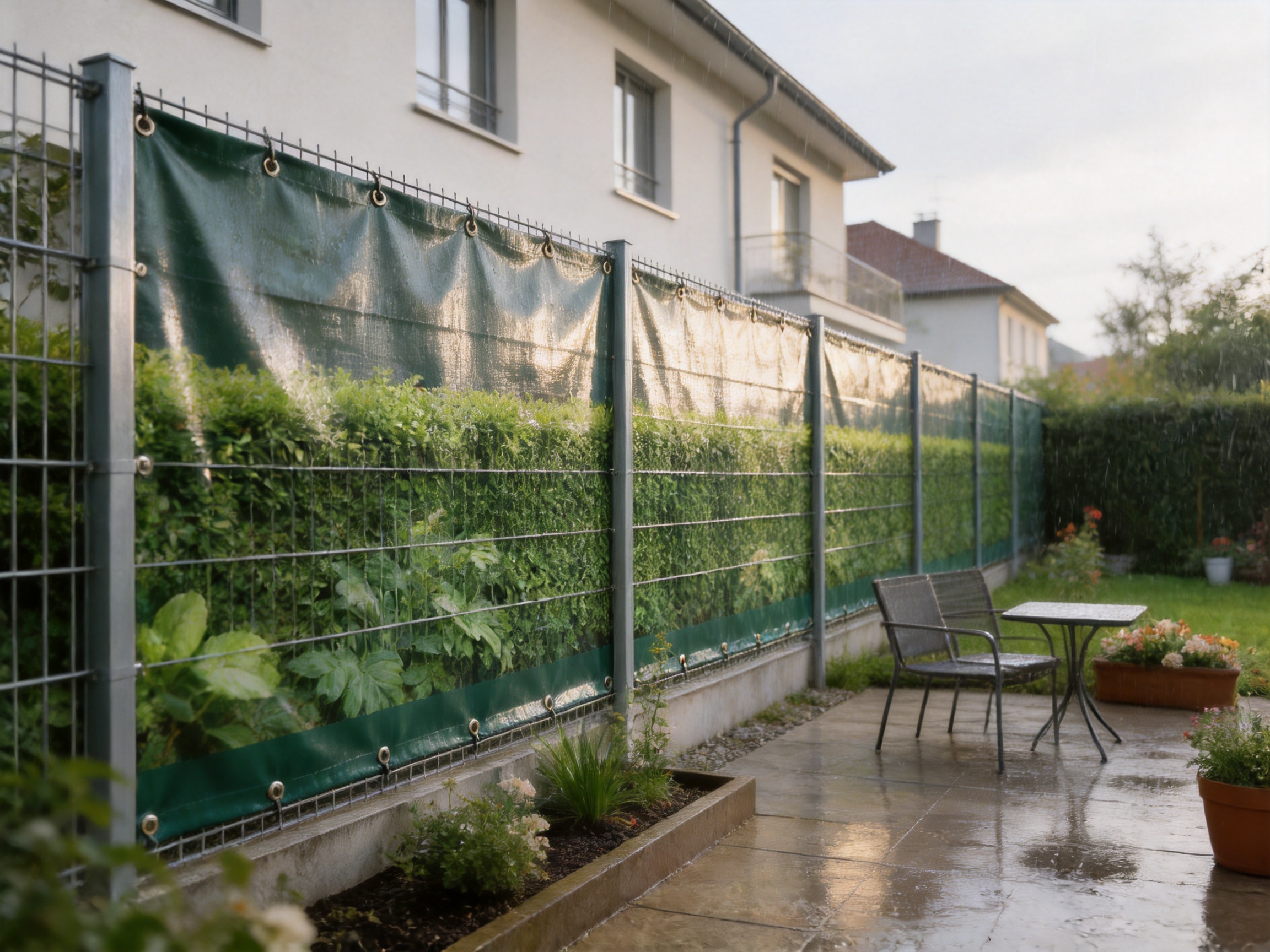
One of the strongest practical advantages of rolled tarpaulin screening is its adaptability. Rigid panels require precise measurements and may be difficult to transport through narrow entrances. A roll can be carried, measured, cut, and installed in stages. This makes it suitable for long fence runs as well as small residential projects.
The material can be used with many traditional grid fences, wire mesh fences, balcony railings, and garden barriers. Users can cut the roll to match the required length and adapt the height according to the fence structure. Narrow retail strips such as 0.19 m × 35 m or 0.19 m × 50 m are especially convenient for weaving through grid openings or covering selected sections.
Before cutting, the installer should measure the fence length and allow enough material for the selected fixing method. A clean cutting tool helps produce a straight edge. If the design requires frequent cutting, the supplier can discuss suitable edge treatments, welding options, or finishing methods.
Because the product is supplied in rolls, it should be stored on a clean, dry surface and protected from sharp objects. During installation, the roll should be handled carefully to avoid unnecessary creasing, dragging, or contact with rough ground.
Common fixing methods may include cable ties, lacing cord, clips, hooks, or other compatible accessories. Fixings should be distributed along the upper, lower, and side edges rather than concentrated at only a few points. Even spacing helps reduce localized stress and keeps the screen aligned.
The material should be installed firmly but not excessively tight. A small amount of allowance can help accommodate movement caused by wind and temperature changes. Excessive tension may increase stress at the fixing points, while loose installation may create flapping, noise, and uneven appearance.
Fence corners require particular attention because wind forces can change direction around them. The screen should follow the fence profile without sharp folds that could damage the coating. Where necessary, corners can be reinforced or fixed at closer intervals.
At the end of a fence run, the edge should be secured so that it does not pull away from the structure. If a large screen is installed in a high-wind location, professional advice should be considered regarding the fence strength, fixing pattern, and whether partial sections would be more appropriate than one continuous surface.
Decorative waterproof tarpaulin competes with several categories of garden screening products, including shade cloth, reed fencing, artificial hedge panels, printed polyester fabric, PVC mesh, and rigid decorative boards. Each category has useful applications, but the tarpaulin format combines several advantages that are not always available in one product.
Shade cloth is often designed to reduce sunlight rather than provide complete visual privacy. Its open structure may allow people to see through from certain angles. It may also retain moisture or show stretching after repeated outdoor use. Decorative tarpaulin offers a denser coated structure and can provide a more solid visual barrier.
Reed, bamboo, and willow screening can provide a natural appearance, but organic materials may vary in thickness, shed fibers, absorb water, and deteriorate over time. They can also be difficult to print or clean. A waterproof printed tarpaulin offers more consistent dimensions, controlled imagery, and easier surface maintenance.
Artificial hedge panels can create a highly realistic green appearance, but they are usually thicker, heavier, and more expensive to transport. They may also require stronger support structures. Printed tarpaulin can create a hedge effect in a flatter, lighter roll format, which may be more suitable for long fence lines and retail packaging.
Plain PVC mesh can be durable and weather resistant, but its appearance may be limited to solid colors or simple patterns. The printable surface of decorative tarpaulin allows more detailed landscape imagery and greater design flexibility. This can make it more attractive to customers who want a functional product that also contributes to the appearance of their garden.
Rigid panels often require accurate measurement, specialized transport, and more permanent installation. They can be difficult to adapt to irregular fence shapes or temporary layouts. Rolled tarpaulin is easier to handle and can be cut to suit different projects. It also takes less storage space for distributors and retailers.
The product is manufactured by Haining Taiwei New Material Co., Ltd., a Chinese producer established in July 2010. The company is located in Haining Dingqiao Industrial Park in Zhejiang Province, with convenient access to the ports of Shanghai and Ningbo. This location supports domestic logistics, export operations, raw material movement, and international customer service.
The company specializes in PVC films, digital printing fabrics, tarpaulin films, frontlit and backlit materials, double-sided printing fabrics, mesh, and other light box cloth products. This product range is relevant to decorative fence screening because it demonstrates experience across coated substrates, printable surfaces, flexible media, and outdoor display materials.
The factory operates advanced calendering equipment, multiple production lines, and professional bonding facilities. Its annual output is stated at 45 million square meters, providing substantial capacity for repeat orders, customized specifications, and international distribution programs.
Calendering is a controlled manufacturing process used to form and refine polymer films and coated materials. Through carefully managed heat, pressure, speed, and layer distribution, the process can help achieve consistent thickness, surface quality, and material structure.
For tarpaulin applications, consistent calendering is important because uneven material thickness may influence weight, flexibility, appearance, printing behavior, and waterproof performance. A stable process helps support repeatability from one production batch to another.
Bonding is central to the performance of coated tarpaulin. The base fabric and coating must work as a unified structure during folding, cutting, installation, and outdoor exposure. Professional bonding facilities allow production teams to manage adhesion and layer integration more effectively.
Strong bonding supports the stated adhesion performance and helps prevent premature separation. It also contributes to a clean surface for printing and improves confidence in the product’s ability to withstand practical handling.
Multiple production lines support manufacturing flexibility. Different orders may require different widths, weights, colors, coating characteristics, printing designs, packaging formats, or roll lengths. A factory with several lines can organize production according to product category and order requirements, helping reduce unnecessary delays.
For distributors and supermarket chains, production capacity is important because a successful retail product may require repeated replenishment. Stable capacity can support seasonal campaigns, regional programs, and private-label or customized packaging plans.
More than 98 percent of the company’s products are stated to be exported to Europe, America, the Middle East, Southeast Asia, and other regions. Export experience involves more than shipping goods. It requires attention to packaging, documentation, production consistency, communication, inspection, and delivery planning.
International experience is especially useful for buyers serving European home improvement markets. Retailers may require precise roll dimensions, individual packaging, carton box cutting, barcode placement, product labels, and clear technical information. The company’s export orientation can support discussions around these requirements.
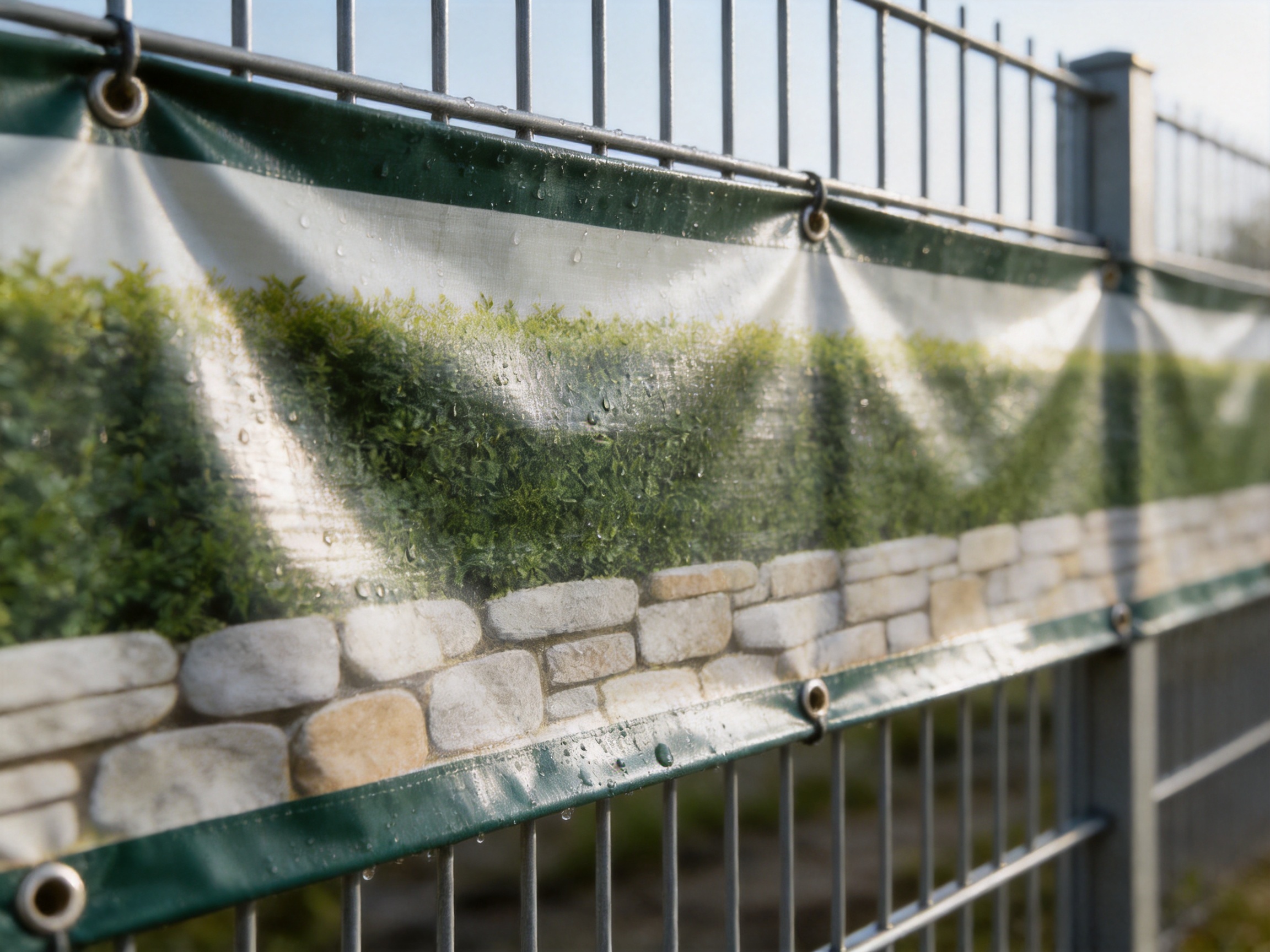
Garden fence screening is well suited to retail distribution because it solves a visible consumer problem and can be presented in a compact package. The suggested strip formats of 0.19 m × 35 m and 0.19 m × 50 m are designed for common fence applications and can be positioned as convenient do-it-yourself products.
Retail-ready production may include individual rolls, protective wrapping, printed labels, instruction sheets, carton boxes, and customized exterior packaging. The exact format can be discussed according to the retailer’s shelf dimensions, product range, target price, and installation expectations.
Home improvement stores can use decorative tarpaulin screening to expand their outdoor living category. It can be displayed near fencing, garden furniture, landscaping accessories, privacy products, or seasonal outdoor merchandise. The combination of privacy and decoration creates clear consumer communication.
Packaging should explain the main benefits in simple language, such as waterproof construction, privacy coverage, printable decorative design, easy cutting, and outdoor suitability. Product images showing an installed fence can help shoppers understand the result more quickly than technical specifications alone.
Distributors often need a product that can serve different customer groups without requiring many separate stock-keeping units. A roll-based tarpaulin can be supplied in different colors, patterns, widths, and lengths while maintaining a common production platform.
Printed designs can be adjusted for local preferences. Natural hedge imagery may be popular in one market, while stone walls, timber, or floral scenery may be preferred in another. This flexibility allows distributors to develop regionally relevant collections.
Retail customers may request custom carton boxes, individual retail packaging, printed instructions, or private-label branding. The manufacturer can discuss these options according to order volume and packaging requirements. Customized packaging helps retailers present the product as part of a coordinated garden range.
Consistent quality is essential for a fence-screening material because users expect the product to look uniform along the entire fence. Important quality-control points include raw material inspection, fabric density, coating uniformity, weight, tensile strength, tearing strength, adhesion, surface appearance, printing quality, roll length, and packaging condition.
The base fabric should be checked for consistent construction, visible defects, contamination, and irregular areas. A stable base supports reliable coating and printing. Variations in fabric structure can affect finished weight, strength, and appearance.
The coating should be visually uniform and free from pinholes, excessive wrinkles, bubbles, or areas of poor coverage. Waterproof performance depends on the integrity of the coated surface. Coating inspection is therefore relevant to both product durability and customer satisfaction.
Tensile, tearing, and adhesion tests provide measurable information about the product’s mechanical performance. Testing helps verify that production results remain within the agreed technical range and provides useful documentation for buyers.
Decorative imagery should be checked for registration, color consistency, clarity, and surface defects. If multiple rolls are intended for one continuous fence line, matching print appearance is particularly important. Buyers may establish approved samples or color references before large-scale production.
A durable outdoor product can support more responsible consumption by reducing the need for frequent replacement. Waterproofing, anti-mildew properties, UV treatment, and a robust coated structure may extend the useful period of a fence screen when the product is correctly installed and maintained.
Maintenance is generally straightforward. Dust and light dirt can often be removed with water and a soft cloth or sponge. Strong abrasive tools and harsh chemicals should be avoided unless specifically approved for the coating. Cleaning should be carried out gently to protect the printed surface.
Users should inspect the screen periodically, especially after storms. Loose fixings, sharp fence edges, accumulated debris, and damaged sections should be corrected promptly. Early maintenance can prevent a small issue from developing into extensive tearing or detachment.
At the end of its service life, the material should be handled according to applicable local waste-management rules. Buyers and distributors may wish to request information about the product composition, packaging materials, and available recycling or disposal routes. Responsible product communication should avoid unsupported environmental claims and should reflect the actual characteristics of the material.
Although garden fence screening is the primary application, the flexible waterproof material can be considered for other temporary or semi-permanent privacy and decorative uses. Potential applications include balcony railings, terrace boundaries, allotment fences, construction-site visual screening, outdoor event partitions, hospitality areas, poolside barriers, pet enclosures, and temporary retail displays.
Balconies can benefit from a screen that reduces visibility from neighboring buildings while adding a decorative pattern. On terraces, the material can help define an outdoor dining or seating zone. At events, printed screens can separate service areas or create a themed background.
Commercial users should evaluate local safety requirements, wind exposure, fire regulations, mounting height, and the strength of the supporting structure before selecting the material for a specific application. The product should not be treated as a substitute for engineered structural barriers where safety or security is the primary concern.
When comparing suppliers, buyers should consider more than the lowest unit price. The overall value of a fence-screening product depends on technical stability, printing quality, manufacturing capacity, packaging support, delivery reliability, communication, and after-sales service.
A capable supplier should be able to provide clear information about material construction, weight, strength, adhesion, available widths, roll lengths, printing options, and packaging. Technical documentation helps distributors prepare product listings and assists retailers with compliance and customer questions.
Samples are useful for checking color, opacity, flexibility, coating appearance, cutting behavior, and installation suitability. Buyers should test the material on their intended fence type and review its appearance in natural light before approving a large order.
Annual production capacity and export experience are important indicators for larger buyers. A supplier should be able to discuss lead times, minimum order quantities, production scheduling, inspection arrangements, and shipping plans. These details are particularly important for seasonal garden products, where late delivery can affect the selling period.
Customization may include color, landscape artwork, roll dimensions, edge treatment, carton design, retail labels, and installation instructions. The ability to coordinate these elements can reduce the need for buyers to work with several separate suppliers.
For the best result, users should begin by inspecting the fence and removing sharp projections that could damage the tarpaulin. The fence should be structurally sound, and weak or corroded sections should be repaired before installation.
The screen should then be measured against the fence. If a long fence requires several rolls, users should plan the joining points so that the printed appearance and fixing pattern remain consistent. The material should be aligned before final fixing to avoid diagonal pulling and unnecessary wrinkles.
Fixings should be positioned at regular intervals. Areas exposed to stronger wind may require additional support, but excessive tightening should be avoided. After installation, the user should check that the screen is not rubbing against sharp edges and that water can drain away from the lower edge.
Seasonal inspection is recommended. After heavy wind or storms, fixings should be checked and any loosened section should be secured. If a small puncture occurs, it should be repaired with a compatible method before the damage expands.
It is primarily used to create privacy and decoration on garden fences, wire mesh barriers, railings, balconies, terraces, and similar outdoor structures. It can reduce direct visibility while presenting a printed landscape or decorative pattern.
The dense construction is designed to provide highly opaque visual coverage when correctly installed. Actual privacy can vary according to lighting, viewing angle, fence gaps, installation tension, and the selected design. Buyers should evaluate a sample for their specific application.
Yes. The waterproof coated structure is intended for outdoor use and helps resist rainwater penetration and moisture absorption. It is especially suitable for applications where repeated rainfall and damp conditions are expected, provided that the material is installed and maintained correctly.
Yes. The roll format allows users to measure and cut the material for different fence lengths. Clean cutting and appropriate edge fixing are recommended to maintain appearance and reduce the risk of tearing.
Possible designs include hedges, stone walls, timber, bamboo, flowers, foliage, countryside scenery, and other landscape images. The exact artwork, color, and print method should be confirmed with the supplier before production.
Ordinary shade cloth is often more open and is primarily designed for shading. Decorative waterproof tarpaulin has a denser coated construction intended to provide stronger visual screening, improved water resistance, and a printable decorative surface.
Yes. Narrow rolls can be woven through or fixed to many conventional grid fences. The installer should select suitable ties or clips and distribute them evenly along the screen.
At 450 gsm, it is more substantial than lightweight fabric but remains suitable for roll handling and do-it-yourself installation. The required support depends on the fence size, screen height, wind conditions, and fixing method.
The stated specification includes 300*500D tarpaulin, 18*12 construction, 450 gsm weight, tensile strength of 200/180 N/5 cm, tearing strength of 100/80 N, and adhesion of 60 N/5 cm. Buyers can request additional information and samples for project evaluation.
Yes. The product can be discussed for individual retail packaging, standard consumer widths, customized carton boxes, and other distribution requirements. Packaging options depend on the order plan and retail channel.
Light dirt can generally be removed with clean water and a soft cloth or sponge. Abrasive brushes and unapproved chemicals should be avoided because they may damage the coating or printed surface.
It is intended as a privacy and decorative covering material, not as a replacement for a structural fence. The supporting fence must be stable and suitable for the added wind load. Professional assessment may be appropriate in exposed or high-risk locations.
Decorative waterproof tarpaulin for garden fence screening combines several qualities that are often purchased separately: privacy, weather resistance, decorative appearance, flexible installation, and retail-friendly roll packaging. Its dense 300*500D construction, 18*12 specification, 450 gsm weight, stated mechanical strength, waterproof coating, anti-mildew characteristics, and anti-UV treatment make it a practical option for outdoor screening in residential and commercial environments.
The printable surface adds a major advantage over plain shade cloth, reed fencing, and basic mesh. Users can select natural or decorative imagery that supports the overall appearance of a garden rather than simply covering the fence with a solid color. The roll format also simplifies transportation, storage, cutting, and installation.
For professional buyers, the manufacturing background is equally important. Haining Taiwei New Material Co., Ltd. offers experience in PVC films, digital printing fabrics, tarpaulin films, frontlit and backlit materials, mesh, and related coated products. Its advanced calendering equipment, multiple production lines, bonding facilities, large stated annual output, and extensive export experience provide a strong foundation for customized and repeat supply.
When properly specified, installed, and maintained, this decorative tarpaulin can help transform exposed garden boundaries into more private, attractive, and weather-ready spaces. It is a versatile material for home improvement retailers, distributors, landscaping professionals, and end users seeking a balance between practical performance and visual design.
1. Product technical specification supplied for 300*500D, 18*12, 450 gsm tarpaulin material.
2. Manufacturer-provided information concerning tensile strength, tearing strength, and adhesion performance.
3. Manufacturer profile and production information for coated PVC films, digital printing fabrics, tarpaulin films, mesh, frontlit materials, and backlit materials.
4. General principles of outdoor textile installation, fence-screening tension management, and weather-exposed material maintenance.
5. General industry practices for waterproof coated fabrics, UV-resistant outdoor materials, printed flexible media, and retail packaging for home improvement products.
Decorative Waterproof Tarpaulin For Garden Fence Screening
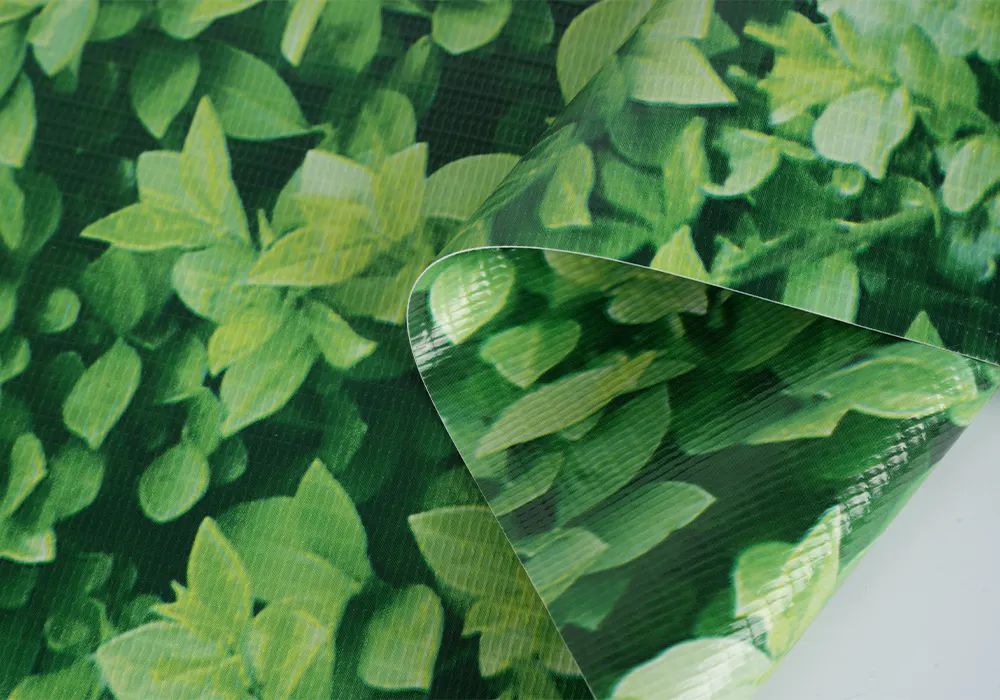 Thickened Privacy Waterproof Tarpaulin For Garden Barrier Fence
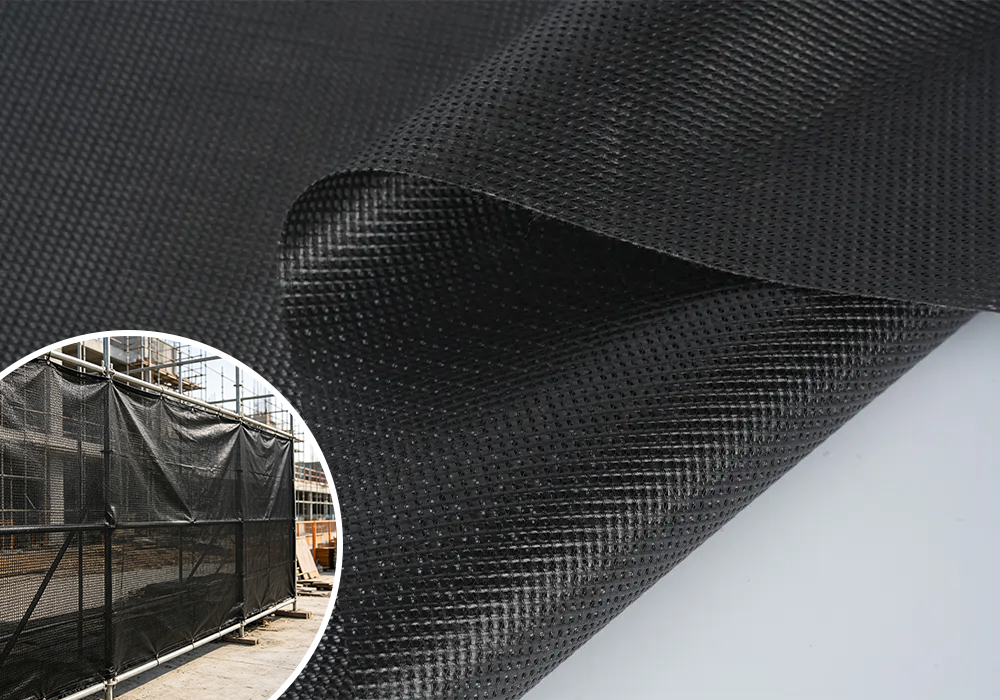 All Weather Heavy Duty Mesh Tarpaulin for Barrier Fencing
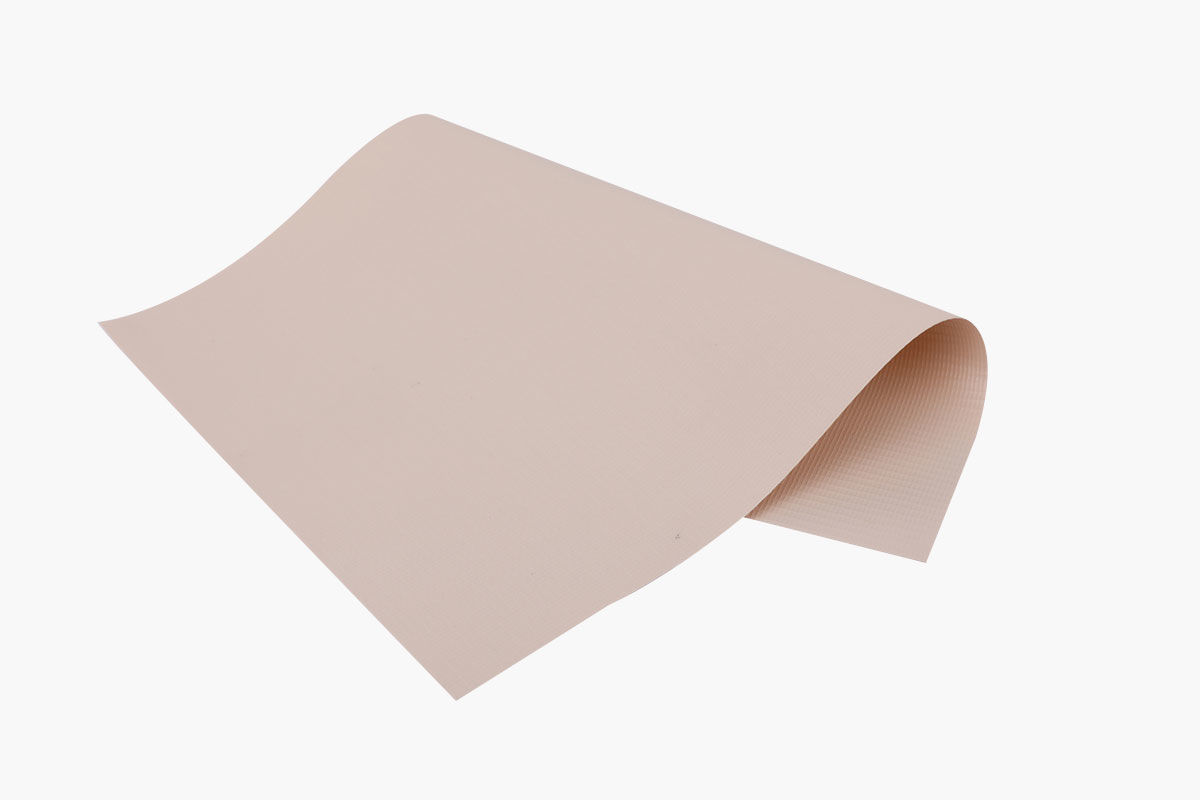 Heavy-Duty Reinforced Waterproof Tarpaulin
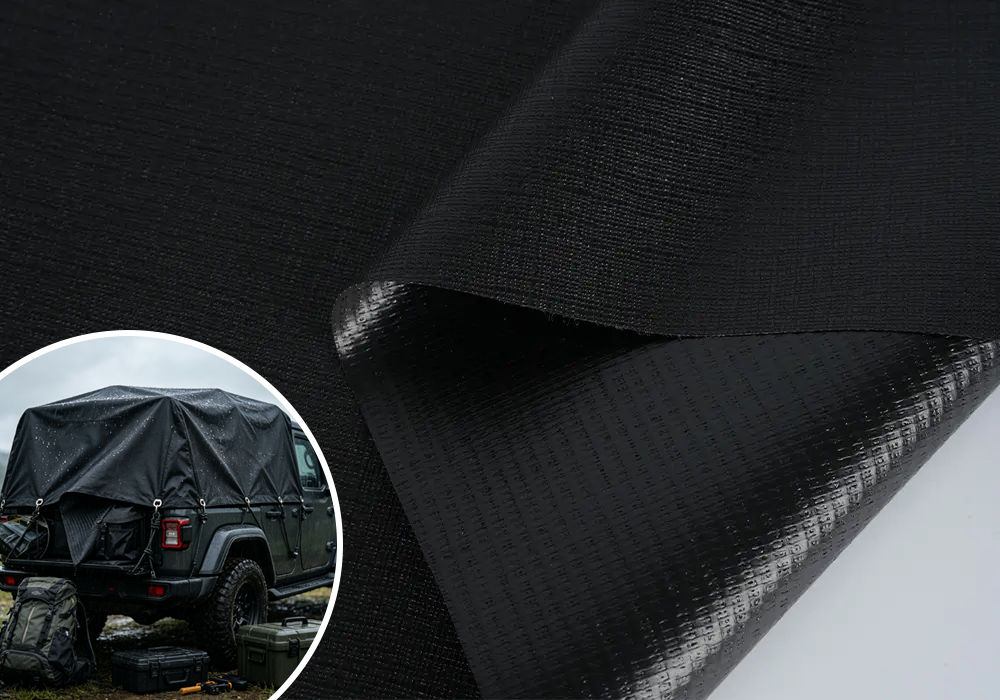 Weatherproof Printable Waterproof Tarpaulin For Camper RV
 Heavy Duty Printable UV Block Tarpaulin For RV Awning
 Custom Digital Printing Fabric Manufacturers

 Previous