

 English
 中文简体
 Español
News
Home / Author / Shen Yaqin — International Sales Manager / Reflective Outdoor Advertisement Flex Banner: A Durable Solution for High-Visibility Advertising


Content
Outdoor advertising must remain visible, attractive, and reliable in changing environmental conditions. Whether it is installed beside a busy highway, displayed at a public event, mounted on a building façade, or used as part of a temporary promotional campaign, an advertising banner must do more than present a graphic. It must withstand wind, rain, ultraviolet radiation, temperature changes, handling, transportation, installation, and long periods of exposure. At the same time, it must provide strong visual impact during both daytime and nighttime hours.
The Reflective Outdoor Advertisement Flex Banner is designed to address these practical requirements. It combines a flexible advertising substrate with a reflective surface that improves visibility when illuminated by vehicle headlights, street lighting, or other artificial light sources. This feature makes the banner suitable for advertising situations in which standard daytime visibility is not enough. A printed message can continue to attract attention after sunset, extending the useful communication time of the display.
The product is manufactured by Haining Taiwei New Material Co., Ltd., a China-based manufacturer and exporter of PVC films, digital printing fabrics, tarpaulin materials, frontlit and backlit products, mesh fabrics, and other advertising media. The company has operated since July 2010 and supplies products to Europe, America, the Middle East, Southeast Asia, and other international markets.
With a nominal weight of 550 grams per square meter, a high-strength 840 by 840 denier base specification, a 9 by 9 thread construction, and a maximum width of up to 5 meters, this flex banner is positioned for demanding outdoor applications. Its combination of reflective visibility, weather resistance, dimensional flexibility, and industrial manufacturing capability gives advertisers a practical alternative to ordinary non-reflective banner materials.
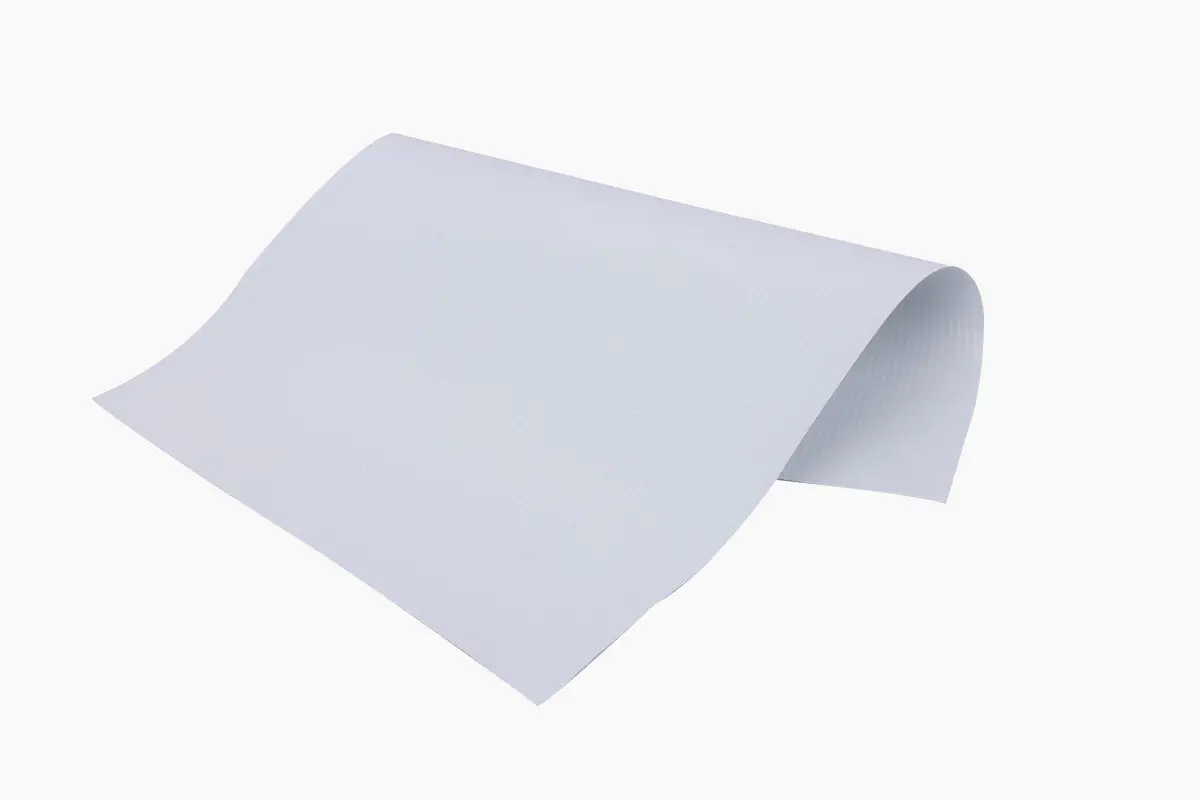
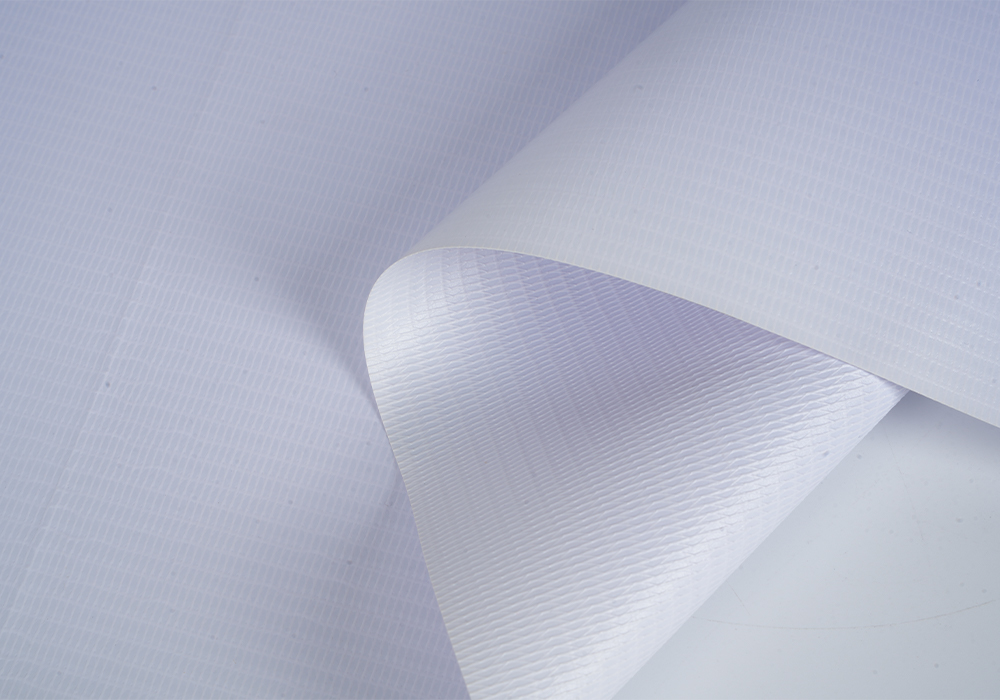
Reflective Outdoor Advertisement Flex Banner
A flex banner is a flexible advertising material used for digitally printed graphics, signs, promotional messages, event branding, and outdoor displays. The material normally consists of a woven or reinforced fabric structure coated with polymer layers. These layers help protect the printed image, improve weather resistance, and provide a smooth surface for ink adhesion.
The reflective version adds a surface characteristic that returns a portion of incident light toward its source. When a vehicle headlamp or spotlight reaches the banner, the surface can appear brighter and more noticeable than a standard banner. This does not mean that the banner produces light by itself. Instead, it uses available artificial light to improve recognition and contrast in low-light conditions.
This characteristic is especially useful for advertisements positioned near roads, parking areas, construction zones, outdoor venues, fuel stations, commercial properties, and transportation facilities. A reflective banner can support round-the-clock brand communication because it remains visually active after normal daylight hours.
The material can be printed with logos, text, product images, directional information, event graphics, safety messages, or promotional artwork. Depending on the selected printing process and ink system, the finished banner may be used for short-term campaigns or longer-term outdoor installations. Its flexible structure also allows it to be rolled, folded, transported, cut, hemmed, and fitted with eyelets or other installation accessories.
The product is identified by item number TWF8484-550. The listed construction uses an 840 by 840 denier specification and a 9 by 9 thread arrangement. These values indicate a reinforced woven base designed to provide a balance between flexibility and mechanical strength. The total weight is 550 grams per square meter, which gives the material substantial body for outdoor use without making it impractical to handle.
The stated tensile strength is 1,000/800 N per 5 centimeters, while the tearing strength is 200/180 N. These values represent resistance in two directional orientations and help indicate how the material may respond to pulling forces, installation tension, wind loading, and handling. The listed adhesion value is 60 N per 5 centimeters, supporting the integrity of the coated structure when the material is converted or used outdoors.
The temperature resistance range is listed as approximately -15°C to +70°C. Within this range, the material is intended to maintain practical performance across a broad variety of seasonal and regional conditions. The maximum listed width is up to 5 meters, allowing the production of large-format signs with fewer seams.
| Specification | Listed Value | Practical Significance |
|---|---|---|
| Item number | TWF8484-550 | Product identification for quotation and production communication |
| Base fabric specification | 840 × 840 denier | Reinforced construction for outdoor advertising applications |
| Thread construction | 9 × 9 | Balanced woven structure and dimensional support |
| Total weight | 550 gsm | Substantial outdoor-grade material body |
| Tensile strength | 1,000/800 N per 5 cm | Resistance to pulling and installation forces |
| Tearing strength | 200/180 N | Support against damage beginning at an edge or fixing point |
| Adhesion | 60 N per 5 cm | Bonding performance between coating layers |
| Temperature resistance | -15°C to +70°C | Use across many outdoor climates |
| Maximum width | Up to 5 meters | Large-format production with reduced panel joining |
| Minimum order quantity | One 20-foot container | Suitable for distributors, converters, and larger commercial buyers |
The central advantage of this product is its reflective surface. Conventional advertising banners depend primarily on daylight, nearby illumination, or external floodlights. A reflective banner offers an additional visibility function by directing incoming light back toward the viewing area. This can improve the chance that passing drivers, pedestrians, and customers will notice the advertisement at night.
Nighttime visibility is valuable because many commercial locations continue operating after sunset. Restaurants, retail stores, entertainment venues, service stations, logistics companies, and event organizers may need their messages to remain visible during evening traffic. A banner that becomes more prominent under headlights can extend the effective exposure of the campaign without requiring continuous electrical lighting.
Reflective advertising can also help create a visual distinction from neighboring signs. In locations where multiple printed banners compete for attention, a surface that reacts to light can provide a different appearance from ordinary matte materials. This difference can be used for promotional campaigns, directional signage, limited-time events, roadside announcements, and location identification.
The reflective effect should be considered part of a complete signage design rather than a replacement for strong artwork. High-contrast colors, clear typography, appropriate spacing, and a well-positioned message remain essential. Reflectivity is most useful when it supports a readable and intelligently designed graphic. The product therefore provides the substrate advantage, while the final advertising performance also depends on print quality, installation angle, viewing distance, and surrounding light conditions.
Low-light environments often reduce the impact of ordinary printed materials. A banner may be physically present but difficult to recognize when there is insufficient illumination. The reflective surface helps address this problem by making the printed display more responsive to headlights and directional light sources.
Potential low-light applications include roadside advertising, temporary traffic-direction displays, parking-lot promotions, outdoor exhibitions, festival entrances, construction-site communication, and large commercial campuses. In each case, the advertiser can use the banner to improve recognition without necessarily installing a separate lighting system.
Reflective visibility can also support safety-oriented communication. For example, an organizer may use a printed banner to identify an entrance, communicate a temporary route, or draw attention to a service area. Such uses should be designed and installed in accordance with applicable local regulations, but the material’s visibility characteristic can be helpful where visual recognition after dark is important.
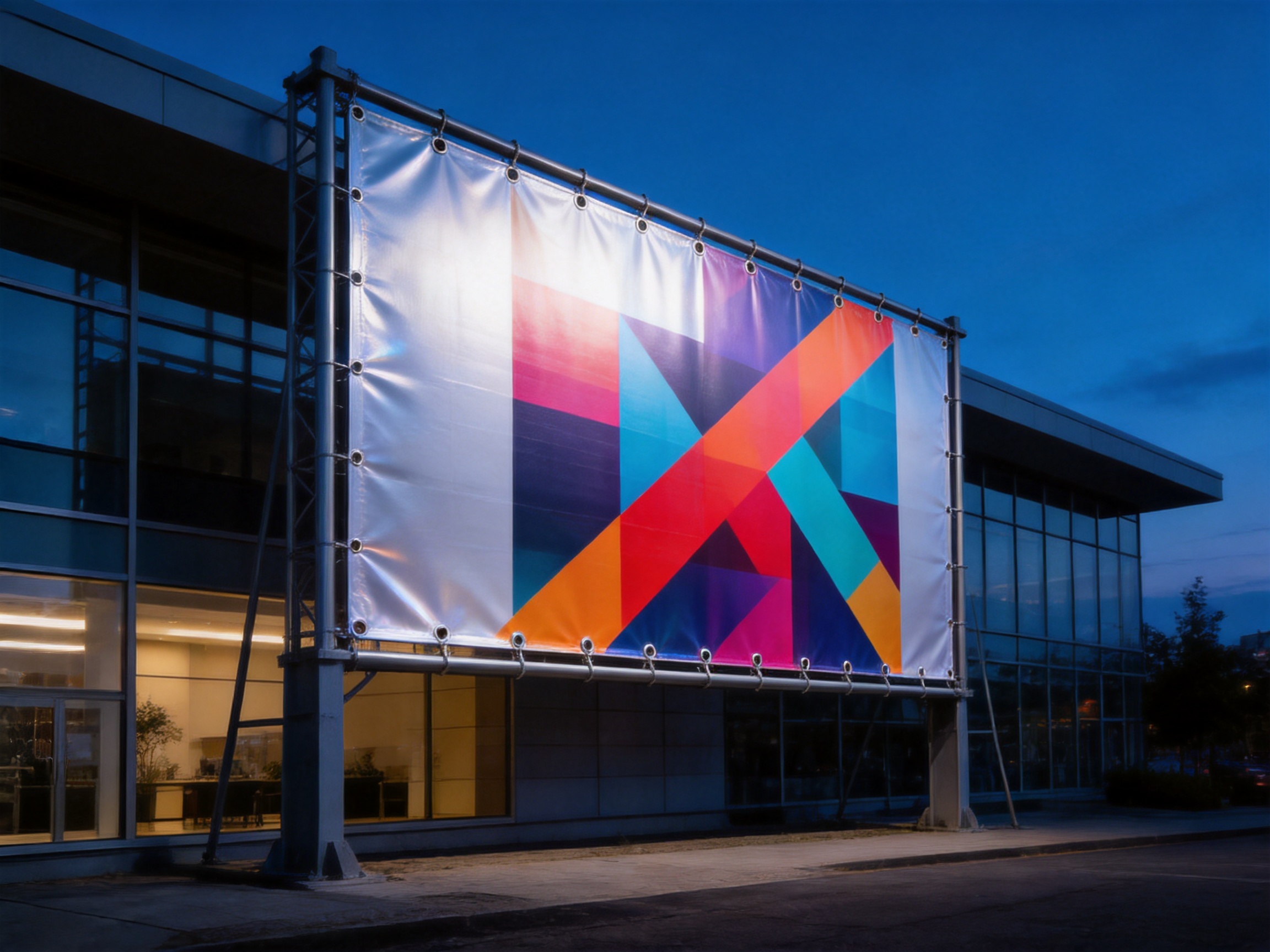
Outdoor advertising materials face a combination of environmental stresses that are rarely present indoors. Rain can wet the surface and weaken poorly protected substrates. Wind can place repeated tension on hems, eyelets, and mounting points. Solar radiation can cause colors to fade, while temperature changes can produce expansion and contraction. Dirt, humidity, airborne pollutants, and repeated handling can further reduce the useful life of an advertising display.
The Reflective Outdoor Advertisement Flex Banner is developed for outdoor conditions and is described as water-resistant, UV-resistant, and durable. The polymer-coated structure provides a protective barrier around the reinforced base fabric. This construction helps the banner retain its physical function when used in outdoor display systems and exposed to ordinary weather conditions.
UV resistance is particularly important for printed graphics. Without sufficient resistance, pigments can lose intensity and the overall image can appear dull or uneven. A UV-resistant advertising material helps preserve the visual impression of the campaign for a longer period. Actual color durability will still depend on ink selection, color density, exposure intensity, installation direction, cleaning practices, and local climate.
Water resistance helps prevent rain from immediately penetrating the material. This is useful for banners installed at outdoor events, on fences, on building exteriors, and near transportation routes. A water-resistant surface is also easier to clean because dust and light surface contamination can generally be removed with appropriate methods.
The material’s mechanical values are also relevant to weather performance. Its listed tensile strength and tearing strength support the demands created by tensioning and wind movement. A strong base fabric can help reduce the risk of damage around properly reinforced fixing points. However, the mounting system must be engineered correctly. Even a high-strength banner can fail if it is installed with inadequate spacing, weak eyelets, unsuitable rope, or insufficient support.
The 840 by 840 denier specification indicates a heavy woven base designed for demanding applications. Denier refers to the linear density of the yarn and is commonly used to describe synthetic textile construction. A higher-denier base generally provides more material in the yarn, contributing to strength and stability when combined with an appropriate weave and coating system.
The 9 by 9 thread construction reflects the number of yarns arranged in the two principal directions of the fabric. A balanced structure can help support consistent handling and dimensional behavior. This is important during printing, cutting, welding, hemming, and installation because a stable substrate is less likely to distort during conversion.
The 550 gsm total weight gives the banner a substantial feel. Compared with lightweight indoor media, this weight is more appropriate for large-format outdoor use. It can provide better resistance to fluttering and handling damage when correctly installed. At the same time, the product remains flexible enough to be rolled and transported in a practical manner.
Tensile strength of 1,000/800 N per 5 centimeters provides an indication of the force the material can withstand before breaking under specified test conditions. The two values typically represent different fabric directions. Directional performance should be considered during fabrication, especially when a large banner will be subjected to strong tension or when the design includes concentrated fixing points.
Tearing strength of 200/180 N is also important for outdoor banners. Tearing can begin at a cut, edge, eyelet, or small puncture and then spread under load. A material with useful tear resistance can help limit the progression of damage, although reinforcement and correct installation remain necessary for reliable performance.
The listed adhesion value of 60 N per 5 centimeters relates to the bonding strength between layers. Strong adhesion helps the coated structure remain integrated during folding, rolling, printing, installation, and outdoor exposure. It is one of the factors that separates an industrial outdoor substrate from a basic temporary sheet.
The most direct advantage over ordinary frontlit or non-reflective banners is improved nighttime visibility. A standard banner can still be effective when positioned under strong lighting, but it may lose attention in dim environments. The reflective surface adds a passive visibility feature that works when an external light source reaches the material.
A second advantage is campaign versatility. The same material can be used for daytime promotional communication and nighttime recognition. This is useful for businesses that operate on extended schedules or for events that continue into the evening. Instead of using separate daytime and nighttime sign systems, an advertiser can use one reflective printed substrate for both periods.
A third advantage is reduced dependence on powered illumination. Floodlights and illuminated sign boxes can increase installation complexity, energy consumption, maintenance requirements, and operating cost. A reflective banner does not eliminate the need for proper lighting in every application, but it can reduce reliance on dedicated lighting where ambient headlights or nearby light sources are sufficient.
The product also offers a useful combination of visibility and flexibility. Rigid reflective boards may provide strong visual performance but can be heavier, more difficult to transport, and more expensive to install over large areas. A flex banner can be rolled, shipped efficiently, and adapted to fences, frames, walls, and temporary structures.
Compared with thin promotional sheets, the 550 gsm construction provides a more substantial outdoor-grade platform. Its reinforced base, stated tear resistance, and broad width capability support professional signage applications where appearance and service life are important.
| Material Type | Nighttime Visibility | Flexibility | Large-Format Suitability | Typical Consideration |
|---|---|---|---|---|
| Reflective flex banner | Enhanced when illuminated | High | Excellent, up to 5 meters listed width | Requires thoughtful artwork and installation |
| Standard non-reflective flex banner | Depends on external lighting | High | Excellent | Often economical for daytime campaigns |
| Rigid sign board | Can be strong with reflective face | Low | Limited by panel size and handling | More difficult to transport and store |
| Paper poster | Low without lighting | Moderate | Suitable mainly for short-term use | More vulnerable to moisture and tearing |
| Mesh banner | Usually depends on lighting | High | Useful for windy locations | Open structure may reduce image density |
| Illuminated sign box | High when powered | Low | Suitable for permanent installations | Higher equipment and operating requirements |
The banner can be customized with a company message, event identity, product image, directional instruction, slogan, or promotional artwork. Digital printing is particularly suitable for this type of product because it supports detailed images, gradients, multiple colors, variable data, and short or medium production runs.
For best results, artwork should be prepared with the final viewing distance in mind. Large text, strong contrast, and simple visual hierarchy are usually more effective for roadside and large-format applications than dense blocks of small information. Reflective surfaces may affect the visual appearance of colors under different lighting angles, so a proof or sample can be valuable for important campaigns.
Designers should also allow sufficient bleed and safe margins. The outer edges may be hemmed, welded, or fitted with eyelets, and these conversion processes can occupy part of the printable area. Keeping critical text and logos away from the edge helps prevent important information from being hidden by the finishing structure.
For banners intended to be seen by motorists, message comprehension must be rapid. The viewer may have only a few seconds to recognize the brand and understand the offer. A concise headline, clear contact information, and a strong focal image are usually more effective than excessive copy. The reflective feature should enhance this message rather than compete with it.
Printing performance depends on the compatibility of the ink, printer, coating, drying conditions, and production settings. The substrate should be tested before a large production run, especially when the material will be used for a high-value campaign or installed in a demanding environment.
Color management is important for maintaining brand consistency. Profiles, ink limits, curing or drying conditions, and viewing-light differences can affect the final result. A professional supplier or converter can help establish an appropriate workflow for the selected digital printing system.
After printing, the banner should be inspected for pinholes, uneven coating, scratches, color variation, poor adhesion, and edge defects. Quality inspection is particularly important for reflective products because surface marks may become more noticeable when illuminated at night.
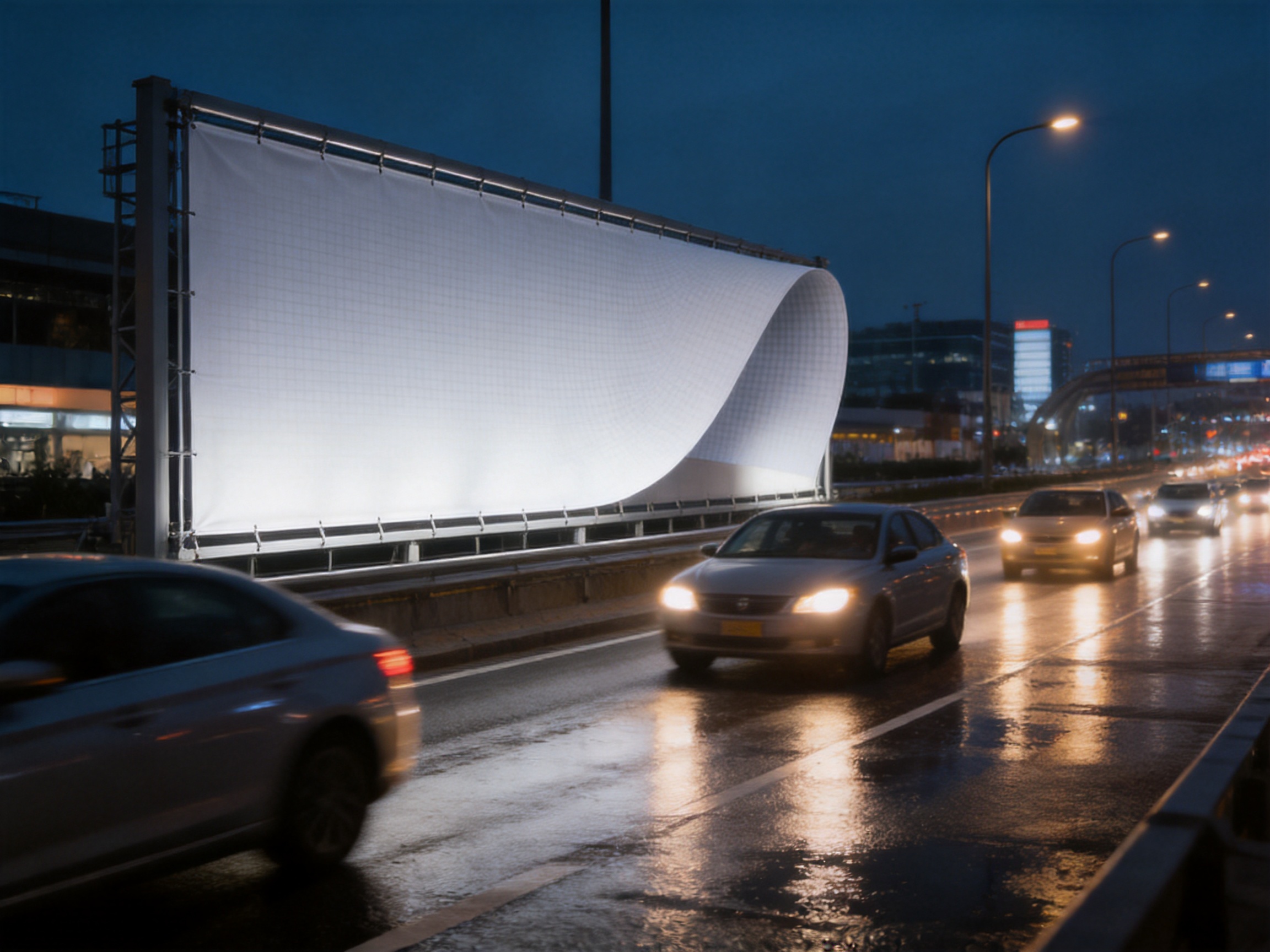
Roadside advertising is one of the most suitable applications for a reflective flex banner. Vehicles may pass during daylight, twilight, and nighttime hours, so a material with extended visibility can support longer campaign exposure. The banner can be produced in large widths and installed on prepared frames, fences, building surfaces, or other approved structures.
Because traffic environments require careful attention to safety, installation location and graphic design should comply with local regulations. The banner should not obstruct traffic signs, create dangerous glare, or distract drivers in a prohibited manner. When properly planned, reflective advertising can improve recognition without requiring a large powered sign system.
Outdoor events often need temporary signs that are attractive during the day and easy to notice after sunset. Concerts, fairs, festivals, sporting events, exhibitions, and community gatherings can use reflective banners for entrances, sponsor displays, directional information, and event branding.
The banner’s flexible form is useful for temporary campaigns because it can be produced in various sizes, transported to the venue, and installed on frames or perimeter structures. After the event, it can be removed and stored for reuse if the artwork and construction are suitable for another occasion.
Retail stores, restaurants, service centers, shopping areas, and entertainment facilities can use reflective banners to promote opening hours, seasonal offers, new products, or special events. A banner positioned near a parking area or entrance may remain visible to customers arriving after dark.
Businesses can also use different banner sizes across a property. A large display may communicate the primary campaign, while smaller panels can provide directions or identify service areas. The ability to customize the graphics supports coordinated visual communication across multiple locations.
Construction sites and property developments frequently use printed banners to identify the project, introduce future facilities, promote available units, or provide contact information. Large-format flexible media can cover fences and temporary walls while presenting a more professional appearance than untreated barriers.
Reflective visibility can help identify the project perimeter in the evening, although it should not replace legally required safety equipment, warning signs, or lighting. The banner should be mounted securely and checked regularly because construction environments may involve dust, machinery, wind exposure, and frequent site changes.
Warehouses, distribution centers, truck depots, and logistics parks can use large outdoor banners for facility identification, recruitment, service promotion, and directional communication. These locations often operate early in the morning or late at night, making extended visibility useful.
The material’s width capability can help create broad graphics with fewer joins. Fewer seams may improve visual continuity and simplify installation, particularly when the banner is used across a long fence or building façade.
The product is manufactured by Haining Taiwei New Material Co., Ltd., which specializes in coated and flexible materials for advertising and industrial applications. The company was established in July 2010 and is located in Haining Dingqiao Industrial Park in Zhejiang Province, China. Its location provides access to major transportation routes and nearby Shanghai and Ningbo ports, supporting export-oriented production and international logistics.
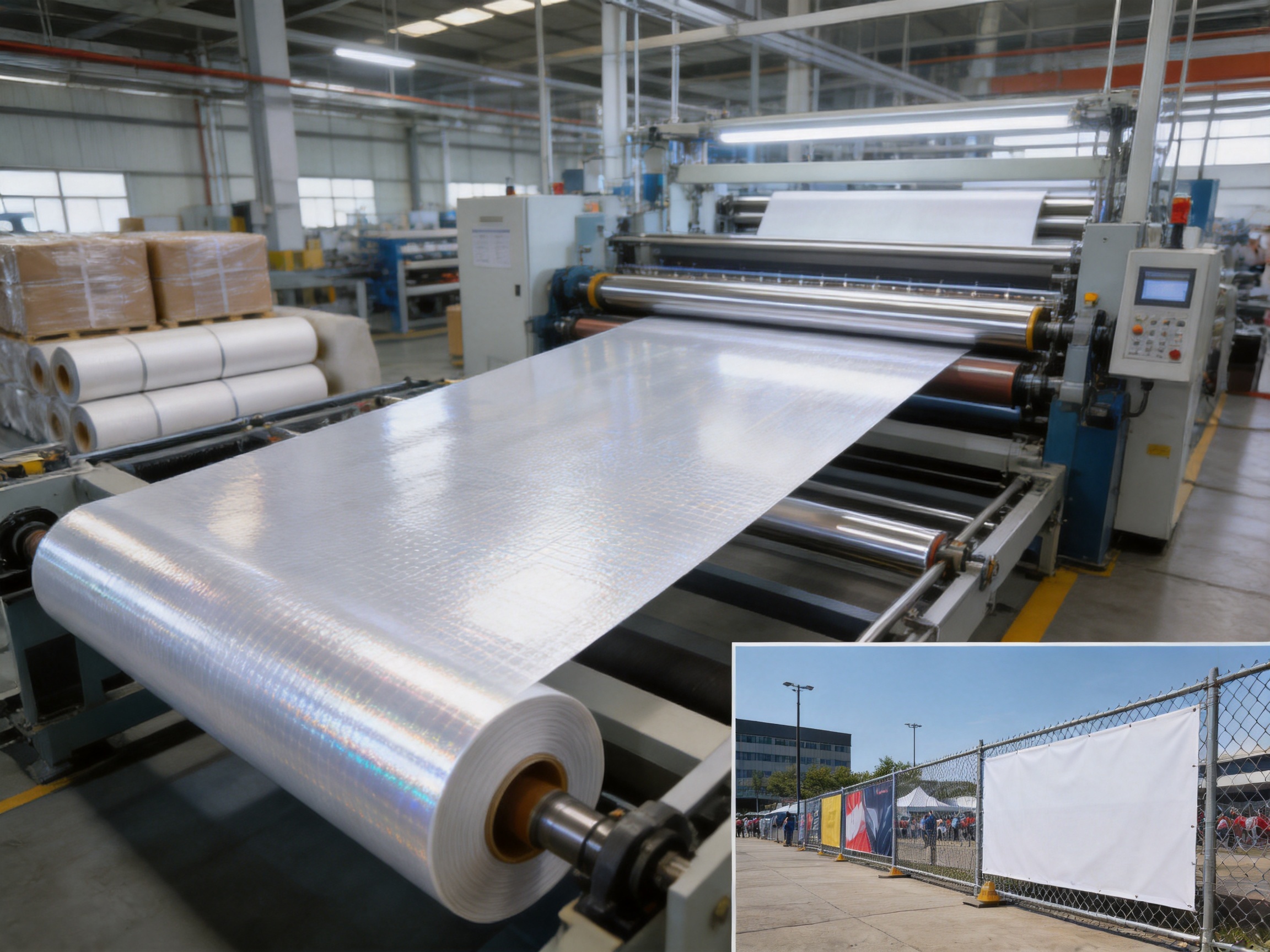
The company operates advanced calendering equipment, multiple production lines, and professional bonding facilities. Calendering is a key process for producing coated polymer films and fabrics. During calendering, material is processed through controlled rollers that can apply pressure, heat, and thickness control. Consistent production parameters are important for achieving a uniform surface, stable coating, and predictable finished weight.
Multiple production lines can provide manufacturing flexibility. Different product specifications may require changes in coating formulation, fabric construction, surface treatment, width, thickness, or finishing. A multi-line production environment can support a broader product range while helping the manufacturer manage production planning and capacity.
Professional bonding facilities are important for materials that depend on the integrity of multiple layers. A strong bond between the base fabric and coating can support adhesion, durability, print performance, and resistance to separation. Bonding quality is especially relevant when the material is rolled, folded, welded, hemmed, or exposed to temperature changes.
The company reports an annual output of approximately 45 million square meters. This capacity indicates experience in large-scale production and the ability to serve commercial buyers, distributors, converters, and overseas customers. It also supports supply continuity for clients that need regular shipments or repeat orders.
More than 98 percent of the company’s products are reported to be exported to international markets. Export experience can help a manufacturer understand packaging requirements, product documentation, communication practices, shipping coordination, and the performance expectations of different regions.
Product consistency is essential for advertising material. A customer may use the same brand artwork across multiple signs, cities, or production batches. If the substrate varies significantly in weight, surface finish, coating behavior, or color response, the final campaign may appear inconsistent.
The company lists ISO 9001:2015 and GB/T 19001-2016 certification information. These quality management standards are associated with documented processes, customer-focused operations, corrective actions, and continual improvement. Certification does not replace product testing, but it provides a framework for managing production and quality procedures.
The product information also references DIN 75200 for a fire-related performance requirement and GB/T 3923.1-2013 for tension testing. Buyers should confirm the exact scope, test reports, certificate validity, and applicability of these standards for the intended market and product configuration. Requirements may differ depending on whether the material is used for general advertising, transportation, public buildings, or regulated installations.
Quality control should cover the incoming base fabric, coating materials, surface appearance, weight, width, tensile strength, tear resistance, adhesion, temperature behavior, printing compatibility, and finished roll packaging. For reflective products, inspection of surface uniformity and reflective response is also important.
A reflective banner is a functional advertising system rather than a simple printed sheet. Its performance depends on how the base fabric, coating, reflective layer, and finished graphics work together. Small variations in coating thickness or bonding can influence flexibility, ink adhesion, appearance, and outdoor service life.
Controlled production can reduce the risk of defects such as pinholes, wrinkles, uneven gloss, delamination, inconsistent width, weak edges, or variable surface energy. These controls help converters and printers reduce waste and improve the reliability of the finished sign.
For large commercial orders, manufacturing control also helps support repeatability. A distributor can specify the same item number and technical requirements for future shipments, while the manufacturer can use established production parameters and inspection records to maintain continuity.
Correct installation is essential for achieving the expected performance of any outdoor banner. Before installation, the surface should be inspected for cuts, punctures, contamination, and coating damage. The banner should be unrolled on a clean surface and handled carefully to avoid scratching or creasing the reflective face.
For framed installations, the frame should be structurally sound and capable of supporting the banner under local wind conditions. Fixing points should be distributed evenly rather than concentrated at only a few locations. Hems and reinforced edges can improve the load distribution around eyelets or attachment points.
The banner should not be stretched excessively. Excessive tension can distort the printed image, place unnecessary stress on the coating, and increase the risk of edge or fixing-point damage. At the same time, insufficient tension can create folds and pockets that reduce appearance and may allow wind to act unpredictably on the surface.
Where wind exposure is high, the installation design may need additional support, reduced panel size, or a mesh-based product instead. The Reflective Outdoor Advertisement Flex Banner is designed for durable outdoor advertising, but the appropriate product must always be selected according to local weather, mounting height, exposure area, and structural conditions.
The banner is lightweight relative to rigid sign systems and can be rolled for transport. Rolling is generally preferable to sharp folding because it reduces the risk of permanent creases and surface damage. The reflective surface should be protected from abrasion during shipment and storage.
Rolls should be stored in a dry, clean location away from direct sunlight, excessive heat, sharp objects, and chemical contamination. If the material has been exposed to cold conditions during transportation, it should be allowed to acclimatize before printing or conversion. Sudden changes in temperature can influence flexibility and handling behavior.
During long-term storage, rolls should be supported so that they do not become distorted. Packaging should prevent dust and moisture from reaching the surface while allowing appropriate protection against compression and impact.
Routine inspection can help extend the useful life of an installed banner. Owners should check the surface, hems, eyelets, frame, ropes, cables, and attachment points periodically. Particular attention should be given after storms, strong winds, heavy rainfall, or accidental contact with equipment.
Light dirt can often be removed with clean water and a soft cloth or sponge. Aggressive brushes, abrasive cleaners, strong solvents, and unapproved chemicals should be avoided because they may damage the coating, printed image, or reflective surface. Cleaning should begin with the mildest suitable method and be tested on an inconspicuous area when possible.
If a small cut or puncture is discovered, it should be repaired promptly using a method compatible with the material. A minor defect can grow under wind tension if left untreated. Severe damage may require replacement of the banner or professional reworking of the affected section.
Service life depends on many factors, including climate, sunlight intensity, wind, installation quality, cleaning, print system, ink selection, and campaign duration. The stated UV resistance and outdoor construction support durability, but no flexible advertising material remains unaffected indefinitely under continuous exposure. Buyers should request application-specific guidance when a long-term installation is planned.
Commercial buyers should define the intended application before requesting a quotation. Important details include required width, roll length, finished size, printing method, artwork, installation method, expected service period, exposure conditions, destination country, packaging, and testing requirements.
The listed maximum width is up to 5 meters. This capability can reduce the number of seams in large displays, but the actual production width should be confirmed for the requested specification and order quantity. Buyers should also clarify whether the quotation covers plain material, printed material, cutting, hemming, welding, eyelets, packaging, and shipping.
The listed minimum order quantity is one 20-foot container. This quantity is suitable for importers, distributors, large printing companies, and advertising-material wholesalers rather than very small one-time users. Buyers should confirm container loading arrangements, roll dimensions, net and gross weight, and the available product mix within a shipment.
Payment terms are listed as an earnest payment plus balance through T/T or L/C, with delivery terms such as FOB, CIF, and CNF available for discussion. The listed delivery time is 20 working days, subject to confirmation based on specifications, production scheduling, order quantity, and shipping arrangements.
Because the product is customized and application-sensitive, a technical discussion before ordering is recommended. A buyer may request a specification sheet, sample, test data, printing trial, color proof, or confirmation of the relevant fire and mechanical standards. This preliminary process can reduce uncertainty and help ensure that the material is suitable for the final advertising system.
A reflective banner can contribute to operational efficiency by extending the visibility of an advertising message without necessarily requiring a continuously powered lighting system. This may reduce the need for additional electrical equipment in temporary or semi-permanent installations. The actual environmental benefit depends on how the banner is used, how long it remains in service, and whether it can be reused.
Its rollable form can also simplify transportation compared with rigid panels. More compact shipping and storage may help reduce handling requirements. For event organizers and advertising contractors, the ability to transport flexible material between locations can support more efficient campaign logistics.
Reuse should be considered during design. If a banner is intended for recurring events, graphics can be created with adaptable dates, replaceable panels, or general branding that remains relevant. Careful removal, cleaning, and storage can help preserve the material for future use.
As with all polymer-coated products, buyers should review local disposal and recycling options at the end of service life. Product composition, printing inks, adhesives, and finishing components may influence available waste-management routes. Responsible procurement includes consideration of service life, reuse, maintenance, and end-of-life handling.
Before approving a production order, the buyer should verify the product identity and technical specification. The item number, total weight, base fabric construction, width, tensile strength, tear strength, adhesion, temperature range, and reflective characteristics should correspond with the project requirements.
The buyer should also review a physical sample when appearance is important. A sample can reveal surface texture, flexibility, color response, reflective behavior, coating uniformity, and print compatibility. Testing a sample under both daylight and artificial light can be particularly useful for campaigns that depend on nighttime recognition.
Artwork approval should include dimensions, bleed, safe margins, color expectations, resolution, finishing details, and viewing distance. The approved proof should be retained for comparison during production inspection.
Packaging should protect the reflective surface from abrasion and moisture. The shipping marks should identify the product, roll number, quantity, dimensions, and handling requirements. For international shipments, buyers should confirm export documents, customs information, and any destination-specific compliance requirements.
The banner includes a reflective surface designed to return part of the light that reaches it toward the light source. Vehicle headlights, spotlights, and other directional illumination can make the banner more noticeable in low-light conditions.
Yes. The product is intended for both daytime and nighttime outdoor advertising. During the day, the printed graphic provides the primary visual message. After dark, the reflective surface can provide additional visibility when illuminated.
The material is described as water-resistant and designed for outdoor use. Proper installation, edge finishing, maintenance, and drainage should still be considered because prolonged moisture exposure and standing water can affect any advertising structure.
The listed width is up to 5 meters. The exact production width should be confirmed for the required item, order quantity, printing process, and finishing method.
Gsm means grams per square meter. A 550 gsm material weighs approximately 550 grams for each square meter before considering packaging or additional finishing. This weight indicates a substantial outdoor-grade construction.
The listed tensile strength is 1,000/800 N per 5 centimeters, and the listed tearing strength is 200/180 N. These values represent directional performance under specified test conditions and should be interpreted together with installation design and application requirements.
It is intended for customized advertising graphics and can be evaluated for compatibility with the customer’s digital printing system. A printing trial or sample test is recommended before full production, particularly when exact color, adhesion, or long-term outdoor performance is important.
It can be considered for roadside and highway advertising where the installation complies with local laws, visibility requirements, structural regulations, and traffic-safety rules. The banner should not obstruct official signs or create an unsafe distraction.
It should be stored rolled in a clean, dry location away from direct sunlight, high heat, sharp objects, moisture, and chemicals. The reflective face should be protected from abrasion and excessive pressure.
The listed minimum order quantity is one 20-foot container. Buyers should confirm the current quantity, loading plan, available specifications, and shipping details before placing an order.
The listed delivery time is 20 working days. Actual timing may vary according to order specifications, production capacity, artwork approval, payment arrangements, packaging, and shipping schedules.
The product is manufactured by Haining Taiwei New Material Co., Ltd., a manufacturer and exporter of PVC films, digital printing fabrics, tarpaulin films, frontlit and backlit materials, mesh, and other advertising-media products.
The Reflective Outdoor Advertisement Flex Banner is designed for advertisers that need more than a basic printed outdoor sheet. Its reflective surface can improve visibility when exposed to headlights or other directional light, helping a campaign remain recognizable after sunset. Its 550 gsm construction, reinforced 840 by 840 denier base, 9 by 9 thread structure, listed mechanical strength, water resistance, UV resistance, and maximum width of up to 5 meters support a broad range of demanding outdoor applications.
The product is suitable for roadside advertising, events, retail properties, construction projects, transportation facilities, commercial campuses, and other locations where visibility, durability, and flexible installation are important. Compared with standard non-reflective media, it offers an additional nighttime visibility function. Compared with rigid sign systems, it is easier to roll, transport, store, and adapt to large surfaces.
Its performance is supported by the manufacturer’s experience in coated fabrics and flexible advertising materials. Haining Taiwei New Material Co., Ltd. operates advanced calendering equipment, multiple production lines, and professional bonding facilities, with reported annual output of 45 million square meters and extensive export experience. The company’s quality-management framework, product range, and international supply capability make it suitable for commercial buyers seeking an established production partner.
For the best result, buyers should match the material to the application, approve a sample where necessary, use compatible printing systems, design graphics for the actual viewing distance, and install the finished banner with suitable structural support. When these factors are managed correctly, the Reflective Outdoor Advertisement Flex Banner can provide a high-impact and practical advertising solution for campaigns that need to remain visible in changing outdoor conditions.
1. Haining Taiwei New Material Co., Ltd. Product information for Reflective Outdoor Advertisement Flex Banner, item TWF8484-550.
2. Haining Taiwei New Material Co., Ltd. Company information and manufacturing profile.
3. ISO 9001:2015, Quality Management Systems — Requirements.
4. GB/T 19001-2016, Quality Management Systems — Requirements.
5. DIN 75200, Determination of the Burning Behaviour of Materials Used in the Interior of Motor Vehicles.
6. GB/T 3923.1-2013, Textiles — Tensile Properties of Fabrics — Determination of Maximum Force and Elongation at Maximum Force.
7. General principles for large-format digital printing, outdoor graphic production, substrate handling, and banner installation.
Reflective Outdoor Advertisement Flex Banner
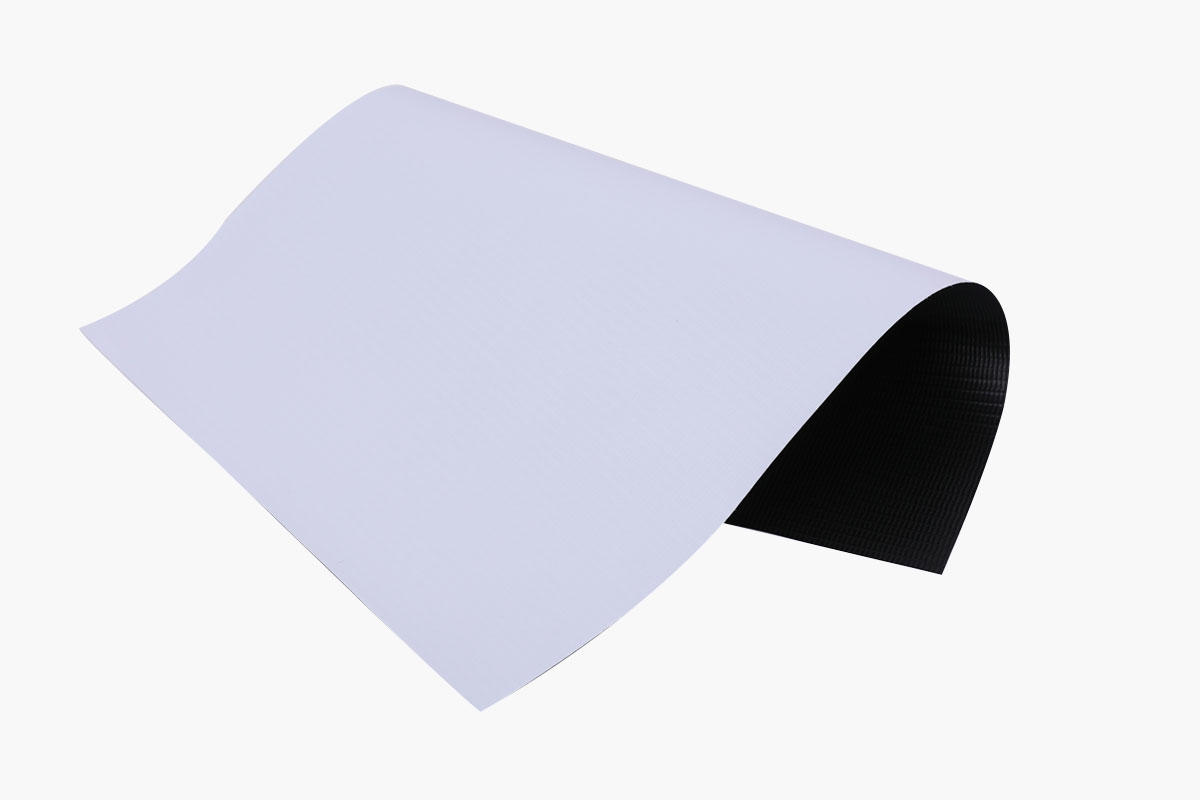 High-Resolution Durable PVC Flex Banner
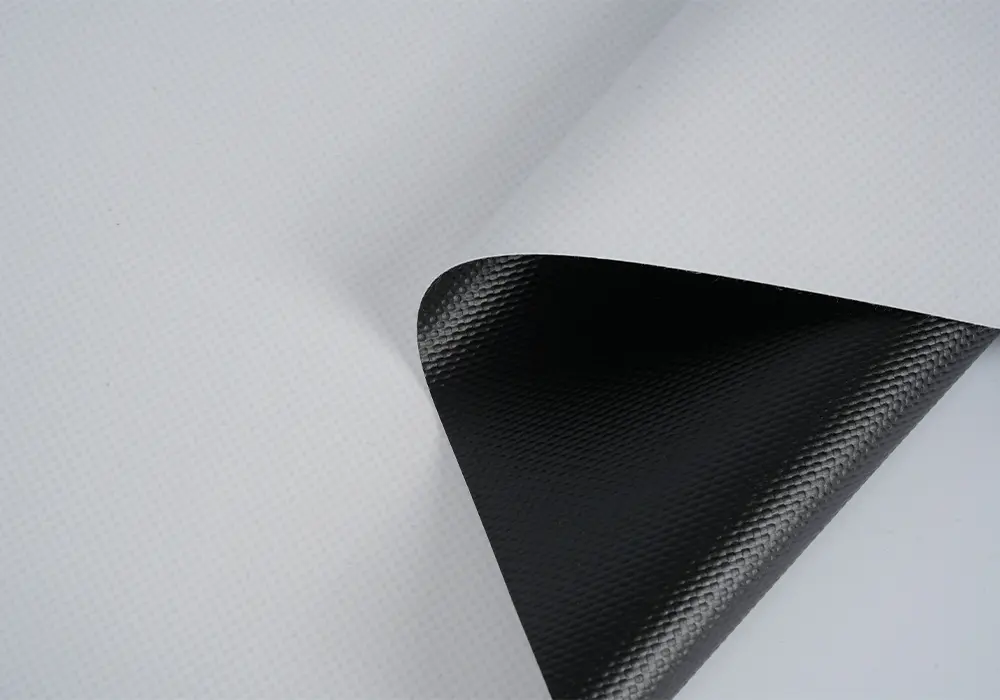 Weatherproof Blackback Opaque Advertising Flex Banner
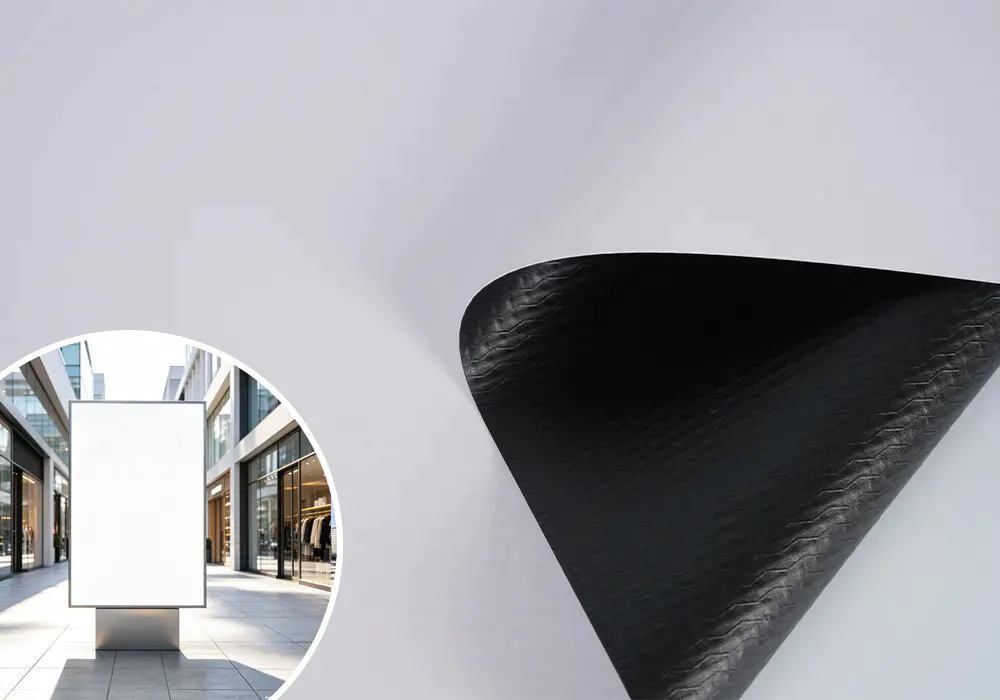 Anti UV Long Lasting Blackback Outdoor flex Banner Fabric
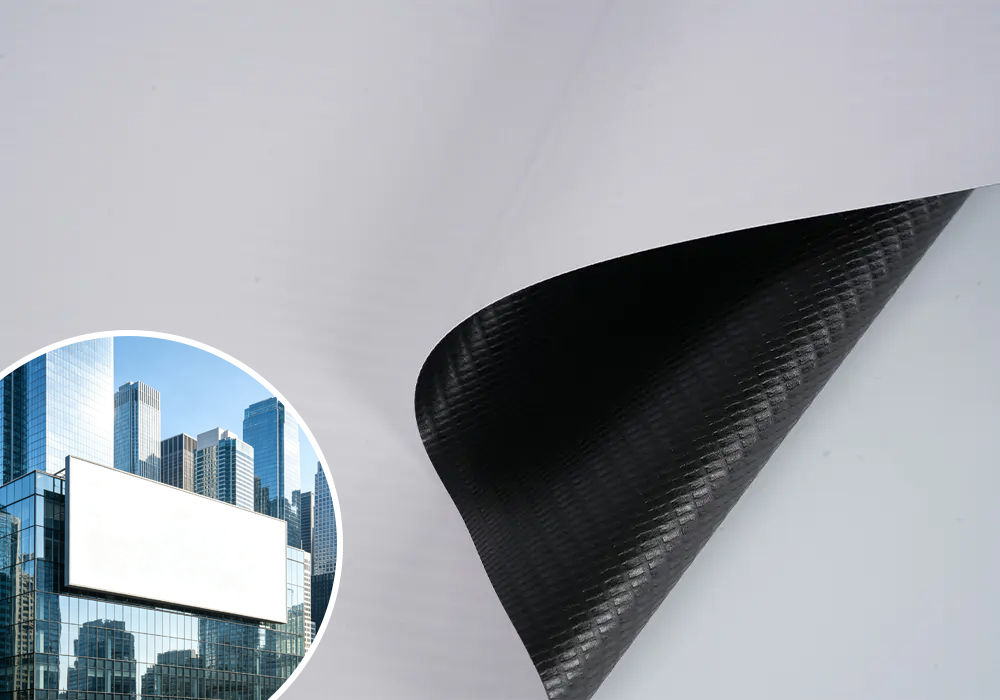 High Ink Absorption Blackback Commercial Promo Flex banner Material
 Light Flexible Light Transmitting Flex Advertising Banner
 Custom Digital Printing Fabric Manufacturers

 Previous