

 English
 中文简体
 Español
News
Home / Author / Shen Yaqin — International Sales Manager / High Ink Absorption Blackback Flex Banner Material for Commercial Promotion


Content
Commercial graphics must do more than display an attractive design. They must preserve color accuracy, maintain sharp text, resist environmental interference, and remain practical for installation, storage, transportation, and replacement. The choice of banner substrate therefore has a direct influence on advertising effectiveness, campaign efficiency, and the perceived quality of a brand’s visual communication. High Ink Absorption Blackback Commercial Promo Flex Banner Material is developed for these demanding requirements, combining a high-performance printable surface with a dense black backing and a flexible PVC-based construction.
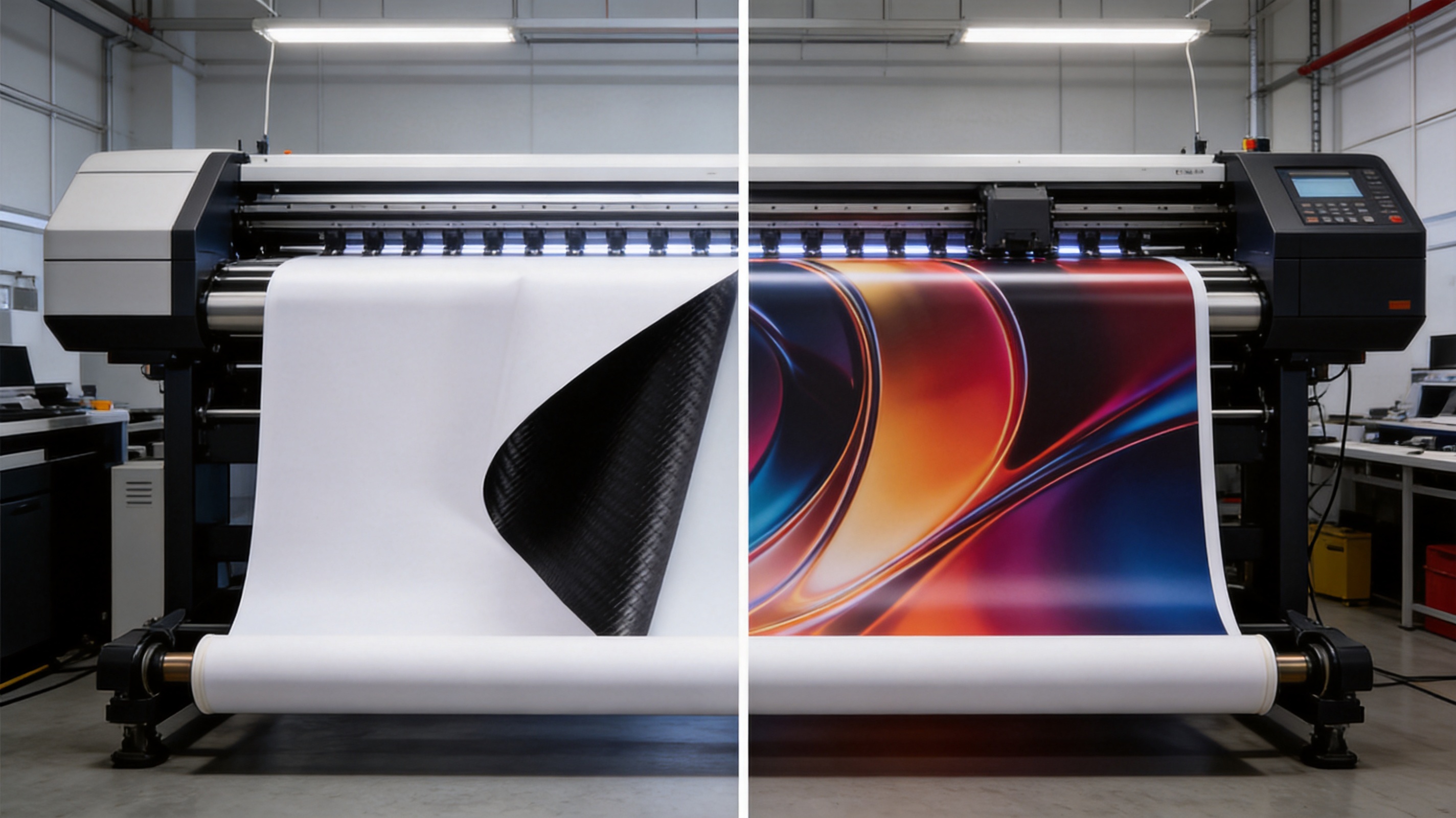
This blackback flex banner is designed for high-precision digital printing in applications where image clarity and visual contrast are essential. Its upgraded surface treatment accepts ink evenly, helping prevent bleeding, feathering, uneven saturation, and blurred details. At the same time, its opaque backing blocks light transmission from behind the display. The result is a cleaner, more stable image with deeper colors, clearer text edges, and less interference from surrounding illumination.
The material is suitable for indoor commercial promotions, shopping malls, pop-up exhibitions, retail campaigns, trade events, temporary outdoor advertising, and other short- or medium-term display projects. It offers a practical balance between print quality, weather resistance, handling convenience, and production efficiency. Compared with ordinary frontlit banner materials, basic coated substrates, or lightweight media without a blackout layer, this product provides a more controlled visual result in challenging display environments.
Printed advertising is often viewed from a distance, under changing lighting conditions, and alongside competing visual messages. A banner that appears acceptable in a controlled production room may lose impact after installation. Light may pass through the substrate, colors may appear washed out, text may become difficult to read, and surface inconsistencies may become visible across large printed areas. These problems can reduce brand recognition and weaken the return on an advertising investment.
Blackback flex banner material addresses these issues through a construction that combines an ink-receptive face with a light-blocking rear layer. The front surface is engineered to support the controlled absorption and fixation of digital inks. Rather than allowing ink to remain excessively wet on the surface or spread into adjacent areas, the coating helps distribute and hold the ink in a more predictable manner. This is especially important for fine typography, logos, product photography, gradients, and high-resolution promotional artwork.
The blackback layer performs a separate but equally important function. It creates an opaque barrier that limits light transmission from behind the printed graphic. Without this barrier, sunlight, warehouse lighting, display illumination, or light from adjacent fixtures can create shadows, hot spots, and uneven color perception. By reducing rear illumination, the blackback construction helps the printed image retain stronger contrast and a more uniform appearance.
For commercial users, these benefits extend beyond appearance. Improved print definition can reduce reprints caused by blurred graphics or unacceptable color variation. Better opacity can reduce the need for additional liners or double-layer installation. Flexible handling can shorten installation time and make campaign materials easier to transport and store. These practical advantages help improve project efficiency from printing through removal.
The defining feature of this flex banner is its upgraded high ink-absorption surface treatment. The surface is intended to receive digital ink evenly across the printable area, supporting consistent color density and clean image reproduction. The coating helps control the movement of ink after application, reducing the tendency of small text, thin lines, and detailed patterns to spread beyond their intended boundaries.
Commercial promotional designs commonly include a combination of large solid color fields, small legal text, product images, gradients, icons, and brand marks. Each element creates different demands for the printable surface. Large color fields require even coverage, while fine details require controlled dot placement. A high-absorption coating helps the substrate accommodate both requirements without creating excessive surface wetness or uncontrolled ink movement.
Improved absorption is particularly valuable for high-resolution digital printing. When the substrate responds consistently to the printing process, the final image can preserve sharper edges and more accurate tonal transitions. The result is a professional presentation that supports brand consistency across retail banners, event graphics, promotional walls, and temporary outdoor campaigns.
The blackback construction provides a dense barrier against rear illumination. This feature is designed to isolate the graphic from environmental interference, including sunlight behind a window, light from a storefront, or artificial illumination behind a hanging display. By limiting the passage of light, the material helps prevent shadowing and reduces the washed-out appearance that can occur with less opaque substrates.
Blackout opacity is especially useful when a banner is installed over an existing graphic, a temporary wall, a glass surface, or a structure with irregular background colors. The dark backing helps conceal underlying patterns and prevents them from influencing the front-facing image. This gives designers greater freedom when selecting installation locations and reduces the need for extensive surface preparation.
A stable blackout layer can also improve color perception. Colors appear more saturated when unwanted rear light is reduced, and dark tones can maintain greater visual depth. This is valuable for premium corporate branding, high-end retail campaigns, photographic graphics, and designs that depend on strong contrast between light and dark elements.
Although the material is designed for commercial durability, it remains flexible enough for practical handling. It can be rolled for transportation, stored without requiring bulky rigid packaging, and installed on common banner support systems. Its manageable weight is useful for temporary displays, frequently changed promotional graphics, and projects where installation teams must handle large-format materials in limited spaces.
Flexibility also supports a wide range of finishing options. Depending on project requirements, the material may be prepared for hemming, eyelet installation, pole pockets, hanging systems, framing, or other standard display methods. The ability to adapt the finished banner to different hardware configurations makes it suitable for both standardized promotional programs and customized commercial installations.
For retailers and event organizers, the combination of flexibility and light weight can reduce labor demands. Teams can move and position large graphics more easily, while storage areas can accommodate rolled materials rather than rigid panels. These advantages are particularly meaningful for pop-up exhibitions, seasonal retail campaigns, promotional roadshows, and short-term event branding.
The product is equipped with an enhanced exterior protective compound intended to help the printed banner withstand demanding conditions. Outdoor graphics may be exposed to ultraviolet radiation, rain, wind, fluctuating temperatures, and airborne dust. In certain regions, sand and surface abrasion can place additional stress on the material. The protective construction helps reduce the risk of premature cracking, embrittlement, and color degradation under these circumstances.
Resistance to severe weather does not eliminate the need for proper installation and maintenance. A banner should be tensioned correctly, secured against wind loads, and selected according to the duration and exposure level of the project. Nevertheless, a weather-resistant flex banner provides a stronger foundation for outdoor promotional work than a basic indoor-only substrate.
The enhanced protective layer is also valuable during handling and transport. It helps protect the surface from ordinary environmental contact and supports a longer usable life when the banner is installed, removed, rolled, and stored according to recommended practices. This makes the product appropriate for campaigns that may be reused across several locations.
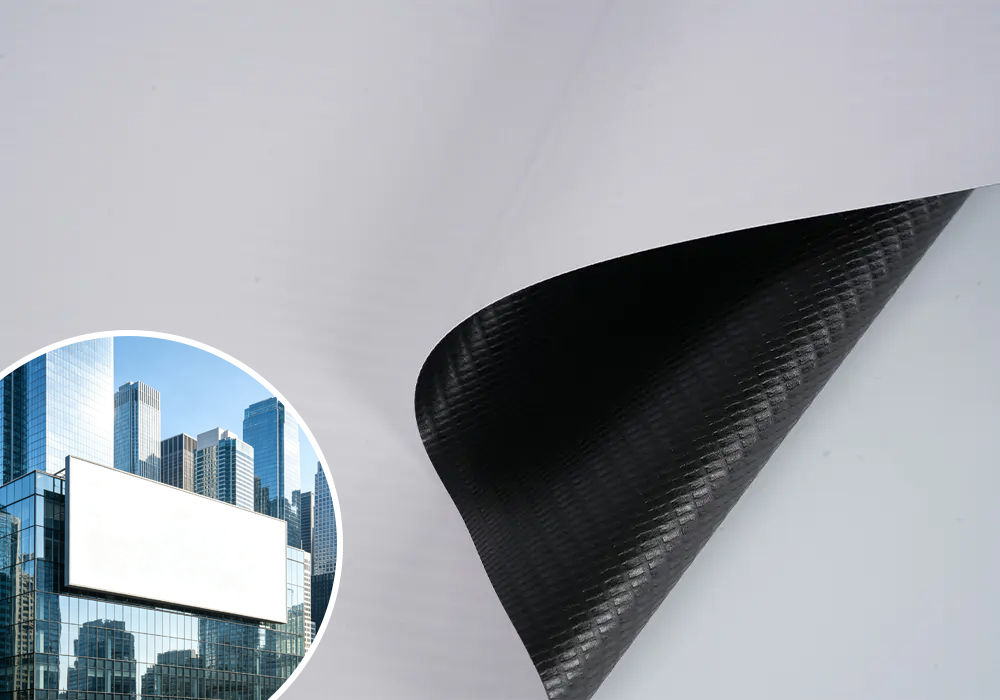
High Ink Absorption Blackback Commercial Promo Flex banner Material
Material specifications provide an important basis for selecting a banner substrate. They help buyers compare strength, handling performance, and suitability for different finishing methods. The available specification for this product identifies a blackback construction using a 300*500D yarn configuration, 18*12 construction, and a nominal weight of 440 gsm.
| Specification Item | Product Value | Practical Significance |
| Material construction | Blackback 300*500D | Supports a flexible yet stable substrate for commercial graphics |
| Fabric construction | 18*12 | Indicates the weave density used in the base structure |
| Nominal weight | 440 gsm | Provides a substantial surface for printing and handling |
| Tensile strength, longitudinal/transverse | 200/180 N/5 cm | Supports resistance to pulling forces during finishing and installation |
| Tearing strength, longitudinal/transverse | 100/80 N | Helps resist propagation of damage from cuts or punctures |
| Adhesion | 60 N/5 cm | Supports the integrity of the laminated or bonded construction |
The 440 gsm weight represents a balance between substantial feel and manageable handling. A very light substrate may be easy to transport but can be more vulnerable to wrinkling, distortion, or damage during installation. A much heavier material may provide additional rigidity but increase shipping weight and handling requirements. This product’s weight is positioned for common commercial banner applications that require dependable performance without the burden of a rigid display panel.
Tensile strength describes the material’s ability to withstand pulling forces along the length and width of the substrate. This is relevant when a banner is stretched across a frame, tensioned between attachment points, or prepared with hems and eyelets. The stated values of 200/180 N/5 cm indicate the measured strength in the two principal directions and provide a reference for production and installation planning.
Tearing strength measures resistance to the continuation of a tear once damage has begun. This characteristic is important around eyelets, hems, corners, and handling points. Proper finishing remains essential, but a material with useful tear resistance can provide an additional margin of reliability during installation and service.
Adhesion performance relates to the bond between the layers of the finished material. Strong interlayer adhesion helps maintain construction stability when the banner is rolled, printed, finished, transported, and exposed to temperature changes. It is an important property for blackback products because the visual and functional benefits depend on the continued integrity of the backing and printable surface.
Standard banner materials can produce acceptable results for simple graphics, but they may not provide the same level of control for detailed commercial artwork. A conventional surface may allow ink to remain wet for longer, spread at the edges, or produce uneven saturation. These issues are more apparent in small lettering, fine outlines, QR codes, product photography, and complex logos.
The high ink-absorption surface of this blackback flex banner is designed to reduce these problems. It supports cleaner ink placement and helps retain the intended shape of printed elements. When viewed close to the display, text edges appear more defined. When viewed from a distance, the overall image maintains stronger structure and visual impact.
Basic frontlit materials may allow rear light to influence the appearance of a graphic. This can make dark areas appear gray, reduce color depth, and create inconsistent brightness across the banner. The blackback layer reduces this interference, allowing the front-printed image to present more stable contrast.
For brand colors, this is particularly significant. Corporate identity systems often depend on precise color relationships, including the contrast between a primary color, a neutral background, and dark text. A more opaque substrate helps preserve these relationships under varied installation conditions. It can also make photographic images appear richer and more dimensional.
When a banner is installed over a dark wall, a previous advertisement, a metal structure, or a brightly lit surface, the background may affect the final appearance. A blackout backing reduces the visibility of these underlying conditions. This can simplify installation and minimize the need to cover or modify the mounting surface before the new graphic is applied.
For temporary promotions, reduced background interference saves time. The advertising team can focus on accurate positioning and secure attachment rather than preparing a perfectly neutral background. This is useful in shopping centers, exhibition halls, temporary retail spaces, and event venues where installation windows are short.
Some low-cost banner substrates are designed primarily for short indoor use and may lose flexibility or color stability when exposed to outdoor conditions. The protective compound used in this product is intended to help defend against ultraviolet exposure, moisture, freezing temperatures, and abrasive particles. This makes the material better suited to short-term and selected medium-term outdoor promotional work.
Its outdoor suitability can help businesses avoid replacing graphics too frequently. While actual service life depends on printing technology, ink type, climate, installation method, and exposure duration, a more resistant substrate gives the project a stronger performance foundation. It is a practical choice when visual quality must remain consistent throughout a campaign rather than only during the first few days.
Rigid boards and panels can require substantial storage space and specialized transportation. Flexible banner material can generally be rolled, labeled, and stored more efficiently. For organizations managing multiple seasonal campaigns, this can reduce warehouse pressure and simplify inventory control.
When removed carefully, a flexible banner may also be suitable for reuse in another location or at a later event. Reusability depends on the finishing method and the condition of the printed surface, but the flexible structure makes it easier to handle than many rigid alternatives. This supports more economical promotional planning and may reduce material waste.
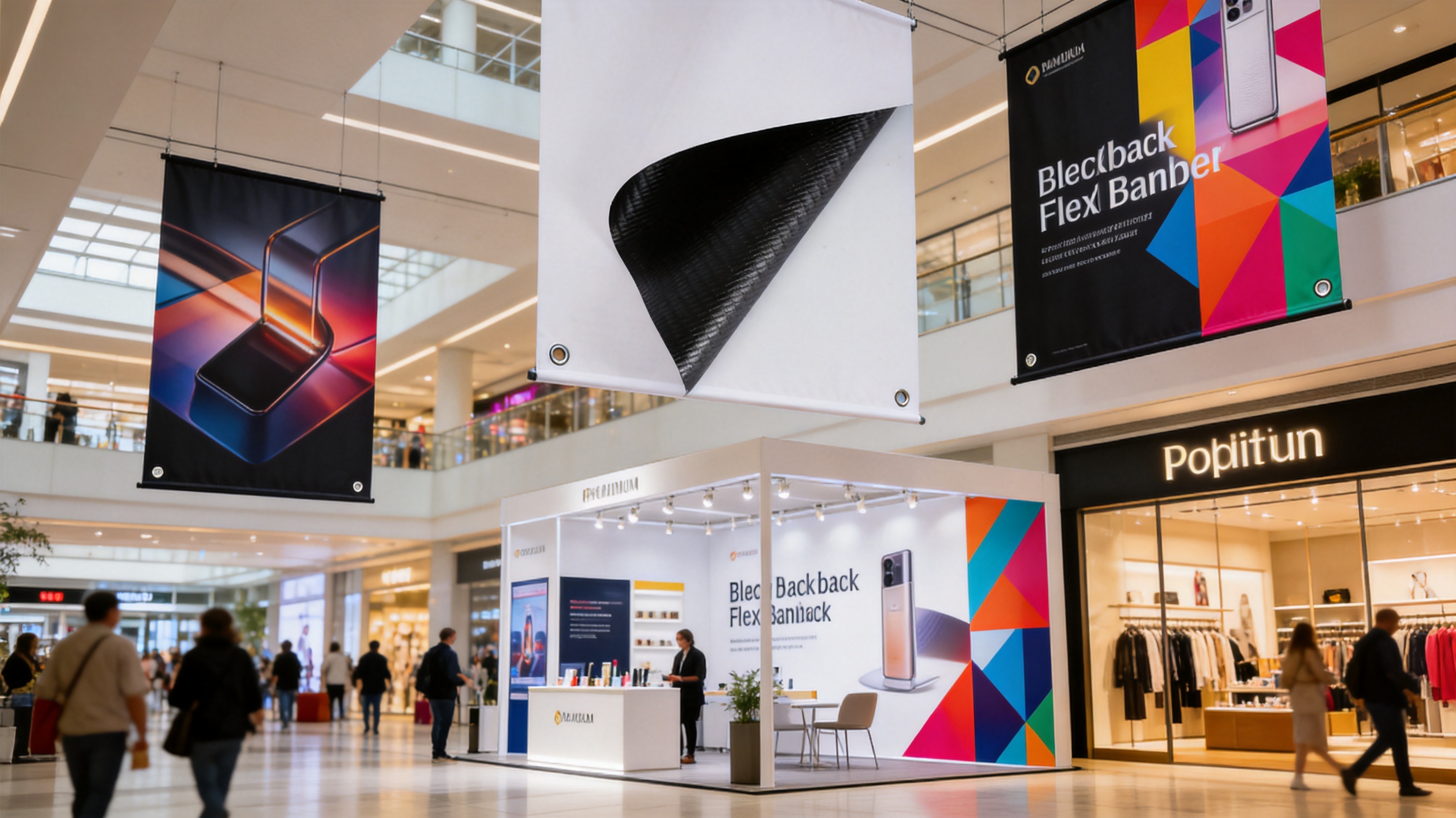
Retail environments require graphics that remain vivid under artificial lighting and are easy to install without disrupting normal operations. Blackback flex banner material can be used for atrium banners, storefront promotions, seasonal sale graphics, promotional partitions, and temporary brand zones. Its opacity helps prevent light from behind the display from weakening the message, while its printable surface supports detailed product imagery and promotional typography.
Retail campaigns often change frequently. A flexible, rollable material allows graphics to be produced, transported, installed, removed, and replaced according to the marketing calendar. The material is therefore suitable for short-term sale events as well as larger seasonal campaigns.
Pop-up events require fast setup and efficient dismantling. Promotional graphics may need to travel between cities or venues, and the installation team may have limited tools and time. The flexible construction of this banner simplifies movement and supports common hanging and framing methods.
High ink absorption is valuable in exhibition environments because visitors often view graphics at close range. Clear product images, sharp brand marks, and readable information help create a more professional booth or activation area. The blackback layer can also conceal the structure behind a display, contributing to a cleaner visual presentation.
At trade shows, a company’s display competes with many neighboring booths. Strong contrast and color depth can help a message remain visible in a crowded hall. The material can be used for back walls, hanging banners, side panels, directional graphics, and temporary partitions.
Corporate events also benefit from the material’s ability to reproduce fine details. Sponsor logos, event schedules, partner marks, and branded patterns can be printed with clear edges when the artwork and production settings are properly managed. The result is a cohesive environment that supports recognition and professionalism.
Outdoor promotions often require a substrate that balances affordability, print performance, and weather resistance. This blackback flex banner is suitable for temporary storefront campaigns, roadside promotional structures, event fencing, festival branding, construction-site advertising, and outdoor product launches.
For outdoor use, proper finishing is essential. Hems, eyelets, tension systems, and attachment spacing should be selected according to the banner size and expected wind conditions. The material’s strength and protective construction can support outdoor performance, but installation quality remains a major factor in safety and service life.
Some promotional graphics are installed near windows, illuminated signs, or light-emitting display systems. In these locations, rear illumination can alter the appearance of ordinary banner media. A blackback product helps isolate the graphic from light behind it, making it more appropriate for environments where light control is difficult.
It should be distinguished from dedicated translucent backlit media. Blackback flex banner material is intended to block rear light rather than transmit it. Its strength is visual purity and opacity, not controlled illumination from behind. This distinction allows buyers to select the correct material for the desired display effect.
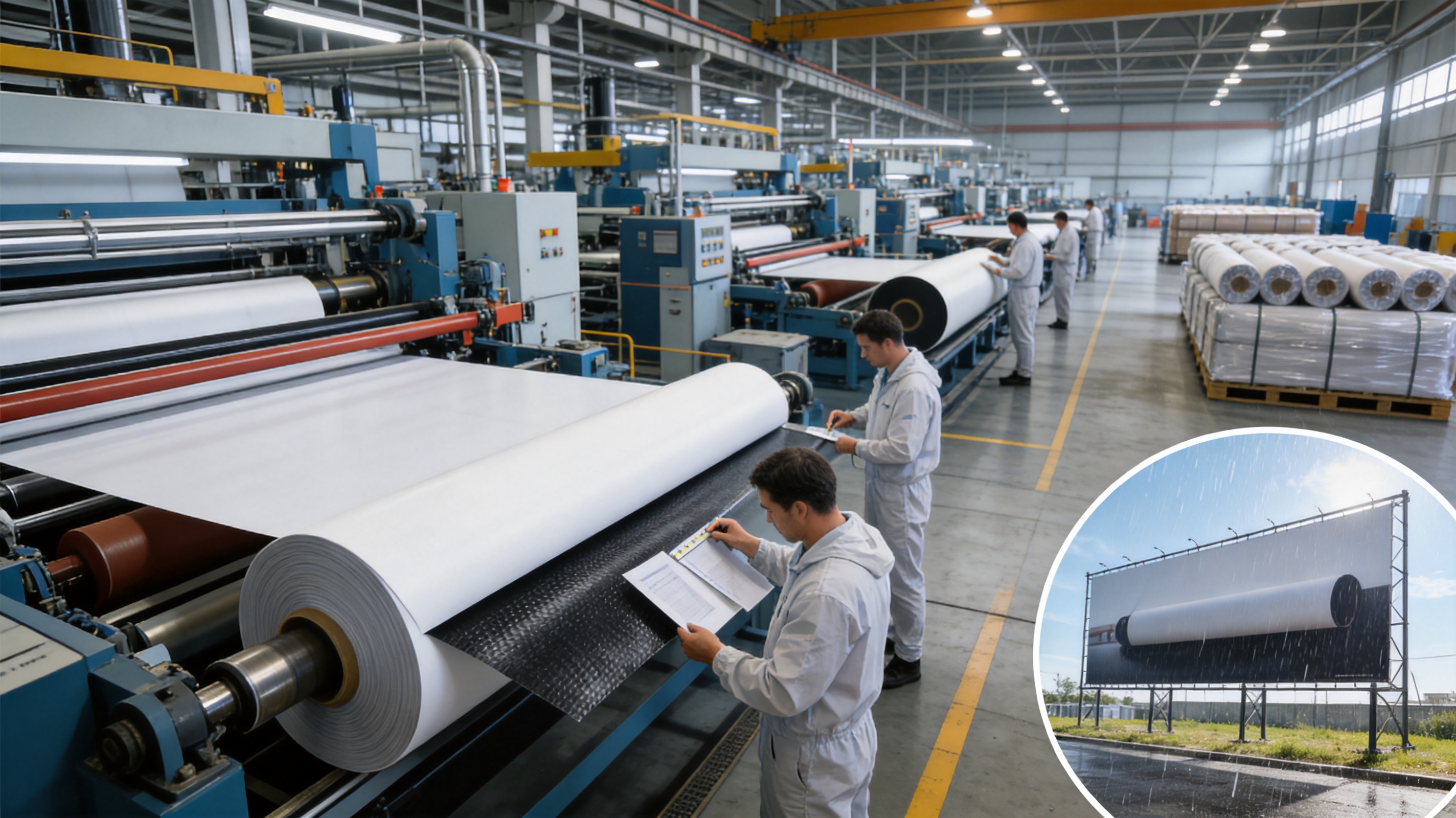
The performance of a commercial banner begins with the manufacturing process. A reliable product requires more than a printable surface; it depends on controlled raw materials, stable coating or lamination, accurate calendering, dependable bonding, and consistent inspection. The manufacturer behind this product operates advanced calendering equipment, multiple production lines, and professional bonding facilities to support large-scale production of PVC films, digital printing fabrics, tarpaulin films, frontlit and backlit materials, mesh, and other display media.
Calendering is a key process for producing PVC-based flexible materials. During calendering, prepared material is processed through controlled rollers to form a continuous sheet with a defined thickness, surface condition, and appearance. Stable temperature, pressure, speed, and formulation control are important for maintaining uniformity across the roll.
For a blackback banner, calendering quality influences the consistency of the face layer and the integration of the backing structure. A well-controlled process helps reduce thickness variation, surface defects, uneven gloss, and dimensional instability. It also provides a more dependable foundation for subsequent coating, printing, bonding, and finishing.
Consistent calendering is especially important for wide-format production. Even small variations can become visible across large graphics or cause difficulties during printer feeding and finishing. Advanced equipment and established process controls help the manufacturer produce rolls with stable characteristics from beginning to end.
Blackback flex banner material relies on the effective integration of multiple functional layers. The printable face must remain compatible with digital inks, while the black backing must maintain opacity and bond securely to the construction. Professional bonding facilities support control over these interfaces.
Bonding quality affects durability, appearance, and handling. Weak or inconsistent adhesion may lead to delamination, bubbling, edge separation, or loss of opacity during use. A controlled bonding process helps maintain layer integrity when the material is rolled, unrolled, folded during handling, tensioned during installation, or exposed to changes in temperature and humidity.
The stated adhesion value of 60 N/5 cm provides a measurable reference for the finished construction. Regular testing of adhesion, tensile strength, tearing strength, weight, thickness, and surface appearance allows production teams to identify variation and maintain more consistent output.
Multiple production lines provide capacity and flexibility. They allow the manufacturer to support different material categories, widths, constructions, finishes, and order volumes while maintaining a structured production schedule. This is valuable for buyers who require both standard products and customized specifications.
Production capacity also supports more dependable delivery planning. The company reports an annual output of approximately 45 million square meters, indicating experience with large-scale manufacturing and international supply. Capacity alone does not guarantee quality, but when combined with process control, experienced personnel, and inspection procedures, it provides a strong foundation for repeat orders.
Commercial printing technology continues to evolve. Printers, inks, color-management systems, finishing equipment, and installation methods place changing demands on banner media. A manufacturer with broad product experience can adapt materials to different application requirements, including high-absorption surfaces, blackout constructions, outdoor protection, flame-retardant options, antistatic properties, mildew resistance, and antibacterial performance.
The company’s wider product portfolio includes PVC films, digital printing fabrics, tarpaulin films, frontlit and backlit materials, double-sided printing fabrics, mesh, and light box cloth products. This range provides technical knowledge across several display-media categories. It also enables customers to source related materials from one manufacturing partner, simplifying communication and product coordination.
Haining Taiwei New Material Co., Ltd. was established in July 2010 and is located in Haining Dingqiao Industrial Park in Zhejiang Province, China. Its location provides access to established industrial infrastructure and transportation connections to Shanghai and Ningbo ports. These logistics advantages are useful for export orders involving large rolls, container shipments, and repeat commercial supply.
The company specializes in flexible materials for printing, advertising, covering, and display applications. Its product range reflects a focus on functional performance rather than a single narrow product category. In addition to banner media, the company produces materials with cold resistance, flame retardancy, ultraviolet resistance, antistatic characteristics, mildew-proof properties, and antibacterial features.
Such a portfolio suggests an ability to match material construction to application conditions. For example, a retail promotion may prioritize print quality and opacity, while an outdoor industrial covering may require additional weather resistance. A trade-show application may require flame-retardant compliance, while a large temporary display may prioritize tensile strength and finishing compatibility.
More than 98 percent of the company’s products are reported to be exported to Europe, America, the Middle East, Southeast Asia, and other regions. International supply experience can support familiarity with different packaging expectations, documentation requirements, communication practices, and project schedules. It also indicates that the manufacturer serves customers with varied climate conditions and application standards.
The company emphasizes technological innovation, product quality, and customer service. For commercial buyers, these strengths are relevant because banner projects frequently involve more than a single purchase. Customers may require sample evaluation, color testing, customized widths, different roll lengths, private labeling, packaging adjustments, or repeat production with consistent specifications. A structured manufacturing partner can help manage these requirements more effectively than an occasional supplier.
High-quality banner media can only perform as well as the artwork and printing process allow. Designers should prepare files at an appropriate resolution and confirm that important text remains within safe margins. Logos and fine typography should be reviewed at actual output size, not only on a computer screen.
Color profiles should be selected according to the printer, ink set, and production workflow. A test print or proof is recommended when exact brand colors are important. Because blackback material is designed to reduce rear-light interference, printed colors may appear more stable after installation, but color management remains necessary for accurate reproduction.
Before full production, converters and print service providers should verify compatibility between the banner surface, printer, ink technology, drying conditions, and take-up system. The high-absorption surface is designed to support controlled ink reception, but optimal settings may vary according to solvent, eco-solvent, UV, latex, or other digital printing systems.
Proper curing or drying is important before rolling, laminating, cutting, or finishing. Even a high-performance printable surface can be affected if the print is handled before the ink has stabilized. A controlled production environment helps preserve surface quality and prevent blocking between layers during storage.
Finishing methods should be selected according to the display structure and expected service conditions. Hemming can reinforce edges, while eyelets provide attachment points for ropes, hooks, or tensioning systems. Pole pockets may be suitable for hanging banners, and frame systems can provide a clean presentation for indoor displays.
Attachment points should be distributed evenly to reduce localized stress. Over-tensioning can distort the graphic or place unnecessary strain on the edges, while insufficient tension can create wrinkles and wind movement. Outdoor banners should be installed with consideration for wind exposure, drainage, surrounding structures, and local safety requirements.
Printed or unprinted rolls should be stored in a clean, dry area away from direct sunlight, excessive heat, sharp objects, and moisture. The material should be protected from crushing and should not be placed under heavy loads for extended periods. When possible, rolls should remain supported and stored in a way that prevents deformation.
During installation, handlers should avoid dragging the printed face across rough surfaces. Dirt, grit, and sharp contact can affect the appearance of the graphic even when the substrate itself has strong mechanical properties. Careful handling improves the possibility of reuse and helps maintain the professional appearance expected from commercial signage.
Buyers comparing banner substrates should consider more than unit price. A lower-cost material may require additional layers to block light, more frequent replacement, extra installation labor, or reprinting caused by unsatisfactory image quality. A complete evaluation should include print performance, opacity, strength, outdoor resistance, finishing behavior, storage requirements, and total project cost.
Compared with ordinary frontlit media, a blackback product offers stronger control over rear illumination. Compared with uncoated or lower-absorption surfaces, it offers greater support for crisp fine detail and even ink coverage. Compared with rigid panels, it offers easier transportation, storage, and replacement. Compared with very lightweight temporary media, its 440 gsm construction provides a more substantial balance of durability and handling stability.
The product is not intended to replace every specialized display material. Dedicated backlit media is more appropriate when the design depends on illumination from behind. Heavy-duty industrial tarpaulin may be more suitable for long-term structural covering. Rigid board may be preferred where a flat, self-supporting panel is required. The advantage of this blackback flex banner lies in its combination of commercial print quality, opacity, flexibility, and practical weather resistance.
A professional comparison should also examine production consistency. Samples from different batches can be tested for weight, surface appearance, ink reception, blackout performance, adhesion, tensile strength, and tearing strength. This process helps buyers select a material that meets the technical demands of the project rather than relying only on general product descriptions.
Responsible material selection includes consideration of product life, replacement frequency, transportation, and disposal. A banner that maintains its appearance throughout a campaign may reduce waste associated with premature replacement. Its rollable construction can also simplify transport compared with rigid display systems, potentially reducing packaging volume.
Operational planning is equally important. Graphics should be produced in the correct quantity, stored properly, and installed in a way that supports reuse where possible. After removal, the material should be assessed for future use, recycling options, or appropriate disposal according to local regulations and the composition of the finished product.
Customers with specific environmental or regulatory requirements should request current technical documentation, compliance information, and available options before ordering. Depending on the market and application, requirements may include flame performance, restricted substances, packaging standards, or material declarations. A direct discussion with the manufacturer can help confirm the correct specification.
When requesting a quotation, buyers should provide the intended application, required width and length, printing method, indoor or outdoor exposure, expected campaign duration, finishing method, roll packaging requirements, and destination market. Clear information allows the manufacturer to recommend a suitable construction and avoid unnecessary changes later in the process.
Samples are useful for evaluating surface feel, flexibility, opacity, color reproduction, adhesion, and printer compatibility. For high-value campaigns, buyers may also request a printed sample using the actual artwork or a representative color chart. This provides a more meaningful assessment than an unprinted material sample alone.
Repeat orders should reference the original product specification, production width, weight, surface finish, backing color, roll length, and quality requirements. Maintaining accurate records supports consistency across campaigns and locations. For multinational projects, a standardized material specification can help ensure that the same visual result is achieved in different markets.
Packaging should protect rolls from moisture, impact, contamination, and deformation during shipment. Export customers should confirm labeling, palletization, container loading, and documentation requirements in advance. The manufacturer’s location near major ports can support international logistics, but shipment planning should still account for production lead time, inspection, customs procedures, and local delivery.
Before approving a production batch, buyers may evaluate roll appearance, surface uniformity, blackback opacity, weight, dimensions, and packaging condition. A visual inspection can identify creases, scratches, contamination, uneven coating, edge damage, or irregular winding.
Print testing should examine solid color fields, gradients, small text, fine lines, photographic details, and dark areas. The printed sample should be viewed under lighting conditions similar to the final installation. If the banner will be used outdoors, an outdoor exposure assessment or accelerated test may be considered for important long-term projects.
Mechanical testing may include tensile strength, tearing strength, and adhesion. The stated values of 200/180 N/5 cm for tensile strength, 100/80 N for tearing strength, and 60 N/5 cm for adhesion provide reference points for inspection. Buyers should confirm test methods, sampling procedures, and acceptable tolerances with the supplier when these properties are critical to the project.
Blackback flex banner material is a flexible printable substrate with a dark, opaque backing layer. The backing helps block light from behind the display and reduces interference from underlying surfaces. It is commonly used for commercial advertising, retail promotions, exhibitions, events, and temporary outdoor graphics.
The high ink-absorption surface helps receive and hold digital ink more evenly. This can reduce bleeding and blurring while improving the clarity of small text, fine lines, logos, images, and color transitions. The final result depends on the printer, ink, artwork, and production settings, but the surface is designed to support high-precision commercial printing.
No. The blackback layer is designed to block rear illumination rather than transmit it. The material is suitable when the graphic should remain visually stable and opaque. Dedicated translucent backlit media should be selected when light from behind is intended to illuminate the printed image.
It is suitable for short-term and selected medium-term outdoor promotional applications, provided it is finished and installed correctly. The protective construction is intended to help resist ultraviolet radiation, rain, freezing temperatures, and abrasive conditions. Actual service life depends on climate, exposure, ink system, wind, installation, and maintenance.
The specified nominal weight is 440 gsm. This provides a balance between a substantial, stable banner structure and manageable handling for transportation, installation, and storage.
The tensile strength values are 200/180 N/5 cm in the two principal directions. They indicate the material’s resistance to pulling forces along and across the roll. This information is useful when planning hems, eyelets, tensioning, framing, and other installation methods.
The tearing strength is listed as 100/80 N in the two principal directions. It indicates resistance to the spread of a tear after damage has begun. Proper finishing and attachment remain important, but tear resistance contributes to overall reliability during handling and installation.
Commercial banner materials may often be customized according to width, roll length, surface treatment, backing construction, packaging, and other production requirements. Buyers should provide complete project information and confirm available options, minimum order quantities, lead times, and technical tolerances with the manufacturer.
Compatibility should be confirmed with the specific printer and ink system used by the converter. Depending on the production environment, testing may be required for solvent, eco-solvent, UV, latex, or other digital printing technologies. A sample run helps determine ink density, drying time, color appearance, and finishing behavior.
Printed rolls should be stored in a clean, dry environment away from direct sunlight, excessive heat, moisture, sharp objects, and heavy pressure. They should be protected from crushing and handled carefully to prevent scratches, creases, and contamination of the printed surface.
Large production capacity can support stable supply, repeat orders, and coordinated delivery for regional or international campaigns. The company reports an annual output of approximately 45 million square meters and operates multiple production lines, advanced calendering equipment, and professional bonding facilities. Buyers should still evaluate samples and quality documentation for each specific product.
Its key distinctions are the high ink-absorption printable surface, dense blackback opacity, 440 gsm construction, enhanced exterior protection, and suitability for detailed commercial graphics. These features are intended to provide better image definition, stronger contrast, reduced rear-light interference, and more dependable handling than basic banner media.
High Ink Absorption Blackback Commercial Promo Flex Banner Material is designed for businesses and print professionals that require more than a basic advertising substrate. Its upgraded surface treatment supports even ink absorption and crisp image reproduction, while the dense black backing helps produce deep, stable colors by blocking unwanted rear illumination. Its flexible 440 gsm construction provides a practical balance of durability, handling convenience, storage efficiency, and installation adaptability.
The material is suitable for shopping malls, retail promotions, pop-up exhibitions, trade shows, corporate events, temporary outdoor campaigns, storefront graphics, and other commercial display applications. Its weather-resistant protective construction expands its usefulness in challenging environments, while its mechanical specifications provide a foundation for dependable finishing and installation.
The manufacturing capabilities of Haining Taiwei New Material Co., Ltd. further support the product’s commercial value. Established in 2010, the company operates in Haining’s industrial manufacturing environment and combines advanced calendering equipment, multiple production lines, professional bonding facilities, broad product expertise, and international export experience. Its annual output and global customer base indicate the capacity to support both standard supply and customized material programs.
For buyers, the best results come from matching the banner specification to the application, testing printer compatibility, confirming finishing requirements, and following proper installation and storage practices. When selected and handled correctly, this blackback flex banner can help deliver sharper promotional graphics, stronger visual contrast, efficient campaign logistics, and a more professional presentation than standard banner materials.
Product technical specification sheet for blackback 300*500D 18*12, 440 gsm flex banner material.
Manufacturer-provided product information concerning high ink absorption, blackout opacity, outdoor protection, and commercial promotional applications.
Manufacturer-provided company profile concerning production equipment, product categories, export markets, and annual manufacturing capacity.
General principles of large-format digital printing, substrate selection, banner finishing, and commercial display installation.
General textile and coated-material testing principles for tensile strength, tearing strength, adhesion, opacity, and weight evaluation.
Best-practice guidance for storage, handling, installation, and maintenance of flexible PVC display media.
High Ink Absorption Blackback Commercial Promo Flex banner Material
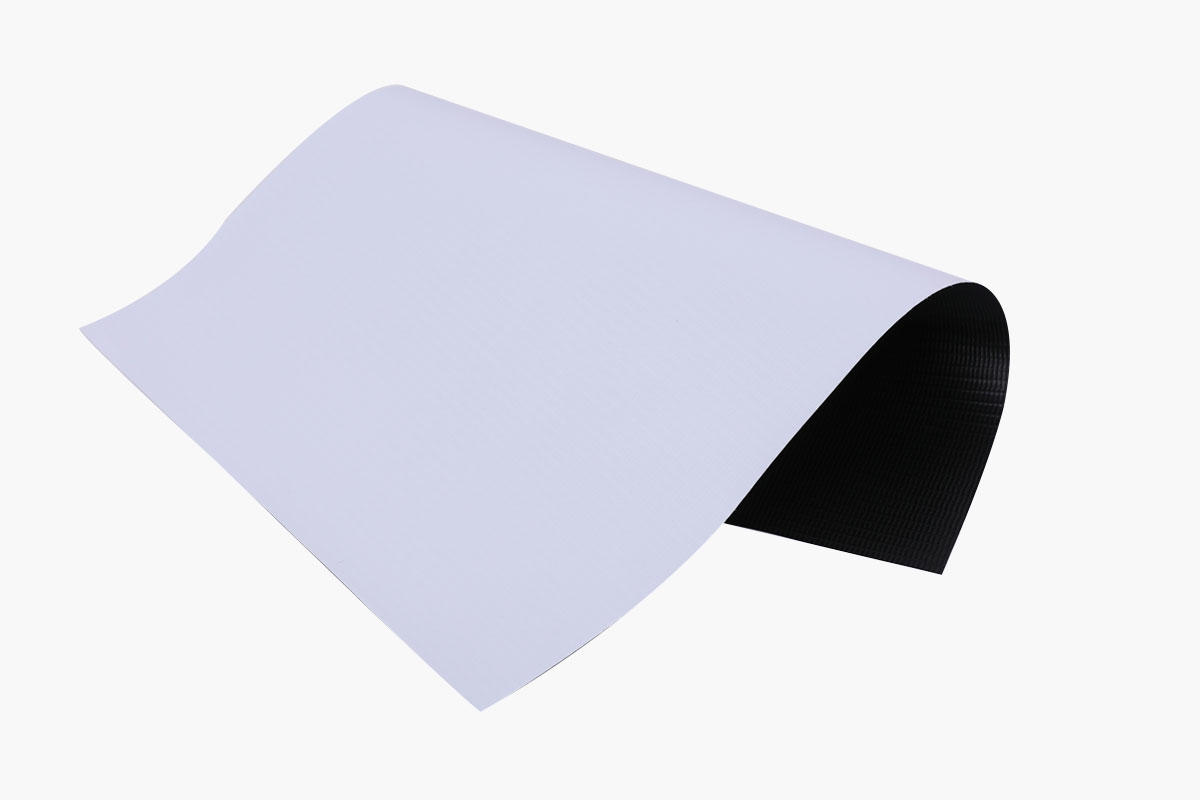 High-Resolution Durable PVC Flex Banner
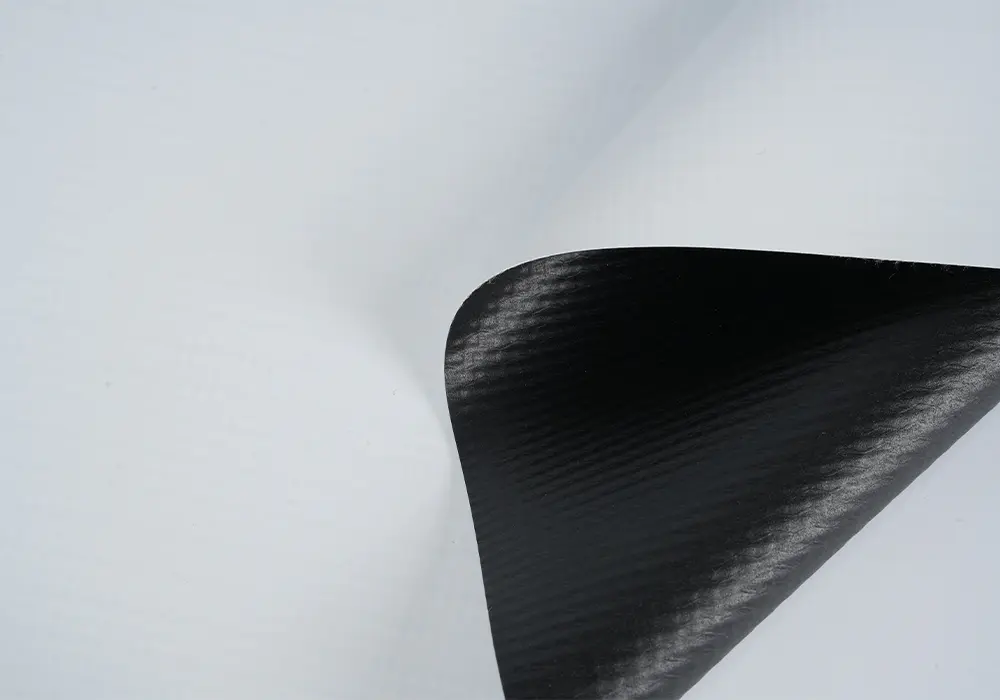 Blackback Light Block HD Printing Flex Banner Fabric
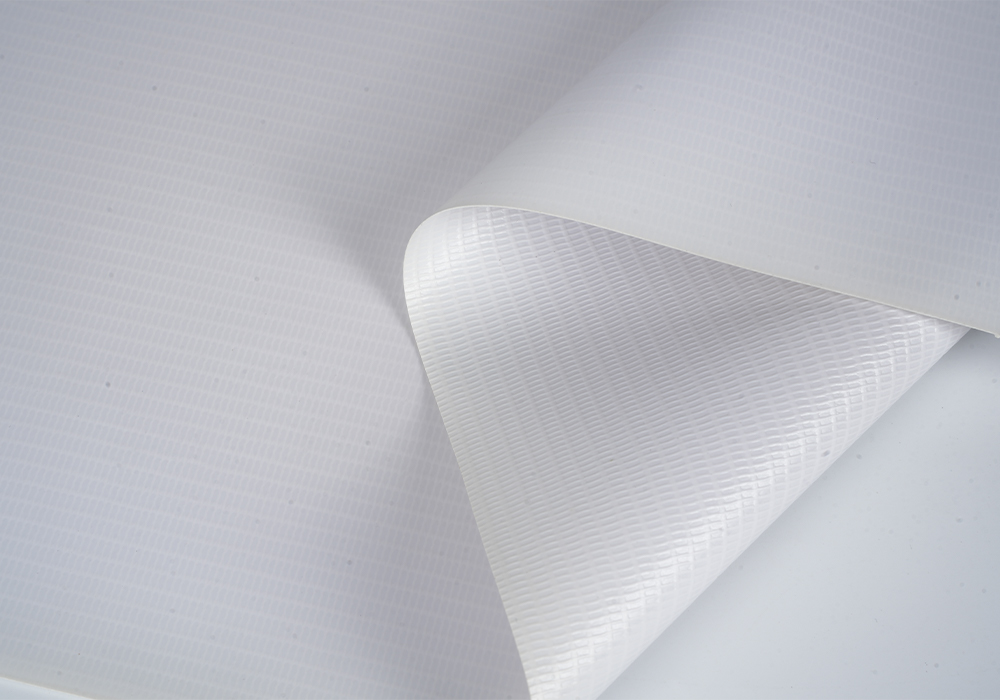 Thick Vivid Color Commercial Flex Banner Display Cloth
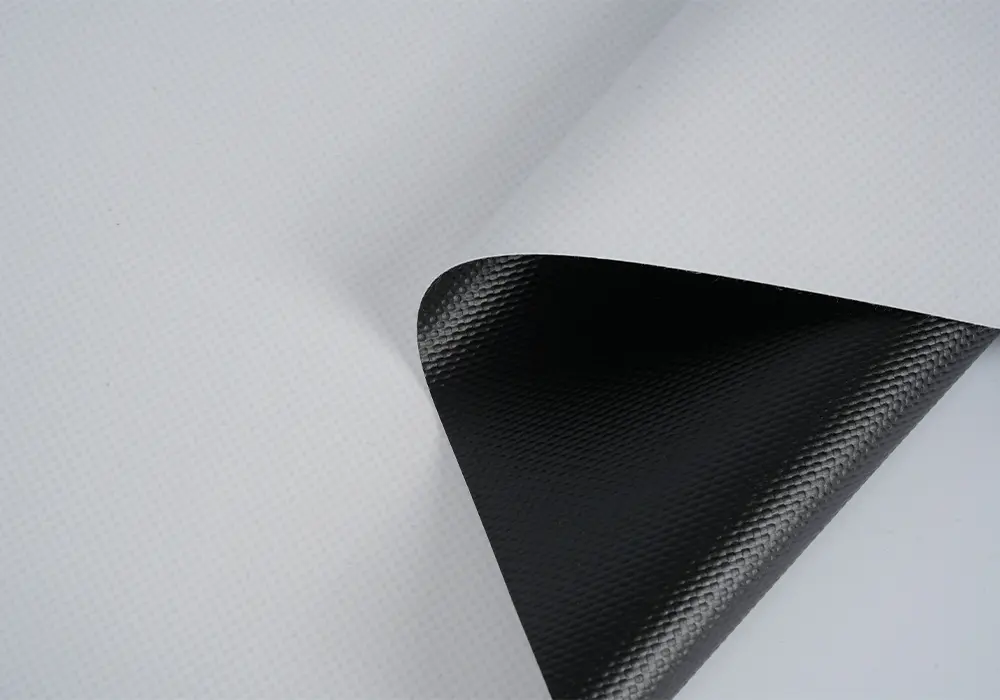 Weatherproof Blackback Opaque Advertising Flex Banner
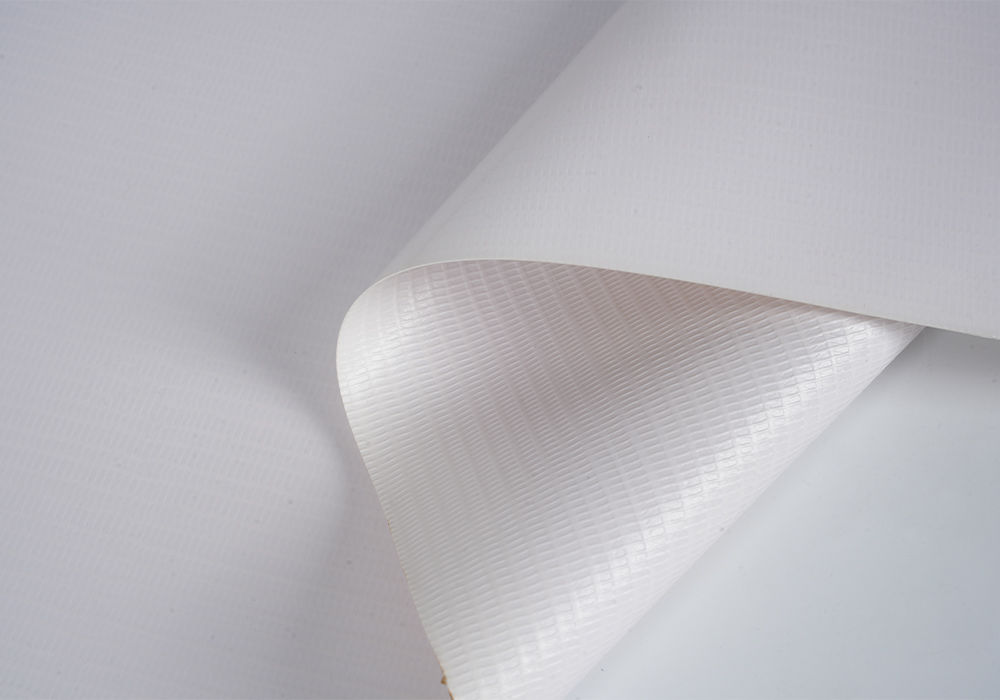 Waterproof Stretch Resistant Event Flex Banner Material
 Custom Digital Printing Fabric Manufacturers

 Previous